Skip to Content Facebook Feature Image

Pope Leo XIV's cancer diagnosis raises questions about the future and the very recent past

News

Pope Leo XIV's cancer diagnosis raises questions about the future and the very recent past
News

News

Pope Leo XIV's cancer diagnosis raises questions about the future and the very recent past

2026-10-15 12:11 Last Updated At:13:22

VATICAN CITY (AP) — When Pope Leo XIV was elected after the pained finale of Pope Francis’ pontificate, there was hope that a younger, healthier pope would be able to guide the Catholic Church for quite some time before age and ailments slowed him.

Leo’s lung cancer diagnosis announced Tuesday has thrown a question mark into that scenario and his pontificate. Already, the president of Peru is suggesting Leo’s upcoming Latin America trip may have to be changed.

But Vatican watchers say the 71-year-old's diagnosis could have other unintended effects — not all of them negative: It could propel Leo to accelerate his own agenda, which to date has been slow and deliberate. It also could galvanize support for him, bolstering his efforts to unify the fractured Catholic Church.

And most poignantly for his own ministry, the diagnosis has placed Leo squarely among the “fragile” and “vulnerable” who have emerged as his central focus. In his preaching, writings and interactions with ordinary faithful, people who are wounded take center stage.

“There’s something really beautiful in that even the most powerful person in the church is broken,” said Natalia Imperatori-Lee, associate professor of theology at Fordham University. “He’s been so, so eloquent on how our fragility is also a source of our strength.”

Leo was 69 when he was elected in 2025, relatively young compared with the two popes who immediately preceded him.

Pope Francis was 76 when elected in 2013 and had had part of one lung removed as a young man. Francis battled respiratory and mobility problems throughout his pontificate and died in 2025 after a lengthy hospitalization for double pneumonia.

Pope Benedict XVI was 78 when elected in 2005 and retired after eight years because he simply couldn’t go on anymore.

Leo was elected in large part because he was seen as someone who would be around long enough to stabilize and unify the church after Francis’ turbulent papacy, and get the Vatican’s finances, in particular, into order. He brought a youthful vigor to the papacy, bounding up the stairs of St. Peter's Square and zipping off to the country each week to play tennis and swim.

“It’s a big question mark on the investment that many people have made on this pontificate: an emotional investment, a political investment, even a financial investment,” said Massimo Faggioli, a theologian at Leo’s alma mater, Villanova University in Pennsylvania.

He noted that Leo has emerged as a powerful counterweight to the Trump administration in preaching a message of peace as the U.S. and Israel launched a war on Iran. He has become a respected moral authority on the need for safeguards on artificial intelligence.

And yet “even the pope gets the ‘emperor of maladies’ — cancer,” he said.

But assuming Leo recovers fully — and oncologists say his type of lung cancer has the best prognosis — Leo could emerge even stronger as a global figure.

“The mystique of the survivor is very strong in our culture,” Faggioli said.

Doctors on Wednesday said his recovery was proceeding normally. He walked around his hospital room, celebrated Mass and did respiratory physiotherapy while well-wishers outside recited the rosary praying for his recovery.

“He has always been very serene, kind and joyful, and he hasn’t lost that attitude even though the news came as a surprise,” said Tiziano Perrini, a Roman who came to Gemelli hospital to pray for the pope Wednesday. “So my perception hasn’t changed at all; in fact, perhaps it makes us feel closer to him.”

But if the future is uncertain, Leo can draw from the recent past to help get through it.

During his Sept. 25-28 visit to France, Leo followed in the footsteps of millions of pilgrims who flock to the shrine in Lourdes each year to drink its spring water and pray for miraculous cures for all that ails them.

The Vatican hasn’t said when Leo learned that doctors suspected he had a cancerous mass in his lungs. Before Tuesday’s surgery, he underwent a series of preoperative tests, including a biopsy under general anesthesia during a separate, secret hospital visit and a PET scan.

There are suggestions that Leo might have known something even before leaving for France and that he scheduled the surgery for Tuesday — typically his day off — “because he wanted to keep as much as possible the commitments he made,” said Giovanni Maria Vian, the former editor of the Vatican newspaper L'Osservatore Romano.

All of which makes Leo's visit to Lourdes all the more significant, if he had a hint then that he, too, was among the sick.

Leo arrived at the shrine in the evening of Sept. 26 and immediately went to the Grotto of the Apparitions where alleged visions of the Virgin Mary were reported over a century ago. He performed the “three gestures” of the Lourdes pilgrim seeking a cure: He drank from its springs, lit a candle and touched the rock.

The next day, he celebrated Mass before 150,000 people, many of them sick, denounced laws allowing assisted dying and threw himself into a crowd of people in wheelchairs. After an exhausting day and seemingly struggling himself, Leo walked among the sick carrying a torch in an emotional torchlit procession at night.

Leo told reporters en route home from France that he witnessed “almost miracles” in Lourdes “walking with, accompanying so many people who are sick and suffering and seeing how the grace of God’s presence manifested in many different ways, touches people’s hearts, transforms their lives.”

He didn’t include himself in their ranks, but he took away the lesson of Lourdes.

“Being in a place, especially like Lourdes where people are searching for something much deeper and understanding that their lives, even in the midst of sickness or disability or pain of different kinds, their life has meaning,” he said.

AP visual journalist Silvia Stellacci contributed to this report.

Associated Press religion coverage receives support through the AP’s collaboration with The Conversation US, with funding from Lilly Endowment Inc. The AP is solely responsible for this content.
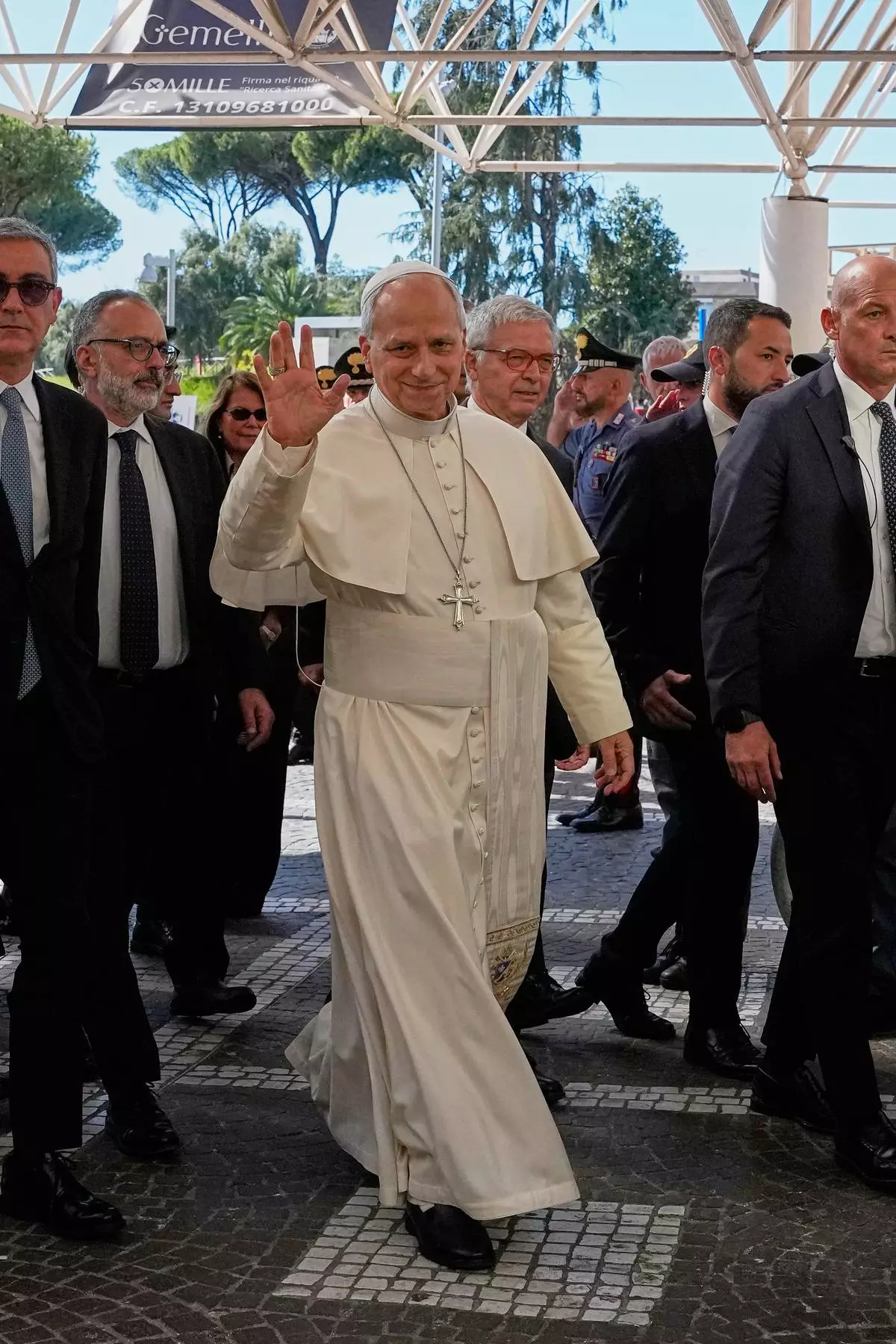
Pope Leo XIV arrives at the Agostino Gemelli Polyclinic in Rome, Tuesday, Oct. 13, 2026, where he's expected to be operated to remove a lung nodule. (AP Photo/Alessandra Tarantino)
Pope Leo XIV arrives at the Agostino Gemelli Polyclinic in Rome, Tuesday, Oct. 13, 2026, where he's expected to be operated to remove a lung nodule. (AP Photo/Alessandra Tarantino)

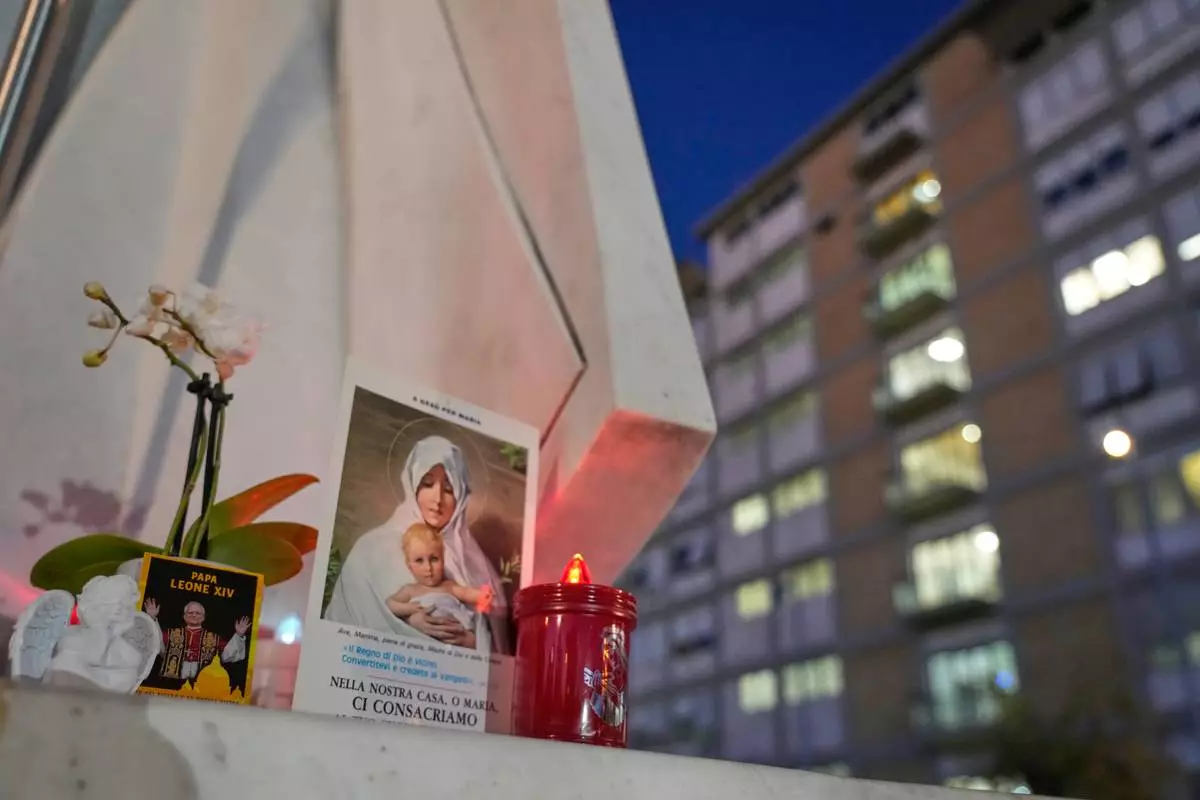
An image of Pope Leo XIV rests at the base of a statue of late pope St. John Paul II outside the Agostino Gemelli Polyclinic, where Leo is hospitalized for surgery to remove a lung nodule, in Rome, Tuesday, Oct. 13, 2026. (AP Photo/Gregorio Borgia)

An image of Pope Leo XIV rests at the base of a statue of late pope St. John Paul II outside the Agostino Gemelli Polyclinic, where Leo is hospitalized for surgery to remove a lung nodule, in Rome, Tuesday, Oct. 13, 2026. (AP Photo/Gregorio Borgia)
KUALA LUMPUR, Malaysia--(BUSINESS WIRE)--Oct 15, 2026--

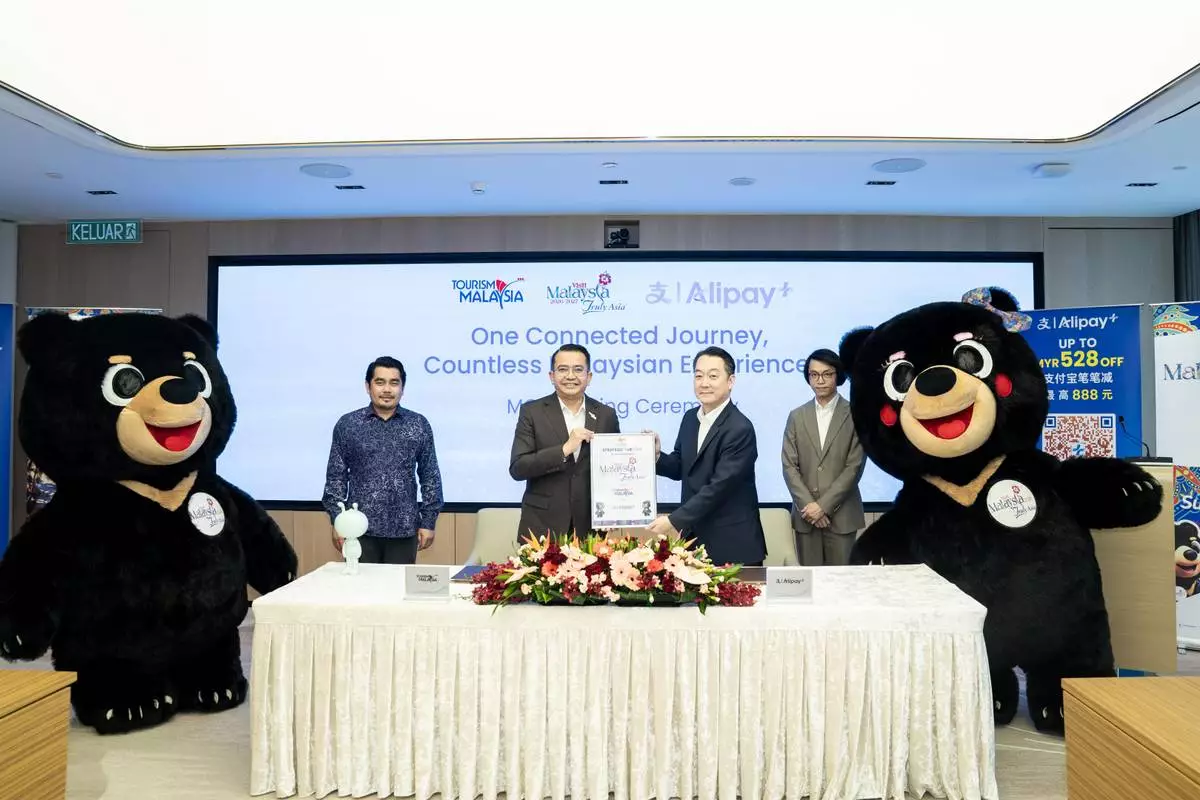
Tourism Malaysia and Alipay+, the unified wallet gateway of Ant International, today signed a Memorandum of Understanding (MoU) to accelerate cross-border commerce and digitalise merchant engagement across Malaysia's tourism economy.

This press release features multimedia. View the full release here: https://www.businesswire.com/news/home/20261014035900/en/

As Malaysia welcomes visitors for Visit Malaysia 2026–2027 (VM2026–2027), this partnership merges Tourism Malaysia’s destination marketing with Alipay+’s global wallet ecosystem and AI capabilities. It aims to create a highly intelligent digital journey, connecting international travellers directly with local operators as well as Small and Medium Enterprises (SMEs), strategically distributing visitor spending beyond major hubs to support the broader economic goals of VM2026–2027.

Mr. Mohd Amirul Rizal Abdul Rahim, Director General of Tourism Malaysia, said: “Digital technologies continue to reshape the way people plan and experience travel, and Tourism Malaysia remains committed to embracing innovative solutions that enhance visitor convenience and engagement. This initiative makes it easier for travellers to discover Malaysia and access tourism-related benefits through a seamless digital journey, supporting our broader efforts under VM2026–2027 to strengthen Malaysia's competitiveness as a smart tourism destination. By leveraging digital platforms with extensive international reach, we can engage travellers more effectively while showcasing Malaysia's diverse tourism experiences to a wider global audience.”

The MoU builds on Alipay+'s significant momentum within Malaysia's digital commerce ecosystem. In the first half of 2026, over 600,000 merchants, primarily SMEs, received payments from Alipay+ partner wallets and bank apps, marking a year-on-year increase of over 70%. Furthermore, traveller spending via DuitNow surged by more than 60%, establishing Alipay+ as the largest contributor to inbound QR transactions nationwide. Currently, Alipay+ connects over 2 billion user accounts with 150 million merchants across 210 destinations, and operating through major national schemes like PayNet.

Mr. Michael Guo, Alipay+ General Manager for Southeast Asia, South Asia and ANZ, Ant International, added: “Cross-border commerce is evolving beyond the moment of payment. AI can now connect a traveller's intent with the right destination, business and offer. Through our collaboration with Tourism Malaysia, we are helping local businesses not only accept international payments, but also to actively engage global customers, creating more opportunities for Malaysian businesses, particularly SMEs, to participate in the growth of cross-border travel and commerce.”

A core component of the collaboration is Alipay+ Voyager, an AI travel agent embedded within travellers' digital wallets. Alipay+ Voyager will surface Tourism Malaysia-verified cultural, culinary, and experiential offerings tailored to individual interests, creating a new digital channel to reach international customers at the moment of discovery. To further incentivise exploration, Tourism Malaysia will also launch an exclusive AI-powered travel subsidy programme, allowing visitors to converse directly with the digital agent to unlock benefits for accommodation, transportation, and attractions. Alipay+ Voyager also simplifies the day-to-day experience – for example, visitors can access local ride-hailing services directly via their embedded AI agent, without having to download additional apps, and also get triple protection covering timeout, no-shows, and long waits.

Tangible Benefits for Malaysian Businesses

As part of the MoU, Malaysian merchants, big and small, all across the country will benefit from the growing number of visitors for VM2026-2027:

Through these initiatives, Tourism Malaysia reinforces its commitment to cultivating a connected, inclusive digital commerce ecosystem that benefits both the national economy and the everyday traveller, beyond the Visit Malaysia 2026–2027 campaign.

About Tourism Malaysia

Malaysia Tourism Promotion Board, also known as Tourism Malaysia, is an agency under the Ministry of Tourism, Arts and Culture Malaysia (MOTAC). It focuses on promoting Malaysia as a preferred tourism destination and has, since its establishment, played a significant role in strengthening the country’s presence and competitiveness in the global tourism landscape.

Visit Malaysia 2026 (VM2026) underscores Malaysia’s commitment to sustainable tourism development, in line with the United Nations Sustainable Development Goals (UNSDGs). The campaign aims to showcase the nation’s diverse natural attractions, rich cultural heritage, and vibrant tourism offerings, while driving inclusive growth and long-term value for local communities and industry stakeholders.

For more information, visit Tourism Malaysia’s website www.tourism.gov.my and social media accounts on Facebook, Instagram, X, YouTube, and TikTok.

About Alipay+

Ant International's Alipay+ is a unified wallet gateway with cross-border payment and digitisation services that help connect global merchants to consumers. Consumers enjoy seamless payment, a broad choice of deals and the convenience of digital services using their preferred payment app while travelling abroad. Small and medium-sized businesses may use Alipay+ digital tools to enhance efficiency and achieve omni-channel growth.

(From left) Mr Mohd Akbal Setia (Head of VM2026 Secretariat and Senior Director, Advertising & Digital Tourism); Mr Mohd Amirul Rizal Abdul Rahim (Director General, Tourism Malaysia); Mr Danny Chung (General Manager of Alipay+ Global Growth Center and Vice President of Ant International); Mr Michael Guo, Alipay+ General Manager of SEA, South Asia and ANZ, Ant International)

(From left) Mr Mohd Akbal Setia (Head of VM2026 Secretariat and Senior Director, Advertising & Digital Tourism); Mr Mohd Amirul Rizal Abdul Rahim (Director General, Tourism Malaysia); Mr Danny Chung (General Manager of Alipay+ Global Growth Center and Vice President of Ant International); Mr Michael Guo, Alipay+ General Manager of SEA, South Asia and ANZ, Ant International)

Recommended Articles