Chinese astronauts aboard the Tiangong Space Station have helped conduct extensive experiments in space science, biology, materials and technology over the past four years, yielding important discoveries in each of these fields, according to the China Manned Space Agency.
Since the station was completed in 2022, Tiangong has hosted more than 120 life and physical science experiments, with astronauts working closely with ground-based researchers to carry out the experiments and collect samples.
In that time, nearly 100 categories of space science samples have been brought back to Earth, and over 450 terabytes of scientific data have been downloaded. More than 700 high-level SCI (Science Citation Index) papers have been published, and nearly 200 patents have been granted, with some results already transferred and commercialized.
In the field of space life sciences and biotechnology, China has successfully carried out experiments on a variety of plants, microorganisms, and small animals, including zebrafish, fruit flies and mice. Others have dealt with cells and tissues, proteins, microfluidic organoids and biomechanics.
A noteworthy achievement was China's first space experiment on mice, with the animals safely returning to Earth. The mice successfully bred three litters after returning to Earth.
China also completed the full life cycle of rice "from seed to seed" in space, obtaining new germplasm resources to support space and ground plant breeding.
Further breakthroughs have been made in the study of bone metabolism and liver lipid metabolism regulation mechanisms under microgravity conditions, providing new methods and ideas for fracture repair, bone loss prevention and space metabolic liver disease research.
In the field of microgravity physical sciences, China's space station has achieved multiple discoveries in materials, fluids, combustion and fundamental physics, providing important experimental support for the preparation of high-performance materials, heat transfer under extreme conditions, clean combustion and quantum sensing technology.
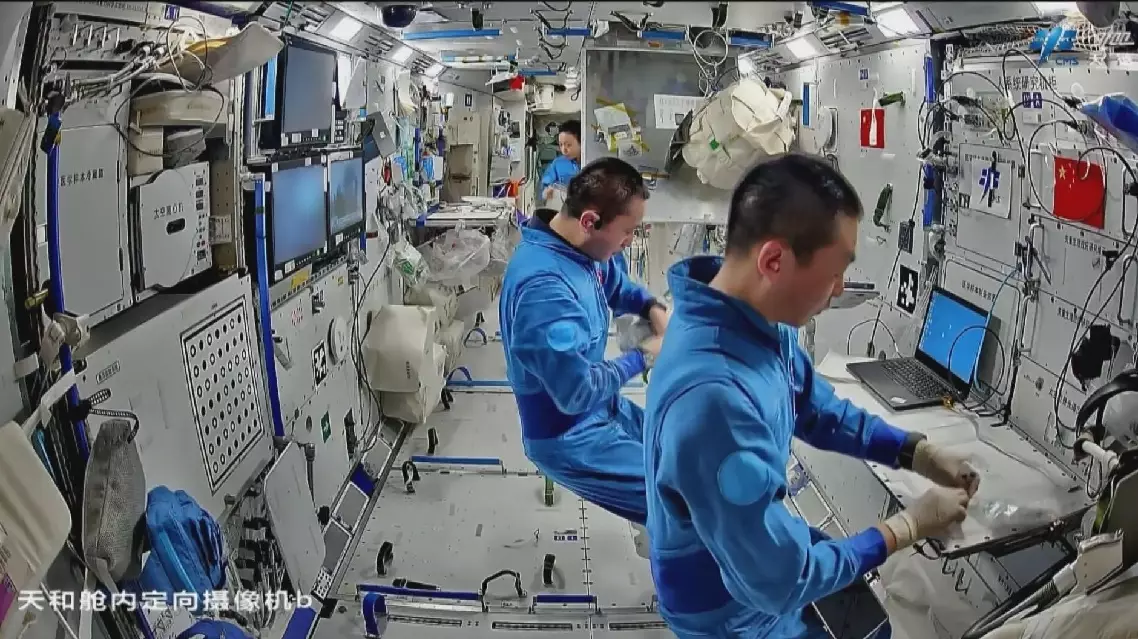
China's space station delivers major scientific returns in four years since completion