Skip to Content Facebook Feature Image

IMF says African economies performing well despite shocks from the Iran war

News

IMF says African economies performing well despite shocks from the Iran war
News

News

IMF says African economies performing well despite shocks from the Iran war

2026-10-15 20:05 Last Updated At:20:30

BANGKOK (AP) — African economies have managed to weather fairly well the energy crisis brought on by the Iran war, but a decline in aid has left the continent vulnerable to future shocks, the head of the International Monetary Fund’s Africa department said Thursday.

The IMF forecasts growth in Africa at 4.5% this year, slightly higher than its earlier estimate, recovering to 5% in 2027. But development assistance for the continent fell sharply last year and is forecast to fall another 12% this year, Zeine Zeidane said at a meeting of the IMF and World Bank in Bangkok.

More Images
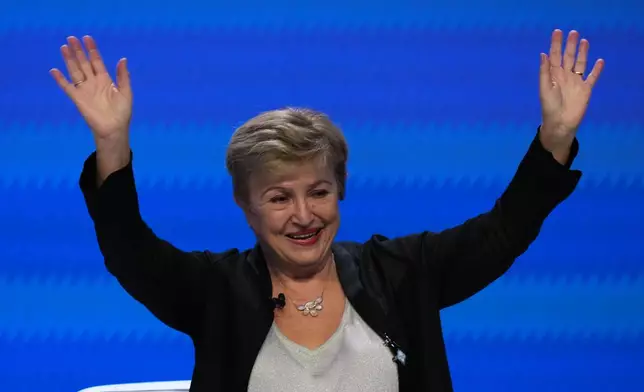
International Monetary Fund (IMF) Managing Director Kristalina Georgieva speaks on the Global Economy forum during the annual meetings of the International Monetary Fund and the World Bank Group in Bangkok, Thailand, Thursday, Oct. 15, 2026. (AP Photo/Sakchai Lalit)
International Monetary Fund (IMF) Managing Director Kristalina Georgieva speaks on the Global Economy forum during the annual meetings of the International Monetary Fund and the World Bank Group in Bangkok, Thailand, Thursday, Oct. 15, 2026. (AP Photo/Sakchai Lalit)
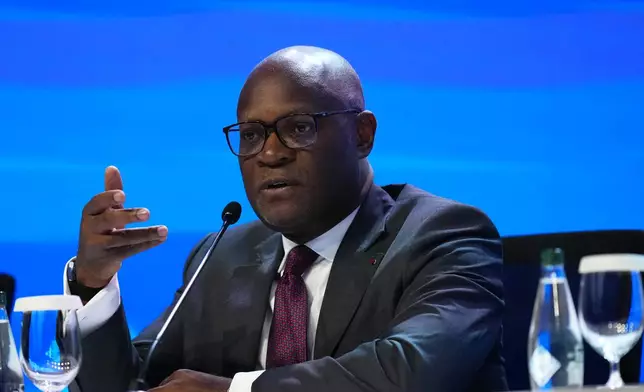
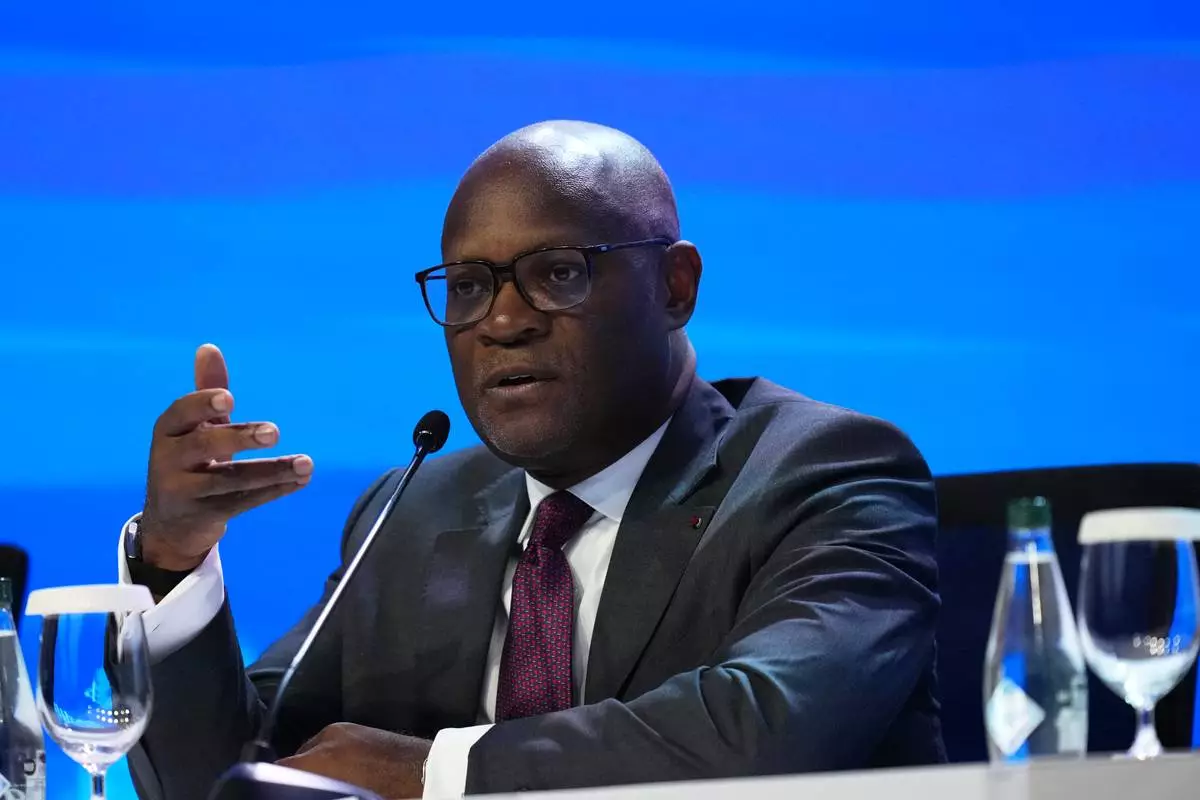
Congo Finance Minister Christian Yoka speaks at African Finance Ministers news conference during the annual meetings of the International Monetary Fund and the World Bank Group in Bangkok, Thailand, Thursday, Oct. 15, 2026. (AP Photo/Sakchai Lalit)
Congo Finance Minister Christian Yoka speaks at African Finance Ministers news conference during the annual meetings of the International Monetary Fund and the World Bank Group in Bangkok, Thailand, Thursday, Oct. 15, 2026. (AP Photo/Sakchai Lalit)

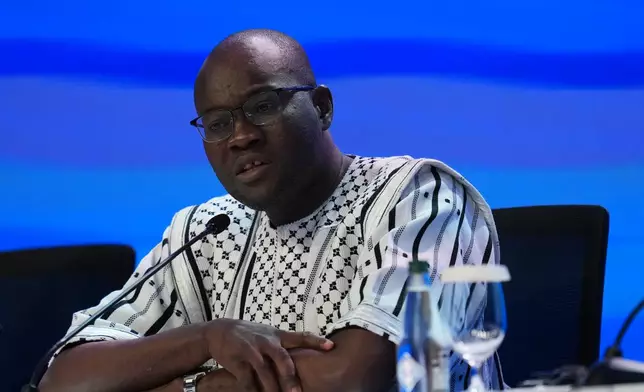
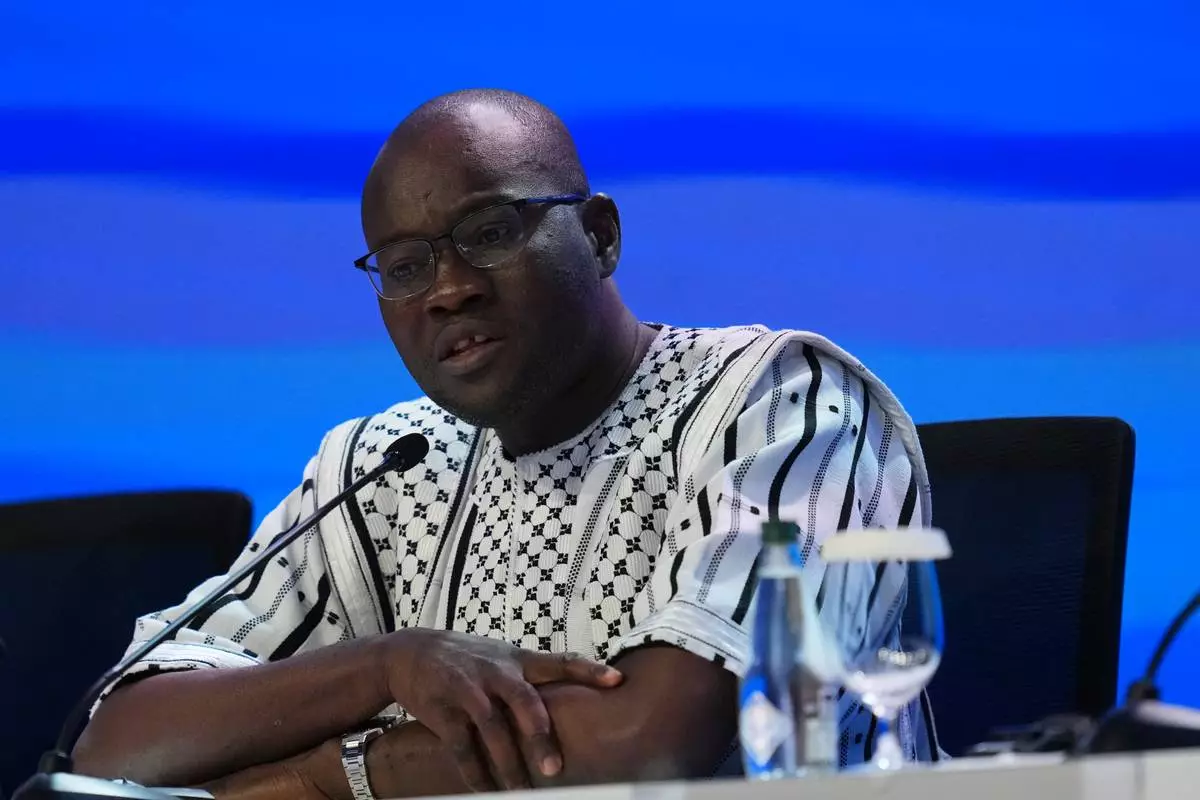
Burkina Faso Finance Minister Aboubakar Nacanabo speaks at African Finance Ministers a news conference during the annual meetings of the International Monetary Fund and the World Bank Group in Bangkok, Thailand, Thursday, Oct. 15, 2026. (AP Photo/Sakchai Lalit)

Burkina Faso Finance Minister Aboubakar Nacanabo speaks at African Finance Ministers a news conference during the annual meetings of the International Monetary Fund and the World Bank Group in Bangkok, Thailand, Thursday, Oct. 15, 2026. (AP Photo/Sakchai Lalit)

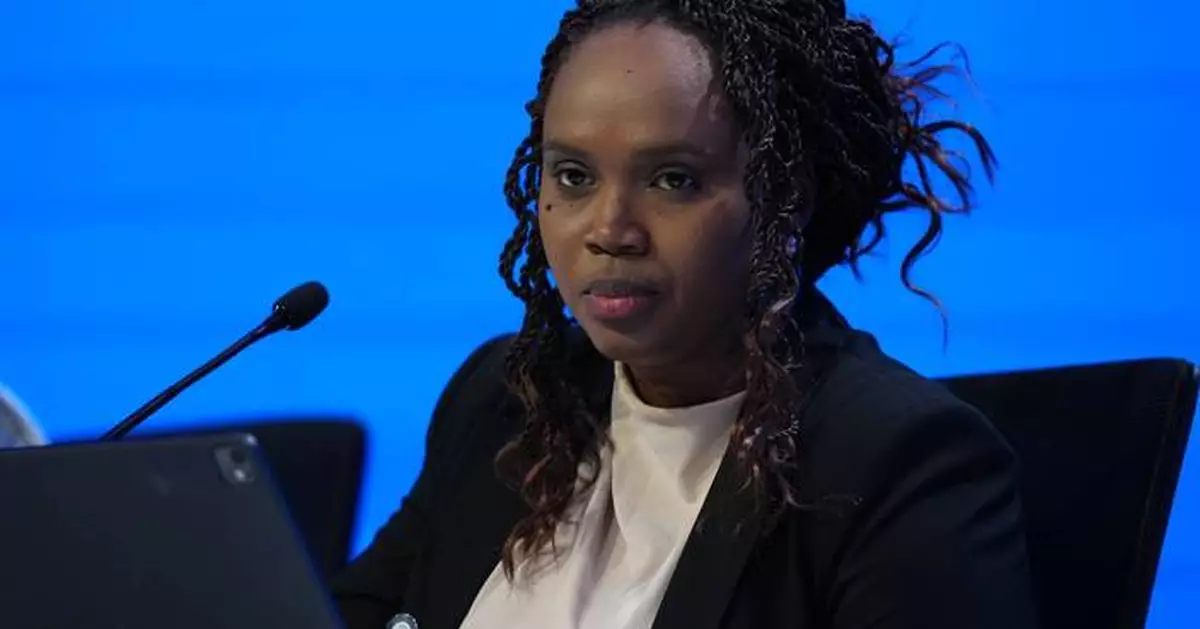
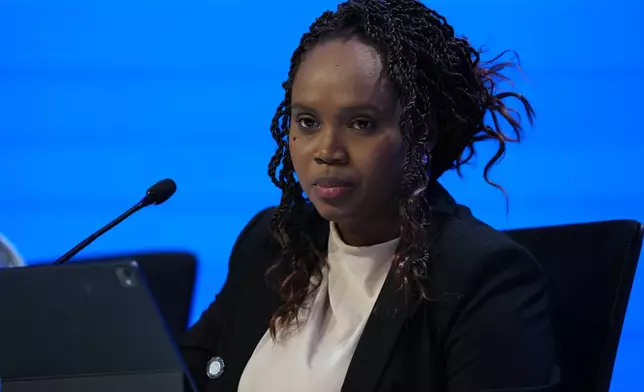
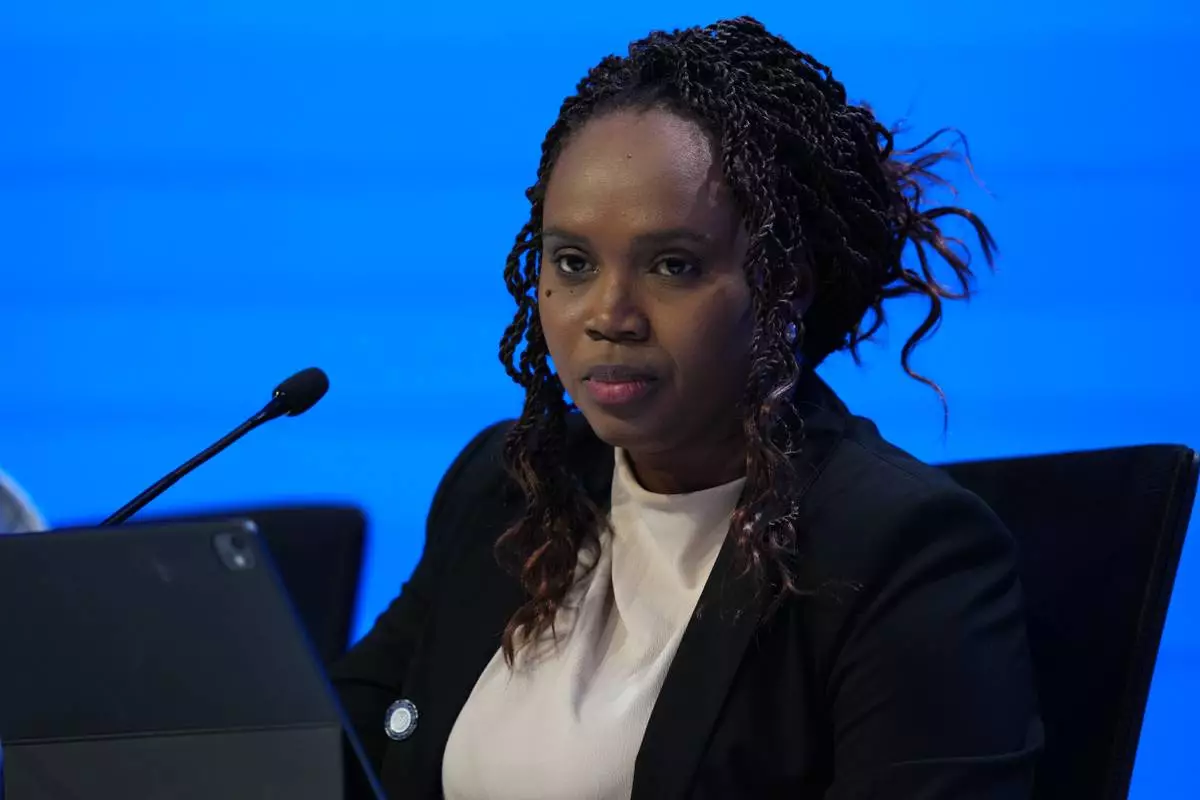
Guinea Finance Minister Mariama Sylla speaks at African Finance Ministers news conference during the annual meetings of the International Monetary Fund and the World Bank Group in Bangkok, Thailand, Thursday, Oct. 15, 2026. (AP Photo/Sakchai Lalit)

Guinea Finance Minister Mariama Sylla speaks at African Finance Ministers news conference during the annual meetings of the International Monetary Fund and the World Bank Group in Bangkok, Thailand, Thursday, Oct. 15, 2026. (AP Photo/Sakchai Lalit)

“That leaves the region with little room to absorb another shock. Renewed disruption to energy supplies, a sharp increase in global risk aversion, or a strong El Nino could all intensify pressures,” he told reporters.

Persisting conflict and insecurity are other drags on the regional economy, posing a threat to food security in some regions.

“Overall risks remain firmly tilted to the downside and the challenges are significant, but so is the region’s ability to adapt and move forward,” Zeidane said.

Many African nations have enacted reforms to improve their economic resilience, and some are benefiting from surging prices for their exports of critical minerals used in advanced technologies such as artificial intelligence.

The IMF has urged those countries to use those windfalls wisely and adopt AI to improve their competitiveness.

Some African finance ministers attending the Bangkok meetings outlined strategies for fostering job creation and sustainable growth.

Mariama Cire Sylla, the minister of Economy, Finance and Budget for the Republic of Guinea, said a railway project linking mines in Simandou to the coast was part of a long-term economic transformation program.

Guinea has rich mineral resources, but half its people live in poverty. The government is banking on the Simandou iron ore project to boost the economy.

“How can we leverage mining to really develop other sectors and diversify the economy,” Sylla said. “It’s really critical because financial resources are scarce. We need to create enclaves of investment. We need to create growth poles.”

Ensuring African countries benefit more from their valuable strategic resources such as gold, cobalt and copper is vital, said Aboubakar Nacanabo, finance minister of Burkina Faso.

Burkina Faso, a major gold exporter, has opened its first gold refinery as its military-led government seeks greater economic sovereignty after severing ties with traditional Western partners.

Governments across West Africa have been moving to reclaim control over their natural resources by rewriting mining codes, banning exports of raw produce and boosting government ownership. Guinea and Ghana recently restricted gold exports. Mali said it was building a gold refinery together with Russia’s Yadran Group and Ivory Coast has announced it will open one next year.

“The first step is to create the value chain,” Nacanabo said, “to create opportunity for our youth.”

The long-term impacts of AI on African economies, both direct and indirect, remain to be seen. But in the coming decade, the IMF estimates that “adoption, adaptation and scaling of AI” could increase economic growth by more than 4% over 10 years, Zeidane said.

“So, it’s not only about who benefits from AI, but the use of AI can actually make a big difference and in particular in sectors like agriculture where you have low productivity today, low yields compared to international yields, but also in education, health, government services,” he said.

Associated Press journalist Haruka Nuga contributed to this report.
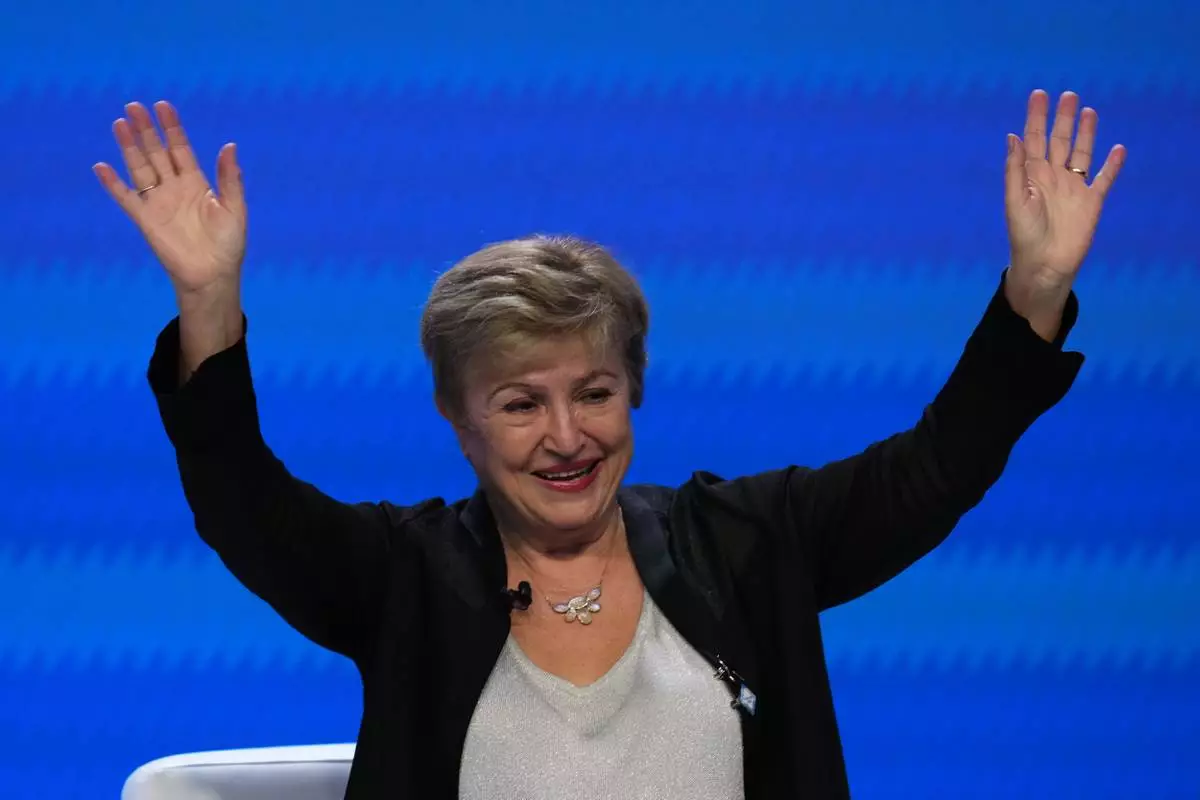
International Monetary Fund (IMF) Managing Director Kristalina Georgieva speaks on the Global Economy forum during the annual meetings of the International Monetary Fund and the World Bank Group in Bangkok, Thailand, Thursday, Oct. 15, 2026. (AP Photo/Sakchai Lalit)
International Monetary Fund (IMF) Managing Director Kristalina Georgieva speaks on the Global Economy forum during the annual meetings of the International Monetary Fund and the World Bank Group in Bangkok, Thailand, Thursday, Oct. 15, 2026. (AP Photo/Sakchai Lalit)
Congo Finance Minister Christian Yoka speaks at African Finance Ministers news conference during the annual meetings of the International Monetary Fund and the World Bank Group in Bangkok, Thailand, Thursday, Oct. 15, 2026. (AP Photo/Sakchai Lalit)
Congo Finance Minister Christian Yoka speaks at African Finance Ministers news conference during the annual meetings of the International Monetary Fund and the World Bank Group in Bangkok, Thailand, Thursday, Oct. 15, 2026. (AP Photo/Sakchai Lalit)

Burkina Faso Finance Minister Aboubakar Nacanabo speaks at African Finance Ministers a news conference during the annual meetings of the International Monetary Fund and the World Bank Group in Bangkok, Thailand, Thursday, Oct. 15, 2026. (AP Photo/Sakchai Lalit)
Burkina Faso Finance Minister Aboubakar Nacanabo speaks at African Finance Ministers a news conference during the annual meetings of the International Monetary Fund and the World Bank Group in Bangkok, Thailand, Thursday, Oct. 15, 2026. (AP Photo/Sakchai Lalit)

Guinea Finance Minister Mariama Sylla speaks at African Finance Ministers news conference during the annual meetings of the International Monetary Fund and the World Bank Group in Bangkok, Thailand, Thursday, Oct. 15, 2026. (AP Photo/Sakchai Lalit)
Guinea Finance Minister Mariama Sylla speaks at African Finance Ministers news conference during the annual meetings of the International Monetary Fund and the World Bank Group in Bangkok, Thailand, Thursday, Oct. 15, 2026. (AP Photo/Sakchai Lalit)

LONDON (AP) — Jeffrey Donaldson, the former leader of Northern Ireland’s largest unionist party, was sentenced on Thursday to 15 years in prison for the rape and sex abuse of two girls decades ago.

The judge said that Donaldson, 63, had expressed no “regret, apology or shame” for crimes that had blighted the victims' lives.

Donaldson was one of Northern Ireland's best-known politicians until his arrest stunned his political colleagues and wider society two years ago.

He was convicted in June of one count of rape, four counts of gross indecency and 13 indecent assault charges involving two girls between 1985 and 2008. He had denied the charges.

Donaldson led the Democratic Unionist Party, the biggest party in favor of keeping Northern Ireland in the United Kingdom, from 2021 until 2024. He resigned as leader of the conservative DUP after his arrest and gave up the seat in the U.K. House of Commons that he had held since 1997.

The DUP said in a statement that Donaldson “deserves every day of the lengthy prison sentence he has to serve” for his “vile and disgusting crimes.”

Judge Paul Ramsey said that the ex-politician had undergone a “catastrophic descent into disgrace.” He sentenced him at Newry Crown Court, south of Belfast, to 11 years for offenses against one victim and four years for the other, to run consecutively.

“There has not been, and doubtless will not be, one word of regret, apology or shame from this man to at least provide his victims with some crumb of comfort,” the judge said.

Donaldson’s wife, Eleanor Donaldson, 60, was found to have aided and abetted her husband’s offenses for witnessing the abuse and doing nothing to intervene. Because of mental health issues, she faced only a fact-finding hearing that couldn’t result in a conviction.

The two victims testified that Donaldson groped them when they were around primary school age. The older of the two, referred to in court as Complainant B, said that he raped her.

The Associated Press doesn’t name victims of alleged sexual violence, and U.K. law protects their identities from the media for life.

During his trial, Donaldson denied all the allegations against him. He testified that the rape “just didn’t happen.”

Catherine Kierans, the head of the Public Prosecution Service for Northern Ireland's Serious Crime Unit, said that Donaldson “has never accepted responsibility for his offending, nor shown any remorse.”

“This case shows that sexual abuse can be hidden behind a facade of respectability,” she said. “It also shows that no individual, irrespective of their position, status or public reputation, is beyond the reach of the law.”

The victims welcomed the sentence, but said nothing could undo the damage of Donaldson's crimes.

“My childhood was stolen from me and I will never get it back,” victim A said in a statement read by a police officer outside court.

“The conviction does not erase the abuse or undo the impact of what happened to me, and I will always carry the consequences of it.

“But those responsible do not control me now. They forever changed me, but they will not take my future. The cycle is being broken and it ends with me.”

Victim B said that “what happened to me as a child has affected everything since then, every day and every relationship I have ever had.

“I stood up, many years later, because for me this is about drawing a line in the sand and knowing that the Donaldsons can no longer hurt anyone else,” she said.

Donaldson’s lawyer, Kieran Vaughan, said at a presentencing hearing that his client had achieved “significant things in his life.”

“These convictions obliterate all those achievements he has made in his life,” he said.

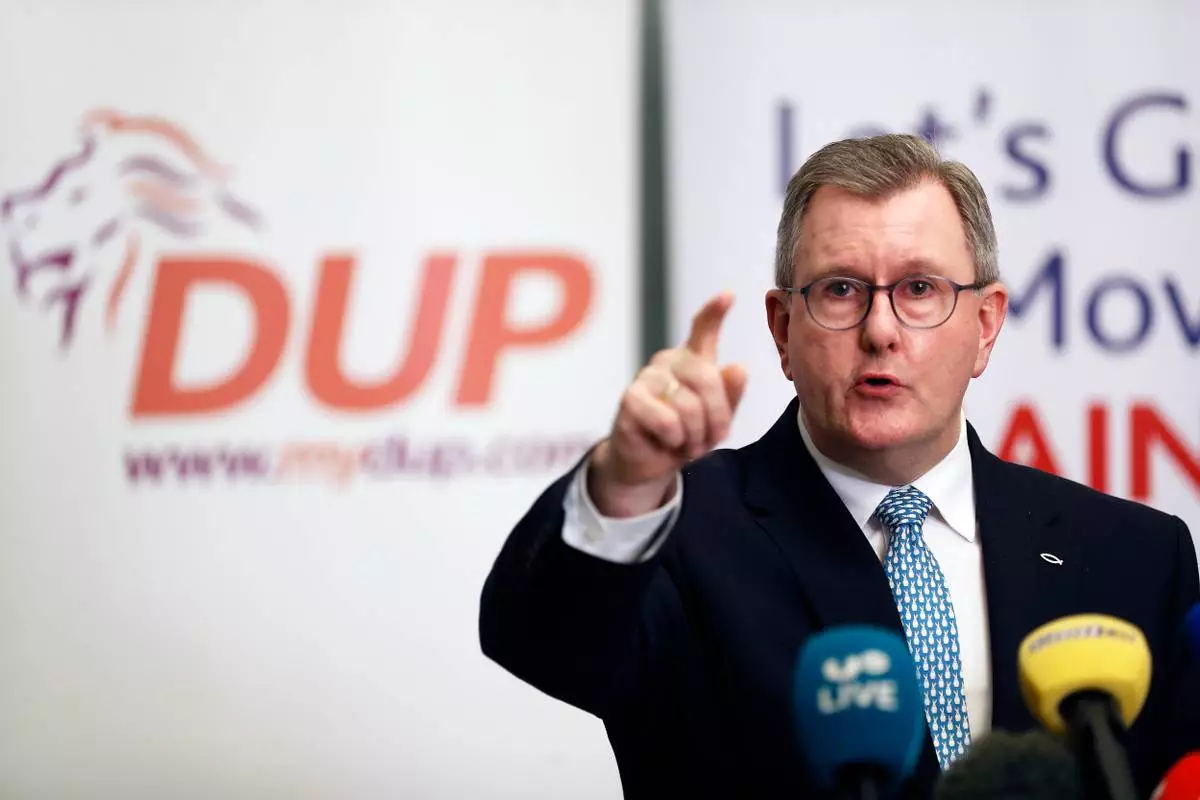
FILE - Democratic Unionist Party (DUP) leader Jeffrey Donaldson speaks to the media during a press conference at Hinch Distillery, Temple, Northern Ireland, on Jan. 30, 2024. (AP Photo/Peter Morrison, File)

FILE - Democratic Unionist Party (DUP) leader Jeffrey Donaldson speaks to the media during a press conference at Hinch Distillery, Temple, Northern Ireland, on Jan. 30, 2024. (AP Photo/Peter Morrison, File)

Recommended Articles