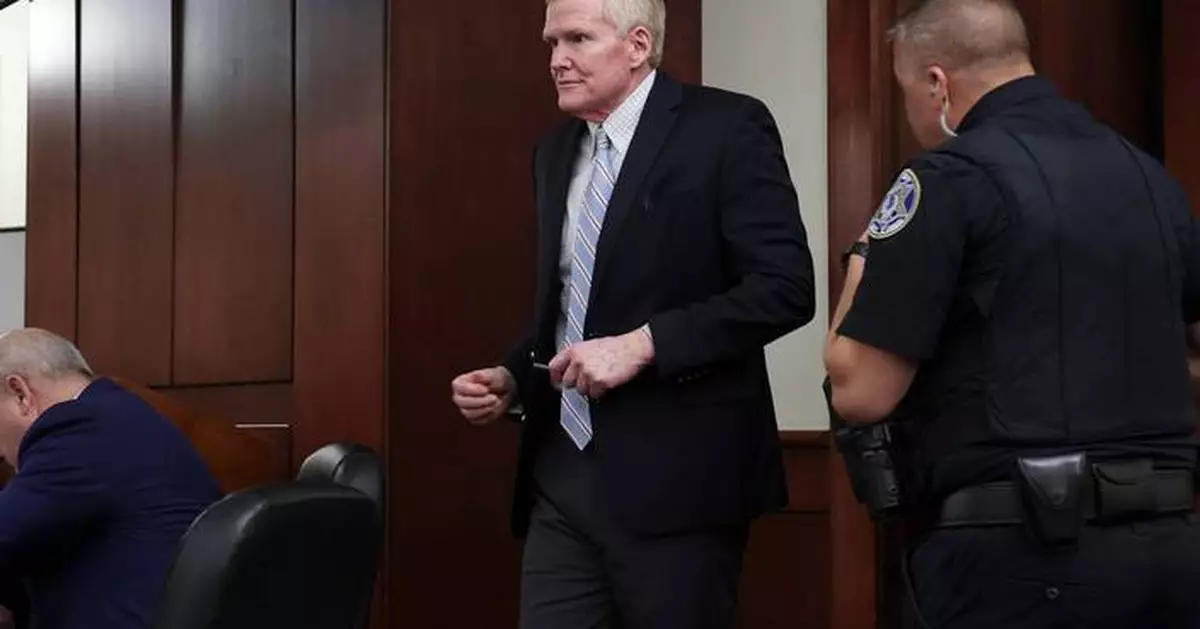
Prosecutors and lawyers for Alex Murdaugh are scheduled to return to court in South Carolina on Friday amid escalating disputes over evidence for his retrial next year on murder charges.
Murdaugh, 58, is scheduled to stand trial again in April on two murder charges in the June 2021 shooting deaths of his wife, Maggie, and younger son, Paul, at their home in Colleton County. He is expected in court Friday as he serves a lengthy prison sentence after pleading guilty to stealing from clients.
The South Carolina Supreme Court overturned the former lawyer's convictions earlier this year, ruling that a court clerk influenced jurors during his 2023 trial. The clerk told jurors to watch Murdaugh’s body language and not be fooled when he testified in his own defense.
Both sides are expected to dispute whether defense DNA experts can test the rest of a sample of genetic material found under the fingernails of Murdaugh’s wife. They’re also expected to argue over whether authorities must turn over ballistics and other evidence from shootings in eight surrounding counties involving the same type of gun as one of the weapons used in the killings.
Very little may be said about the most intriguing dispute of all.
Defense lawyers want to know whether prosecutors have called a grand jury to investigate a police officer who was friends with Murdaugh. Defense attorneys said that prosecutors suggested the officer arrived at Murdaugh’s home before other law enforcement officers and could have helped him hide bloody clothes or the weapons used in the killings. Neither the clothes nor the weapons have been found.
Murdaugh’s lawyers said the evidence is critical because prosecutors argued during his first trial that he acted alone. Prosecutors said no one else was at the home between the killings and Murdaugh’s return from visiting his mother, when he called 911 to report the shootings.
The defense says another person’s involvement would cast doubt on testimony from witnesses who said at Murdaugh’s 2023 murder trial that he acted alone. Murdaugh’s lawyers also demanded any evidence prosecutors have of possible accomplices or a grand jury investigation into them.
In response, prosecutors declined to say whether any evidence exists, citing legal restrictions on disclosing whether a grand jury is meeting.
Prosecutors and the defense have been getting crankier in their court filings.
After Murdaugh's lawyers accused the state of not sharing cellphone data, prosecutors wrote, “It’s hard to understand the inexplicably brazen and highly prejudicial falsehoods the defense puts in its public filings (or, as previously seen, on the record in open court). It is stunning, really. Facts matter.”
And when prosecutors offered all the data from a computerized scan of the crime scene before the hearing, Murdaugh's lawyers wrote in their response, “The defense is glad to hear it. It wishes only that the State had said so a month ago.”
While pretrial hearings are being held in Lexington County, the retrial has been moved to Sumter County, east of Columbia and about 80 miles (129 kilometers) from Colleton County. Judge Debra McCaslin determined that extensive publicity surrounding the case in Murdaugh’s home county could prevent a fair retrial.
The killings of Murdaugh’s wife and son and his subsequent six-week trial captivated the true crime world with a mix of treachery, corruption, money, power and Southern accents.
Regardless of what happens in his next murder trial, Murdaugh will remain in prison. He pleaded guilty to stealing around $12 million from his clients and is currently serving a 40-year federal sentence concurrently with a 27-year state sentence for his financial crimes.
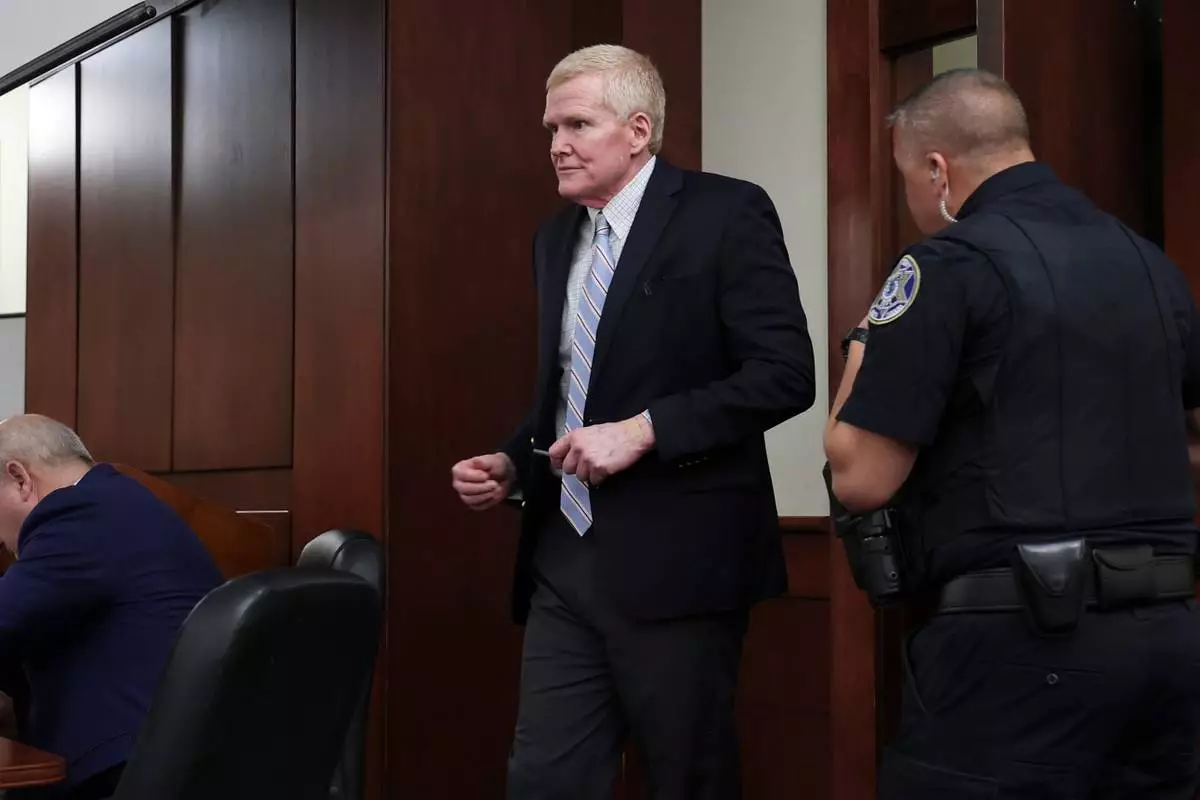
FILE - Alex Murdaugh enters the courtroom for a hearing, Aug. 14, 2026, at the Marc H. Westbrook Judicial Center in Lexington, S.C. (Tracy Glantz/Pool Photo via AP, File)
JERUSALEM (AP) — No commercial goods have entered the Gaza Strip for two days, Israeli authorities said Thursday, blaming the suspension on merchants angered by taxes imposed by Hamas — a claim that Palestinian importers deny.
The halt to commercial shipments, including fruit and winter clothing, cuts off a key source of food and other critical supplies as fears grow about procuring supplies needed to get through winter in the territory.
The move stands to immediately reduce Gaza's supplies, because the closed-off territory is completely reliant on whatever goods Israel allows in through border crossings.
Aid groups generally bring in staples such as flour, while merchants import more perishable foods like fruits and meat, according to data released earlier this year by COGAT, the Israeli military body that oversees humanitarian affairs in Gaza.
The suspension is raising fears about affordability, with humanitarian workers saying a combination of aid and a robust commercial market is needed to keep prices under control.
“The humanitarian sector on its own cannot meet the needs of all the people,” said Shaina Low, a spokesperson for the Norwegian Refugee Council, an aid group. “The markets need to be functioning.”
COGAT announced the suspension of commercial shipments Wednesday. Its deputy spokesperson, Lt. Daniel Kantorovich, said the agency was acting on a decision made by Palestinian merchants a day earlier and could reverse it at their behest.
“We were prepared to coordinate the entry of their trucks as usual, but the vendors informed us that they were cancelling the coordination due to Hamas’s taxation mechanism and threats against them,” Kantorovich said. “The merchants don’t want to bring goods into Gaza.”
The world’s leading authority on food insecurity reported earlier this year that conditions in Gaza had improved since famine was declared in the territory in August 2025, but were still at crisis levels. Most families in the war-battered enclave weren’t getting nearly enough to eat, said the report, adding that “even small disruptions to humanitarian access could rapidly reverse recent gains.”
Merchants in Gaza coordinate directly with vendors outside the territory, whose shipments are examined by Israel's military before entering Gaza.
In announcing the measure, COGAT claimed to be communicating a decision made by local merchants in Gaza who had grown tired of Hamas taxing their trucks and threatening them. Israel has long accused the militant group of levying fees on imports to fund its operations.
COGAT said no private-sector vendors had attempted to import goods to Gaza since the merchants alerted Israel on Tuesday.
But the head of Gaza’s private truckers union, Nahed Sheheiber, disputed Israel's account, saying they were the ones who had made the decision.
“The merchants are not the ones who stopped the shipments,” he said. “The Israeli coordinator is claiming that Gaza’s merchants are responsible, but the truth is that the Israelis are the ones who imposed the restrictions.”
Following COGAT's announcement, Sheheiber's union met with Gaza's Ministry of Economy to express concern and say Israel was citing fees levied by the ministry as a pretext to cut off commercial goods.
The ministry had been asking merchants to pay 10,000 shekels (about $3,226) per truck entering Gaza, Sheheiber said. At the meeting, ministry Undersecretary Khaled Al-Raqab told the union that the amount was not a tax, but rather a donation sought by the ministry to help pay civil servants in the strip.
It was not clear from the COGAT announcement if aid agencies would be allowed to increase shipments into Gaza to compensate for the loss in commercial goods.
The agency claimed that Gaza's population — of roughly 2 million people — required approximately 250 truckloads of goods each day. That's far below the minimum of 600 trucks a day stipulated by a ceasefire brokered by the U.S. a year ago.
The war started when Hamas-led militants killed some 1,200 people on Oct. 7, 2023, and took 251 hostages. Israel responded with a massive bombardment and a ground invasion that has killed more than 74,000 Palestinians, according to the Gaza Health Ministry.
That includes over 1,400 Palestinians killed since the ceasefire took effect, the ministry says. Sporadic attacks have killed five Israeli soldiers in Gaza in the same period.
The ministry, part of the Hamas-run government, maintains detailed records and is seen as generally reliable by U.N. agencies and independent experts. It does not distinguish between civilians and militants in its toll but says women and children make up around half the dead.
Mroue reported from Beirut.
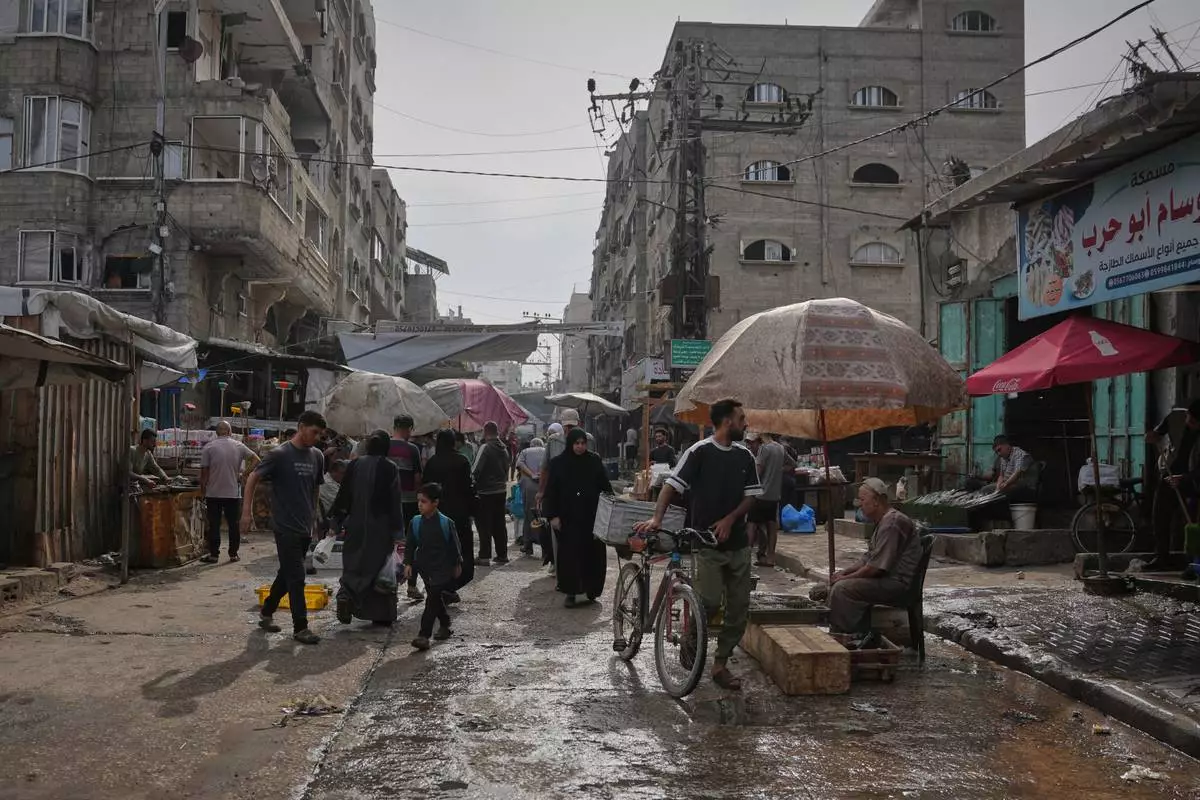
Palestinians walk through a market in the Al-Shati refugee camp in Gaza City on Wednesday, Oct. 14, 2026. (AP Photo/Abdel Kareem Hana)
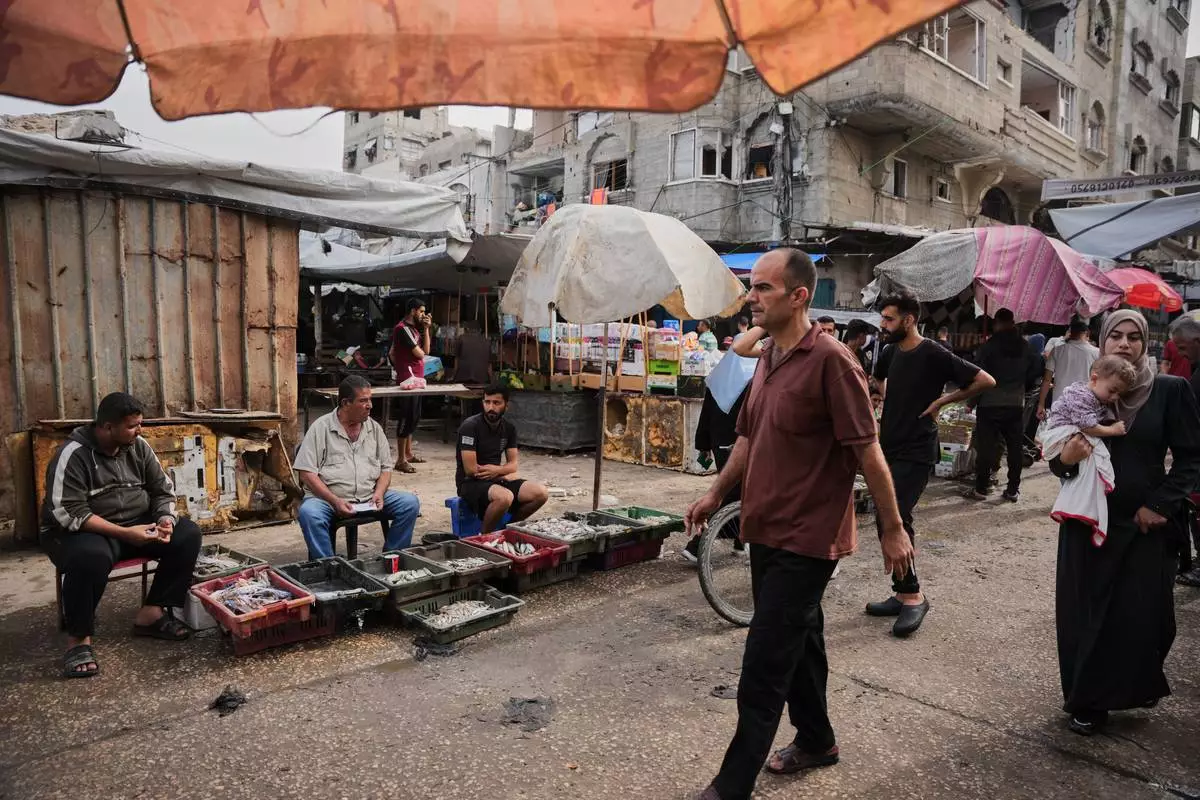
Palestinians walk through a market in the Al-Shati refugee camp in Gaza City on Wednesday, Oct. 14, 2026. (AP Photo/Abdel Kareem Hana)