Chinese Foreign Minister Wang Yi met with Israeli President Isaac Herzog upon request on the sidelines of the Seventh Summit of the Conference on Interaction and Confidence Building Measures in Asia (CICA) in Baku, capital of Azerbaijan, on Thursday.
At the meeting, Herzog noted that the Jewish and Chinese peoples have a long history of exchanges. During the struggle against fascism, the two peoples supported each other, forging a friendship and creating memorable stories in history, he said.
Israel firmly adheres to the one-China principle and is committed to advancing friendly relations with China. It is ready to take the 35th anniversary of the establishment of diplomatic relations between the two countries next year as an opportunity to promote exchanges and cooperation in such areas as science and technology, investment, and personnel exchanges, said Herzog.
Herzog shared Israel's views and position on the situation in the Middle East, saying Israel aspires to peace, not war, but faces threats and challenges to national security that must be addressed resolutely.
China has always been an important and constructive force for world and regional peace. Israel values China's initiatives and proposals, appreciates China's efforts to promote regional peace and stability, and is willing to maintain communication with China, said Herzog.
Wang, also a member of the Political Bureau of the Communist Party of China Central Committee, said that during World War II, both the Chinese and Israeli peoples suffered from war and turmoil, but lent each other support in times of hardship, giving rise to many touching stories. Since the establishment of diplomatic ties between China and Israel over 30 years ago, bilateral relations have continued to develop steadily, with practical cooperation delivering positive results. The foundation of this relationship lies in mutual respect, equality, and mutually beneficial cooperation.
Next year will mark the 35th anniversary of the establishment of diplomatic relations between China and Israel, as well as the 10th anniversary of the China-Israel innovative comprehensive partnership. China is ready to use this as an opportunity to review experience, promote cooperation, and further solidify the popular foundation of bilateral relations, Wang said.
Wang noted that promoting peace and reconciliation in the region is the cornerstone of China's Middle East policy. China has always believed that the Palestinian issue is the greatest historical injustice of this century, and the two-state solution is the correct path to its resolution.
As regional tensions continue, peace and tranquility remain out of reach. The most pressing task is to fully open access to the Gaza Strip, as two million civilians must not continue to struggle on the brink of survival, and a humanitarian disaster must not be allowed to persist, said Wang, adding that Israel should also cease and revoke the forcible establishment of settlements in the West Bank.
Wang stressed that since the beginning of this year, President Xi Jinping has put forward a series of initiatives and proposals to promote peace and security in the Middle East, which are China's contribution of public goods to the region and the world.
China is willing to work with the international community to uphold and practice a vision of common, comprehensive, cooperative, and sustainable security, and to promote an early return to dialogue and consultation by all parties in pursuit of a political solution to the conflict, he said.
Wang recalled that during his presidency, President Isaac Herzog's father promoted the establishment of diplomatic relations between China and Israel and was the first Israeli president to visit China. In his memoir, he wrote that compromise and negotiation do not always mean loss, but often bring important gains and lasting trust. In the current context, these words still carry meaning and inspiration. Wang said that the Palestinian issue is at the root of the Middle East issue, and both the Jewish and Palestinian peoples have the right to peaceful existence and to the establishment of their own independent states. China believes that as long as all parties can adhere to the vision of peace, maintain their resolve for peace, explore peace pathways that move toward each other, and stay committed to the right direction of the two-state solution, the peace that the people eagerly await will ultimately arrive, he said.
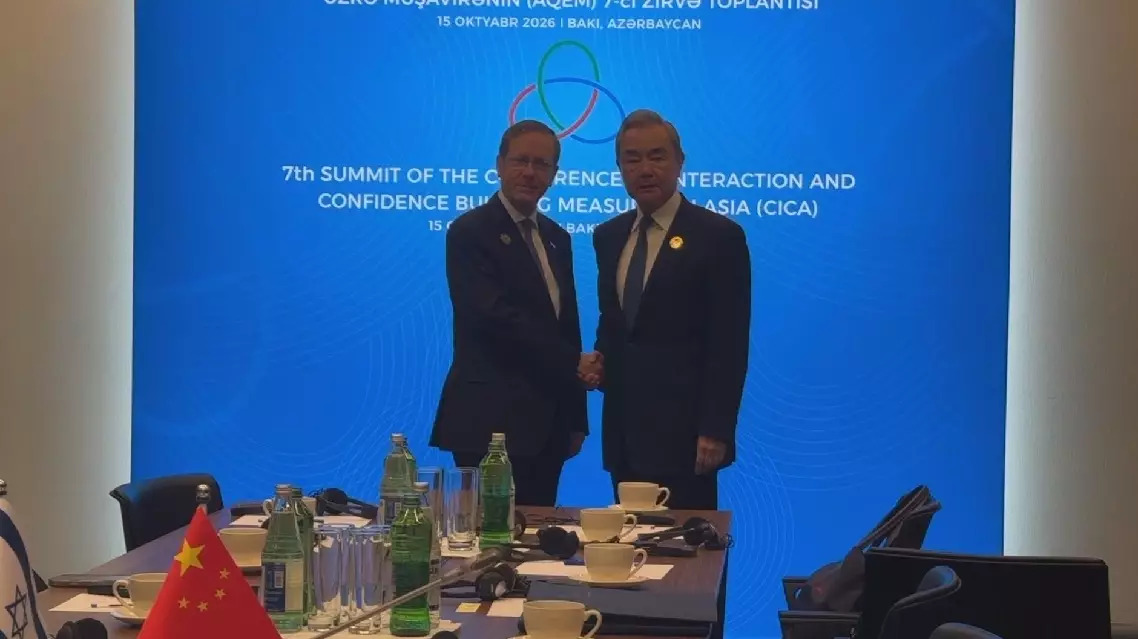
Chinese foreign minister meets Israeli president
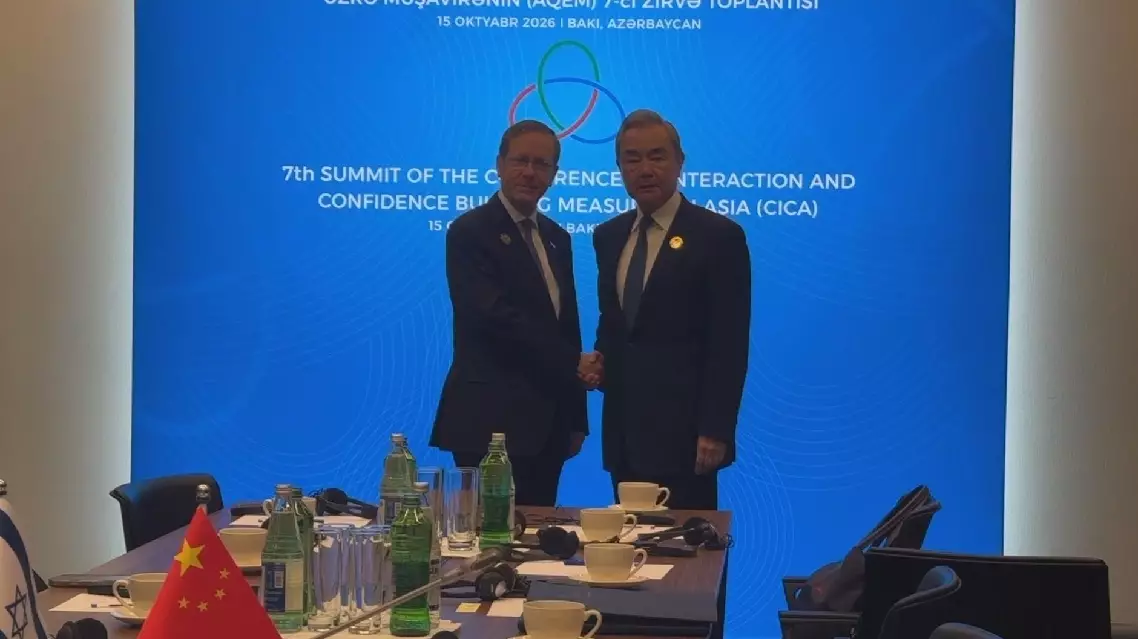
Chinese foreign minister meets Israeli president