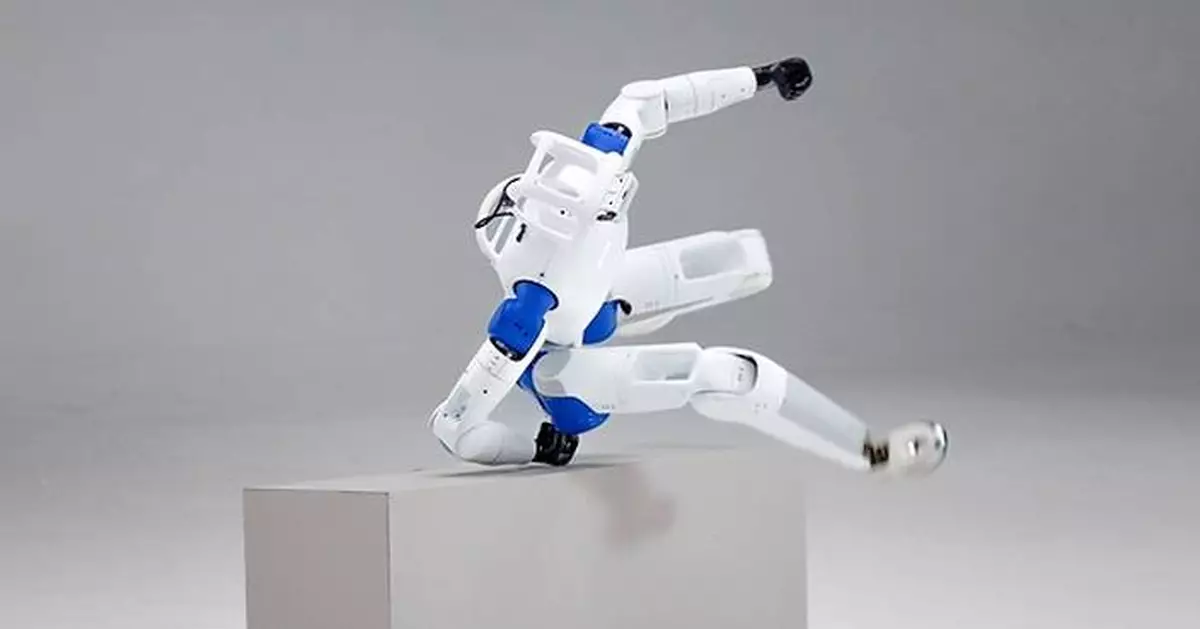
SHANGHAI, Oct. 16, 2026 /PRNewswire/ -- RoboParty today announced RP1 (ROBOTO 01), a high-performance, full-stack open-source humanoid platform for robotics research and embodied AI development. Combining access to core hardware and software with modular configurations, RP1 enables researchers to examine how the robot works, modify its systems and adapt it to their projects.
Researchers need to understand how hardware, control systems and learning algorithms interact, and how changes across those layers affect physical behavior.
RoboParty believes embodied AI should not be built on technological black boxes: every researcher should have the freedom to explore. By sharing engineering resources and development tools, the company aims to make one team's work a foundation that others can examine, extend and improve.
Full-Stack Open Source: From Hardware to Deployment
RP1's development stack spans mechanical structures, electronics, ROMOMO actuator technology, motion control, simulation, training and deployment. Technical documentation and research materials connect the robot's physical construction with the software that turns algorithms into actions.
Sharing these layers lets researchers work beyond predefined interfaces. When physical behavior differs from an algorithm's intended output, researchers can investigate the hardware, control methods and models involved. Access to control interfaces and execution feedback supports comparisons between training results and physical experiments, helping teams identify problems and refine their approaches.
PartyOS, under continuing development by RoboParty Lab, brings together motion control, motion retargeting and learning tools. Higher-level perception, interaction and task capabilities remain subject to further integration and validation, with additional software components planned for staged open-source release.
Designed for Research: Adapting the Robot to the Project
The Standard version stands approximately 1.3 meters tall and has 24 active degrees of freedom, supporting gait, balance and simulation-to-real research. RP1 Pro has 30 active degrees of freedom, including a two-axis neck and seven axes per arm, providing configuration options for end-to-end policy research, human-robot interaction and embodied data collection. Both counts exclude dexterous-hand degrees of freedom.
Interchangeable head modules and wrist-mounted end effectors, together with the RP Hand dexterous hand and expandable computing options, allow teams to configure the platform around manipulation and model-development experiments. Open-source hardware and software resources support modifications as research requirements change.
Teams can compare control methods on the same hardware or retain a method while investigating hardware changes. Robot models, software configurations and experiment records help researchers trace those differences and support repeated testing under documented conditions.
This gives teams a shared platform for different research questions, while keeping changes and test conditions visible. Each configuration still requires matching models, control settings and validation for the intended task.
About RoboParty
Founded in Shanghai in 2025, RoboParty develops humanoid hardware, motion control, software and open-source tools for robotics research and embodied AI development.
Github: github.com/Roboparty/RP1
Web : roboparty.com
Media : marketing@roboparty.com
** This press release is distributed by PR Newswire through automated distribution system, for which the client assumes full responsibility. **

No More Black Boxes: RoboParty Launches Full-Stack Open-Source RP1

No More Black Boxes: RoboParty Launches Full-Stack Open-Source RP1
Collaboration supports EU CRA readiness and cybersecurity planning for industrial and edge AI applications.
TAIPEI, Oct. 16, 2026 /PRNewswire/ -- Advantech, a global leader in IoT intelligent systems and embedded platforms, has signed a memorandum of understanding (MOU) with DEKRA, a global testing, inspection and certification organization, to strengthen cooperation on industrial cybersecurity compliance.
As the European Union's Cyber Resilience Act (CRA) is implemented in stages, manufacturers of industrial equipment and edge AI products need to address cybersecurity requirements earlier in product development. The partnership combines Advantech's industrial computing and application experience with DEKRA's cybersecurity testing and international certification expertise. It aims to help end customers and system integrators plan for EU CRA requirements and international standards such as IEC 62443, reduce compliance risks and avoid delays caused by late-stage changes.
Stan Zurkiewicz, CEO of DEKRA, said: "Digital trust is essential for industrial innovation to succeed in global markets. As AI and connected technologies become integral to manufacturing, energy and transportation, companies need verifiable evidence of safety and cybersecurity to build confidence in new technologies. Our collaboration with Advantech combines its industry experience with DEKRA's independent third-party testing and certification expertise. DEKRA's role is to provide independent assurance, helping companies navigate evolving international requirements and build trust in new technologies."
Miller Chang, President of Advantech's Embedded Sector, said at the signing ceremony: "As edge AI advances, customers increasingly need to consider compliance from the outset of product design. By combining Advantech's industrial computing and edge AI expertise with DEKRA's global testing and certification expertise, we aim to help customers identify regulatory requirements earlier, reduce compliance risks and shorten time to market, bringing trustworthy edge AI innovations to global markets more efficiently."
Planning for Cybersecurity Compliance from the Design Stage
The collaboration aims to help manufacturers consider cybersecurity and compliance requirements at an early stage of product development, drawing on DEKRA's independent testing and certification expertise. It will help customers identify regulatory and technical requirements across markets, plan assessment and certification pathways, and address potential cybersecurity gaps during development.
The scope includes independent technical assessments, documentation reviews, certification readiness assessments and cybersecurity testing to help manufacturers identify and address potential compliance gaps. Early planning can help reduce the time and costs associated with late-stage design changes and establish a clear compliance process from product concept and development through testing and market deployment.
First Milestone: AFE-E630 Security Functions Meet IEC 62443-4-2 SL2 Requirements
As an initial outcome of the collaboration, Advantech's AFE-E630 industrial edge system has passed an independent assessment by DEKRA and received an Attestation of Conformity (AoC). Designed for commercial and industrial energy storage management applications, the AFE-E630 has security functions that meet the relevant Security Level 2 (SL2) requirements of IEC 62443-4-2:2019 within the assessed scope. The assessment results provide a verified basis for product cybersecurity in these applications and a reference for customers' subsequent product integration and system-level compliance assessments.
Exploring Further Applications in Edge AI and Industry
Beyond existing industrial applications, Advantech and DEKRA plan to extend their cooperation to AI-enabled industrial systems, semiconductor manufacturing, robotics, drones and other safety-critical industrial applications, as well as energy and transportation applications.
As edge AI is integrated into physical equipment, product safety, functional safety and cybersecurity need to be considered together. The companies will combine Advantech's edge computing platforms and application experience with DEKRA's testing, cybersecurity and functional safety expertise to support the safety and trustworthiness of next-generation intelligent devices.
Through the MOU, Advantech and DEKRA will continue to develop their technical cooperation, helping customers address market-specific compliance requirements and prepare industrial and edge AI products for international deployment.
About DEKRA
For more than 100 years, DEKRA has been a trusted name in safety. Founded in 1925 with the original goal of improving road safety through vehicle inspections, DEKRA has grown to become the world's largest independent, non-listed expert organization in the field of testing, inspection, and certification. Today, as a global partner, the company supports its customers with comprehensive services and solutions to drive safety and sustainability forward. In 2025, DEKRA generated revenue of 4.4 billion euros. More than 48,000 employees are providing qualified and independent expert services in approximately 60 countries across five continents. DEKRA holds a Platinum sustainability rating from EcoVadis, placing it among the top 1% of the globally assessed companies.
** This press release is distributed by PR Newswire through automated distribution system, for which the client assumes full responsibility. **

Advantech and DEKRA Sign MOU to Advance Industrial Cybersecurity Compliance

Advantech and DEKRA Sign MOU to Advance Industrial Cybersecurity Compliance