CONCORD, N.H. (AP) — Kyle Cotner knew nothing about fall foliage when he trolled his White House colleagues in 2007, telling them he was an expert despite having grown up in Florida.
When autumn rolled around, he kept up the bit, sending out weekly newsletters with foliage statistics and information to a handful of co-workers. Today, he has mastered complex mapping systems, calls himself “Leaf Daddy” and owns The Foliage Report, a website that tracks fall color from coast to coast.
Click to Gallery
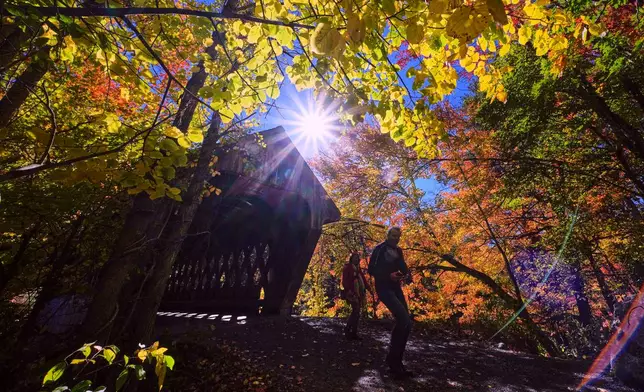
A couple walks through colorful foliage after walking across a covered bridge spanning the Contoocook River, Thursday, Oct. 15, 2026, in Henniker, N.H. (AP Photo/Charles Krupa)
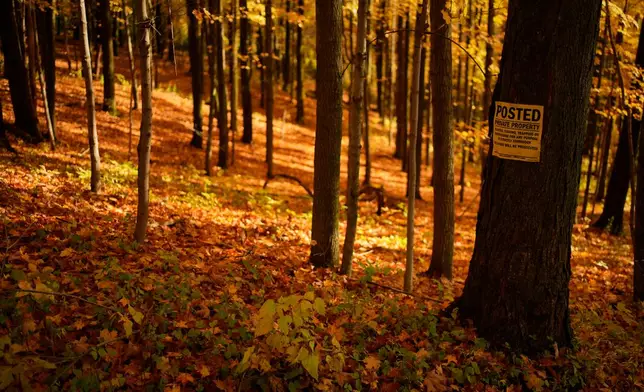
Fresh fallen hardwood leaves cover the forest floor in Ghent, N. Y., Monday, Oct. 12, 2026. (AP Photo/Robert F. Bukaty)

Water flows down the Big Poe Creek on an autumn day in Woodward, Pa., Wednesday, Oct. 14, 2026. (AP Photo/Matt Rourke)

Water flows down the Contoocook River passing the colorful foliage of trees towards a covered bridge, Thursday, Oct. 15, 2026, in Henniker, N.H. (AP Photo/Charles Krupa)
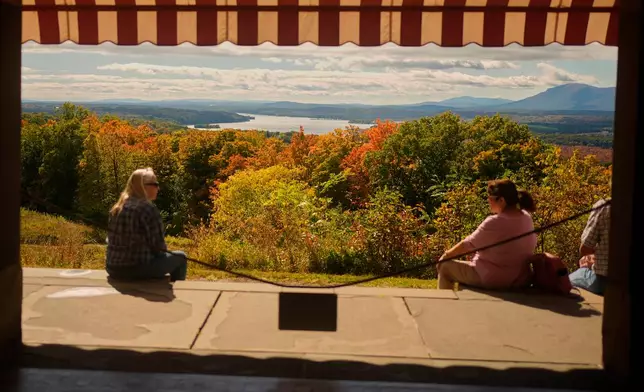
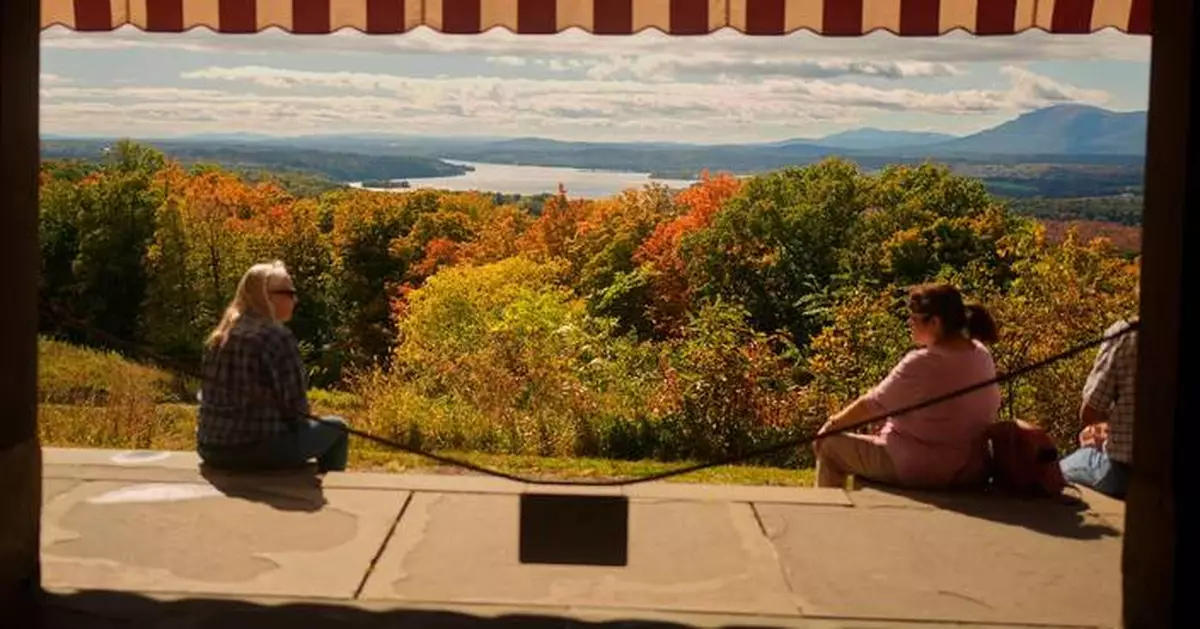
Colorful foliage adds to the view overlooking the Hudson River and Catskill Mountains at Olana, the former home of celebrated painter Frederic Church, Monday, Oct. 12, 2026, in Hudson, N.Y. (AP Photo/Robert F. Bukaty)
Thus, he was speaking with actual authority last week when he said 2026 has been a spectacular year for foliage in New England.
“I’ve been doing this for almost 20 years, and this is the best I’ve seen of New England in that time,” he said. “2020 was a very good year, but this one seems elite to me.”
New England had adequate rain through the spring and summer, plus warm days and cool nights heading into fall, but that wasn’t the case elsewhere, he said.
Extreme drought conditions stressed trees in Colorado, for example, leading to a quick and lackluster foliage season. Aspens in Wyoming, Montana and Idaho aren’t as golden this year, he said. But Utah is a bright spot.
“They got enough rainfall in that area,” he said. “You basically want an average amount of precipitation to really bring out the most majestic and colorful leaves.”
Fall foliage is all about trees preparing for winter, according to experts at the University of New Hampshire Cooperative Extension.
Leaves exist to provide food for the tree. They absorb sunlight through a green pigment called chlorophyll, and that energy is used to convert water and carbon dioxide from the air into glucose, a type of sugar. As days shorten, the tree stops making food, allowing orange and yellow pigments that have been there all along to be unmasked. When sunny days are followed by cold nights, sugars get trapped in leaves, producing red pigments.
Eventually, the layer of cells between a twig and a leaf weakens, allowing leaves to be blown down during wind and rain. The timing varies widely by location. According to Cotner’s research, foliage season starts in Alaska in mid-August and ends in Florida in late December. Hawaii is the only U.S. state without fall foliage, he said.
For Kirk Giglio, leaf peeping provides an escape from his day job as a nurse in a cardiac and stroke unit of a Connecticut hospital. A photographer who frequently chases storms as well, he is used to studying maps and forecasts, and was hopeful by early September that this would be a good year. A recent trip to Maine, New Hampshire and Vermont with his fiancee confirmed it.
“I was just really kind of blown away,” he said, describing sunrise hikes and fog lifting to reveal vibrant colors in New Hampshire’s Crawford Notch and elsewhere. Though some spots were packed with tourists, he still found plenty of secluded and stunning scenery.
“The more I travel, the more I realize how much we take for granted up here,” he said. “In a world that is so modern and gray with these corporate, soulless colors that we see everywhere, the trees are one of the last things that make color anymore, so it’s nice to just observe, especially in a good year like this.”
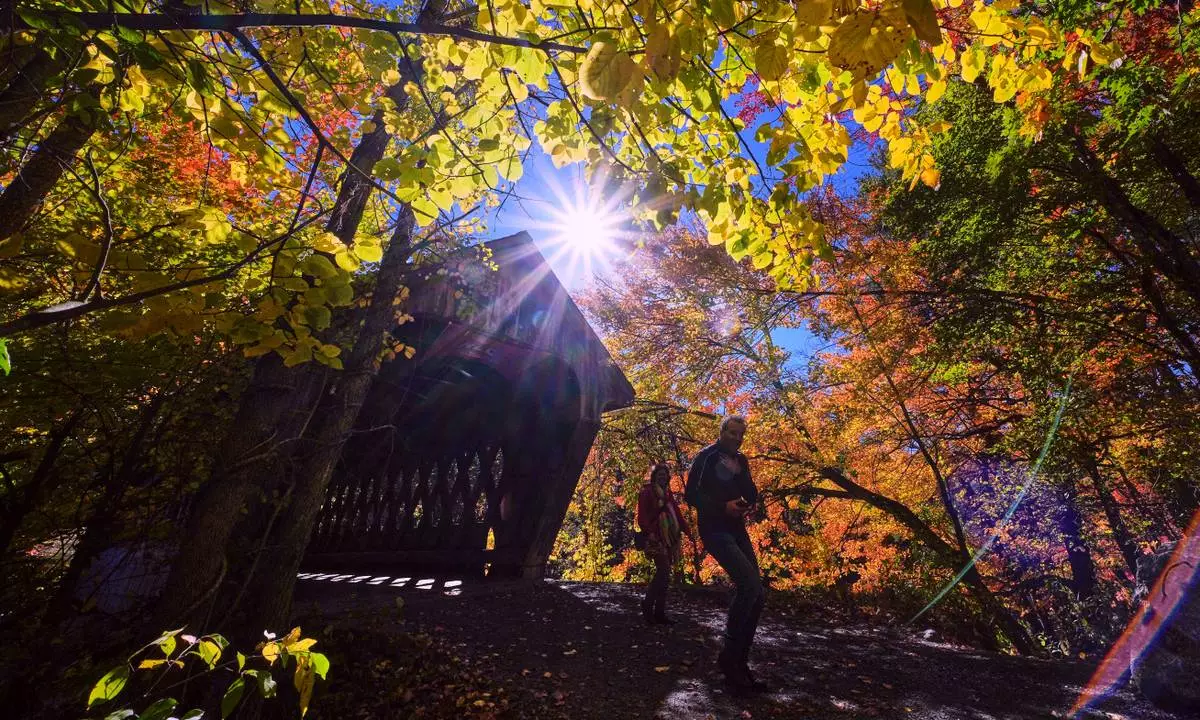
A couple walks through colorful foliage after walking across a covered bridge spanning the Contoocook River, Thursday, Oct. 15, 2026, in Henniker, N.H. (AP Photo/Charles Krupa)
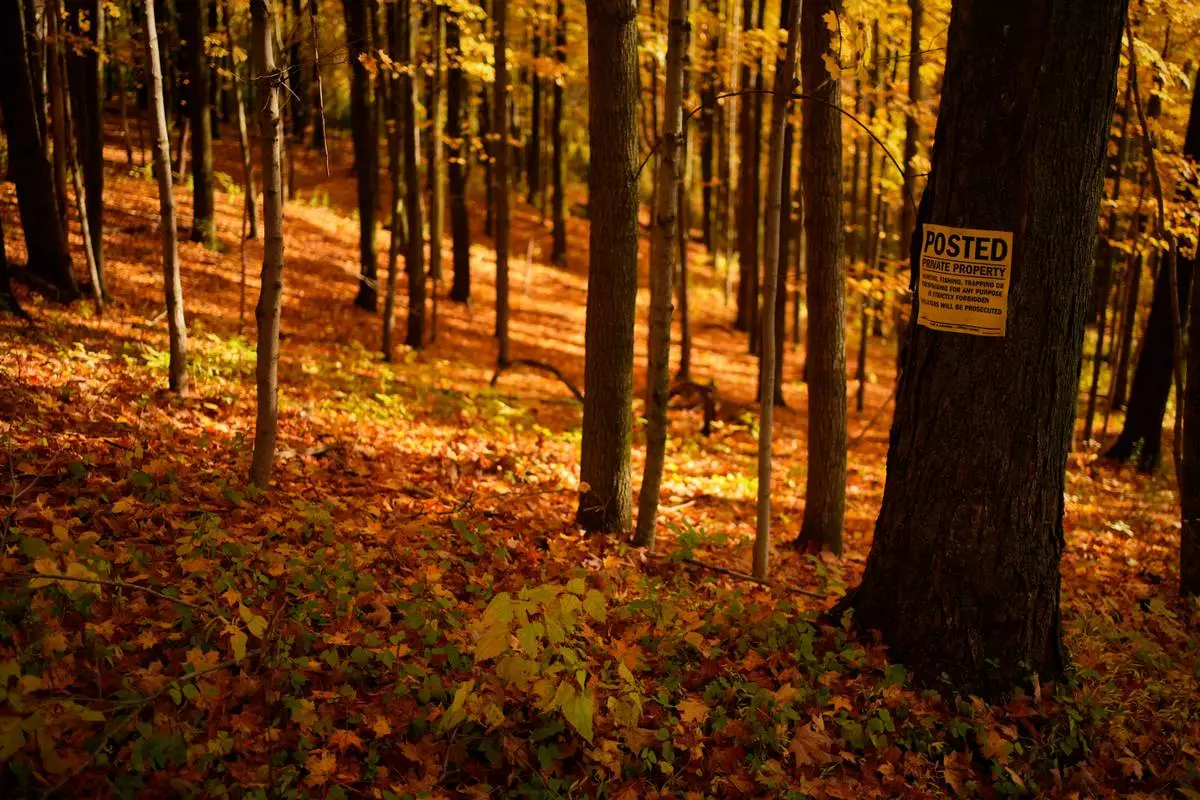
Fresh fallen hardwood leaves cover the forest floor in Ghent, N. Y., Monday, Oct. 12, 2026. (AP Photo/Robert F. Bukaty)
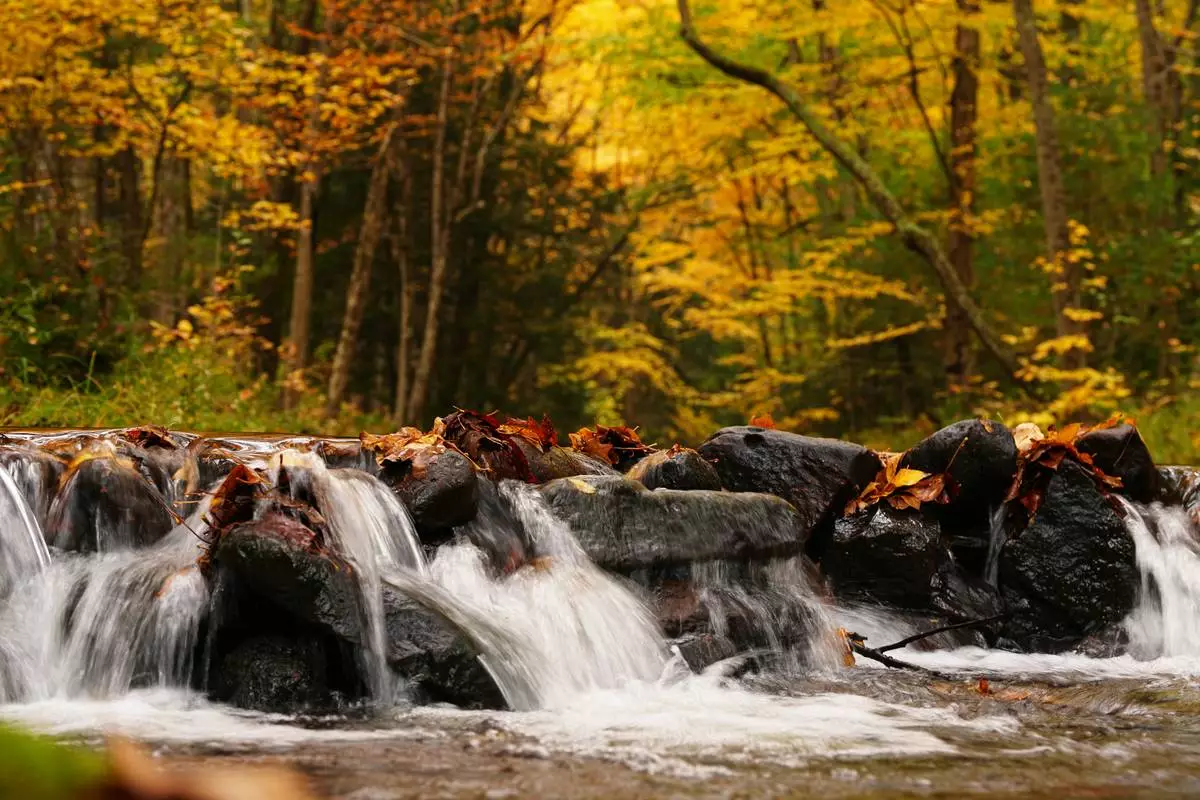
Water flows down the Big Poe Creek on an autumn day in Woodward, Pa., Wednesday, Oct. 14, 2026. (AP Photo/Matt Rourke)
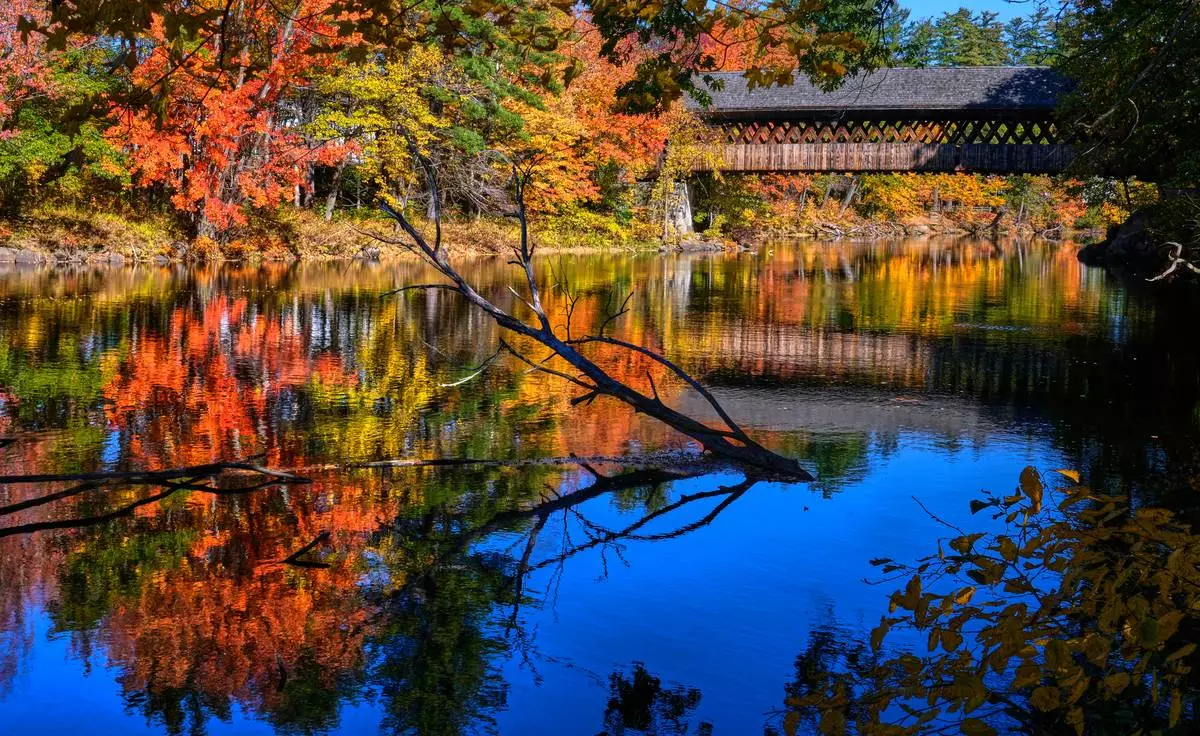
Water flows down the Contoocook River passing the colorful foliage of trees towards a covered bridge, Thursday, Oct. 15, 2026, in Henniker, N.H. (AP Photo/Charles Krupa)
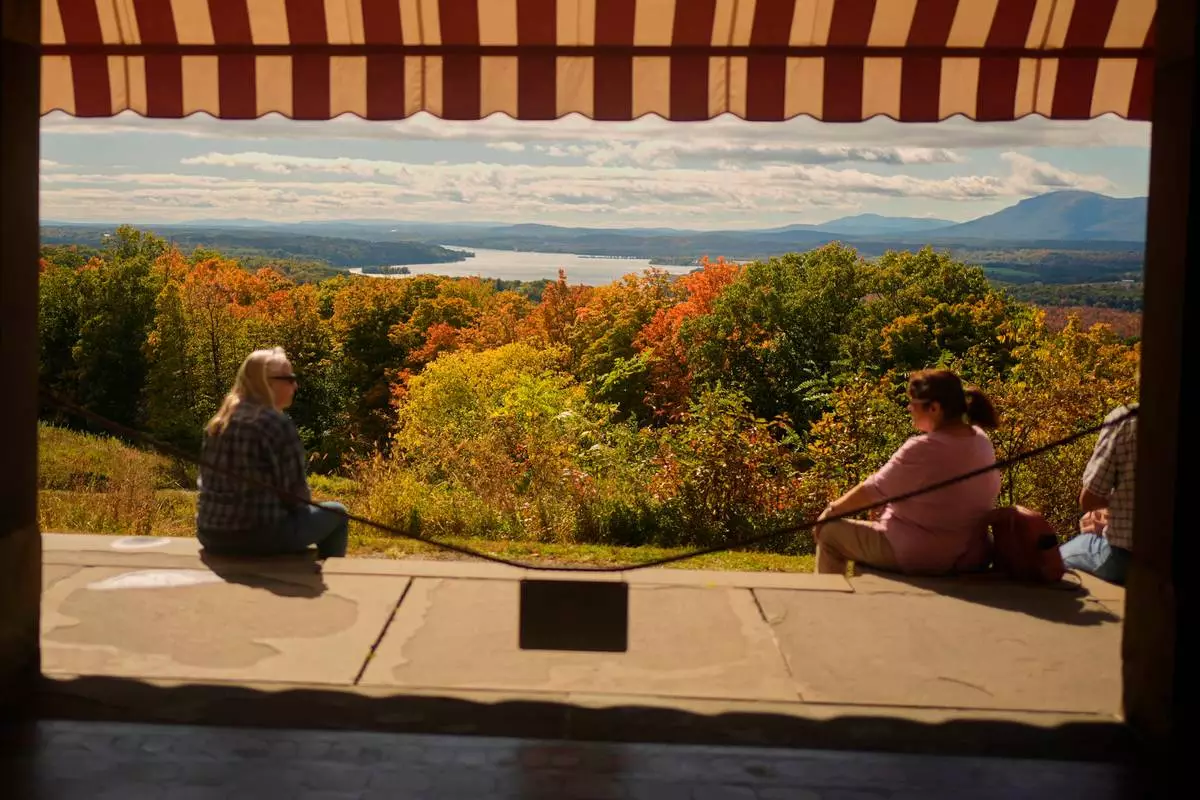
Colorful foliage adds to the view overlooking the Hudson River and Catskill Mountains at Olana, the former home of celebrated painter Frederic Church, Monday, Oct. 12, 2026, in Hudson, N.Y. (AP Photo/Robert F. Bukaty)

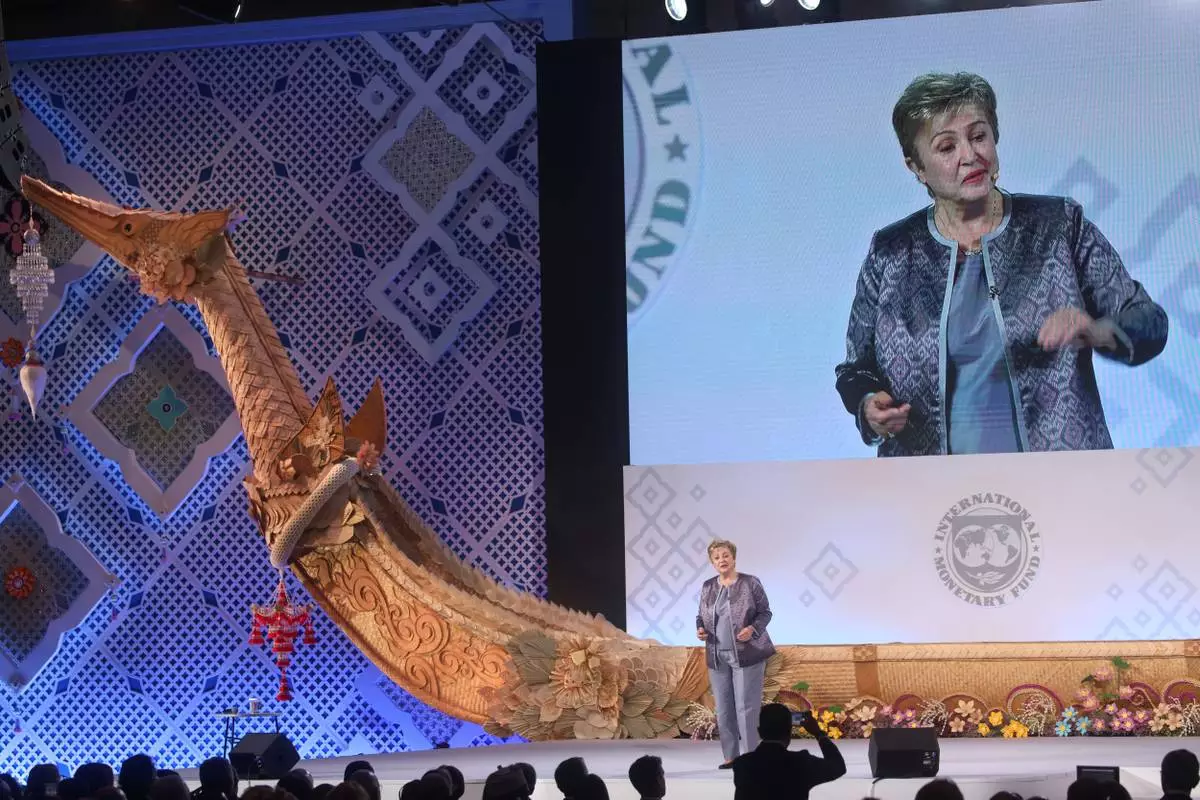
BANGKOK (AP) — Guardrails are urgently needed to contain potential risks from the boom in artificial intelligence, the head of the International Monetary Fund said Friday, likening the technology to a Formula 1 race car that might go off the track and run people over.
“We are racing, and the question is how do we put barriers? So if a car was to fly out it doesn’t kill people,” IMF Managing Director Kristalina Georgieva said.
“I have high respect for the industry. I think what you’re doing is incredibly important for humanity. You may give us the biggest gift, but if the car runs over people, that gift may not be so worthwhile,” she said while speaking on a panel on the impact of AI on the world economy along with experts including Anthropic co-founder and head of policy Jack Clark.
Clark is among technology industry leaders pushing for faster action on regulating AI. In a blog post last month, the rival to OpenAI proposed that the world’s top artificial intelligence companies come up with a coordinated way to pause development of advanced AI systems, warning the technology is improving so quickly there’s a risk humans would lose control.
“I think it’s worse than you describe. I think it’s Formula 1 at night without maybe brakes in the cars,” Clark said. “And it’s remarkable to me that the toys I buy for my children are regulated more than the literal superintelligence I work on at my day job.”
He added that the effort to build policy frameworks to regulate AI is underway.
“The world is now taking this seriously, and I think if we take it seriously, we are going to be able to get our arms around it,” Clark said. “But it cannot only be companies making these decisions. And if we’re negligent about this, we’re going to get some form of chaos.”
The impact of AI on jobs is yet to be fully understood, but an IMF study found three main trends. About 10% of jobs might be transformed or newly created, while work involving repetitive tasks will be gone, Georgieva said.
The third category will be service sector jobs generated by people who benefit from the investment boom.
“The net impact is positive," she said, though she added that “services don’t pay a lot.”
“So you get young people who normally would have gone into professional routine jobs now serving coffee in Starbucks. And that is not what I think young people in the world aspire for,” she said.
Tiff Macklem, the governor of the Bank of Canada, compared that to the effects on employment from more open trade, which has generated great global wealth and raised millions out of poverty. But many millions also lost their livelihoods as manufacturers moved jobs to China and other developing countries.
He said “in aggregate there is an overall benefit,” but acknowledged that in both trade and technology “there will be winners and losers.”
“You have to find a way to help the losers," Macklem said. “Without a system to help them cope with the loss you get a backlash.”
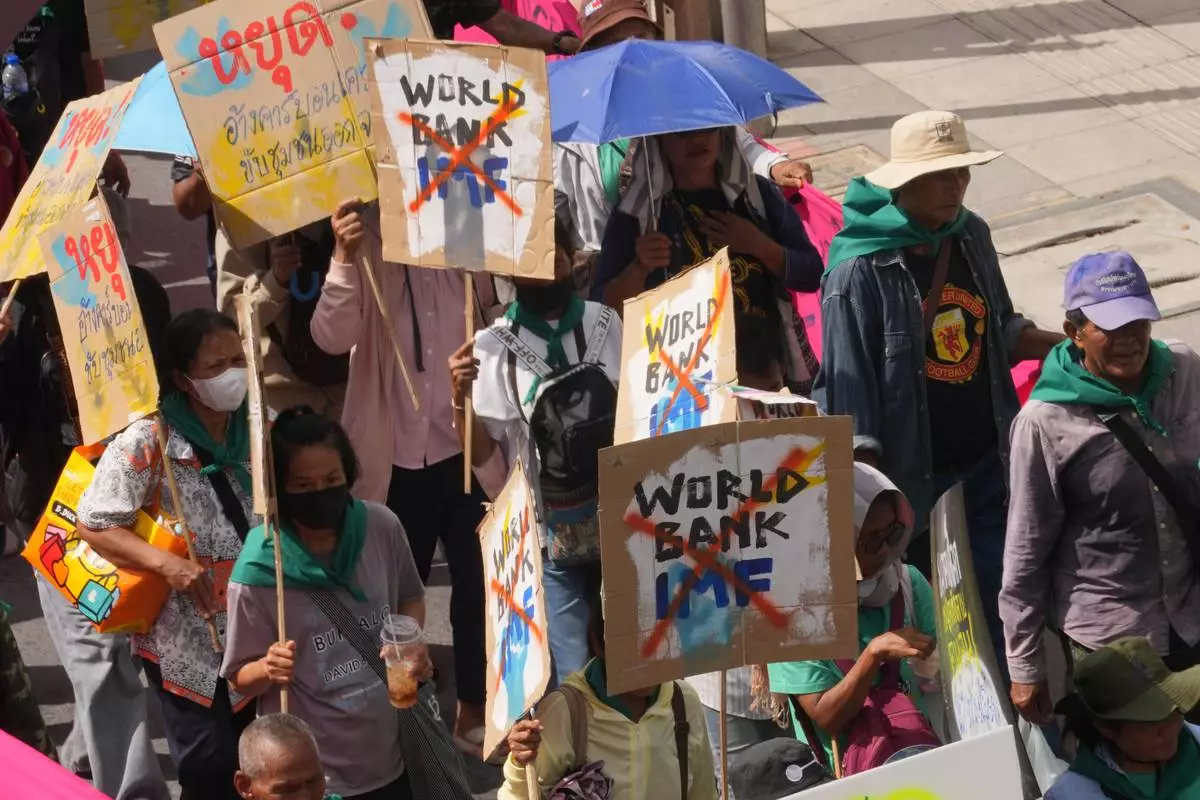
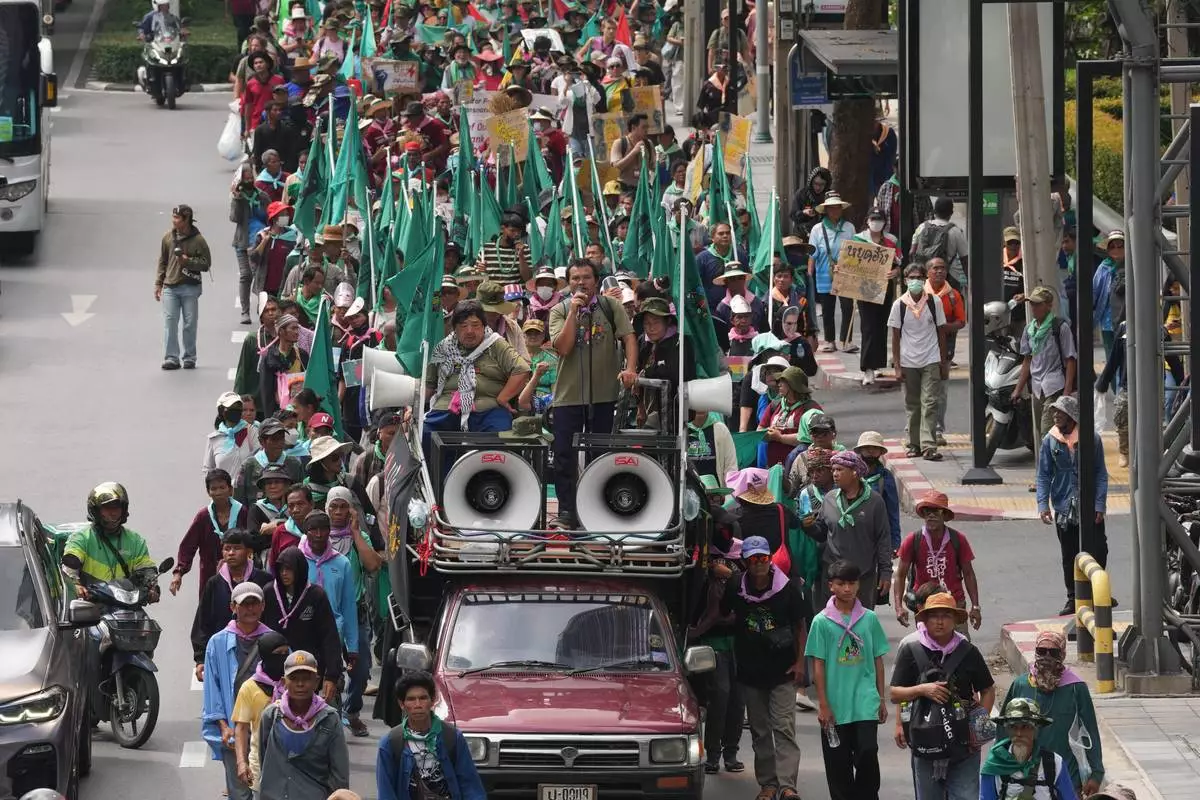
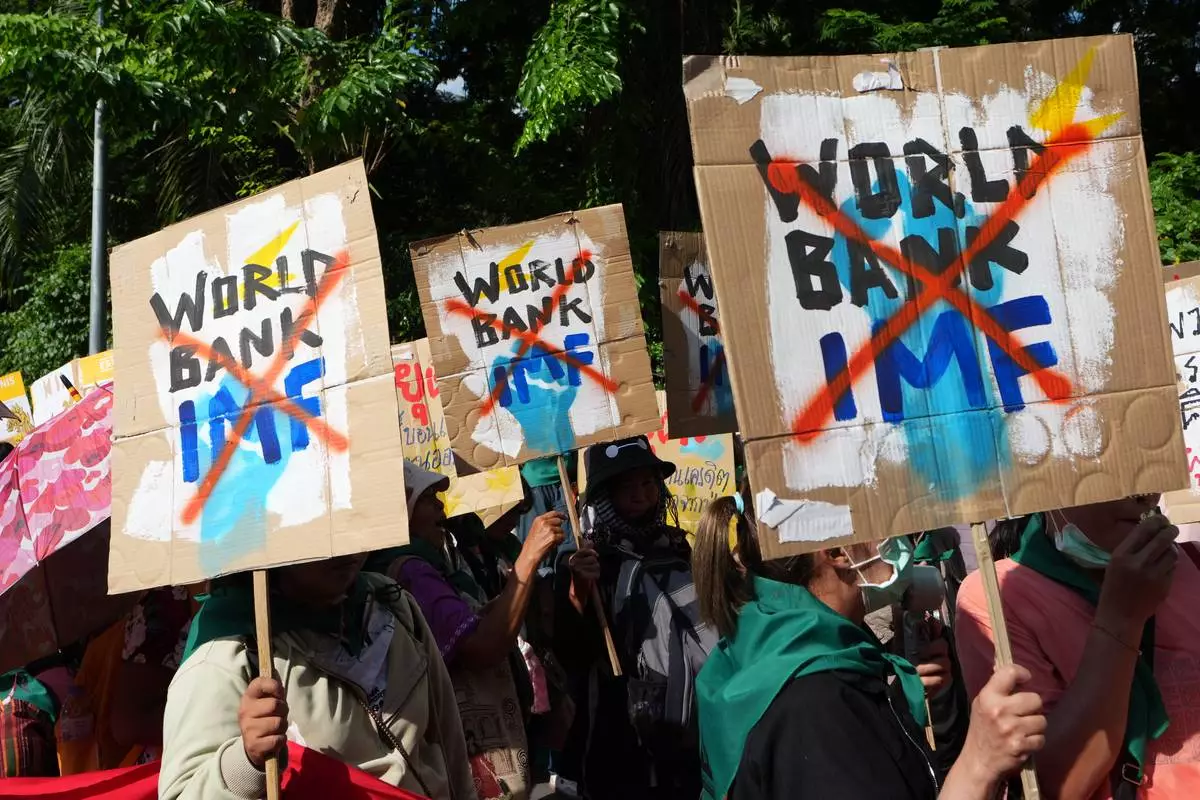
Dozens of people marched in Bangkok on Thursday and Friday in peaceful protests, seeking to draw attention to growing inequality and other frustrations.
Georgieva noted that to ensure that the benefits of AI can reach the maximum number of people, they have to have electricity and access to digital networks. Cybersecurity also is essential.
During the wide ranging session, the speakers were also asked about how they used AI in their own lives. Georgieva said she'd used it to track calories and lose weight.
The IMF chief, who has described her personal AI assistant as bossy, joked that she'd like AI agents to be more polite.
“I mean, the agents we get, they can be really annoying,” she said. “So can we work on, like, their manners?”
Maybe, said Clark.
“We have this dial between sycophantic and rude,” he said. “So we'll spin it around the other way.”
AP journalists Haruka Nuga, Tian MacLeod Ji and Sakchai Lalit contributed.
Protesters march to a meeting venue during a demonstration against the International Monetary Fund and the World Bank Group in Bangkok, Thailand, Friday, Oct. 16, 2026. (AP Photo/Sakchai Lalit)
International Monetary Fund (IMF) Managing Director Kristalina Georgieva speaks during the annual meetings of the International Monetary Fund and the World Bank Group in Bangkok, Thailand, Friday, Oct. 16, 2026. (AP Photo/Dhitaraht Dhanarahtsombat)
Protesters march to a meeting venue during a demonstration against the International Monetary Fund and the World Bank Group in Bangkok, Thailand, Friday, Oct. 16, 2026. (AP Photo/Sakchai Lalit)
International Monetary Fund (IMF) Managing Director Kristalina Georgieva speaks during the annual meetings of the International Monetary Fund and the World Bank Group in Bangkok, Thailand, Friday, Oct. 16, 2026. (AP Photo/Dhitaraht Dhanarahtsombat)