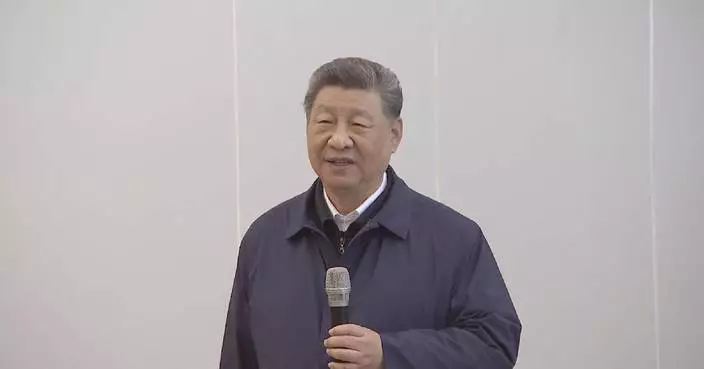
Chinese Vice Premier Ding Xuexiang on Friday put forward four proposals to enhance global cooperation in vocational education during his speech at the World Vocational and Technical Education Development Conference 2026, held in north China's Tianjin Municipality.
In his remarks at the opening ceremony, Ding, also a member of the Standing Committee of the Political Bureau of the Communist Party of China (CPC) Central Committee, underscored the importance of vocational education as a foundational project for cultivating high-quality skilled talent.
He referenced President Xi Jinping's call for a vocational education system that integrates vocational and general education while fostering industry-education collaboration. The goal is to cultivate master craftsmen, skilled artisans, and highly qualified talent.
Ding highlighted that China has made improvements in its modern vocational education system in recent years, broadened opportunities for youth, strengthened talent support for industrial development, and deepened international collaboration, culminating in historic achievements and transformative changes in vocational education.
He outlined four proposals for advancing global cooperation in the sector.
First, promoting open-up and cooperation through the joint development of standards. This entails strengthening policy communication and regulatory alignment, working collaboratively to improve the standards for teaching, practical training, faculty, and evaluation methods, so as to facilitate the cross-border flow of skills and the efficient allocation of resources.
Second, pushing for transformation and upgrading through reform and innovation, advancing the deep integration of new technologies — including digital-intelligent and green technologies — with vocational education, and cultivating highly skilled talent better suited to the needs of economic and social development.
Third, encouraging people's all-round development through fairness and inclusiveness. Ding stressed the need to increase support for less developed countries and regions, ensuring that more young people have opportunities to grow and succeed.
Fourth, strengthening bonds of friendship through mutual learning. Deepening exchanges and cooperation in skills training and knowledge dissemination would enhance mutual understanding among nations.
Chen Min'er, secretary of the CPC Tianjin Municipal Committee, also attended the opening ceremony.
Malaysian Deputy Prime Minister Ahmad Zahid Hamidi delivered a speech during the ceremony, while Khondker M. Talha, President of 43rd session of UNESCO General Conference, provided a video address.
Ding also visited an exhibition showcasing China's advancements in vocational education before the opening ceremony.
One day prior, Ding met with Ahmad Zahid in Beijing.
Ding expressed China's readiness to collaborate with Malaysia to fully implement the important consensus reached by the leaders of both countries. He emphasized advancing high-quality cooperation in infrastructure, high technology, agriculture, and vocational education, aiming to build a high-level strategic China-Malaysia community with a shared future that benefits the peoples of both nations.
For hist part, Ahmad Zahid highlighted Malaysia's commitment to its comprehensive strategic partnership with China, focusing on further promoting bilateral friendship, better aligning its development strategies with China, and achieving mutually beneficial outcomes.
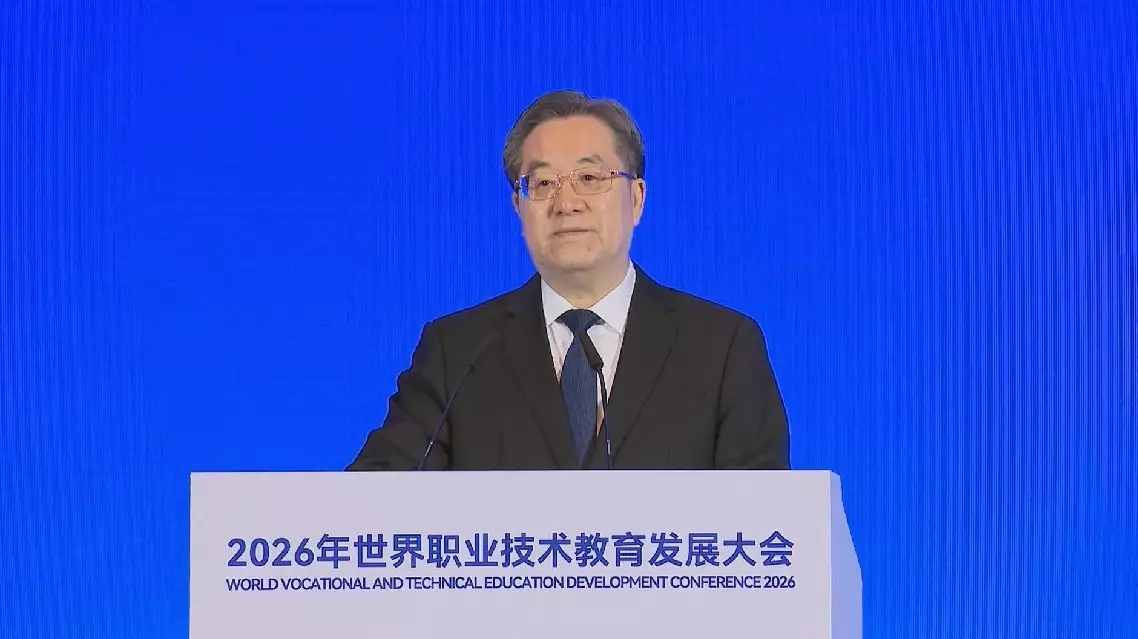
Chinese vice premier outlines proposals to advance global cooperation in vocational education