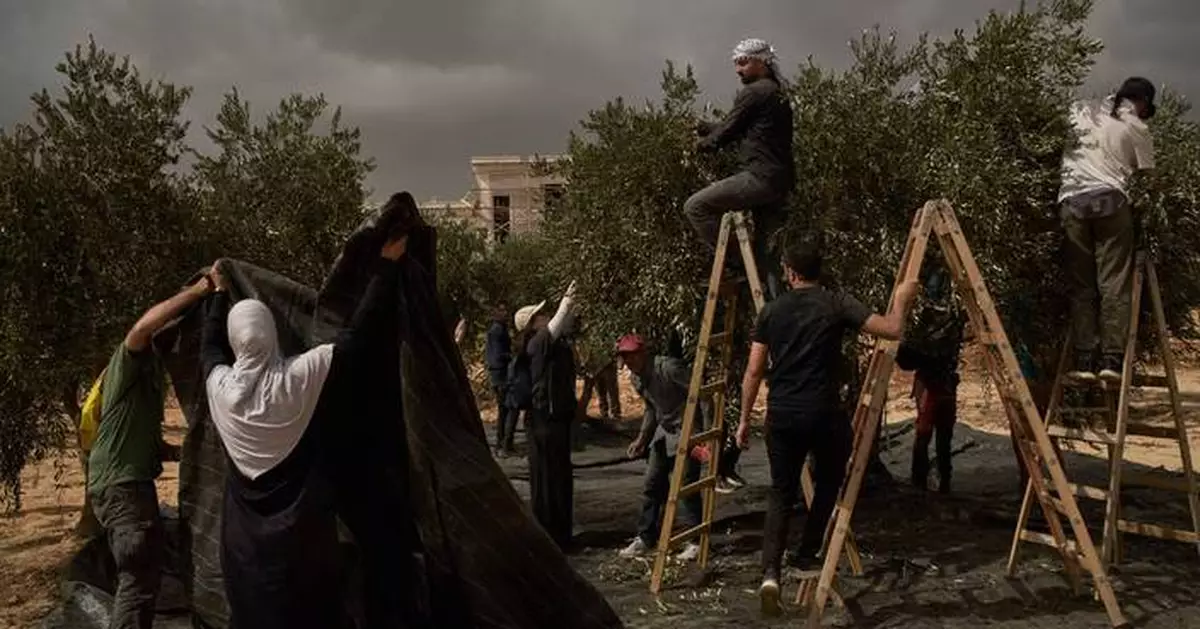
ABU FALAH, West Bank (AP) — Israeli settlers attacked Palestinian villages across the occupied West Bank on Friday, setting fire to cars and trees and beating residents and a foreign journalist, in the latest violence to disrupt the territory's annual olive harvest this month.
Local officials and the Palestine Red Crescent Society reported attacks in at least eight villages in the northern West Bank, where most of the olive groves are concentrated and tens of thousands of Palestinian families depend on them for income.
Click to Gallery
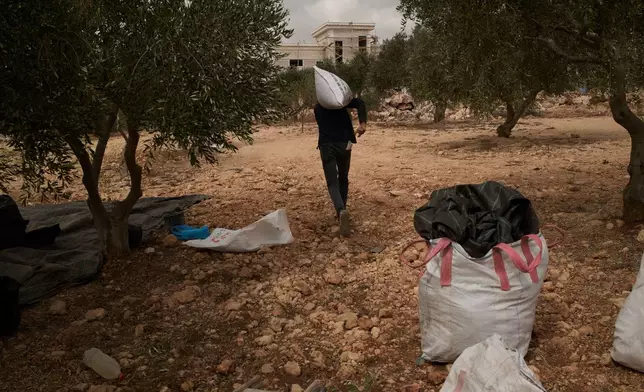
A Palestinian man carrying a sack of olives runs away from the tear gas thrown by Israeli forces following a settler attack during the harvest in the West Bank village of Abu Falah, Friday, Oct. 16, 2026. (AP Photo/Leo Correa)
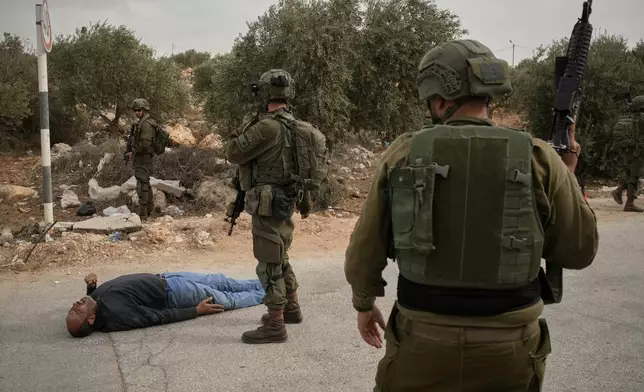
Israeli soldiers stand beside a wounded Palestinian man lying on a road after soldiers shot him following a settler attack on Palestinians harvesting olives in the occupied West Bank village of Abu Falah, Friday, Oct. 16, 2026. (AP Photo/Leo Correa)
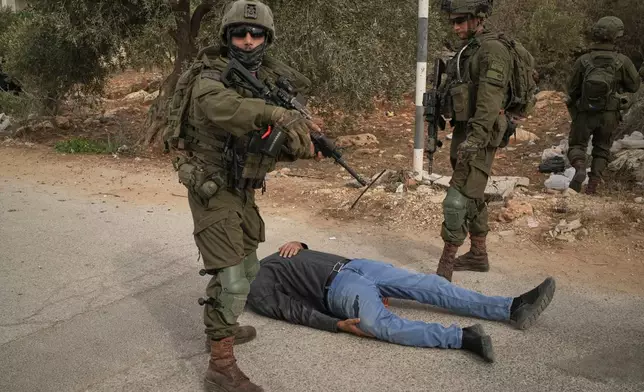
Israeli soldiers stand beside a wounded Palestinian man lying on a road after they shot him following a settler attack on Palestinians harvesting olives in the West Bank village of Abu Falah, Friday, Oct. 16, 2026. (AP Photo/Leo Correa)
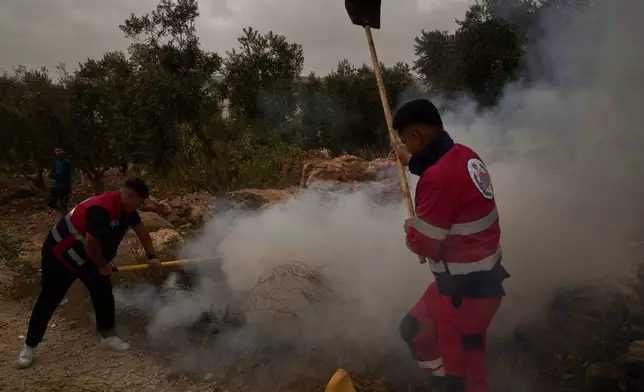
Palestinians extinguish a small fire after Israeli forces fired tear gas following a settler attack during the olives harvest in the West Bank village of Abu Falah, Friday, Oct. 16, 2026. (AP Photo/Leo Correa)
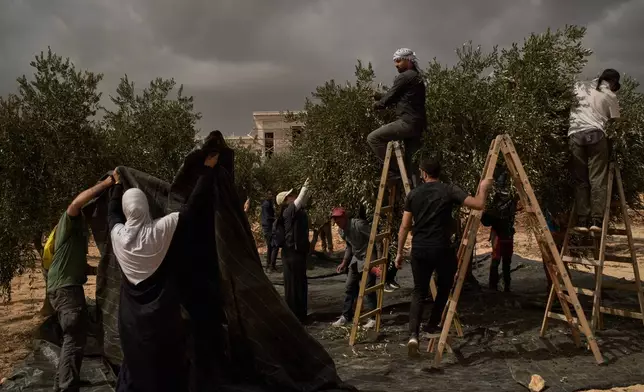
Palestinians and activists collect olives following an attack by Israeli settlers in the West Bank village of Abu Falah, Friday, Oct. 16, 2026. (AP Photo/Leo Correa)
Settler violence against Palestinians has soared this year and spiked further in the weeks leading up to Israel's election on Oct. 27. The far-right government that has emboldened the settlers could soon be voted out of power — or win another term.
Israeli authorities have done little to stop the attacks, according to residents and rights groups, who say the military has aided, protected or stood by as settlers lay siege to Palestinian villages. The violence has drawn accusations of “ ethnic cleansing ” — including from the British government, which has said Israel is turning a “blind eye” to the campaign underway.
“Soldiers aren’t stopping the violence or protecting Palestinians," said Ziv Stahl, executive director of Israeli rights group Yesh Din. “If anything, they’re sometimes assisting settlers in the attacks.”
The West Bank has been under Israeli military rule since the 1967 Mideast war and today is home to around 3 million Palestinians and more than 500,000 Israeli settlers. The U.N. Office for the Coordination of Humanitarian Affairs said last month that more than 1,600 attacks across the territory had been reported between January and August. Yesh Din and other rights groups say authorities rarely arrest or indict the perpetrators.
Israel’s military on Friday condemned the violence and acknowledged that a journalist was injured in Abu Falah.
On Friday, settlers attacked the village as residents, accompanied by peace activists, set out early for the harvest.
As the group of masked vigilantes approached, several members beat Washington Post photographer Heidi Levine, who was hospitalized for her injuries.
The perpetrators — armed with bottles and slingshots — “were kicking me for like 10 minutes and I was trying to hold onto my cameras and my bag,” Levine said.
Levine said her helmet and protective vest, which was marked “PRESS,” likely saved her from more serious injuries.
Both the Washington Post and the Foreign Press Association, which represents international journalists working in Israel and the Palestinian territories, called on Israel to bring the attackers to justice.
“This is the latest in a long line of violent attacks by Israeli settlers against journalists and other civilians in the occupied West Bank. Yet our repeated calls for action to confront this lawlessness have been ignored by Israeli authorities," the Foreign Press Association said.
Israeli troops later arrived in Abu Falah and drove up to the village after dispersing the crowd in the olive groves. Residents said that soldiers later fired live ammunition at village council member Abdel Jaber Hassan, even though he was unarmed and far from the trees. The military said that soldiers had fired because an individual was running toward them with a sharp object.
Nazem Saleh Shoman, another village council member, denied that account and said Hassan was shot at close range while carrying olive harvesting tools.
Across the West Bank, the Palestine Red Crescent Society said that its medics had tended to 14 wounded people in six locations, while local officials reported at least four injuries in two additional villages.
At least four Palestinians have been killed and more than 100 injured since harvest season began earlier this month, the Ramallah-based Palestinian Health Ministry said last week. Yesh Din said on Friday that it had already documented hundreds of incidents of settler violence directly related to this year's harvest.
In Turmus Ayya, a village northeast of Ramallah, mayor Nawaf Zghoul said settlers early Friday had burned several cars in the hamlet's surrounding olive groves.
“The settlers were lying in wait for farmers working on their land and attacked them,” he said. “Nothing has been left intact."
Israel's military said that suspects had fled the scene before troops arrived.
Roughly 110,000 Palestinian families depend on privately owned groves for income and employ tens of thousands of seasonal farmworkers, according to Abbas Milhem of the Palestinian Farmers’ Union.
In past years, hundreds of thousands of trees have been damaged by settlers and farmers have suffered financial losses that, territorywide, amount to millions of dollars, he said.
This year, Milhem said, is the worst he can remember.
Jonathan Pollak, an Israeli activist who often accompanies Palestinian farmers during the harvest, was in Abu Falah on Friday morning when the settlers attacked. He said they descended from a hilltop outpost, throwing stones, burning trees and firing gunshots at the Palestinians and other activists.
The Israeli military, he said, “stood literally shoulder-to-shoulder with settlers as they attacked Palestinians” and later drove into Abu Falah, where they shot the village council member.
“There was absolutely no motive except one simple thing: to send a message that people cannot go to their land,” Pollak said.
Israeli Prime Minister Benjamin Netanyahu has repeatedly framed settler violence in the West Bank as the work of a few dozen fringe youths and said its scale has been exaggerated.
He condemned the violence in Abu Falah on Friday but questioned whether Palestinians and activists were to blame. Without mentioning accounts of how the attacking settlers descended on the groves, he framed the violence as a clash between outnumbered Israeli youths against Palestinians and activists.
“We will not allow disputed incidents to be exploited to demonize the hundreds of thousands of law-abiding Jewish residents of Judea and Samaria,” his office said in a statement, referring to the West Bank by the biblical name preferred by Israeli settlers.
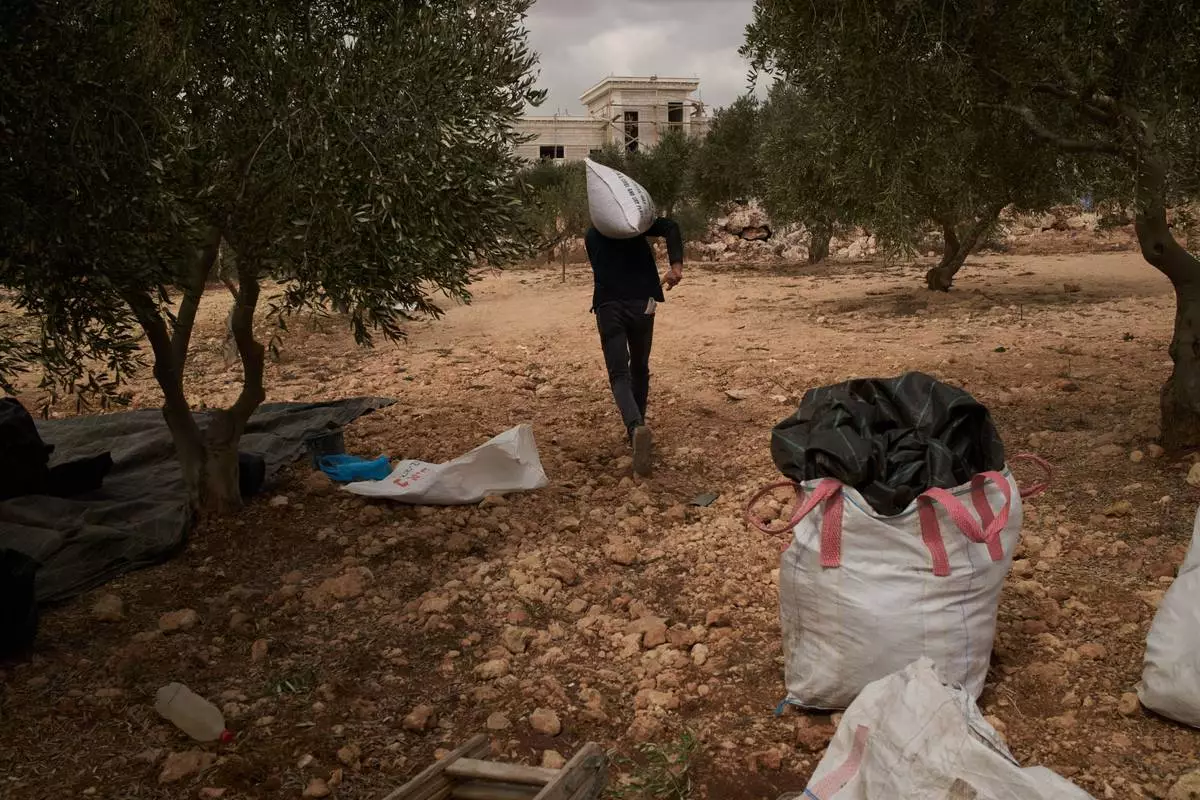
A Palestinian man carrying a sack of olives runs away from the tear gas thrown by Israeli forces following a settler attack during the harvest in the West Bank village of Abu Falah, Friday, Oct. 16, 2026. (AP Photo/Leo Correa)
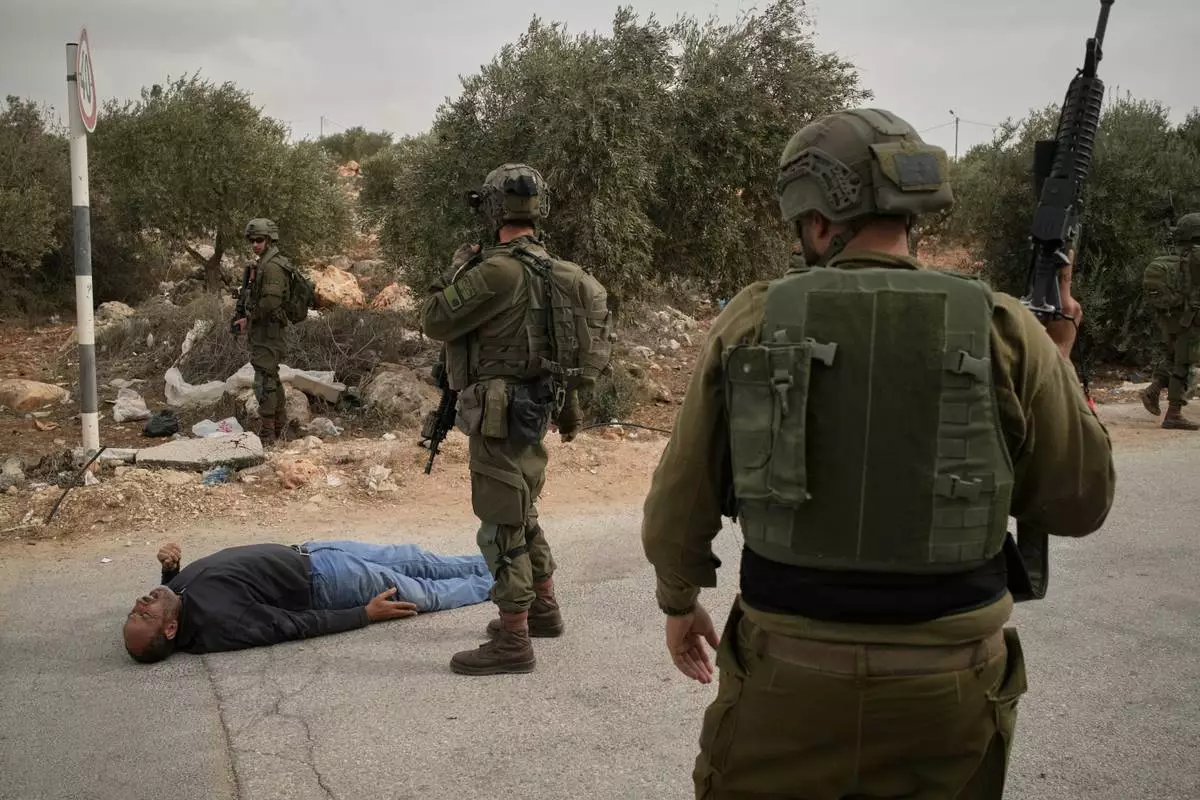
Israeli soldiers stand beside a wounded Palestinian man lying on a road after soldiers shot him following a settler attack on Palestinians harvesting olives in the occupied West Bank village of Abu Falah, Friday, Oct. 16, 2026. (AP Photo/Leo Correa)
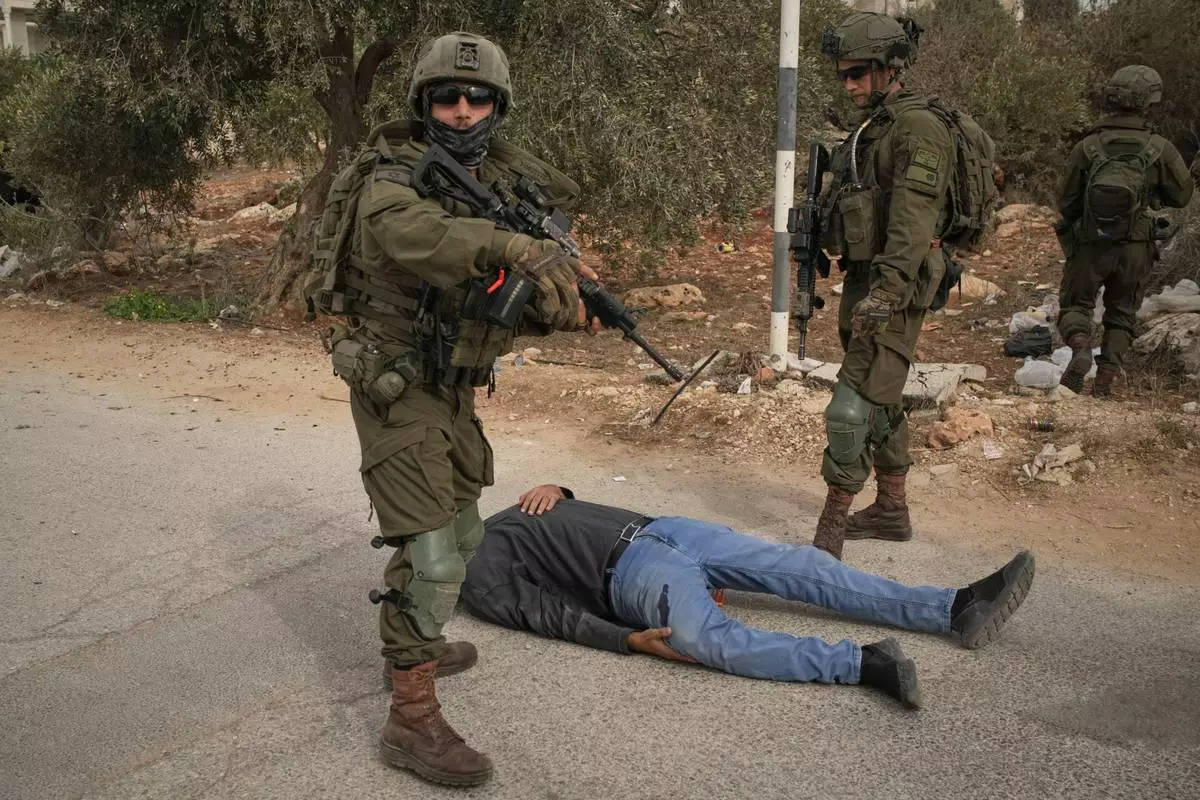
Israeli soldiers stand beside a wounded Palestinian man lying on a road after they shot him following a settler attack on Palestinians harvesting olives in the West Bank village of Abu Falah, Friday, Oct. 16, 2026. (AP Photo/Leo Correa)
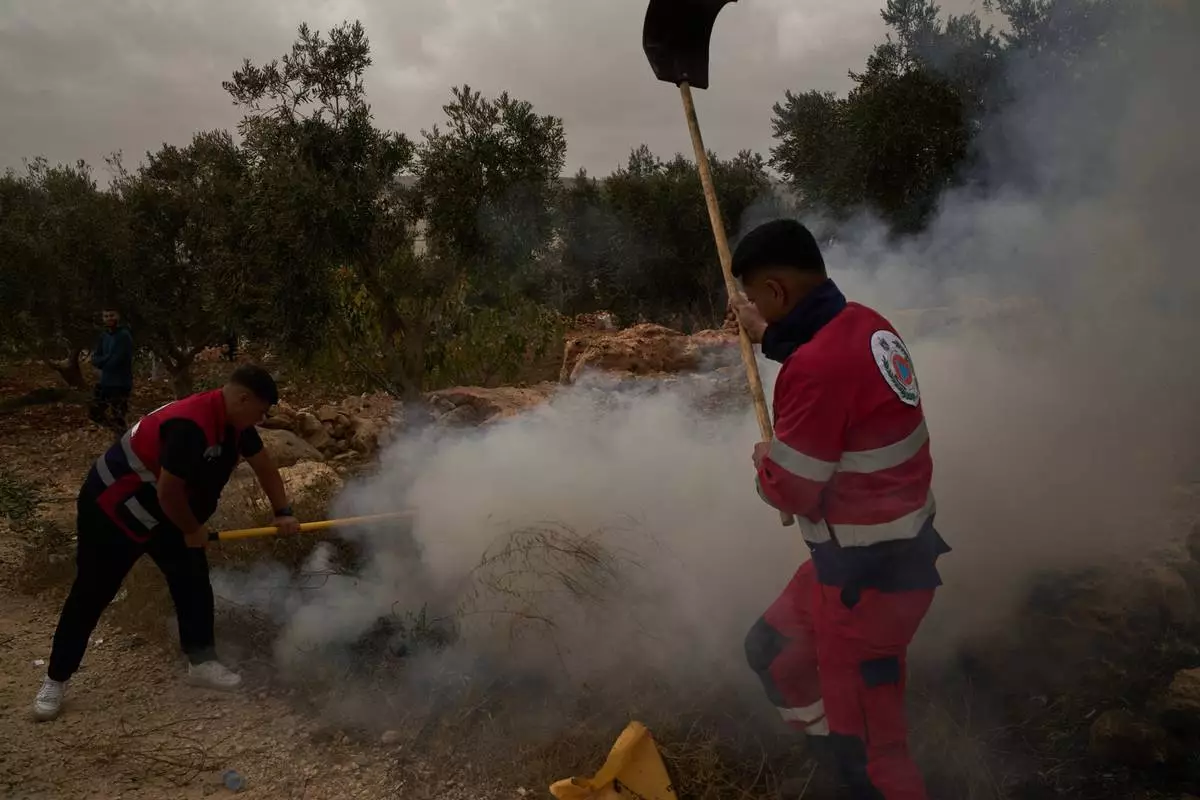
Palestinians extinguish a small fire after Israeli forces fired tear gas following a settler attack during the olives harvest in the West Bank village of Abu Falah, Friday, Oct. 16, 2026. (AP Photo/Leo Correa)
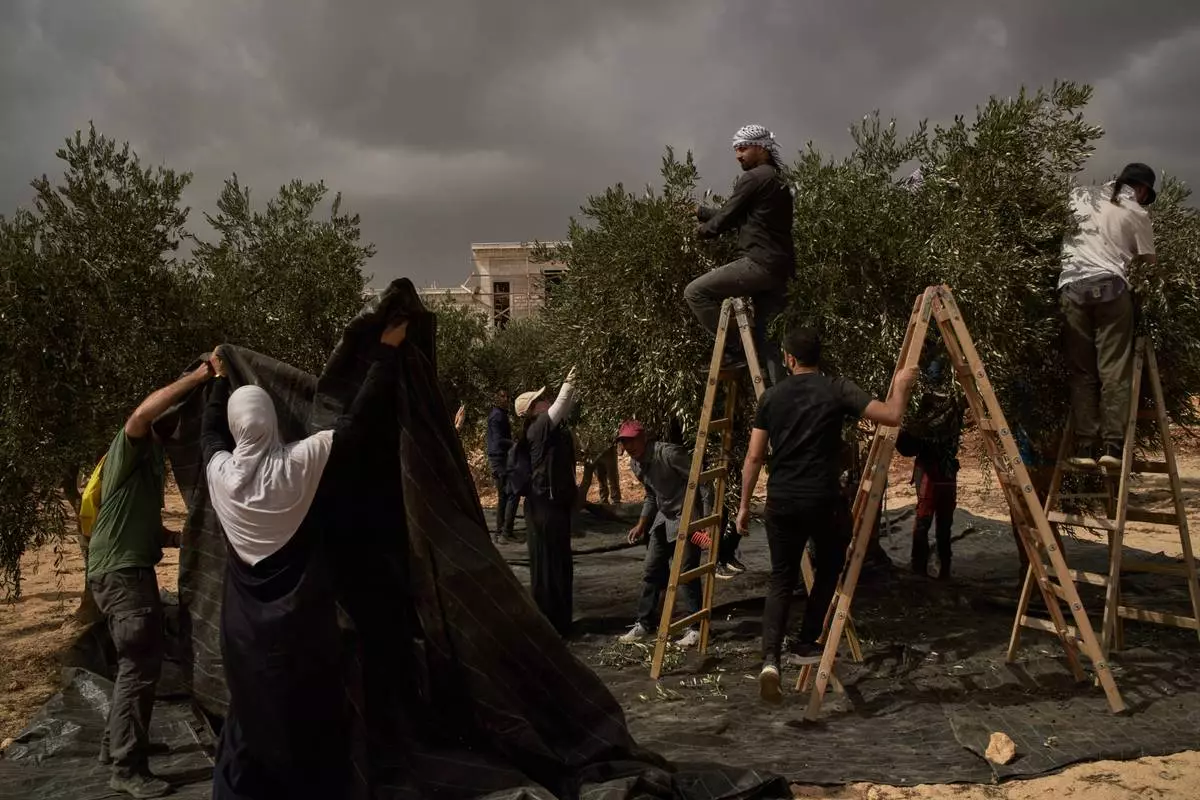
Palestinians and activists collect olives following an attack by Israeli settlers in the West Bank village of Abu Falah, Friday, Oct. 16, 2026. (AP Photo/Leo Correa)