ALBUQUERQUE, N.M. (AP) — A New Mexico judge has dismissed an indictment against “West Wing” and “Field of Dreams” actor Timothy Busfield that accused him of criminal sexual contact with a child, citing prosecutorial misconduct and errors that undermined the grand jury process.
State District Judge Joseph Montano granted a defense motion to toss the charges in a decision released Friday.
Busfield has repeatedly denied the allegations, describing them as lies motivated by revenge.
Prosecutors did not immediately say whether they would seek a new indictment.
The case stems from when Busfield was directing the TV series “The Cleaning Lady” from 2022 to 2024. The parents of two twin boys who were let go from the show claimed that Busfield inappropriately touched the children on the set in Albuquerque.
According to a criminal complaint filed in January, an investigator with the Albuquerque Police Department said a boy reported that Busfield touched him on his private areas over his clothing on one occasion when he was 7 years old and another time when he was 8. The boy’s twin brother told authorities he was also touched by Busfield, but he did not specify where and didn’t say anything because he didn’t want to get in trouble, the complaint said.
Busfield turned himself in and was released from jail pending trial by a judge who found no pattern of criminal conduct or similar allegations involving children in Busfield’s past.
The grand jury indictment followed just weeks later, reiterating allegations that Busfield “touched or applied force to the intimate parts” of one of the boys on several occasions. The indictment allowed the case to proceed without a preliminary hearing on evidence.
Busfield’s attorneys noted that the children told police during initial interviews that Busfield didn’t touch them inappropriately and accused the boys’ parents of coaching their children to give incriminating statements after the boys lost lucrative roles on the show.
In June, Busfield’s attorneys officially asked the court to throw out the indictment, alleging in a motion that prosecutors were “willfully blind to the lack of evidence” and “invented procedural hurdles” to keep grand jurors from hearing witness testimony.
During a September hearing, Busfield’s attorney Amanda Fayerberg played audio recordings of grand jurors asking to hear from additional witnesses. Fayerberg said prosecutors wrongly informed jurors that subpoenas would be needed, even though those witnesses were “present, available and willing to testify.”
“The state engaged in egregious prosecutorial misconduct,” Fayerberg said.
Bernalillo County District Attorney Greer Staley countered that the defense hadn’t followed the correct process for submitting evidence to a grand jury and that Busfield himself improperly and “excessively” tried to steer grand jurors toward favorable witnesses and exhibits during his three-hour testimony.
According to the transcripts of the proceedings submitted by Busfield’s attorneys, the actor also known for appearances in “Thirtysomething” told jurors that the case had turned his life upside down and affected his entire family. He testified that he had been “canceled,” meaning he lost work and was fired by his agency.
Busfield also testified that he had nothing to hide and when asked about the allegations that he had caressed the children, he answered: “I’m saying that is absolutely one gazillion percent untrue. Never ever.”
Prosecutors had said each count in the indictment carried a possible penalty of six years in prison that could be enhanced.

FILE - Timothy Busfield appears at the 2020 ABC Television Critics Association Winter Press Tour in Pasadena, Calif., on Jan. 8, 2020. (AP Photo/Chris Pizzello, File)
ALTADENA, Calif. (AP) — Throughout the arduous process to rebuild the Altadena home where she lived for nearly 50 years, Mary Landau has sometimes felt like giving up. Much of what has sustained her is the encouragement she receives from her disaster case manager.
“She said, ‘You can do this,’” said Landau, a 78-year-old retired teacher who enjoys studying Altadena history and cannot imagine living anywhere else, even after the Eaton Fire destroyed her house. “She gave me hope and strength.”
Landau meets weekly with Veda Ashby Romero, a trained recovery expert who helps her navigate insurance, complete online forms and qualify for financial assistance.
Now Landau is one of roughly 1,400 households affected by the 2025 Los Angeles fires who are set to lose their disaster case managers by the end of October, as a standoff between California and the Federal Emergency Management Agency over the program's funding drags on.
The news has rattled Landau. “The safety net has been pulled out from under me, and the hope is not as strong as it was,” she said.
The program’s early termination is the latest setback for LA communities in the middle of recovery and awaiting billions of additional federal dollars. It also highlights how some disaster-impacted communities still face issues like delayed FEMA payments and inconsistent communication, despite President Donald Trump's administration pledging to streamline processes after long criticizing the agency’s bureaucracy.
FEMA did not respond to a request for comment but has previously touted the assistance it has provided for the program. The White House says California has mismanaged the crisis.
Landau kept her insurance policy up to date for the 1938 two-bedroom, one-bathroom ranch home where she raised her three children and tended a wildflower garden. She still faced a shortfall of at least $200,000 to rebuild the modest home and owed $225,000 on her mortgage.
Ashby Romero supports her through the insurance process — a tedious one that has involved multiple adjusters and required creating an inventory of the half-century’s worth of possessions she lost. She also found Landau a grant to cover a year’s worth of mortgage payments. “I would never have gotten it without her,” Landau said. “I’m very bad with paperwork.”
Trained disaster case managers help people find rental assistance, new employment and money to close the gap between what insurance pays and the actual cost to rebuild. They guide survivors on how to avoid scams, challenge insurance payouts and appeal FEMA decisions.
“The recovery process is very complicated, and a lot of the systems are not designed to make it easy for people,” said Matt Gsell, disaster recovery manager at CORE, the nonprofit managing Landau’s case and one of five participating in LA’s case management program.
After the January 2025 fires, California requested $28 million for case management. FEMA instead awarded $13.2 million for 24 months, to be paid in four equal installments.
FEMA can fund disaster case management for presidentially declared major disasters. The money is reimbursed to the state, which usually contracts with one or more nonprofits to administer the program. In the case of an exceptional disaster, states can request extensions for up to 36 months.
By August, FEMA had made only one of the four payments, leaving the state to front the rest despite “numerous requests” for reimbursement, according to the California Department of Social Services.
FEMA also had not answered a March request for an additional $6.5 million to sustain the program the full 24 months, in light of high demand. Seven hundred households remain on a waitlist for services.
California then announced it could no longer float the costs and would shutter the program at the end of October. FEMA eventually reimbursed the outstanding payments but did not give an answer about the additional money.
Rep. Judy Chu, a Democrat whose district includes Altadena, told The Associated Press that FEMA also had not responded to questions from her office about the additional money. Failing to fund the program the full 24 months “risks abandoning survivors,” Chu said, adding that FEMA should also be prepared to extend the program for longer if needs persist.
With the projected end date looming, nonprofits are triaging open cases and trying to move as many as possible to other organizations that can continue the work using philanthropic dollars.
But there won't be enough resources to keep everyone in case management.
“They are overloaded,” said Bree Jensen, spokesperson for the Eaton Fire Collaborative and an Eaton Fire survivor. “You can’t put everything onto the local nonprofits.”
The uncertainty is destabilizing, as more than 100 case managers stand to lose their jobs and must weigh whether to seek new work now or wait for answers, Jensen said.
“We can’t go month to month,” said Gsell. CORE has already closed some of its less severe cases and is trying to transfer 200 of its 450 clients to other nonprofits.
The case management program is just a small part of the federal support California has requested to recover from fires that destroyed more than 16,000 structures.
Gov. Gavin Newsom, a Democrat, asked Trump, a Republican, and Congress for $15.7 billion, pared down from an earlier request of $33 billion, much of which would go toward rebuilding housing. Trump has not sent the Republican-controlled Congress a supplemental disaster request for the LA fires.
White House spokesperson Lauren Bis said the Trump administration has obligated billions of dollars for LA’s recovery. Bis called Newsom’s supplemental request an attempt “to pass the blame for his horrible mismanagement of the LA wildfires and recovery efforts.”
Anthony Martinez, a Newsom spokesperson, said “fire survivors need help rebuilding their lives, not political attacks from the White House,” and urged the president to request additional aid from Congress.
Landau is waiting for construction to begin on her new home. She is still wrangling with insurance and a bank to receive her final payment. She and her children lean on each other for support, she said, but pressing on won't be the same without Ashby Romero.
“To meet with somebody who cares about you, wants to see that you land on your feet in a good situation,” she said, “it was so important.”
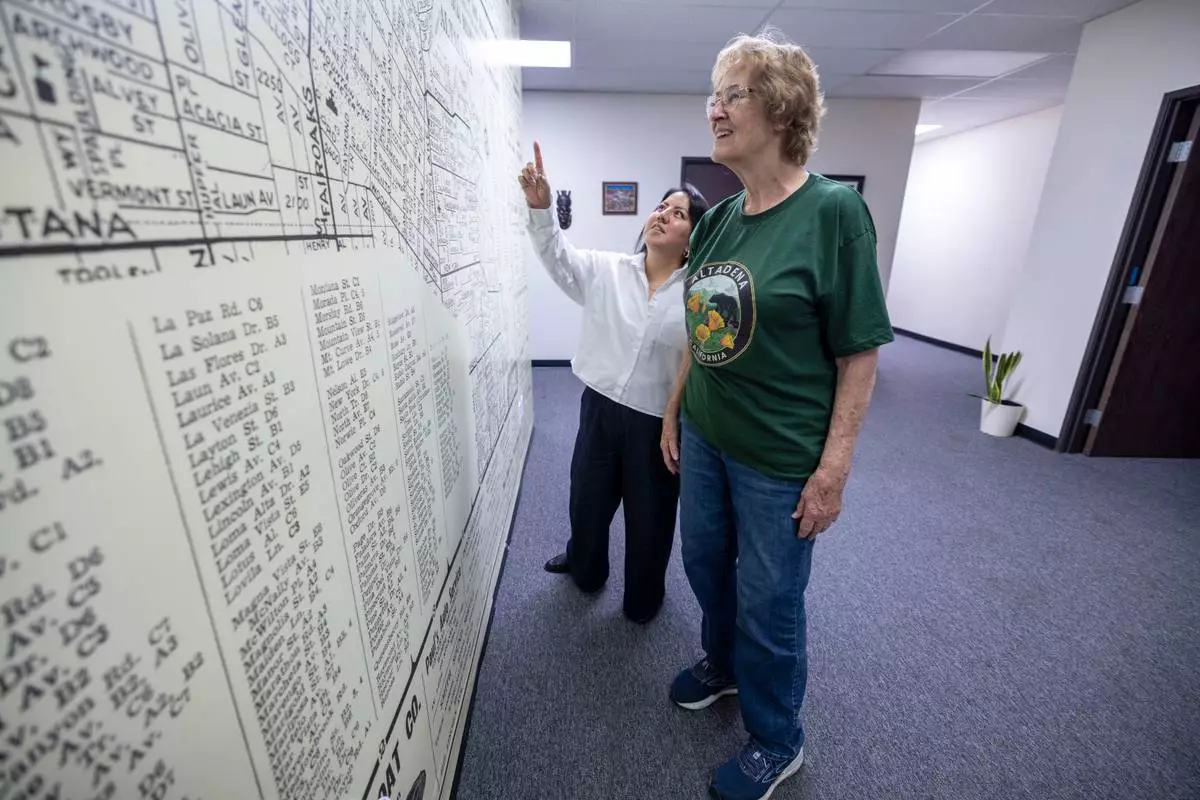
Mary Landau, a fire survivor, and Veda Ashby Romero, a disaster case manager for CORE, look at the Altadena map at the CORE resource center on Thursday, Oct. 15, 2026, in Altadena, Calif. (AP Photo/Jill Connelly)
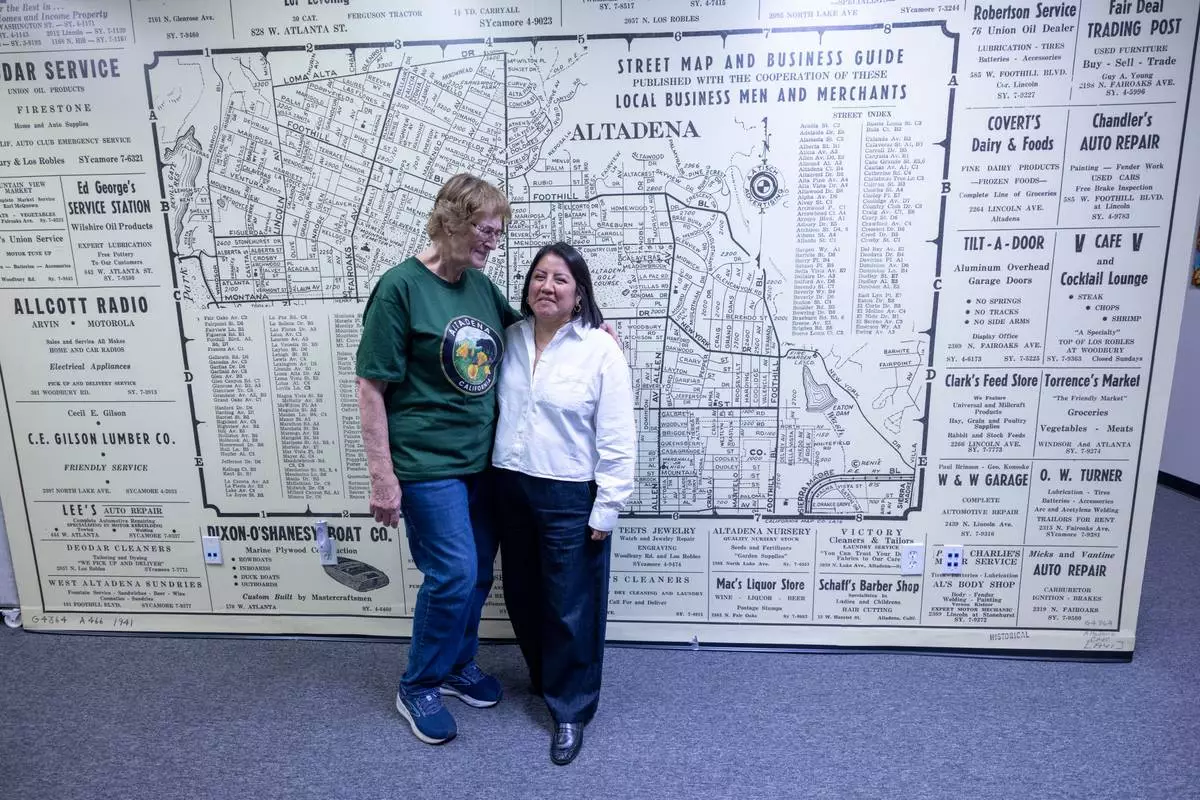
Veda Ashby Romero, right, a disaster case manager for CORE, poses for a portrait with Mary Landau, a fire survivor, at the CORE resource center on Thursday, Oct. 15, 2026, in Altadena, Calif. (AP Photo/Jill Connelly)
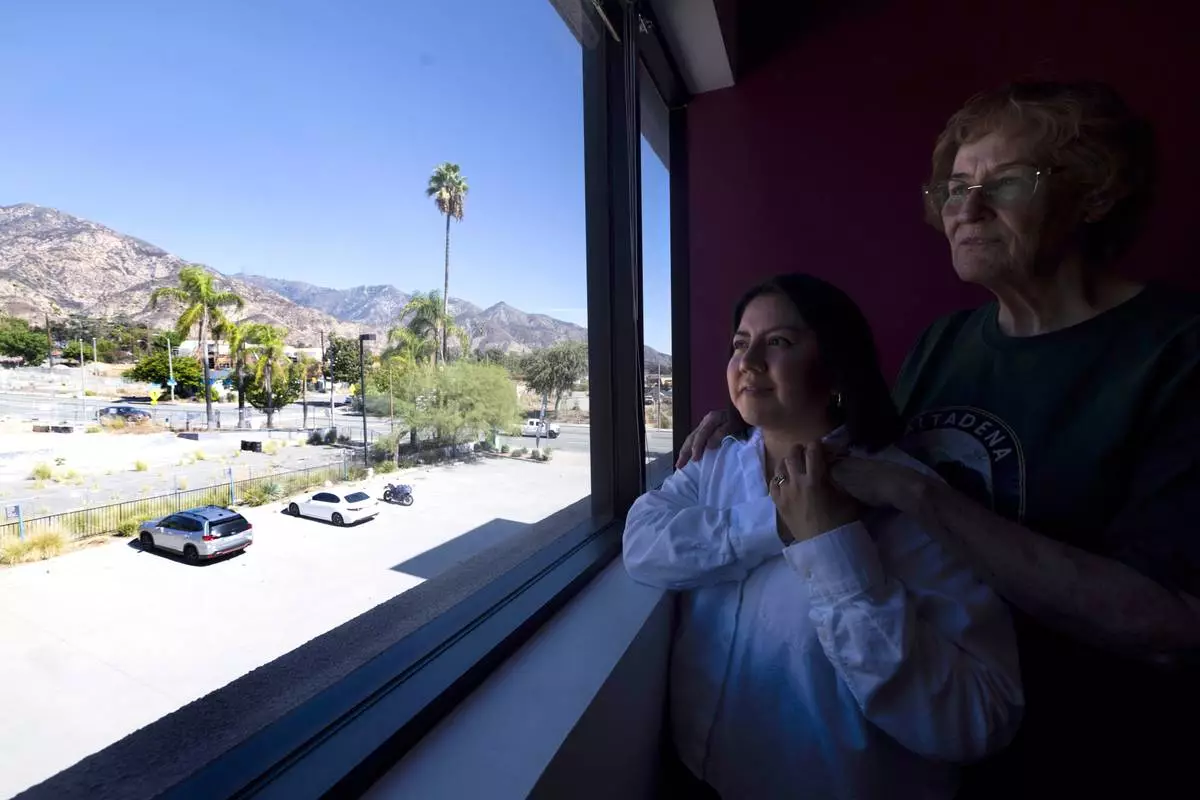
Veda Ashby Romero, left, a disaster case manager for CORE, poses for a portrait with Mary Landau, a fire survivor, at the CORE resource center on Thursday, Oct. 15, 2026, in Altadena, Calif. (AP Photo/Jill Connelly)
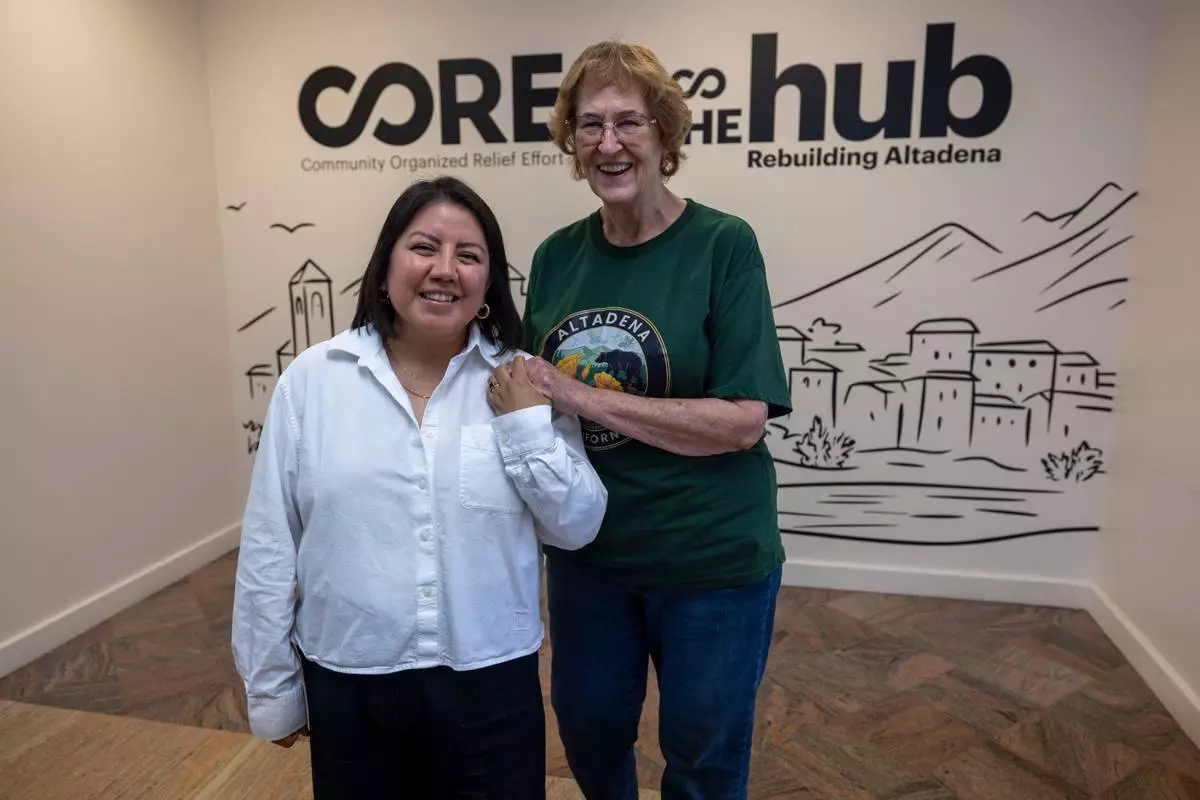
Veda Ashby Romero, left, a disaster case manager for CORE, poses for a portrait with Mary Landau, a fire survivor, at the CORE resource center on Thursday, Oct. 15, 2026, in Altadena, Calif. (AP Photo/Jill Connelly)