EDMONTON, Alberta (AP) — Canadian Prime Minister Mark Carney joined Alberta’s conservative premier Friday in a show of unity against separation, warning of growing threats to Canada’s sovereignty as the oil-rich province prepares for a referendum that could put it on a path toward independence.
The joint appearance came as Carney intensified his campaign to keep Alberta in Canada while U.S. President Donald Trump wages a trade war and repeatedly threatens to make Canada the 51st state. Alberta Premier Danielle Smith, who frequently clashed with Carney’s predecessor, Justin Trudeau, over his carbon tax and other energy policies, praised Carney's efforts to improve relations.
Click to Gallery
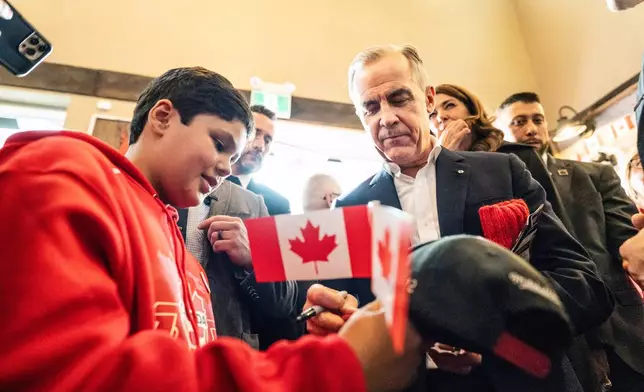
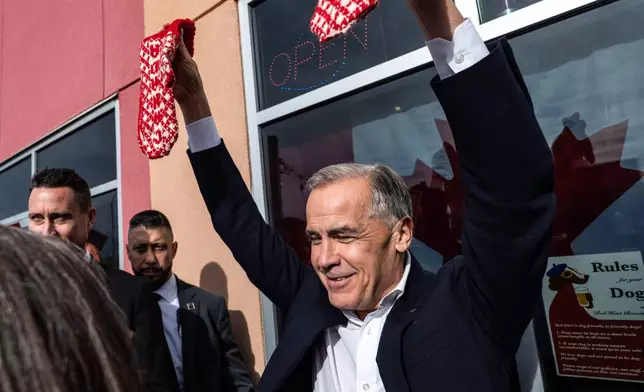
Canada's Prime Minister Mark Carney signs an autograph as he attends a national unity rally in Red Deer, Alberta, Friday Oct. 16, 2026. (John Ulan/The Canadian Press via AP)
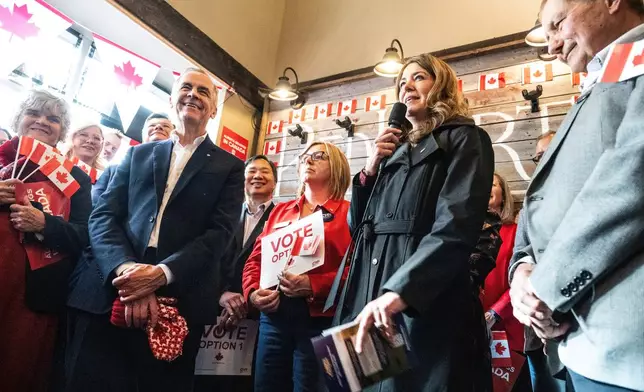
Canada's Prime Minister Mark Carney attends a national unity rally in Red Deer, Alberta, alongside, from left, Monte Solberg, Alberta Premier Danielle Smith, and former Premier Ed Stelmach, Friday, Oct. 16, 2026. (John Ulan/The Canadian Press via AP)
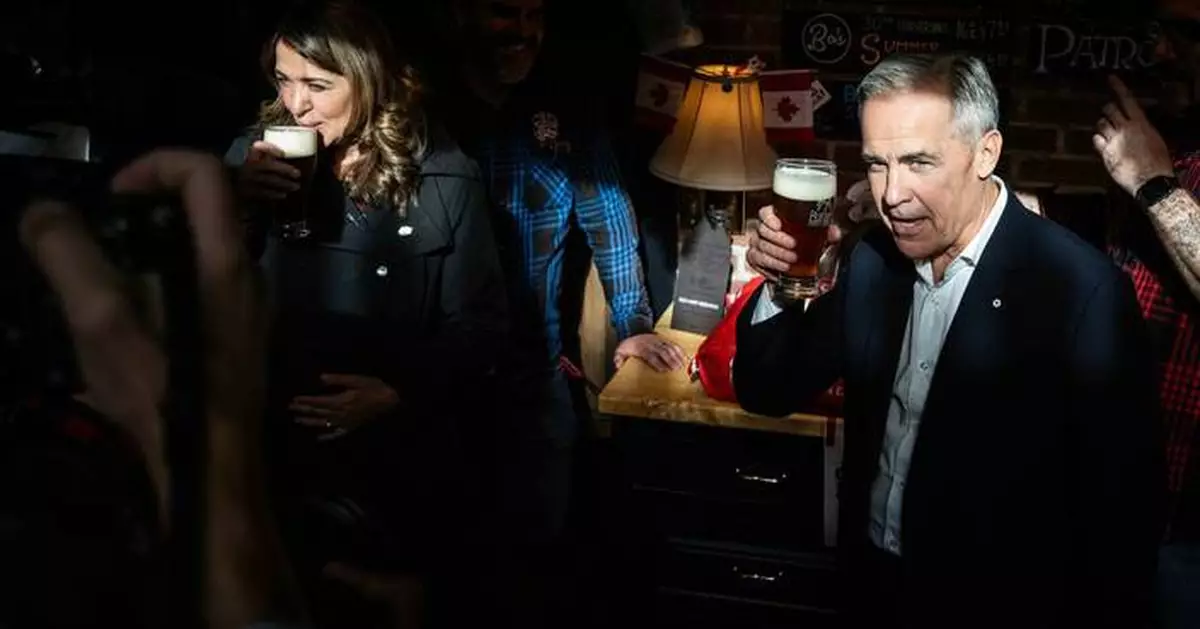
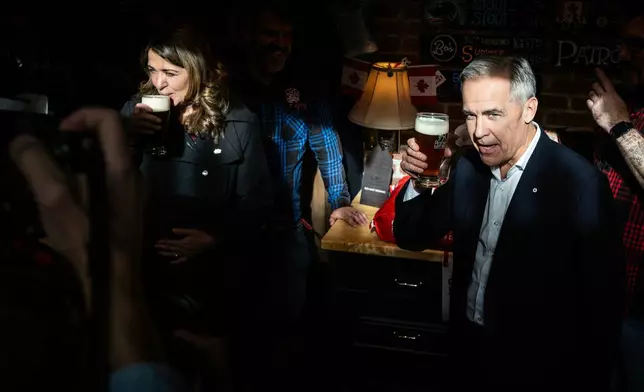
Prime Minister Mark Carney attends a national unity rally in Red Deer, on Friday Oct. 16, 2026. (John Ulan/The Canadian Press via AP)
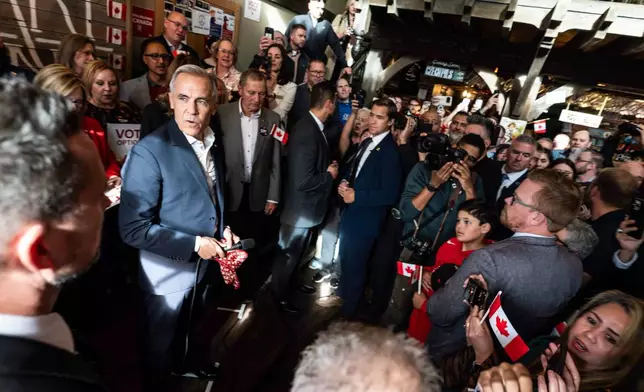
Prime Minister Mark Carney attends a national unity rally in Red Deer, on Friday Oct. 16, 2026. (John Ulan/The Canadian Press via AP)
Prime Minister Mark Carney attends a national unity rally in Red Deer alongside Alberta Premier Danielle Smith on Friday, Oct. 16, 2026.. (John Ulan/The Canadian Press via AP)
“I think what we can agree on is that we have had some real change in the last 18 months,” Smith said alongside Carney in Red Deer, Alberta.
Smith noted that Carney grew up in Alberta and remains an Edmonton Oilers fan.
“He can’t be all bad, right?” she joked.
Monday’s vote is not a direct referendum on independence. Alberta, home to most of Canada’s oil reserves, which rank fourth in the world, will decide whether to remain a province or instruct the government to begin the legal process toward a future referendum on separation.
At Thursday’s Calgary rally, Carney warned that the referendum comes at the “worst possible time” and that forces outside Canada wanted to “break us so they can own us.”
The crowd erupted in its loudest applause when he spoke about reducing Canada’s economic dependence on the United States and building a new oil pipeline to the Pacific coast.
Carney said Friday that Canada faces growing physical and virtual threats to its sovereignty but also unprecedented economic opportunities through cooperation with Alberta on energy, trade and infrastructure.
Smith called the referendum despite opposing independence herself. She recently pointed to a poll showing 22% of Albertans support separation, a figure she said was still too high.
Smith called the vote after facing pressure from separatists within her governing United Conservative Party. Former Premier Jason Kenney said activists angry over COVID-19 restrictions increasingly embraced separatism and gained influence within the party.
But some Albertans who want to remain in Canada are angry with Smith for calling the vote.
“I think it’s a travesty, really, to be putting our province and our country through this when such a small portion of people are rabble rousing and saying they want to separate from Canada,” said Deb Lee, a retired Calgary resident who voted in advance to remain in Canada.
Smith said Carney had substantially addressed seven of nine federal laws Alberta opposed. She also cited cooperation on a proposed oil pipeline.
Independence advocate Tanya Clemens dismissed the agreements between Carney and Smith as “basically pinky promises” that came with too many conditions.
Carney’s chief political rival, federal Conservative leader Pierre Poilievre, also urged Albertans on Friday to remain in Canada.
“Don’t leave your fellow Canadians behind. Lock arms with them," Poilievre said.
Carney acknowledged Alberta’s longstanding resentment of federal energy policies, saying the province’s vast natural resources had sometimes become a source of division rather than national unity.
“What we’re facing on Monday is part of a reflection of that,” Carney said.
Despite their agreement on keeping Alberta in Canada, Carney and Smith remain divided over nine other questions on Monday’s ballot involving immigration and provincial powers. Smith wants voters to approve them, while Carney has urged their rejection. Smith said she would work to change his mind.
Still, Smith emphasized how much their relationship had improved. “For the first time in a long time, Alberta and Canada are walking together,” she said.
Carney was scheduled to address another pro-Canada rally Friday night in Edmonton, as he continued his campaign against separation ahead of Monday’s vote.
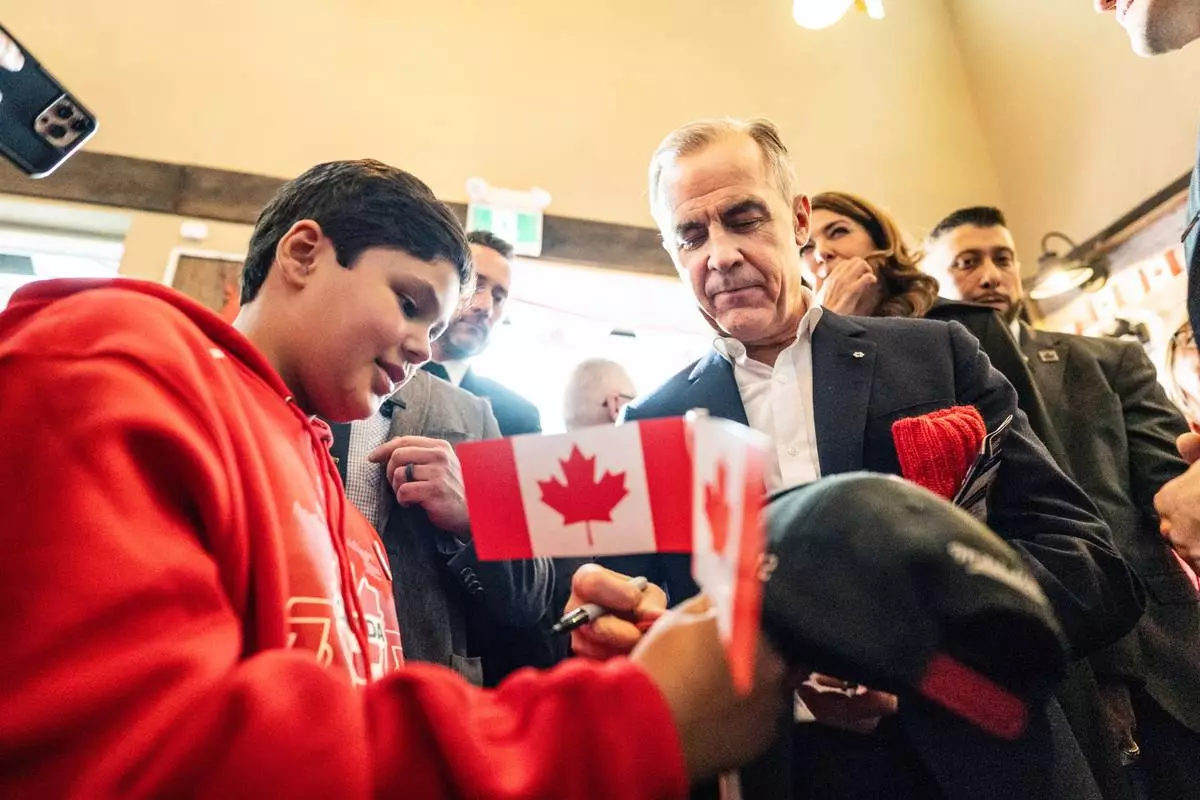
Canada's Prime Minister Mark Carney signs an autograph as he attends a national unity rally in Red Deer, Alberta, Friday Oct. 16, 2026. (John Ulan/The Canadian Press via AP)
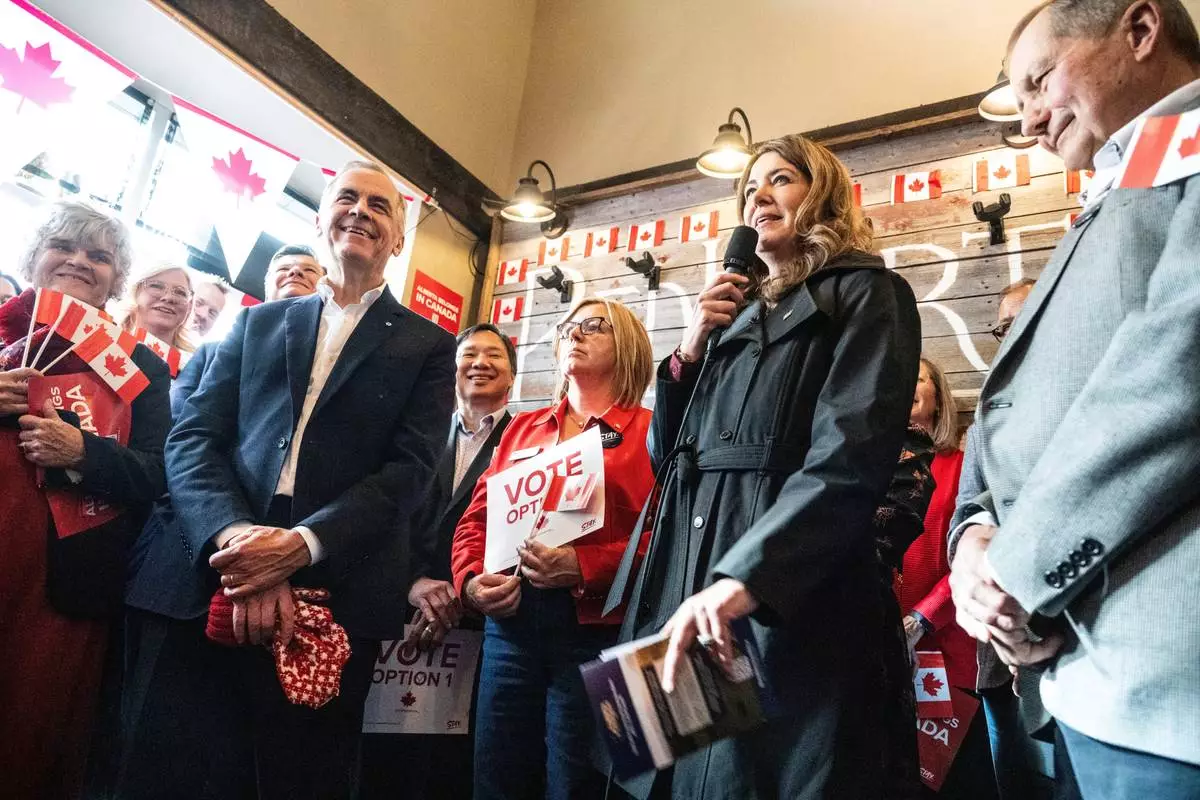
Canada's Prime Minister Mark Carney attends a national unity rally in Red Deer, Alberta, alongside, from left, Monte Solberg, Alberta Premier Danielle Smith, and former Premier Ed Stelmach, Friday, Oct. 16, 2026. (John Ulan/The Canadian Press via AP)
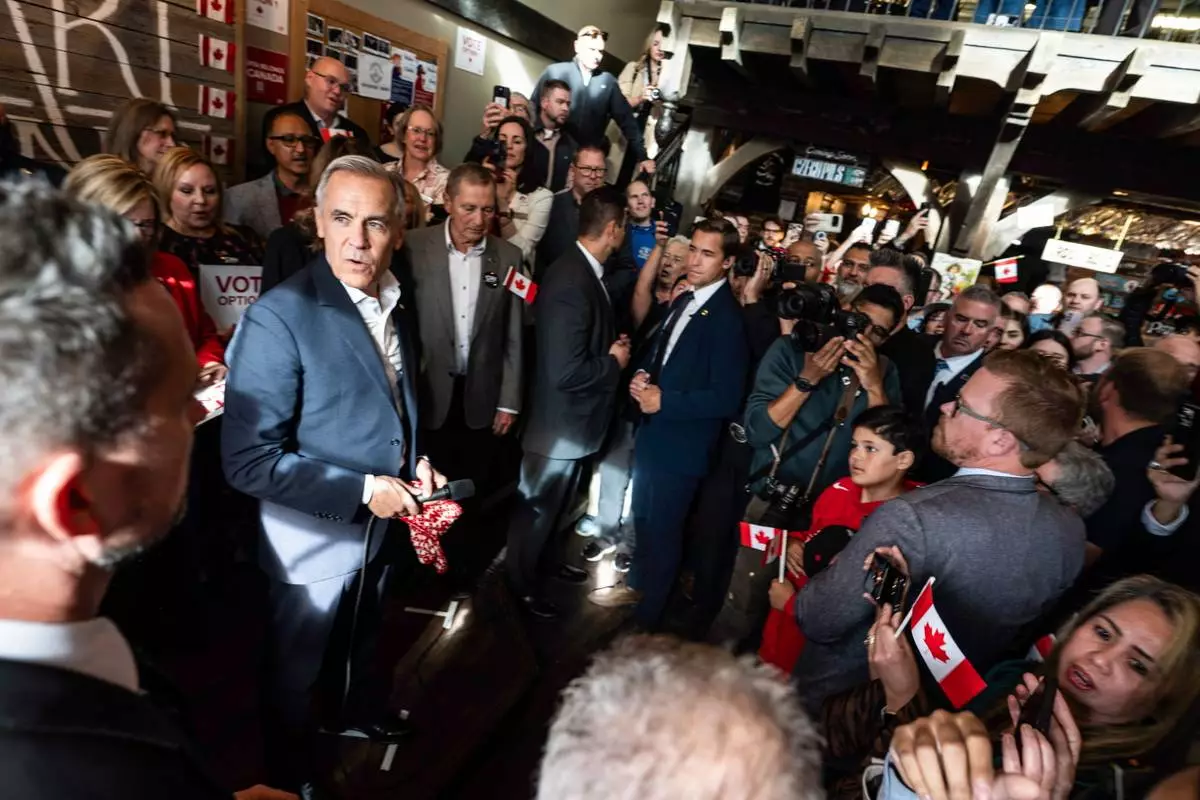
Prime Minister Mark Carney attends a national unity rally in Red Deer, on Friday Oct. 16, 2026. (John Ulan/The Canadian Press via AP)
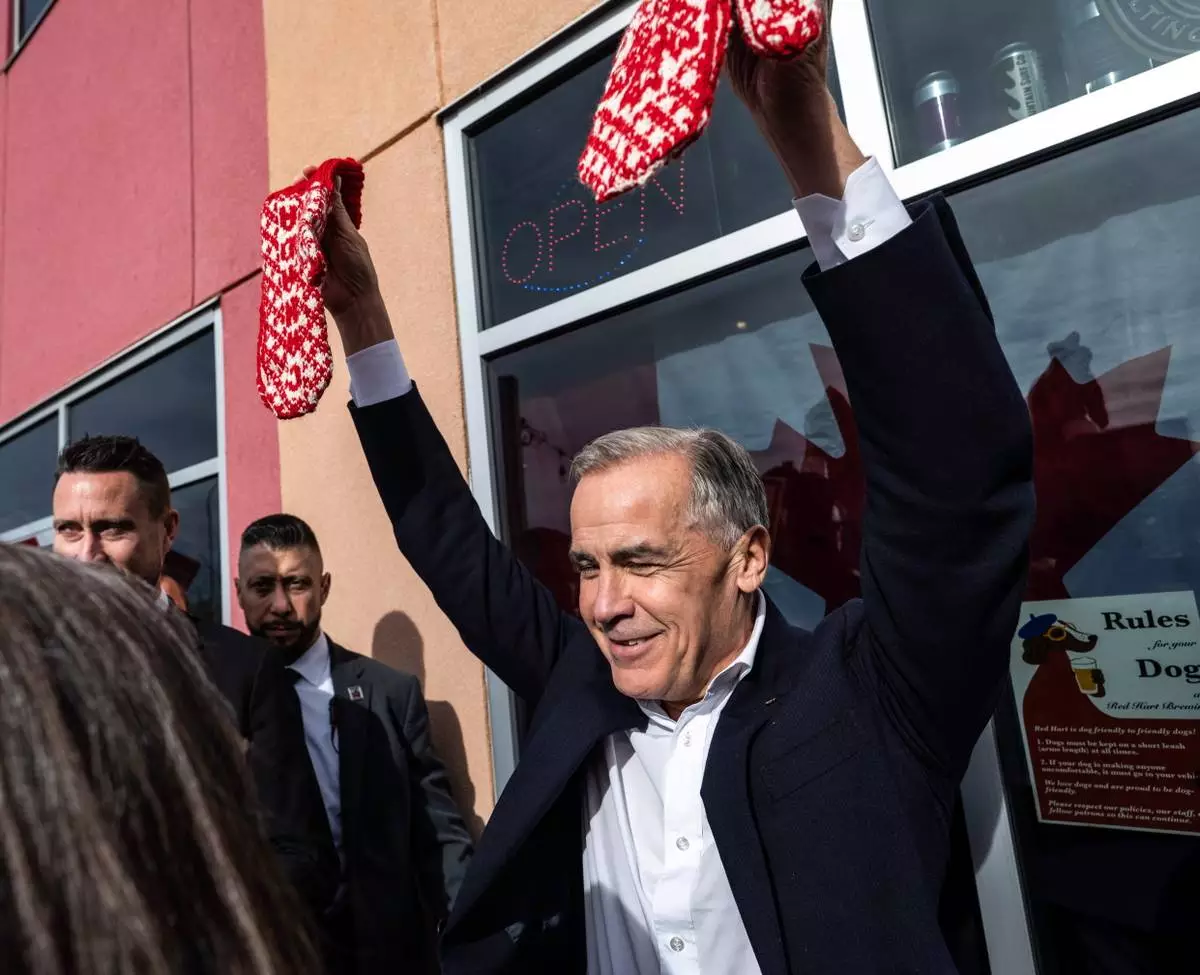
Prime Minister Mark Carney attends a national unity rally in Red Deer, on Friday Oct. 16, 2026. (John Ulan/The Canadian Press via AP)
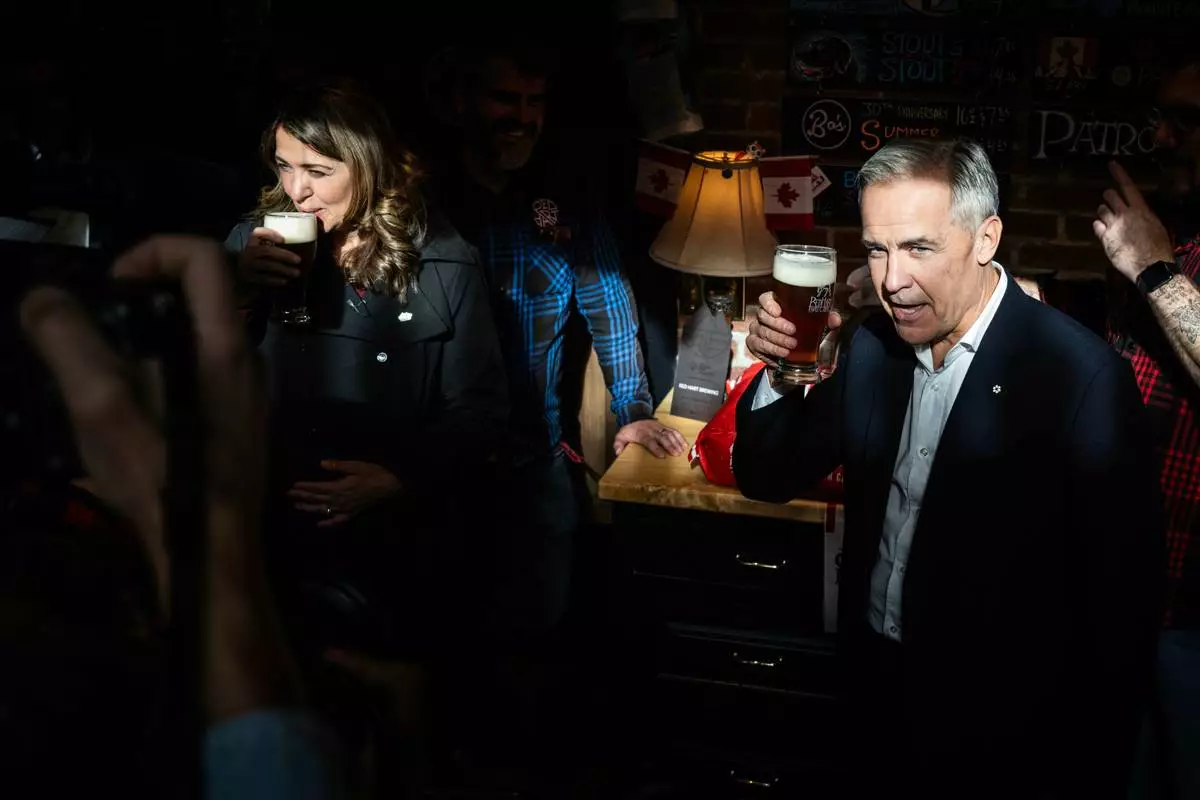
Prime Minister Mark Carney attends a national unity rally in Red Deer alongside Alberta Premier Danielle Smith on Friday, Oct. 16, 2026.. (John Ulan/The Canadian Press via AP)
WASHINGTON (AP) — The Trump administration is escalating its fight with California ahead of next month's midterm election, warning that local officials who process and tabulate ballots submitted by suspected noncitizen voters are putting themselves at risk of criminal investigation and potential prosecution.
The letter Friday from a senior Justice Department official and obtained first by The Associated Press is the latest salvo in an ongoing tussle with heavily Democratic California, coming just a day after the Trump administration sued the state to prevent it from counting mail ballots from people the federal government has identified as “likely” noncitizens until their immigration status can be confirmed.
“The legal consequences for either facilitating or ignoring a federal crime are significant. Noncitizen voting in a federal election is a federal crime — and knowingly facilitating such conduct is equally unlawful,” warns the letter from Trent McCotter, the acting deputy attorney general at the Justice Department.
It adds: “If persons knowingly tabulate ballots cast by individuals identified by federal agencies as noncitizens, they risk becoming aiders and abettors to a federal crime.”
The letter is addressed to the Los Angeles County Counsel's office and also is copied to California Secretary of State Shirley Weber and Los Angeles County Registrar Dean Logan, effectively putting the entire state on notice.
In response to the letter, Logan said his office is focused on conducting a fair and secure election while noting that Election Day is a mere 18 days away.
"The U.S. Department of Justice has chosen to litigate their unverified assertions of voting eligibility. At this point, it is best for this to be addressed in court,” he said.
The other offices and the state attorney general did not immediately respond to requests for comment.
It is unclear how many individuals the Justice Department might look to try to investigate and charge, though any federal criminal cases in the Los Angeles area would be handled by the office of Bill Essayli, the region's top federal prosecutor and one of the Justice Department officials who filed the federal complaint Thursday against California.
Sent less than three weeks before the Nov. 3 election, the letter adds to simmering tensions over voter rolls between California and the Justice Department and reflects the Trump administration's aggressive hunt for noncitizen voters. It has made the issue a priority this year, including by demanding detailed voter information — including dates of birth, addresses, driver’s license numbers and partial Social Security numbers — from the states.
The Justice Department has charged about 90 people for various types of election misconduct so far this year, including 50 who are alleged to have voted as noncitizens. There were more than 227 million registered voters in the United States during the 2024 presidential election.
In July, Homeland Security Secretary Markwayne Mullin sent letters to California, Nevada, New Jersey and Pennsylvania, alleging that as many as 250,000 noncitizens were registered in those states. Election officials there were skeptical of the claim, including Weber, the California secretary of state.
That same month, the Republican administration claimed Nevada had 1,500 noncitizen voters on its voter rolls. But after the federal government identified them to the state, the number of actual registered noncitizens turned out to be zero.
That experience is backed up by research and investigations in various states, which make clear that voting by noncitizens is extremely rare.
The Justice Department lawsuit was filed after California officials were given, and did not meet, a 48-hour deadline to review a password-protected thumb drive that contained a list of 20,000 names. The federal government says those are likely noncitizens who were sent ballots to participate in the Nov. 3 election, although the secretary of state said the administration has provided no evidence to support that claim. The state mails ballots to all registered voters.
Rick Hasen, a UCLA law professor, said the letter “ups the ante by threatening election officials with potential criminal prosecution.”
“It is deplorable that rather than work cooperatively and assist states in their election administration responsibilities, the federal government is making escalating threats and unreasonable demands beyond its power in the middle of an ongoing election,” he said.
Justin Levitt, a former deputy assistant attorney general who teaches at Loyola Law School in Los Angeles, dismissed the idea that an attempted prosecution of an election official using the letter’s rationale would hold up.
“Courts haven’t been buying what DOJ has been selling, and nothing in this letter is calibrated to change course,” he said. “Fortunately, election officials — not just in Los Angeles, but across the country — are equipped to stand up to aggressive bullying. And the law is on their side."
Over 23 million people are registered statewide, and a handful of competitive congressional races in other California districts could determine which party controls the U.S. House for the final two years of President Donald Trump’s term.
The Justice Department's escalating threats against California come as Democratic lawmakers are urging DOJ to honor its longstanding policy of not interfering in U.S. elections.
Earlier Friday, Sens. Alex Padilla, D-Calif., Sheldon Whitehouse, D-R.I., and Dick Durbin, D-Il., wrote to Attorney General Todd Blanche demanding that the Justice Department commit to not seizing ballots or other election materials before the midterm elections are certified.
Associated Press writers Michael R. Blood in Los Angeles and Ali Swenson in New York contributed to this report.
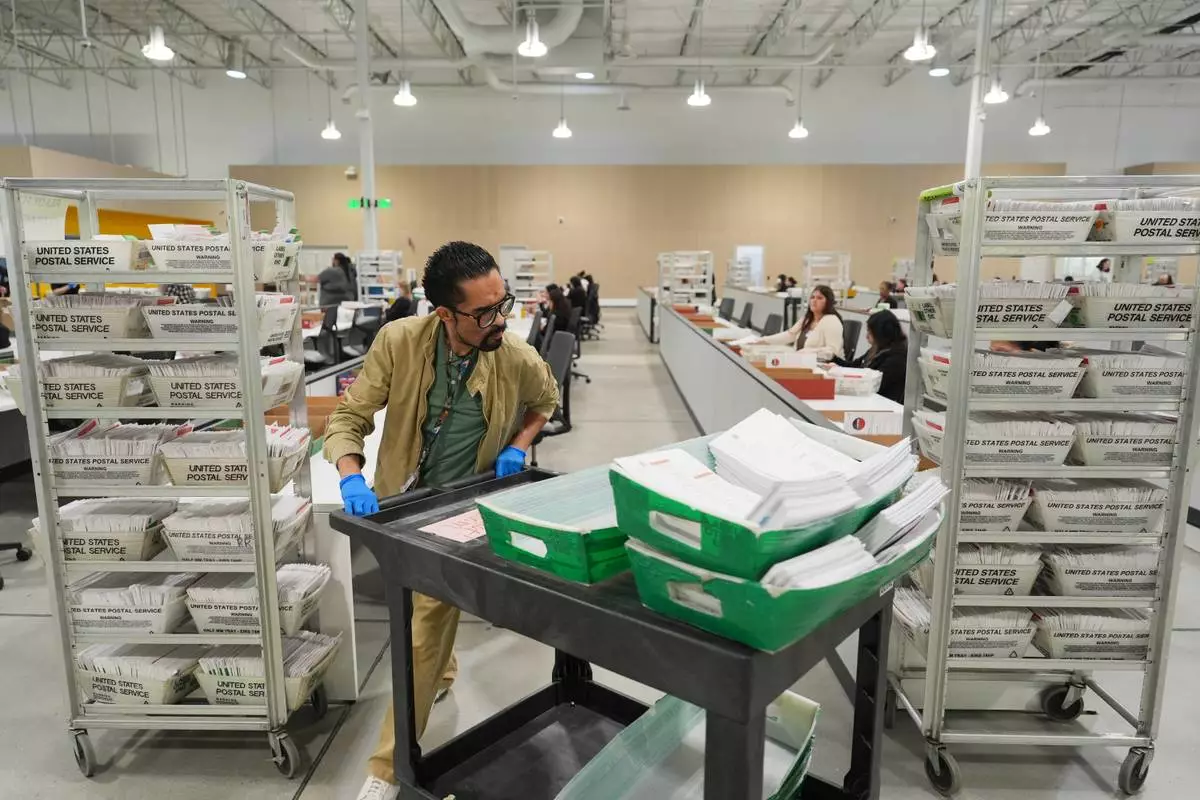
FILE - Ballots are sorted the day after California's primary election at the LA County Ballot Processing Center, June 3, 2026, in City of Industry, Calif. (AP Photo/Jae C. Hong, File)
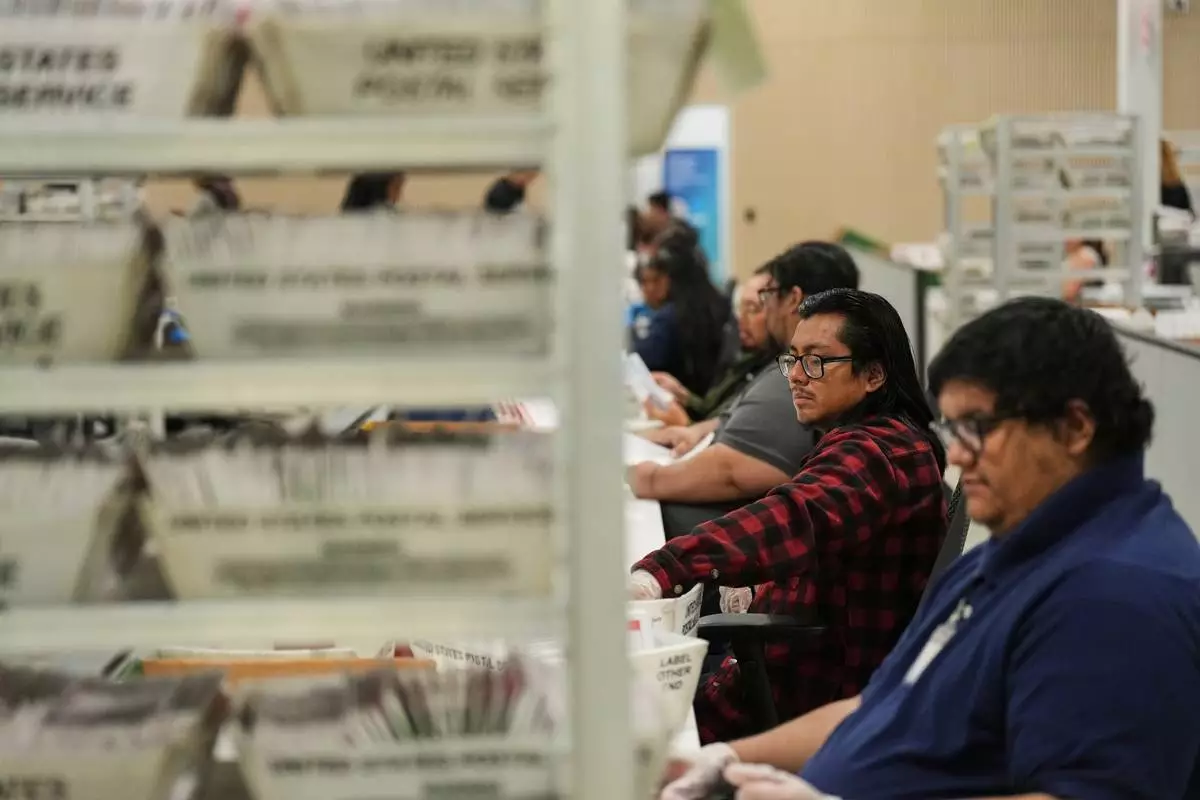
FILE - Ballots are sorted the day after California's primary election at the LA County Ballot Processing Center, June 3, 2026, in City of Industry, Calif. (AP Photo/Jae C. Hong, File)