Skip to Content Facebook Feature Image

A winter of hunger looms for residents trapped in Russian-occupied city in Ukraine

News

A winter of hunger looms for residents trapped in Russian-occupied city in Ukraine
News

News

A winter of hunger looms for residents trapped in Russian-occupied city in Ukraine

2026-10-17 12:01 Last Updated At:12:11

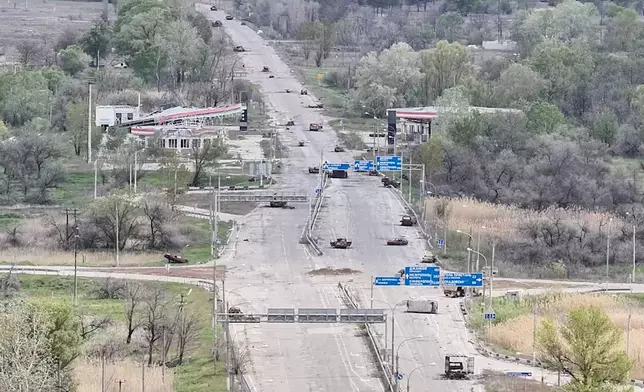
Food and medical supplies have been scarce for months in Oleshky, which sits on the Dnipro River that separates Ukrainian forces from the city’s Russian occupiers. There’s no electricity, heat or running water. Roads leading from town are mined and dotted with burned-out cars. Menacing drones buzz overhead.

One desperate resident watched the front-line city slide further toward a humanitarian crisis as its trapped population dwindled to fewer than 2,000 people. She decided it was time to escape via what's been dubbed “the road of death.”

More Images
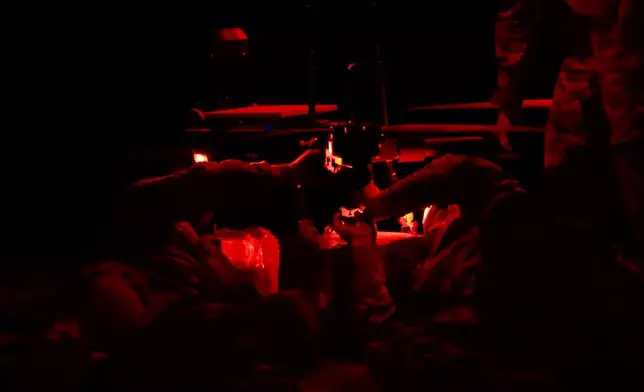
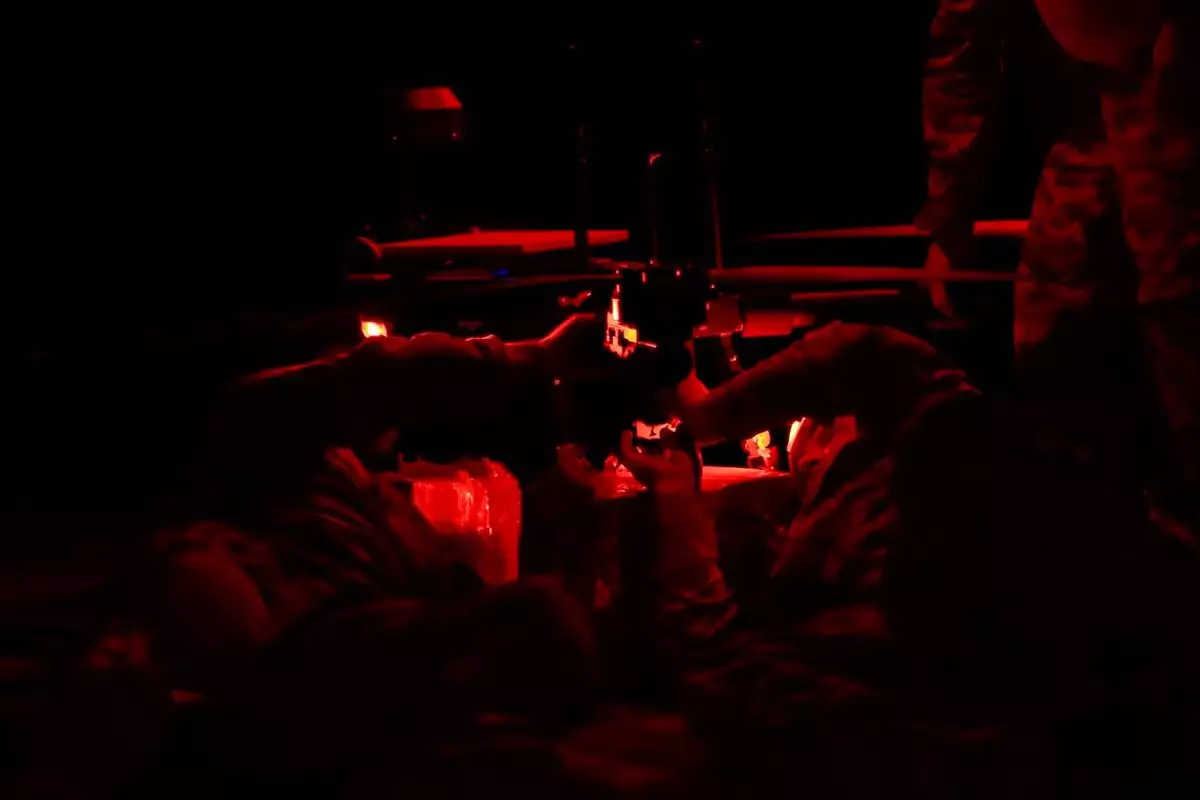
In this undated image from video provided by the Ukrainian 34th Separate Marine Brigade "Borysfen" on Oct. 4, 2026, Ukrainian soldiers at an undisclosed location in the Kherson region of Ukraine attach a parcel of supplies to a drone before a flight to the Russian-occupied city of Oleshky. (Ukrainian 34th Separate Marine Brigade "Borysfen" via AP)
In this undated image from video provided by the Ukrainian 34th Separate Marine Brigade "Borysfen" on Oct. 4, 2026, Ukrainian soldiers at an undisclosed location in the Kherson region of Ukraine attach a parcel of supplies to a drone before a flight to the Russian-occupied city of Oleshky. (Ukrainian 34th Separate Marine Brigade "Borysfen" via AP)

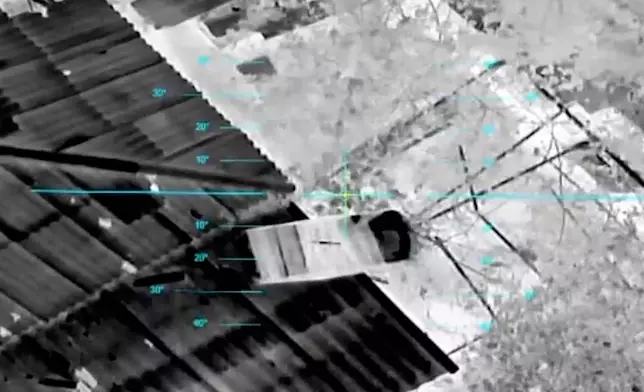
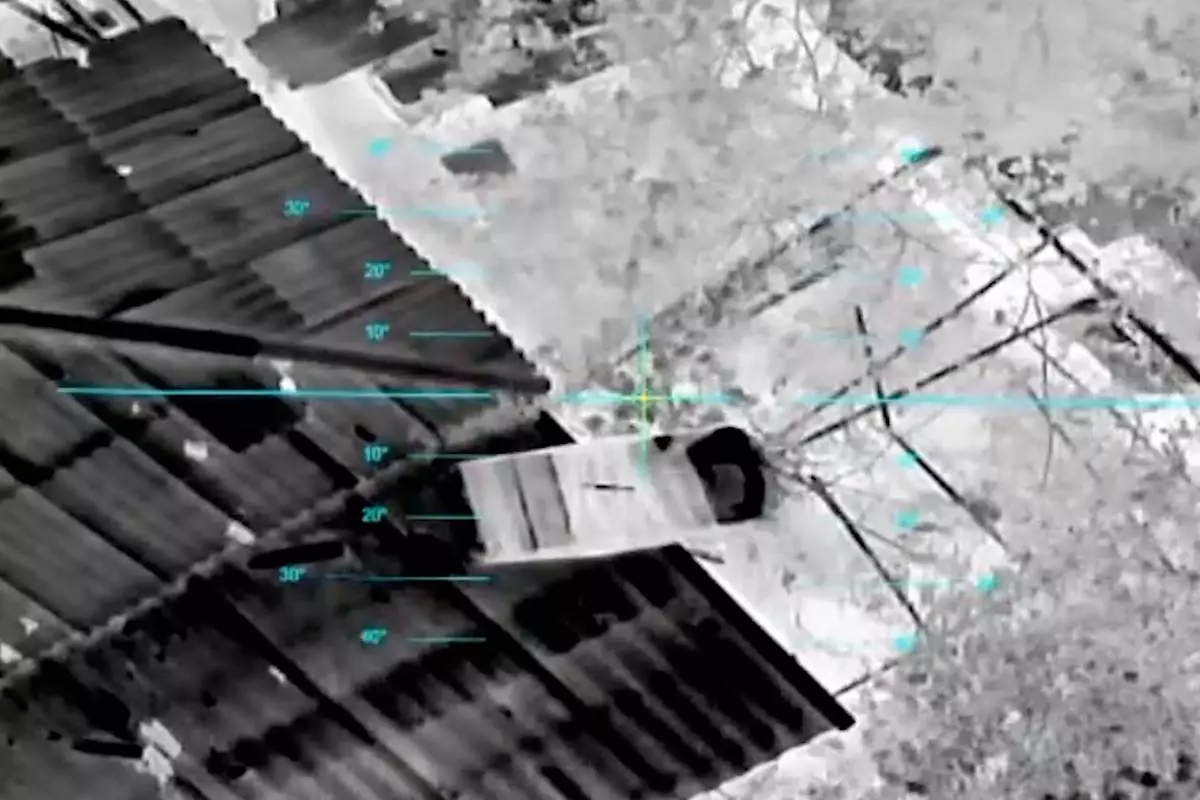
In this undated image from video provided by the Ukrainian 34th Separate Marine Brigade "Borysfen" on Oct. 4, 2026, a drone drops a parcel of supplies to civilians in the Russian-occupied city of Oleshky in the Kherson region of Ukraine. (Ukrainian 34th Separate Marine Brigade "Borysfen" via AP)
In this undated image from video provided by the Ukrainian 34th Separate Marine Brigade "Borysfen" on Oct. 4, 2026, a drone drops a parcel of supplies to civilians in the Russian-occupied city of Oleshky in the Kherson region of Ukraine. (Ukrainian 34th Separate Marine Brigade "Borysfen" via AP)

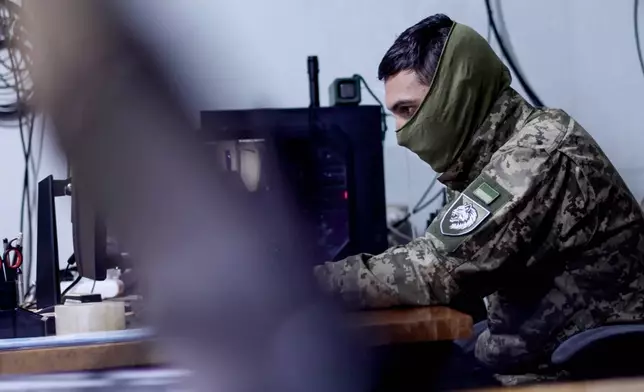
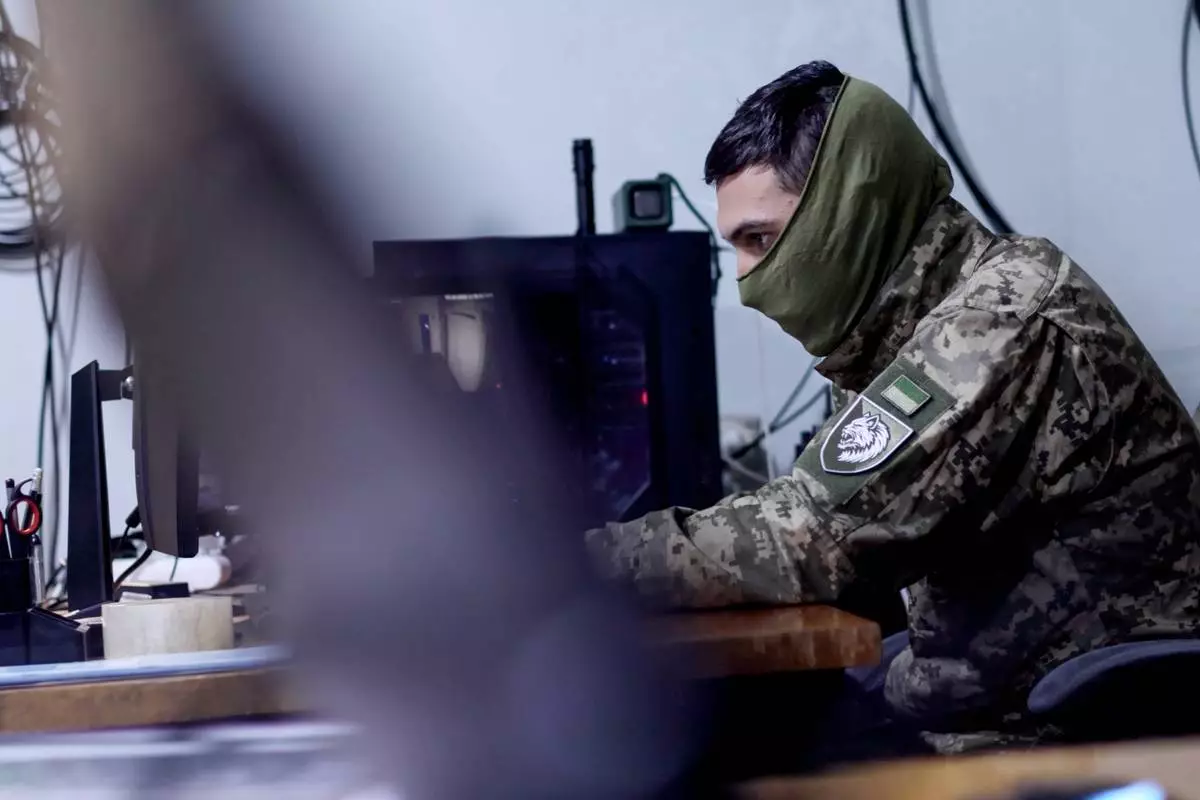
In this undated image from video provided by the Ukrainian 34th Separate Marine Brigade "Borysfen" on Oct. 4, 2026, a Ukrainian soldier launches a drone above the Russian-occupied city of Oleshky from an undisclosed location in the Kherson region of Ukraine. (Ukrainian 34th Separate Marine Brigade "Borysfen" via AP)
In this undated image from video provided by the Ukrainian 34th Separate Marine Brigade "Borysfen" on Oct. 4, 2026, a Ukrainian soldier launches a drone above the Russian-occupied city of Oleshky from an undisclosed location in the Kherson region of Ukraine. (Ukrainian 34th Separate Marine Brigade "Borysfen" via AP)

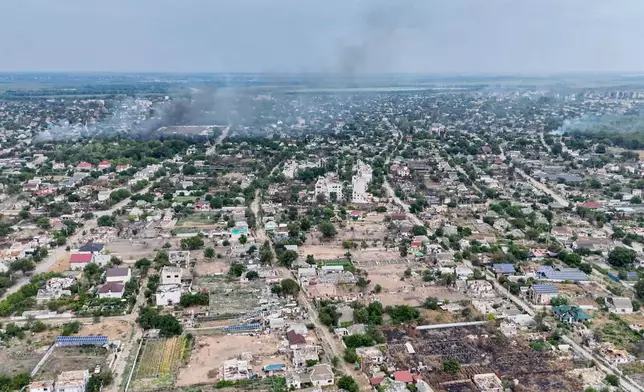
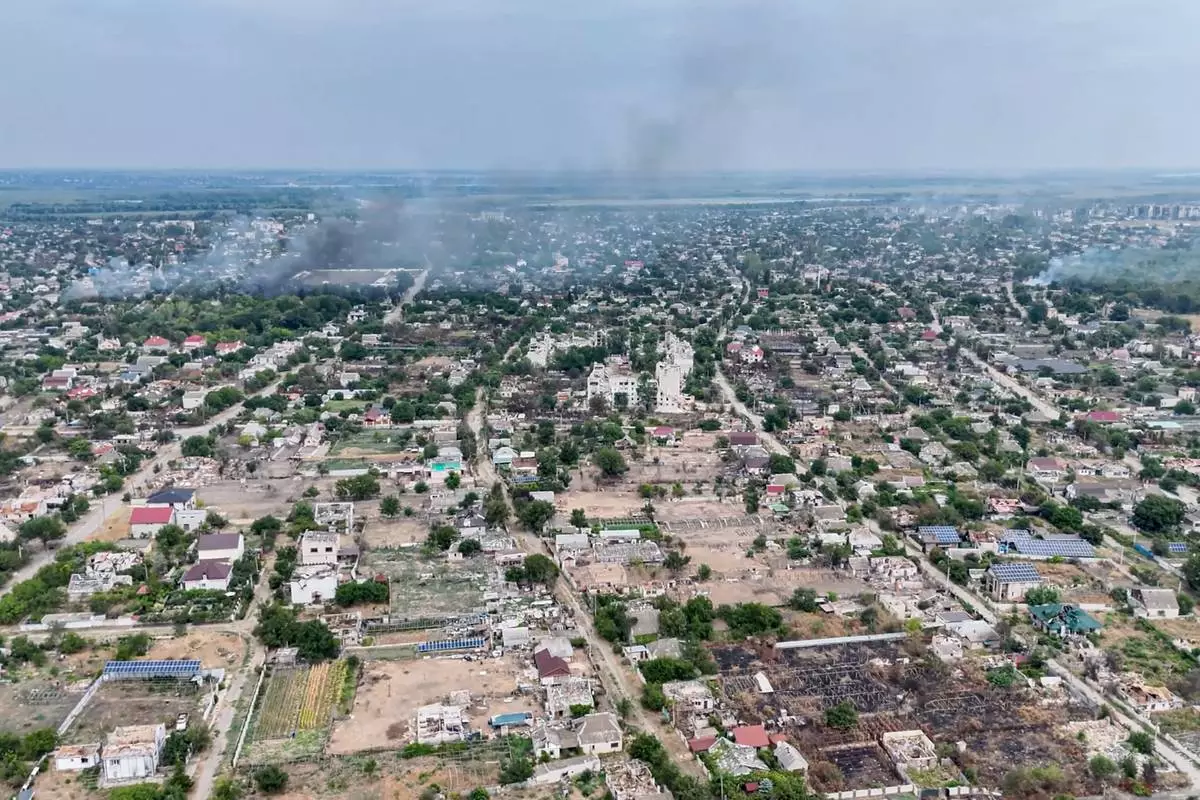
In this undated image from video provided by the Ukrainian 34th Separate Marine Brigade "Borysfen" on Sept. 22, 2026, smoke rises from a residential neighborhood in the Russian-occupied city of Oleshky in the Kherson region of Ukraine. (Ukrainian 34th Separate Marine Brigade "Borysfen" via AP)
In this undated image from video provided by the Ukrainian 34th Separate Marine Brigade "Borysfen" on Sept. 22, 2026, smoke rises from a residential neighborhood in the Russian-occupied city of Oleshky in the Kherson region of Ukraine. (Ukrainian 34th Separate Marine Brigade "Borysfen" via AP)

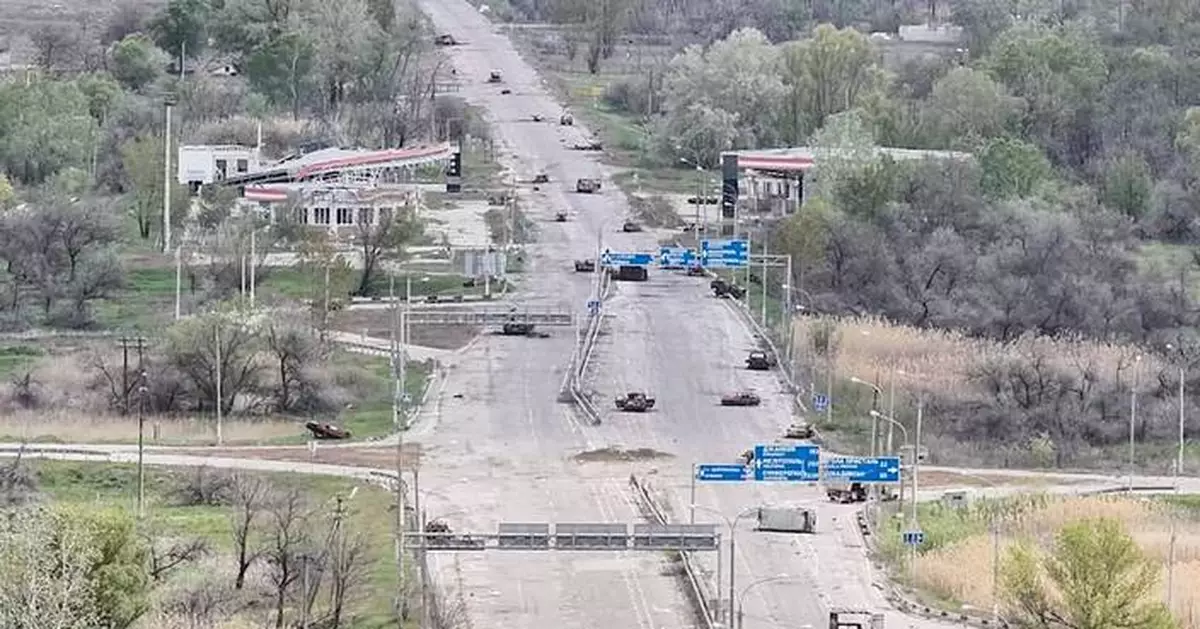
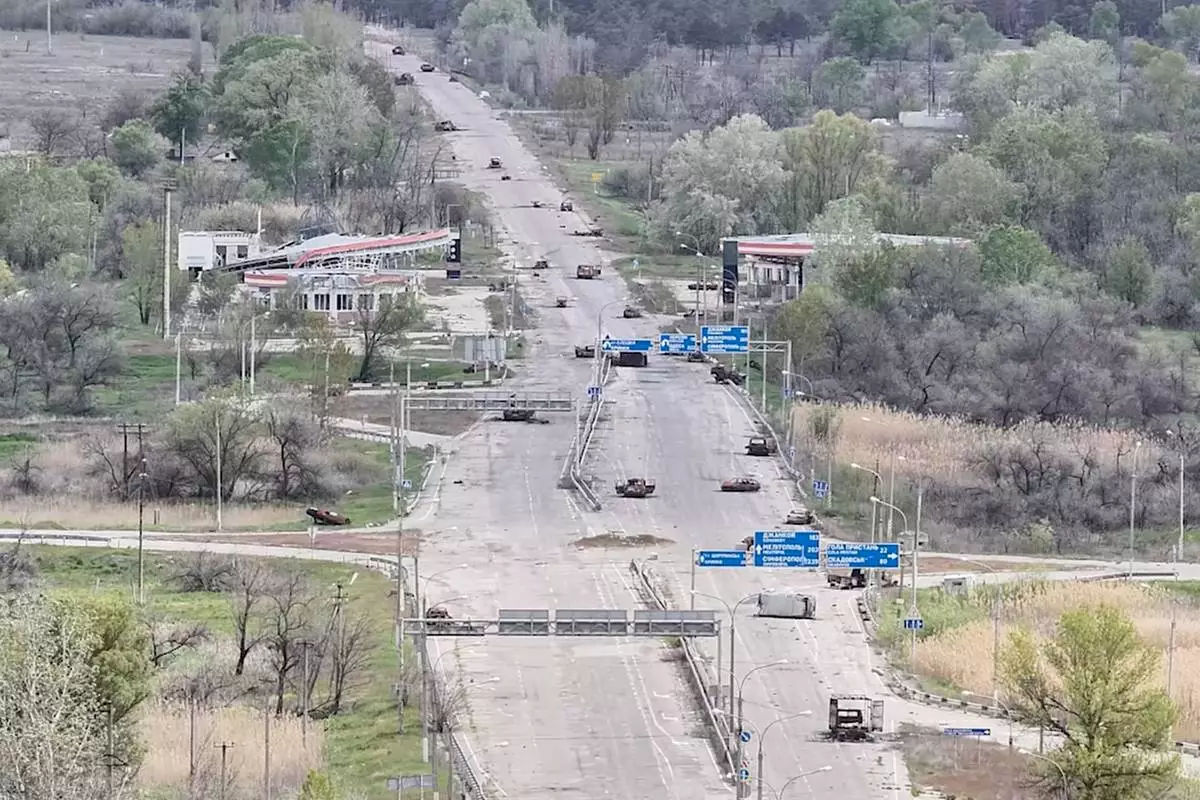
In this undated image from video provided by the Ukrainian 34th Separate Marine Brigade "Borysfen" on Sept. 30, 2026, destroyed cars are seen on a highway from the Russian-occupied city of Oleshky in the Kherson region of Ukraine. (Ukrainian 34th Separate Marine Brigade "Borysfen" via AP)

In this undated image from video provided by the Ukrainian 34th Separate Marine Brigade "Borysfen" on Sept. 30, 2026, destroyed cars are seen on a highway from the Russian-occupied city of Oleshky in the Kherson region of Ukraine. (Ukrainian 34th Separate Marine Brigade "Borysfen" via AP)

So the 40-year-old former hairdresser walked -- for 20 kilometers (12 miles), along the partially mined road — fearing that “every step could have been my last," she said.

Once a city of about 24,000, Oleshky was captured by Moscow’s forces on the first day of their full-scale invasion of Ukraine in 2022. Its buildings were shelled and burned, and its infrastructure damaged. Further calamity struck in June 2023 when floodwaters inundated the city after the Kakhovka Dam collapsed from an explosion that an Associated Press investigation found was likely caused by the Russian military, killing hundreds of residents.

And now those still left in the battered city along Ukraine's southeastern front face death from hunger or disease as another harsh winter looms, with no agreement in sight for even a humanitarian evacuation.

“There is nothing left in Oleshky,” said the woman, who fled in August and spoke to The Associated Press on condition of anonymity because she feared for her security. “No food, no supplies, no medical care, no aid whatsoever.”

Both sides blame each other for the catastrophe. Russia says Ukraine deliberately blocks supplies and evacuations; Kyiv counters that Moscow is effectively holding civilians hostage.

Ukraine has appealed repeatedly for a local ceasefire to organize evacuations. Russia, which as the occupying power is obligated by international law to ensure civilians under its control have what they need to survive, has made no commitment.

President Volodymyr Zelenskyy mentioned Oleshky’s suffering at the hands of Russia on Oct. 12 at an international forum in Poland, saying the city had been “razed to the ground.”

Ukraine is "trying to help these people, but they are under occupation,” he said. “Unblock the city of Oleshky and bring our citizens back.”

In a phone call Friday with President Vladimir Putin, Pope Leo XIV urged a ceasefire to allow food and medicine deliveries to Oleshky and to safely evacuate civilians, the Vatican said. The Kremlin said Putin voiced support for the Vatican efforts to help protect the population and secure vital supplies, and voiced readiness to cooperate.

Remaining residents reportedly scrounge for food amid destroyed buildings, or try to grow vegetables in garden plots. Water is drawn from wells. Firewood is used for warmth. Bodies at the city morgue decompose with no electricity.

Another 100 bodies fill the basement of Oleshky's hospital, said Tetiana Hasanenko, the exiled head of the city's Ukrainian military administration.

The U.N. human rights office said the last regular food delivery by road was May 26. Oleshky's Russian-installed officials said this month they delivered 2 tons of aid, although they admitted it was hardly enough.

The U.N. office said Oleshky's hospital lacks medicine and basic supplies, drone attacks prevent ambulances from reaching patients, and it's unsafe to take them elsewhere.

“It is impossible to live in Oleshky, there is no life left there,” said another resident who fled to Russian-held Mariupol and spoke on condition of anonymity because he feared for his security.

Even the Russian soldiers have moved deeper into the occupied part of the Kherson region, farther from the Dnipro, according to the former hairdresser. The Moscow-appointed authorities seemed to have "given up on us a long time ago,” she said.

She considered herself lucky to have survived the journey from Oleshky to the village of Radensk, also occupied by Russia but farther from the front line and thus better off.

She said an acquaintance who tried to bring food into Oleshky was killed on the road when his car came under fire, adding that she saw a photo of him “covered in blood, with bread and chicken legs scattered around him.”

Hasanenko said the route from Oleshky to Radensk is known as “the road of death” because "corpses lie on this road and no one is taking them away." She cited an explosion this month that killed four people and left an 86-year-old man badly wounded.

Russian troops were driven out of the larger city of Kherson across the Dnipro in 2022 but mined the roads around Oleshky, said Lt. Yevhen Voronetskyi, a spokesman with Ukraine’s 34th Separate Marine Brigade. Kyiv's drones also remotely mined forest paths used by Russian troops, he said.

Some evacuees who make it to Radensk try to return to Oleshky with food “because they have children waiting at home, or immobile elderly parents," Hasanenko said, saying at least 35 children remain there.

Ksenia Arkhipova, who fled Oleshky in 2022 and now helps others leave, said nearby occupied towns and villages in a zone along the Dnipro face similar dire conditions and mined roads.

It takes six to eight hours to walk or cycle from Oleshky to Radensk, she said, because evacuees might be older and weakened by hunger, or they have to wait out attacks or carry their bikes to avoid the mines.

Travel is only possible in dry weather, Arkhipova said, and "I'm terrified at the thought of the coming winter, when many people in Oleshky will be simply doomed."

Some of them don't want to leave their homes or risk a dangerous journey, Voronetskyi said.

Russia and Ukraine have discussed a possible temporary ceasefire and humanitarian corridor but reached no agreement, the U.N. human rights office said. “With winter approaching, the issue is urgent,” it said.

While communications with Moscow continue, "Russia has not provided clear, verifiable guarantees for conducting a humanitarian operation,” according to the office of Ukrainian human rights commissioner Dmytro Lubinets.

The mined roads make an evacuation impossible, and not all residents want to leave, according to the city's Russian-installed officials.

Vladimir Saldo, who was appointed by Moscow as governor of the occupied part of the Kherson region, promised earlier this month to help anyone who wants to leave the town. The former hairdresser told AP that residents have appealed to local authorities several times for a humanitarian corridor and submitted lists of those hoping to leave, but nothing came of it.

The International Committee of the Red Cross was ready to assist an evacuation but only if both countries agree and there are security guarantees for civilians, said ICRC spokesperson Sarah Davies.

Voronetskyi, the Ukrainian lieutenant, said the food shortages in Oleshky have persisted for months and are getting “worse and worse.”

His brigade has flown drones capable of carrying at least 20 kilograms (44 pounds) each over the Dnipro into the city with food aid for at least a year, he said, adding that more than 7 tons were delivered since September.

The parcels contained canned food, ingredients for baking bread, along with buckwheat, rice, sugar and candy for children. along with hygiene kits and medicine, including insulin, he said.

But Voronetskyi cautioned that these supplies weren't meant to get people through the winter but to help them "gather their strength, pack their things ... and still try to leave Oleshky.”

Russia should “come in and take the people out,” he said. "No one will stop you.”

Karmanau reported from Tallinn, Estonia, and Arhirova reported from Kyiv, Ukraine.
In this undated image from video provided by the Ukrainian 34th Separate Marine Brigade "Borysfen" on Oct. 4, 2026, Ukrainian soldiers at an undisclosed location in the Kherson region of Ukraine attach a parcel of supplies to a drone before a flight to the Russian-occupied city of Oleshky. (Ukrainian 34th Separate Marine Brigade "Borysfen" via AP)
In this undated image from video provided by the Ukrainian 34th Separate Marine Brigade "Borysfen" on Oct. 4, 2026, Ukrainian soldiers at an undisclosed location in the Kherson region of Ukraine attach a parcel of supplies to a drone before a flight to the Russian-occupied city of Oleshky. (Ukrainian 34th Separate Marine Brigade "Borysfen" via AP)

In this undated image from video provided by the Ukrainian 34th Separate Marine Brigade "Borysfen" on Oct. 4, 2026, a drone drops a parcel of supplies to civilians in the Russian-occupied city of Oleshky in the Kherson region of Ukraine. (Ukrainian 34th Separate Marine Brigade "Borysfen" via AP)
In this undated image from video provided by the Ukrainian 34th Separate Marine Brigade "Borysfen" on Oct. 4, 2026, a drone drops a parcel of supplies to civilians in the Russian-occupied city of Oleshky in the Kherson region of Ukraine. (Ukrainian 34th Separate Marine Brigade "Borysfen" via AP)

In this undated image from video provided by the Ukrainian 34th Separate Marine Brigade "Borysfen" on Oct. 4, 2026, a Ukrainian soldier launches a drone above the Russian-occupied city of Oleshky from an undisclosed location in the Kherson region of Ukraine. (Ukrainian 34th Separate Marine Brigade "Borysfen" via AP)
In this undated image from video provided by the Ukrainian 34th Separate Marine Brigade "Borysfen" on Oct. 4, 2026, a Ukrainian soldier launches a drone above the Russian-occupied city of Oleshky from an undisclosed location in the Kherson region of Ukraine. (Ukrainian 34th Separate Marine Brigade "Borysfen" via AP)

In this undated image from video provided by the Ukrainian 34th Separate Marine Brigade "Borysfen" on Sept. 22, 2026, smoke rises from a residential neighborhood in the Russian-occupied city of Oleshky in the Kherson region of Ukraine. (Ukrainian 34th Separate Marine Brigade "Borysfen" via AP)
In this undated image from video provided by the Ukrainian 34th Separate Marine Brigade "Borysfen" on Sept. 22, 2026, smoke rises from a residential neighborhood in the Russian-occupied city of Oleshky in the Kherson region of Ukraine. (Ukrainian 34th Separate Marine Brigade "Borysfen" via AP)

In this undated image from video provided by the Ukrainian 34th Separate Marine Brigade "Borysfen" on Sept. 30, 2026, destroyed cars are seen on a highway from the Russian-occupied city of Oleshky in the Kherson region of Ukraine. (Ukrainian 34th Separate Marine Brigade "Borysfen" via AP)
In this undated image from video provided by the Ukrainian 34th Separate Marine Brigade "Borysfen" on Sept. 30, 2026, destroyed cars are seen on a highway from the Russian-occupied city of Oleshky in the Kherson region of Ukraine. (Ukrainian 34th Separate Marine Brigade "Borysfen" via AP)
VATICAN CITY (AP) — There’s a telling anecdote from St. John Paul II's pontificate that illustrates how Pope Leo XIV and his American style of governing have changed the Vatican and the way it handles papal health crises.

The Polish pope, 84 at the time, was back at Gemelli hospital battling an acute respiratory infection, breathing problems and the worsening effects on his larynx of Parkinson’s disease, which had made speaking nearly impossible and breathing difficult.

Doctors performed a tracheotomy under anesthesia, an incision in John Paul’s windpipe, to help him breathe. And yet the next morning, his spokesman gave reporters a remarkably rosy, seemingly implausible update: John Paul had eaten his regular breakfast of coffee with milk, 10 biscuits and a yoghurt.

“Something that would suffocate anyone,” church historian Alberto Melloni recalled Friday. “But it was normal then that they told lies about the pope. Those were the rules of the game.”

Two papacies and twenty years later, Pope Leo XIV has changed the rules of the game.

Not only did history’s first American pope announce himself that he had a lung nodule that required surgery – live on television during his Sunday noon blessing from the Apostolic Palace — but Leo's doctors have been providing the medical updates for his recovery, not the Vatican.

Every day since Leo’s surgery Tuesday, Leo’s personal physician Dr. Luigi Carbone and the head of thoracic surgery at Gemelli, Dr. Stefano Margaritora, have signed the medical bulletins updating the world on Leo’s recovery. The Vatican spokesman has provided information primarily involving non-medical details: The Mass Leo celebrated, the Vatican officials who visited.

The written medical updates are spare, but provide authoritative information with a degree of accountability and transparency that has long been anathema to the Vatican.

Leo’s handling of his cancer is in many ways textbook American-style corporate good governance, applied to the Catholic Church, said Julie Rubio, a professor of Christian social ethics at the Jesuit school of theology at Santa Clara University.

“Even though it doesn’t seem all that revolutionary, ‘best practices’ of relying on experts, transparency, evaluation -- all those kinds of things are practices that are good for an institution,” she said.

She said Leo, the American math major pope, had already brought such best practices into his governing style at the Vatican, most visibly in the official rollout in May of his encyclical on artificial intelligence.

Rather than have a handful of prelates talk about the encyclical at a Vatican press conference, Leo himself presided over the presentation. To provide a spectrum of voices, perspective and experience, Leo had on the stage with him three cardinals, two lay female theologians – from Britain and Congo -- and the co-founder of AI developer Anthropic.

Rubio said the inclusive presentation was in keeping with the effort, begun by Pope Francis, to make the church less clerical and more reflective of the real world. It's a church that relies on lay expertise in the way that Leo relied on medical advice to have the nodule removed, she said.

“Those kinds of practices actually can be pretty transformative to a place,” she said. “Though obviously the transformation is a process.”

The process began to some degree under the Francis pontificate, when the Argentine pope took the reins of the Vatican communications apparatus and gave dozens of sit-down interviews over the course of 12 years, often without informing his media handlers. That level of control precluded a Vatican media operation from spinning tall tales as occurred during John Paul's reign.

But when it came to his own health and governing style, Francis was opaque, stubborn and often shunned expert advice. His go-it-alone attitude, in everything from Vatican diplomacy to communications, extended to his view of doctors. He repeatedly refused medical advice, even as his already fragile respiratory health and mobility deteriorated.

Francis had strained ligaments in his right knee that made walking difficult. But he refused to operate on it, saying he didn’t like the effects of anesthesia. Eventually he was unable to walk and had to use a wheelchair. He similarly refused to go to the hospital as his pneumonia worsened toward the end of his life, even as he swelled with the effects of cortisone and other treatments.

Melloni recalled that Francis was very much a Jesuit, a militant-style religious order and its pope a “Rambo-style” fighter who governed alone. He was, Melloni said, “a man who takes care of himself, a man who if injured fights back, a man who always had to give this proof of military-style valor.”

Leo, on the other hand, is the perfect civilian patient: He listens to expert medical advice and follows it, like most people who get sick, Melloni said. Leo moved quickly to remove the nodule, considering other cases of cancer in his family, with his brother currently being treated for blood cancer, he said.

"He knows that this disease —as is obviously the case with all diseases of that sort — is unpredictable,” he said.

Leo is making his mark on governing, even from the hospital, and showing who is in charge in other ways, too.

Late Friday, the Vatican announced he had spoken by telephone with Russian President Vladimir Putin and “expressed his deep concern about the grave humanitarian situation in the city of Oleshky, in the Kherson region, and called for a ceasefire to allow the delivery of food and medical assistance, and the voluntary and safe evacuation of the civilian population.”

The statement was significant, showing Leo was well enough to conduct official diplomatic business from the hospital, was keeping up with world events and was continuing to promote his message of peace as he recovers from surgery. The Kremlin readout of the call suggested progress had actually been made on the humanitarian front.

But the demonstration of Leo's leadership was significant also because it came as intrigue was consuming the Vatican over the fate of the secretary of state, Cardinal Pietro Parolin. The seasoned diplomat had said Leo's pontificate may have to be “adjusted” given his cancer diagnosis, a bold claim given all indications were that Leo was recovering well.

Parolin, who had been Francis' top deputy but remains in the job, was considered a leading contender in the conclave that elected Leo and was recently passed over as dean of the College of Cardinals.

Perhaps tellingly, he was not among the Vatican officials who visited Leo Friday.

Associated Press religion coverage receives support through the AP’s collaboration with The Conversation US, with funding from Lilly Endowment Inc. The AP is solely responsible for this content.

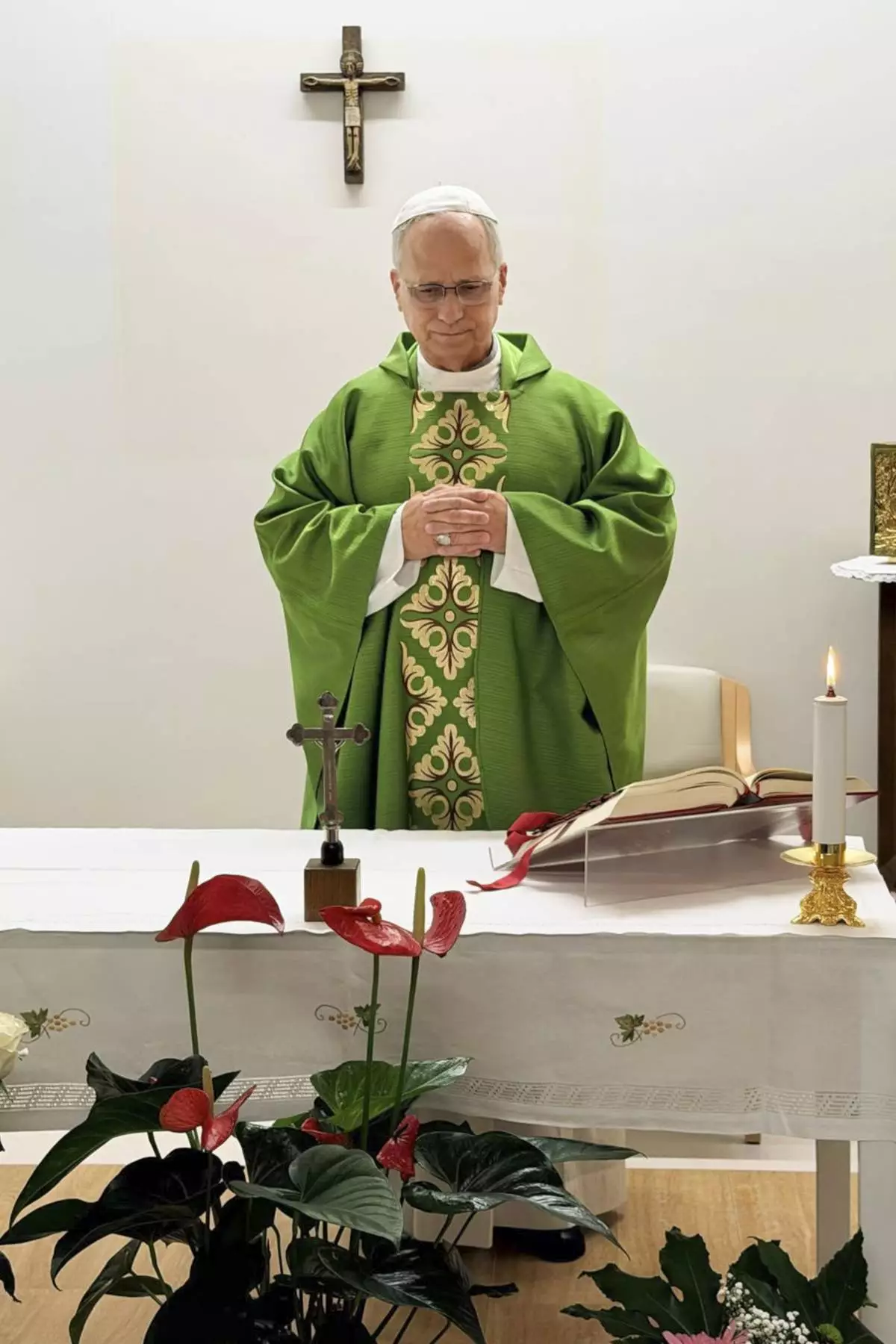
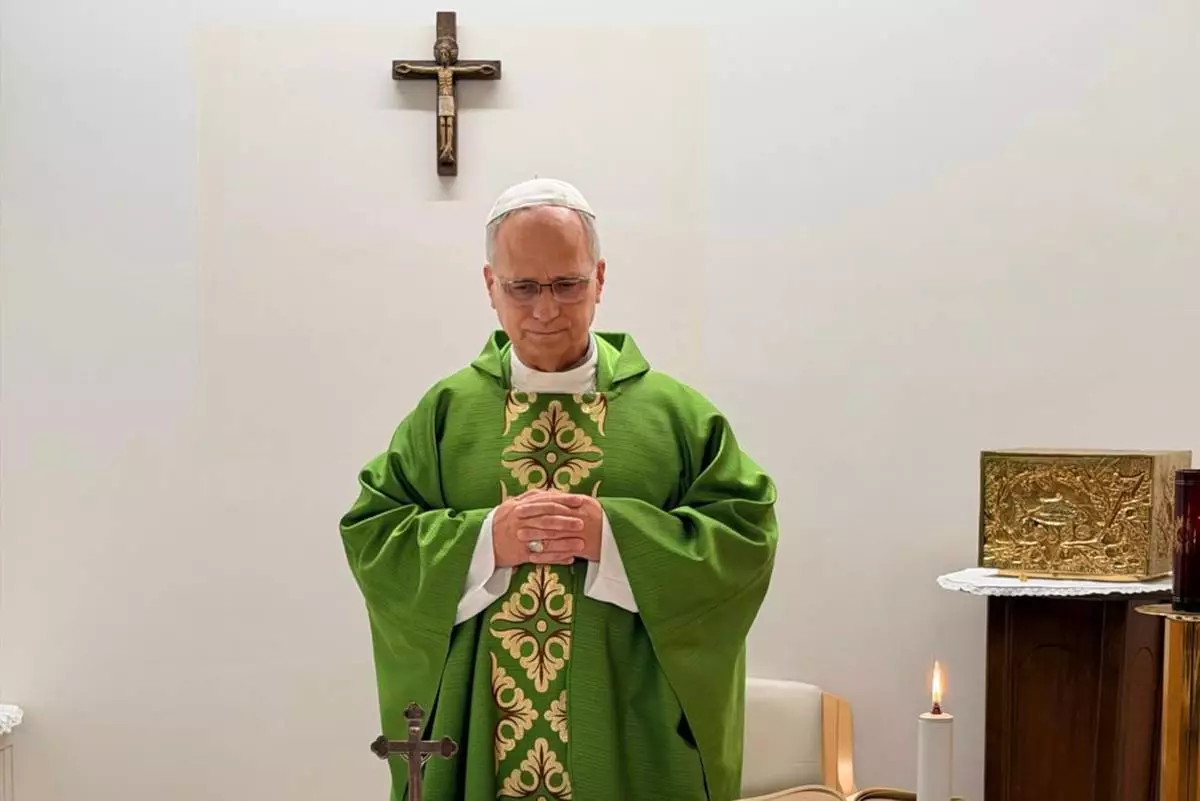
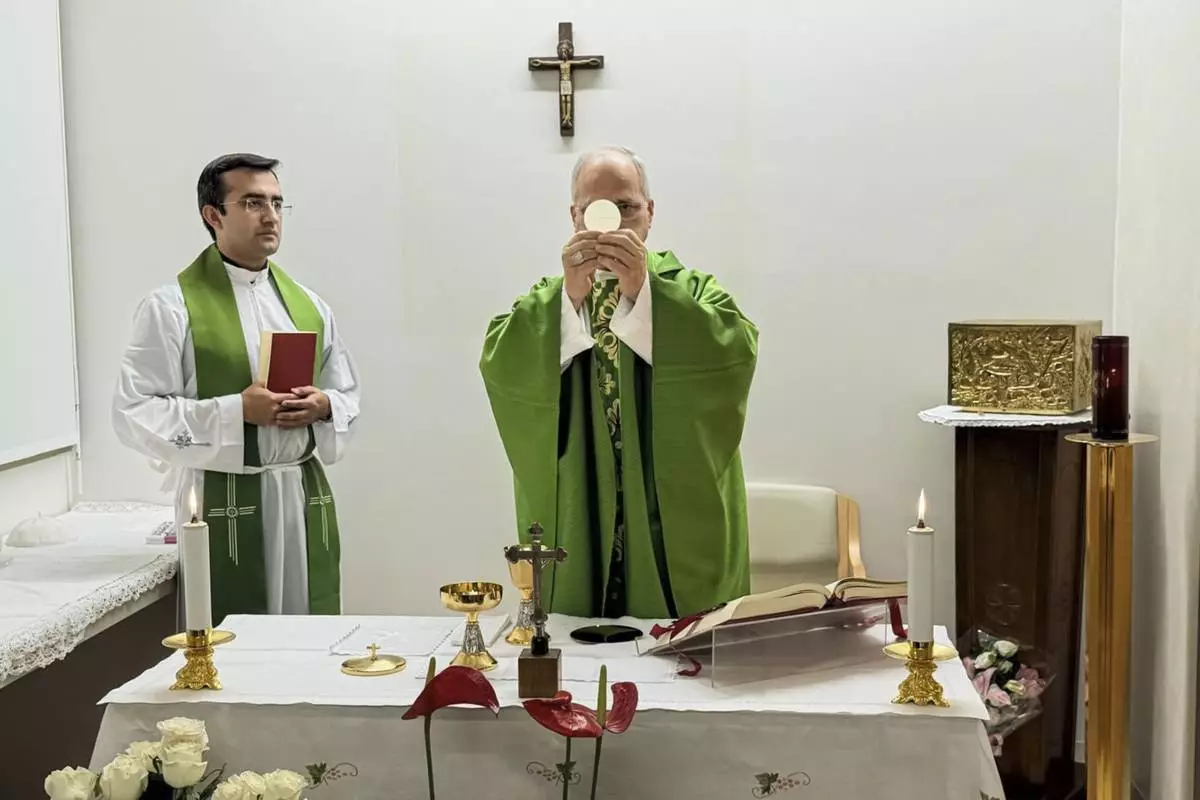
This picture, released by Vatican Media on Friday, Oct. 16, 2026, shows Pope Leo XIV, flanked by his personal secretary, Monsignor Edgard Iván Rimaycuna Inga, left, celebrating Mass at the Agostino Gemelli Polyclinic in Rome, where he is recovering after having cancer removed from his right lung. (Vatican Media via AP)

This picture, released by Vatican Media on Friday, Oct. 16, 2026, shows Pope Leo XIV, flanked by his personal secretary, Monsignor Edgard Iván Rimaycuna Inga, left, celebrating Mass at the Agostino Gemelli Polyclinic in Rome, where he is recovering after having cancer removed from his right lung. (Vatican Media via AP)

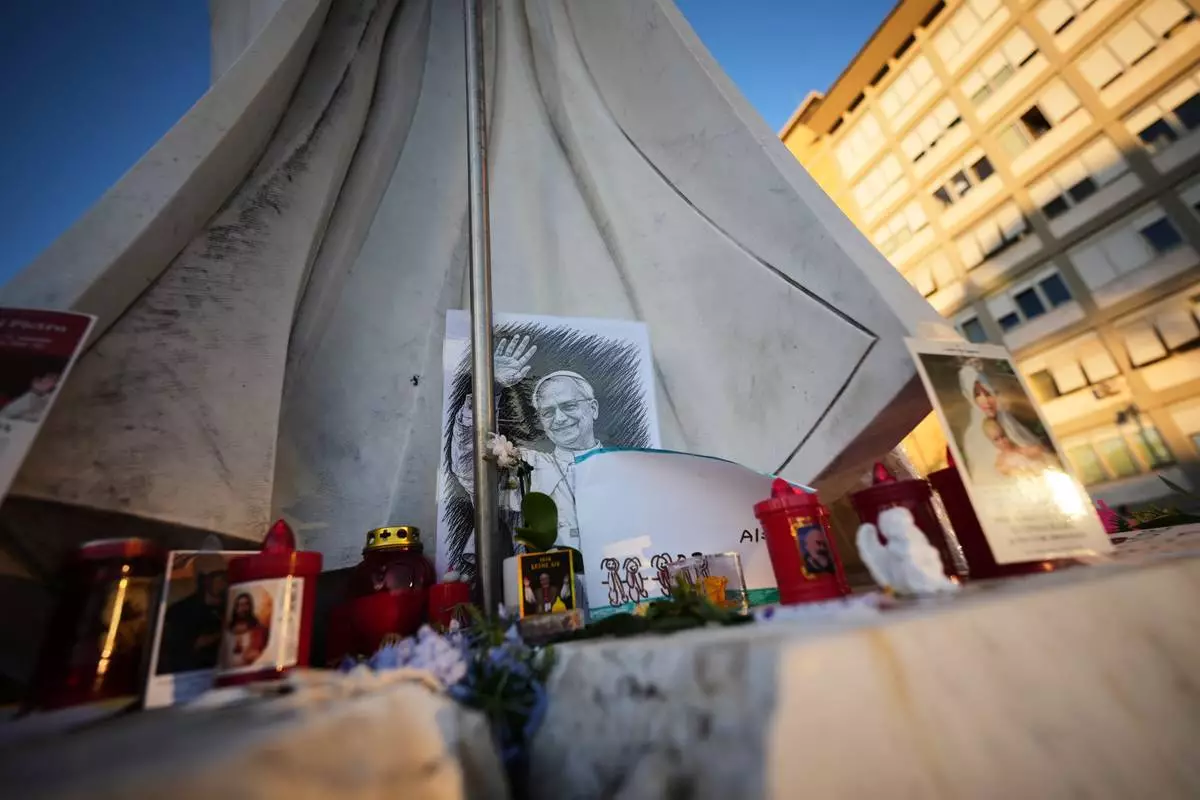
An image of Pope Leo XIV rests at the base of a statue of Pope St. John Paul II at the Agostino Gemelli Polyclinic, where Leo is hospitalized, in Rome, Friday, Oct. 16, 2026. (AP Photo/Andrew Medichini)

An image of Pope Leo XIV rests at the base of a statue of Pope St. John Paul II at the Agostino Gemelli Polyclinic, where Leo is hospitalized, in Rome, Friday, Oct. 16, 2026. (AP Photo/Andrew Medichini)

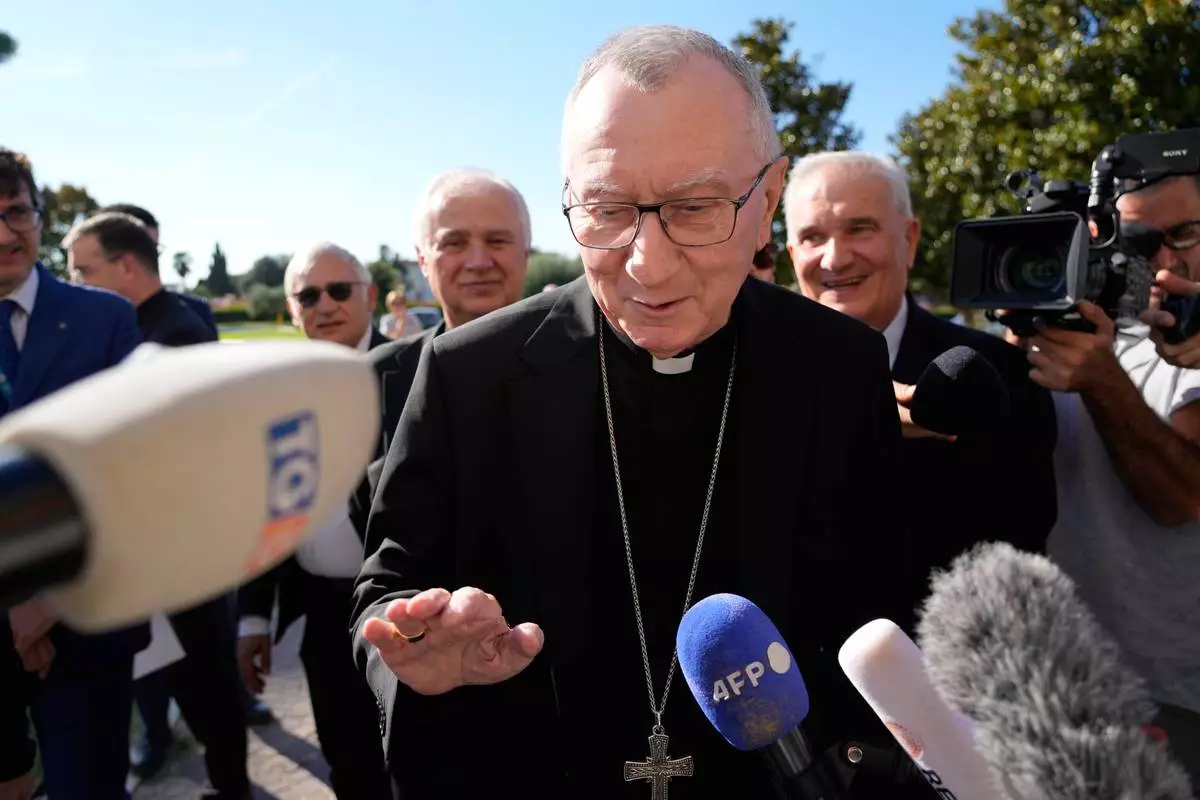
Vatican Secretary of State Pietro Parolin arrives to attend an international congress titled "Human Splendor: Preserving Fertility, Treating Infertility" at the Agostino Gemelli Polyclinic where Pope Leo XIV is hospitalised, in Rome, Friday, Oct. 16, 2026. (AP Photo/Gregorio Borgia)

Vatican Secretary of State Pietro Parolin arrives to attend an international congress titled "Human Splendor: Preserving Fertility, Treating Infertility" at the Agostino Gemelli Polyclinic where Pope Leo XIV is hospitalised, in Rome, Friday, Oct. 16, 2026. (AP Photo/Gregorio Borgia)

This picture, released by Vatican Media on Friday, Oct. 16, 2026, shows Pope Leo XIV celebrating Mass at the Agostino Gemelli Polyclinic in Rome, where he is recovering after having cancer removed from his right lung. (Vatican Media via AP)

This picture, released by Vatican Media on Friday, Oct. 16, 2026, shows Pope Leo XIV celebrating Mass at the Agostino Gemelli Polyclinic in Rome, where he is recovering after having cancer removed from his right lung. (Vatican Media via AP)

This picture, released by Vatican Media on Friday, Oct. 16, 2026, shows Pope Leo XIV celebrating Mass at the Agostino Gemelli Polyclinic in Rome, where he is recovering after having cancer removed from his right lung. (Vatican Media via AP)

This picture, released by Vatican Media on Friday, Oct. 16, 2026, shows Pope Leo XIV celebrating Mass at the Agostino Gemelli Polyclinic in Rome, where he is recovering after having cancer removed from his right lung. (Vatican Media via AP)

Recommended Articles