China has completed this year's issuance of ultra-long special treasury bonds, bringing the total to 1.3 trillion yuan (about 193 billion U.S. dollars), after the Ministry of Finance issued such bonds to raise an additional 20 billion yuan on Friday.
The issuance is in line with this year's government work report, which proposed raising 1.3 trillion yuan through the bonds to support projects for implementing major national strategies and building security capacity in key areas, as well as large-scale equipment upgrades and consumer goods trade-in programs.
Of the total, 800 billion yuan was allocated to projects for implementing major national strategies and building security capacity in key areas.
Meanwhile, 250 billion yuan was used to support consumer goods trade-in programs, and 200 billion yuan to support large-scale equipment upgrades.
Furthermore, 50 billion yuan was earmarked for the establishment of a special fiscal-financial coordination fund to boost domestic demand.
Ultra-long special treasury bonds are an important component of China's current fiscal policy toolkit. Since 2024, China has issued such bonds for three consecutive years, reflecting the continued targeted efforts of a more proactive fiscal policy, according to analysts.
The bond issuance has injected momentum into consumption by boosting consumer goods trade-in programs. Driven by the trade-in programs, retail sales of communication equipment, high energy-efficiency home appliances, and wearable smart devices have maintained rapid growth.
In the first eight months of this year, trade-in programs covered 208 million transactions, involving the sales of 5.35 million vehicles, more than 91 million home appliances, and 108 million digital and smart products, official data showed.
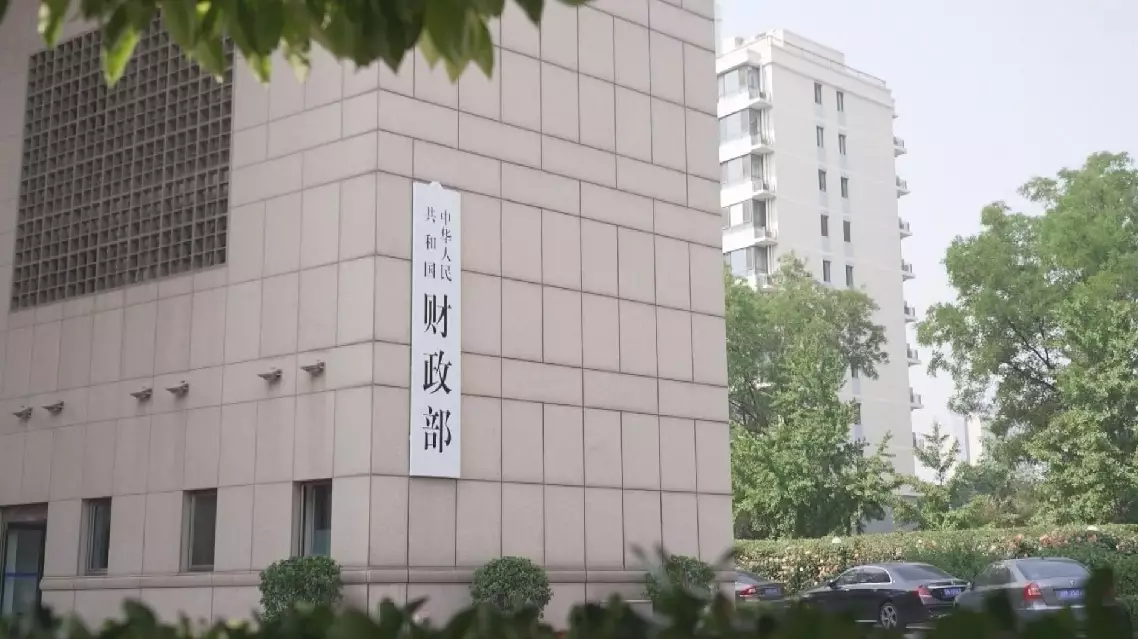
China raises 1.3 trillion yuan via ultra-long special treasury bonds issuance in 2026
Spanish train drivers staged a large-scale strike on Tuesday that disrupted rail services across the country, demanding stronger safety measures to prevent another major accident.
On Tuesday morning, the striking train drivers gathered outside Atocha Railway Station in the Spanish capital Madrid, holding signs calling for better train safety.
A representative of the striking drivers said that after two major high-speed rail accidents within a year, the Spanish government must take measures to provide solid safety guarantees for drivers and passengers, so that similar accidents do not happen again.
The strike caused widespread train delays and cancellations across Spain on Tuesday. The affected services included not only high-speed and long-distance trains but also suburban commuter trains.
Few passengers were seen at the commuter platforms of Atocha station, a major transport hub in the Community of Madrid. Travelers said the sudden strike caught them off guard and seriously disrupted their travel plans.
"I mean, we're just trying to get on. It seems like all the machines are down. I'm not sure if that's why the strike is happening or if that's part of the strike," said Mike, a U.S. traveler in Spain.
On Jan. 18, a fatal incident occurred near the town of Adamuz in the province of Cordoba, when a Malaga-Madrid train left the tracks and struck another train traveling in the opposite direction, causing both to derail. At least 45 people were confirmed dead and more than 100 others injured.
Nine months later, an AVE high-speed train collided with a stationary Iryo high-speed train on October 28, 2026, in the municipality of Los Yebenes close to the Urda passing and stabling point on the Madrid–Seville high-speed rail line, killing 69 people and injuring over 200 more.

Spanish train drivers hold large-scale strike over rail safety

Spanish train drivers hold large-scale strike over rail safety