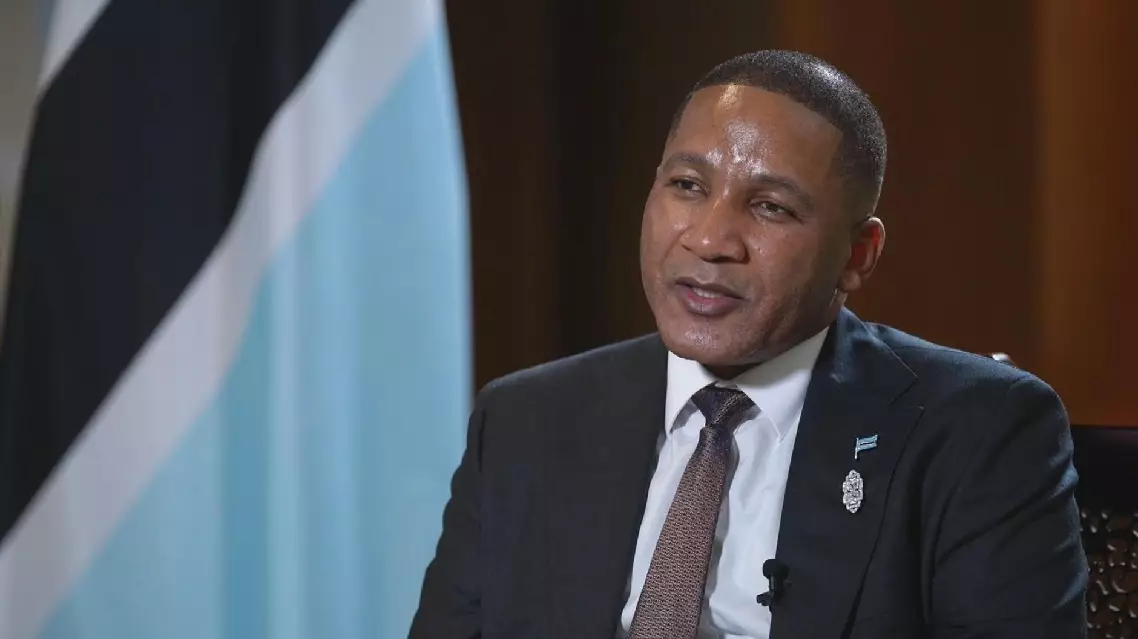
Botswana rejects any attempt to carve up Chinese territory or undermine its sovereignty, President Duma Gideon Boko said on Thursday, in the southern African nation's latest reaffirmation of the one-China principle.
Boko made the remarks in an interview with China Media Group (CMG) during his six-day state visit to China, which began on Monday at the invitation of Chinese President Xi Jinping.
"The one-China principle is inconsistent with anything that seeks to dismember, to parcel out certain portions of Chinese territory and diminish its sovereignty and integrity. And so, the question of Taiwan, to the extent that it seeks the outcome of a dismemberment is inconsistent with our stance on the one-China policy, the one-China principle. And it is something that we can neither countenance nor support," he said.
Earlier this week, China and Botswana issued a joint statement on the establishment of a comprehensive strategic cooperative partnership, in which Botswana recognized that there is but one China in the world, Taiwan is an inalienable part of China's territory, and the government of the People's Republic of China is the sole legal government representing the whole of China.
Botswana committed to one-China principle: Botswana's president
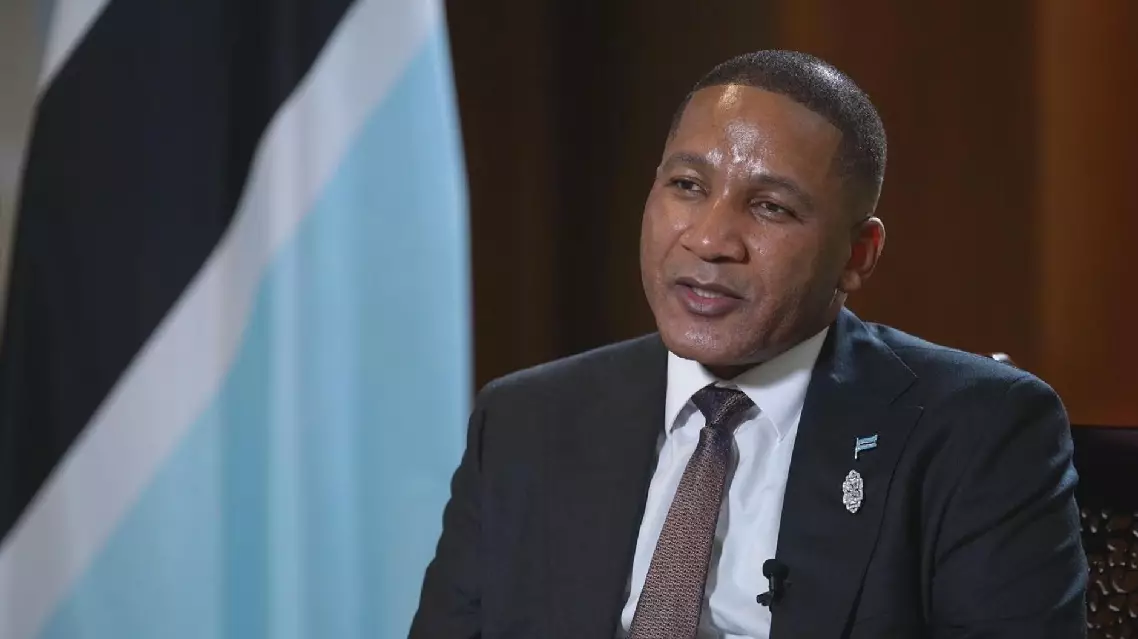
Botswana committed to one-China principle: Botswana's president
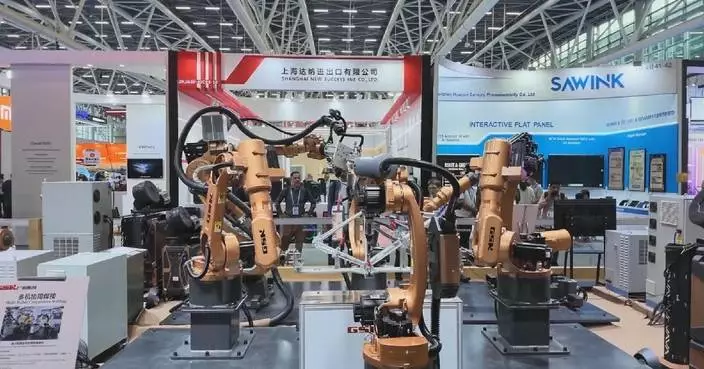
Chinese authorities on Friday began soliciting public opinion on a revision to the catalog of technologies that are subject to export bans or restrictions, with plans to add some technologies in artificial intelligence (AI), biomedicine and photovoltaics to the list.
The adjustment, initiated by the Ministry of Commerce and the Ministry of Science and Technology, covers 40 technologies across the three sectors, according to a notice released by the commerce ministry.
Pre-export registration management will be implemented for these technologies in parallel, the commerce ministry said.
The proposed adjustment includes 23 technologies related to large models, intelligent agents, computing power clusters, and information processing in the AI sector, five technologies related to cell and gene therapy, small nucleic acid drugs, and pathogenic microorganisms in the biomedical sector, and 12 technologies related to polysilicon, wafer and cell manufacturing in the photovoltaic sector.
In a separate statement, the commerce ministry said adjustments to the catalog have been routine since 2001, and the latest proposed revision does not target any specific country, region or entity.
The ministry noted that major economies have implemented varied export controls amid the expanding application of AI, biomedicine and photovoltaic-related technologies in sensitive fields in recent years.
China exercises necessary management in accordance with the law to prevent the risk of losing control over technologies and their improper proliferation, while safeguarding normal international technological exchanges and cooperation, it said.
Regarding the AI sector, the ministry said the move aims to ensure AI technologies are safe and controllable, noting the risk of misuse, including the employment of AI-driven malicious code generation and mutation technologies to attack sensitive systems such as information infrastructure and bypass national security defense systems.
However, the authorities have also specified multiple export scenarios to which facilitation measures can apply, reflecting a tiered and categorized management approach that enhances policy transparency and predictability.
For instance, AI technologies that have already entered the public domain through open source and published academic papers will be exempt from the export control measures. In the biomedical sector, automatic licensing will apply to outbound licensing models that do not involve a transfer of ownership.
The soliciting of public opinion lasts from Oct. 16 to Nov. 15, 2026, and the specific content of the adjustment can be found on the commerce ministry's official website.
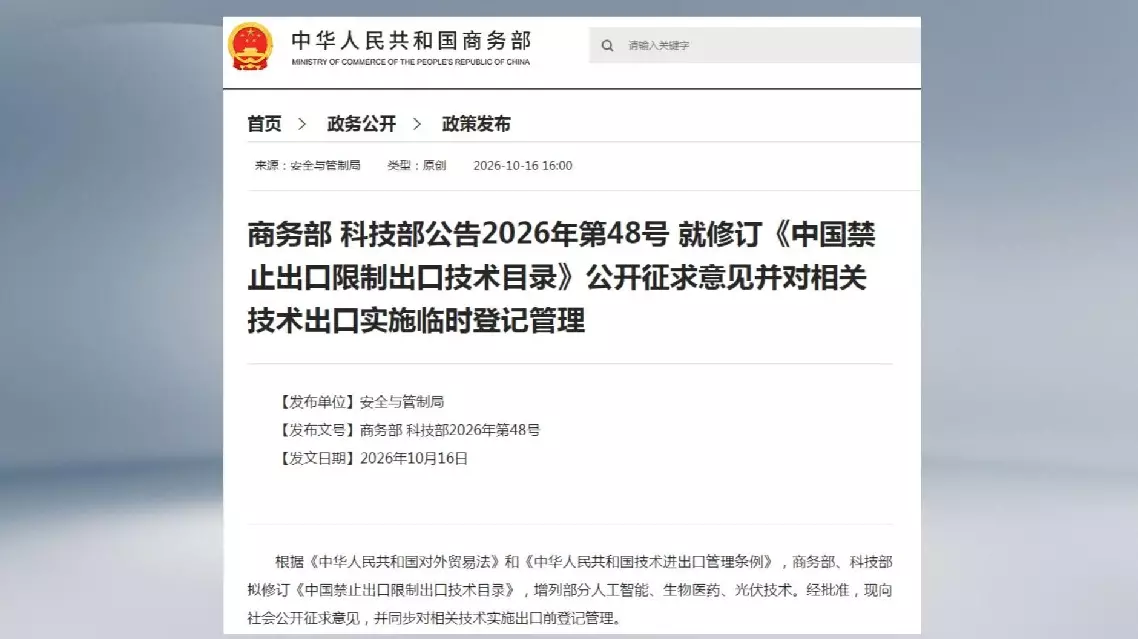
China to adjust export control list, proposes adding AI, biomedicine, photovoltaics
China to adjust export control list, proposes adding AI, biomedicine, photovoltaics