Skip to Content Facebook Feature Image

Yemen's Houthis say 159 prisoners released after surrendering in recent fighting

China

China

China

Yemen's Houthis say 159 prisoners released after surrendering in recent fighting

2026-10-18 15:44 Last Updated At:17:40

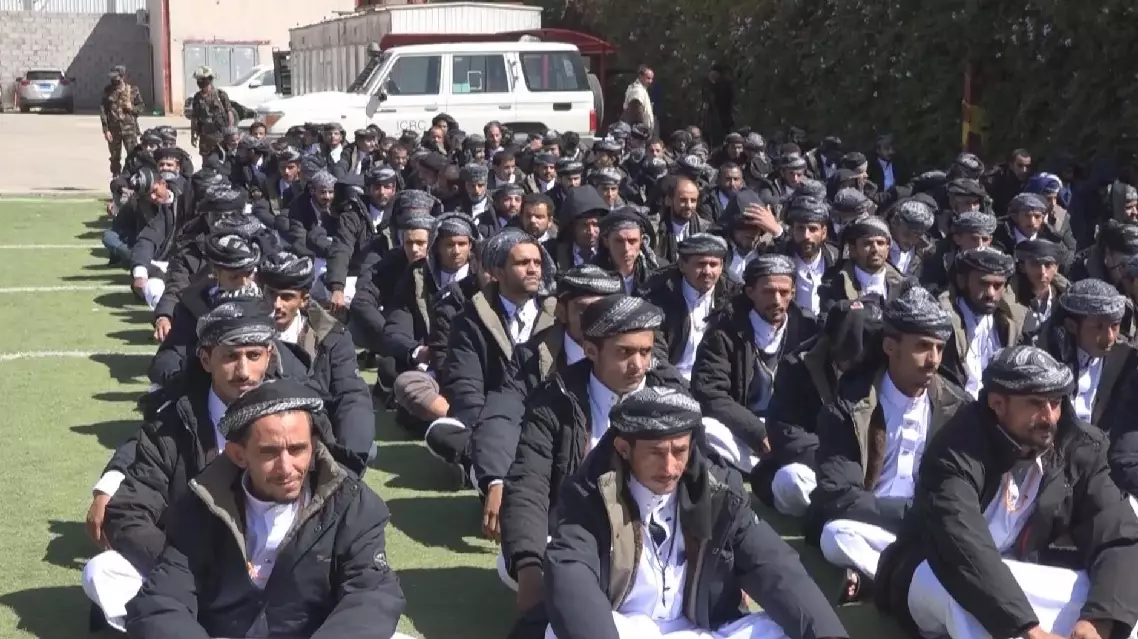
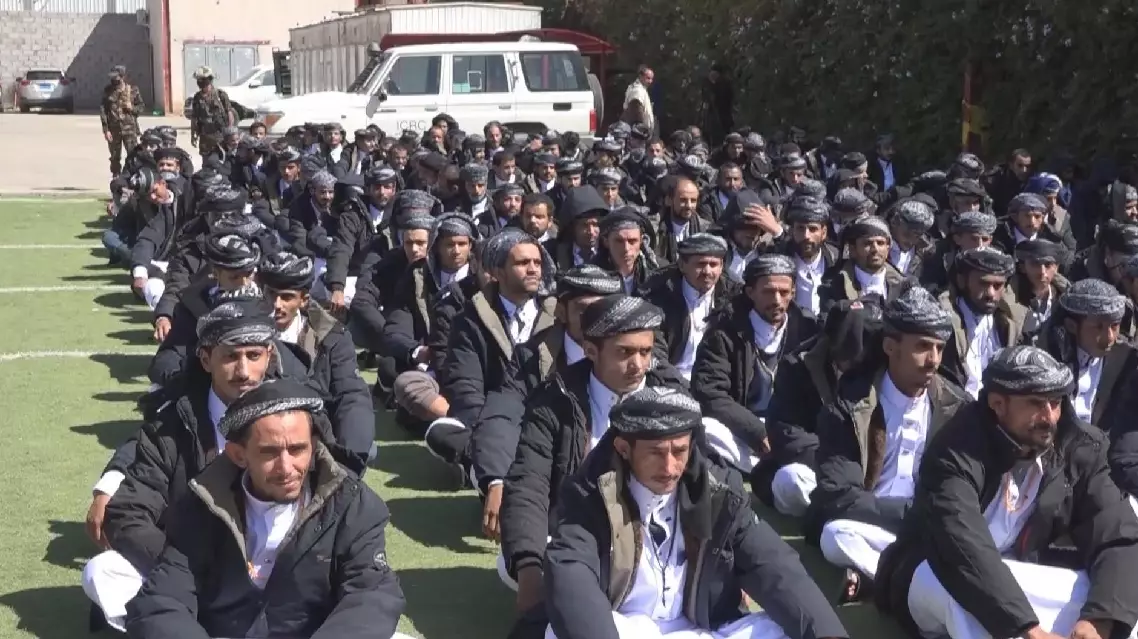
Yemen's Houthi group on Saturday released 159 prisoners whom it described as having surrendered during recent fighting, under an amnesty issued by the group's leadership.

Abdul Qader al-Murtada, head of the Houthis' prisoner affairs committee, announced the release at a press conference in the Houthi-held capital Sanaa.

Al-Murtada described the prisoners as fighters who had "voluntarily surrendered without fighting" during recent combats, without identifying the forces to which they belonged or specifying where they were captured.

He said the release was carried out under a general amnesty issued on Sept. 10 by Mahdi al-Mashat, head of the Houthi Supreme Political Council.

According to al-Murtada, Saturday's release was the second batch carried out under the amnesty, following the release of 323 prisoners in the Red Sea province of Hodeidah on Sept. 15. He said dozens of others had also been released in separate operations in Taiz province.

"This release is the second batch carried out under the amnesty. Earlier on Sept. 15, we released the first batch in Hodeidah. There were a total of 323 prisoners released in the first batch. They voluntarily surrendered. In addition, on the battlefield in Taiz province, we also released in several batches dozens of others who voluntarily surrendered and did not engage in combat," said al-Murtada.

The released prisoners would be returned to their home areas and families in coordination with local authorities in their respective provinces, which would handle arrangements concerning their status, al-Murtada said.

"This joy is beyond words -- it comes from my heart. We had always been with our brothers, we cannot say that we are now going back to our brothers, but we are indeed going back to our families. It is impossible to describe my joy from heart," said Mohamed Sefiani, a released prisoner.

"Thank goodness, we will return safely to our families today," said another released prisoner named Tahir al-Tahbali.

The release came amid renewed fighting between the Houthis and the forces aligned with Yemen's internationally recognized government, which is backed by the Saudi-led coalition.

The warring sides have conducted several prisoner exchanges under UN-mediated agreements in recent years.

Yemen has been mired in conflict since late 2014, when the Houthis seized the capital Sanaa and much of northern Yemen, forcing the internationally recognized government out of the capital. A Saudi Arabia-led coalition intervened in 2015 in support of the government.

The latest developments come amid renewed hostilities between the Houthis and Saudi Arabia, with both sides exchanging attacks and military warnings in recent days.
Yemen's Houthis say 159 prisoners released after surrendering in recent fighting
Yemen's Houthis say 159 prisoners released after surrendering in recent fighting

Yemen's Houthis say 159 prisoners released after surrendering in recent fighting

Yemen's Houthis say 159 prisoners released after surrendering in recent fighting

A grassroots official from Gari Village in Ya'an City of southwest China's Sichuan Province has led locals to conquer immense difficulties to build a road at an altitude of 4,000 meters, turning the once-isolated community into a thriving tourist destination, paving the way towards a prosperous life.

This is a story from a China Global Television Network (CGTN) documentary titled "4,000m Altitude: They Built a Road Straight to the Sky".

Due to its extreme altitude, Gari Village lacked a proper road more than a decade ago, forcing residents to hike in and out on foot.

Refusing to let his village remain cut off from the world, Asheng, the local Party chief, made it his mission to change their fate. Mobilizing the villagers, he led them in overcoming immense geographical and logistical hurdles to finally carve a road through the high-altitude terrain.

The road opened the gates to Dawagengzha, a stunning natural attraction whose name translates to "magic mountain" in the Tibetan language. As word of this natural wonder spread, tourists began to arrive. However, a new challenge quickly emerged: the village lacked hotels and other tourism infrastructure, meaning visitors couldn't stay overnight.

Recognizing the bottleneck, Asheng took the initiative once again, converting his own house into the village's first homestay.

Seeing the success of Asheng's venture, hesitant villagers quickly followed suit.

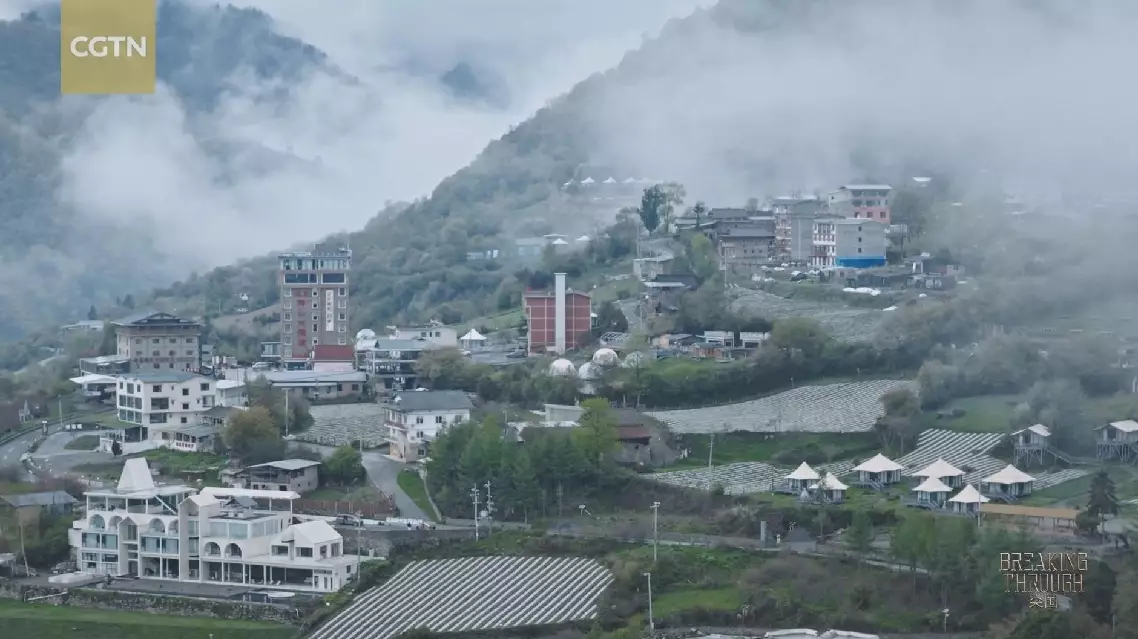
Today, Gari Village is home to 158 distinctive homestays, forming a thriving hospitality cluster known as "Cloud Dawagengzha". Campsites, inns, and wooden cabins now dot the mountain landscape.

In 2024, the village welcomed over one million tourist arrivals, generating a revenue of 120 million yuan (about 17.94 million U.S. dollars). The momentum has only continued to grow. During the autumn foliage season in 2025, the village recorded an average weekly tourism revenue exceeding 1.5 million yuan.

Looking ahead, Asheng said he will continue to explore ways to improve the lives of his fellow villagers.

The documentary is part of CGTN's "Breaking Through" series, which traces China's journey from the historic Long March to its modern-day achievements, highlighting the resilience, ingenuity, and determination of its people.

Building road at 4,000m, grassroots official leads locals to prosperity: documentary

Building road at 4,000m, grassroots official leads locals to prosperity: documentary

Recommended Articles