North American movie theaters were flooded with new films this weekend, including a video game reboot, a big budget survival thriller and a Jane Austen adaptation.
While Paramount’s “Street Fighter” took the first-place spot, earning $31 million from 3,575 theaters according to studio estimates on Sunday, most of the attention and cultural discourse was elsewhere: On the nearly three-hour Elizabeth Holmes documentary, “You Can See Everything.”
Buzz and box office don’t always line up, but “You Can See Everything” made an extraordinary $15 million from only 855 screens, with over 2,000 sellout showings over the weekend, according to A24. It also had the biggest opening for a film playing on under 1,000 screens since “Borat” opened to $26.5 million in 2006, and the biggest nonmusic documentary opening in two decades, since “Fahrenheit 9/11” made nearly $24 million from 868 theaters. Those numbers do not account for inflation.
Like other hits this year, like the Gen-Z driven “Backrooms” and “Obsession,” ticket sales for “You Can See Everything” were driven by a largely younger audience. Over 70% of the opening weekend crowd was under 35.
The film, directed by Nathan Fielder and Lance Oppenheim, was made in secret over three years. Fielder spent over a month with the disgraced Theranos founder and her family, including two young children and partner Billy Evans, in her final days before reporting to federal prison. The reviews have been extremely positive, with 99% on Rotten Tomatoes and 99 on Metacritic. It also got an unprecedented 91% “definite recommend” from audiences, according to PostTrak exit polls.
“You Can See Everything” reportedly cost under $7 million to make and less than $10 million to market.
“Everybody underestimated the movie, because on paper this is like, wait, a three-hour documentary?” said Paul Dergarabedian, the head of marketplace trends for Rentrak. “But he (Fielder) is a huge draw, and he has a huge following on social media, and then Elizabeth Holmes is just a character that you couldn’t even make up. It’s stranger than fiction, and that’s really compelling.”
“Street Fighter” topped the charts as expected with a $51 million global opening, including $20 million from international showings. The movie starring Callina Liang, Noah Centineo and Andrew Koji cost a reported $82 million to make, not accounting for marketing and promotion. Audiences were 69% male.
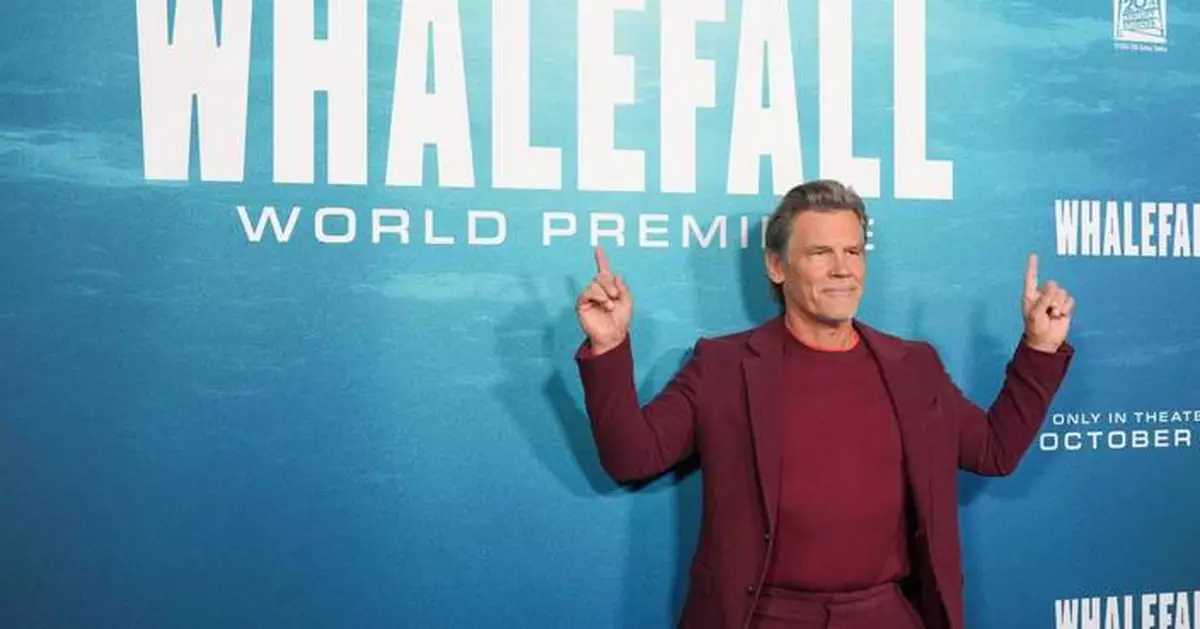
Both “Street Fighter” and “You Can See Everything” may have contributed to “Whalefall’s” relative failure this weekend. The $60 million survival thriller starring Austin Abrams and Josh Brolin made $8 million from 3,065 locations in the U.S. and Canada, despite being better reviewed than “Street Fighter.” With $9.5 million from international showings, the Disney release had a $17.5 million global launch.
“Whalefall” opened in fourth place, behind the Jessica Chastain horror “Other Mommy.” The Universal Pictures release added $8.4 million in its second weekend, bringing its domestic total to $44.9 million.
Fifth place went to “Sense and Sensibility,” which earned an estimated $7.3 million from 2,545 theaters. The well-reviewed Austen adaptation starring Daisy Edgar-Jones drew a predominantly younger (58% between the ages of 14 and 18) and female crowd (84%). It also got the strongest CinemaScore of the week (A-).
Warner Bros. Clockwork also released a restored presentation of Ken Russell’s 1971 film “The Devils” in 350 locations, where it made $1.6 million. It’s the first release from the studio’s specialty label.
Alex Gibney's Elon Musk documentary “Musk” also expanded to 472 screens in the U.S. and Canada, where it made $306,702. The film, which runs nearly four hours, has faced issues advertising on major social media platforms including X, which Musk owns, and TikTok, according to distributor Bleecker Street, who said TikTok this weekend permanently suspended the film’s ad account.
According to Rentrak, the weekend overall generated about $101.6 million in ticket sales, up 45% from the same weekend last year. The year to date stands at $8.2 billion, which is up almost 20% from 2025.
With final domestic figures being released Monday, this list factors in the estimated ticket sales for Friday through Sunday at U.S. and Canadian theaters, according to Rentrak:
1. “Street Fighter,” $31 million.
2. “You Can See Everything,” $15 million.
3. “Other Mommy,” $8.4 million.
4. “Whalefall,” $8 million.
5. “Sense and Sensibility,” $7.3 million.
6. “Verity,” $6.2 million.
7. “Resident Evil,” $5.5 million.
8. “Heart of the Beast,” $4.8 million.
9. “Jailer 2,” $3.2 million.
10. “Forgotten Island,” $2.3 million.
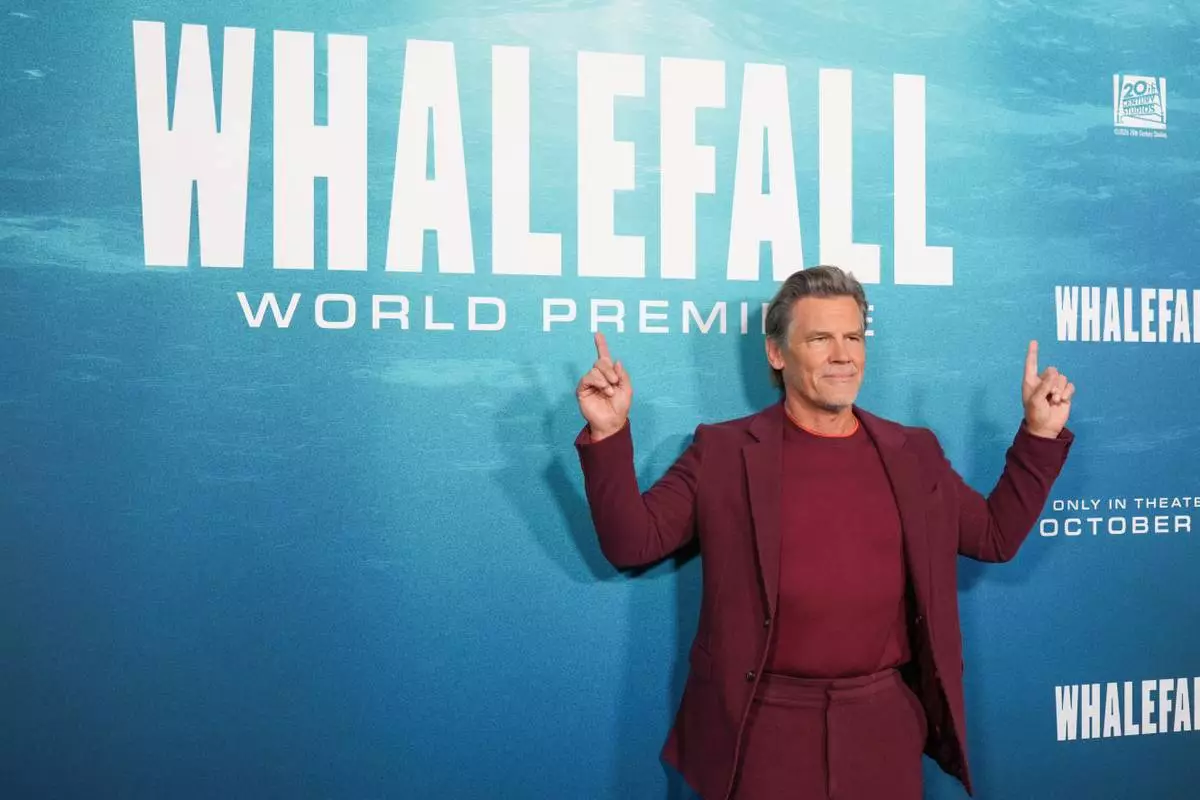
Josh Brolin arrives at the premiere of "Whalefall" on Tuesday, Oct. 13, 2026, at the El Capitan Theatre in Los Angeles. (AP Photo/Chris Pizzello)