A Japanese scholar has warned that sending offerings to or visiting the notorious war-linked Yasukuni Shrine is an extremely dangerous act, urging Japan to establish a correct perception of history.
According to Japanese media reports, Japanese Prime Minister Sanae Takaichi and several other high-ranking officials, including Minister of Health, Labor, and Welfare Kenichiro Ueno, Minister of State for Economic and Fiscal Policy Minoru Kiuchi, House of Representatives Speaker Eisuke Mori, and House of Councilors President Masakazu Sekiguchi, sent ritual offerings to the shrine on Saturday.
Kiuchi also personally visited the war-linked site, making him the first member of Prime Minister Takaichi's cabinet reported to have done so during this year's autumn festival.
Located in central Tokyo's Chiyoda Ward, the Yasukuni Shrine honors 14 convicted Class-A Japanese war criminals from World War II and is regarded as a symbol of Japanese militarism and wartime aggression.
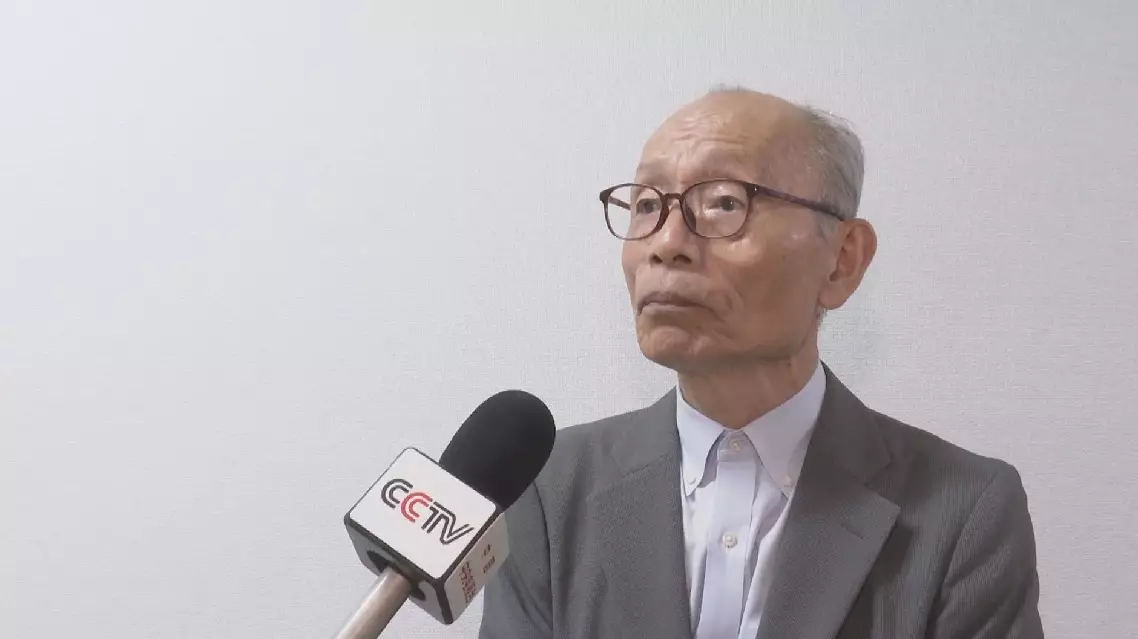
In an interview with the China Media Group (CMG), Atsushi Kouketsu, an honorary professor at Yamaguchi University, criticized the current political trend in Japan as it is highly dangerous.
"Considering Japan's current situation, visiting the Yasukuni Shrine is an extremely dangerous act. For the people of China and other Asian countries that suffered from Japanese aggression during World War II, this is an act that must never be tolerated," he said.
The scholar noted that Germany, also a defeated nation in World War II, was able to thoroughly reflect on its war guilt. Compared with Germany, Japanese society clearly lacks proper history education.
"Germany seriously studied modern history and was determined never to return to that era. Japan, however, has neglected history education which is severely downplayed. So today's young people lack a sufficient understanding of the historical fact that Japan once invaded China and other parts of Asia, and some even know nothing about it at all. Today, it is precisely this generation that is gradually turning 30, 40, and 50, and some of these people have become staunch supporters of the Takaichi administration. I believe that this is an important background for Japan's remilitarization and the resurgence of militarism. It is also an extremely critical issue," said Kouketsu.
The scholar also criticized as fundamentally wrong Takaichi's views expressed during her time as a member of Japan's House of Representatives that she bears no responsibility for past wars.
"When she was a member of Japan's House of Representatives, Takaichi said 'I have no need to apologize because I was not a party to the war, and I was born after the war.' This way of thinking is fundamentally wrong. I myself was also born after the war, but inheriting and recounting the historical facts of that war of aggression and passing them on to future generations is our duty. Failing to fulfill the obligation of truthfully passing historical facts to future generations is an omission that itself constitutes another form of culpability. Many post-war Japanese, including the youth, bear this kind of guilt -- that is, they do not acknowledge the war of aggression, they do not learn lessons from the war of aggression -- this is a kind of guilt. I believe this is a very serious problem, and Takaichi is precisely the one leading this problem. A person with such a shallow and feeble understanding of history should not become Japan's top leader," Kouketsu said.
Japanese scholar slams Yasukuni shrine offerings as extremely dangerous act
Japanese scholar slams Yasukuni shrine offerings as extremely dangerous act