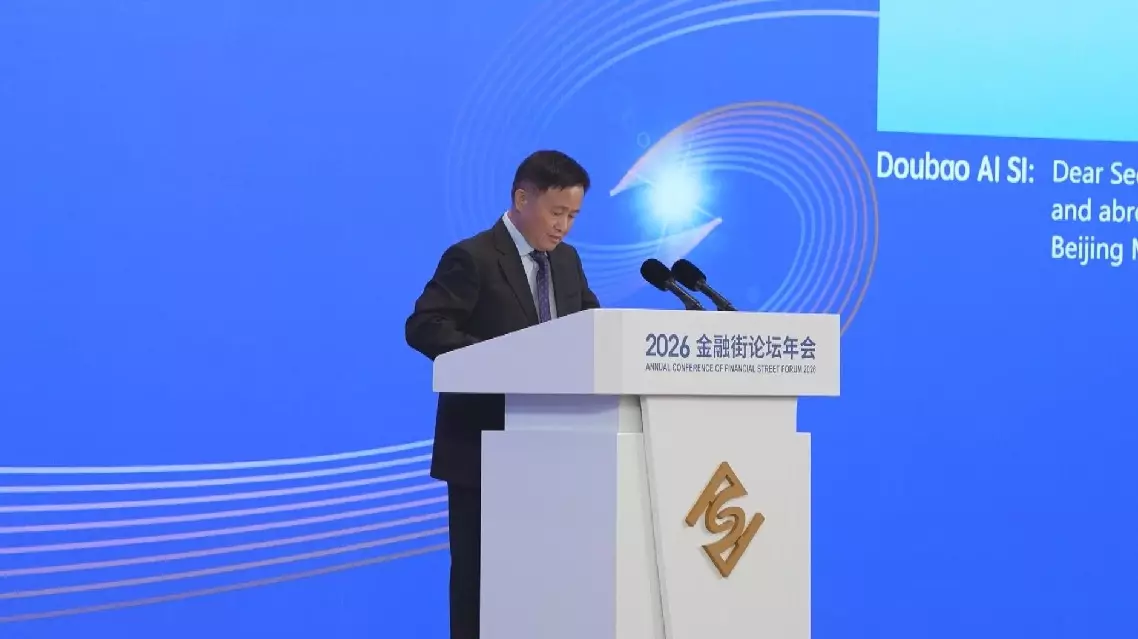
The 2026 Bund Summit, themed "Technology, Geopolitics, and the Global Economy," is being held in Shanghai this week, bringing together global economic experts to discuss the shifting dynamics of global trade and technology.
Speaking at the event, Adam Posen, president of the Peterson Institute for International Economics, highlighted the resilience of global trade despite years of political turmoil.
"Despite all that the Trump administration, then the Biden administration, then the second Trump administration have done to try to decouple from China, it's essentially just made the supply chains longer and less transparent. The trade, in the end, will get through. The trade is actually very resilient. It is more costly and less even than it used to be, but it's actually held up," Posen said.
Kaushik Basu, former senior vice president and chief economist of the World Bank, offered an optimistic outlook on China's long-term economic trajectory, pointing to its talent pool and technological adaptability.
"China has great future potential, actually among the highest. I feel the sector that is going to be most important in the world, today with AI and with new technology, is higher education, creative thinking. So the supply chain—China doing so well on this—is going to give China a long-run, huge boost in its growth, I expect," Basu said.
The 2026 Bund Summit, which runs until Thursday, is a platform for global financial and economic leaders to exchange views on how technology and geopolitics are reshaping the global economic landscape.

Economists highlight China's supply chain resilience, long-term growth potential at Bund Summit