A Kenyan pastor has been convicted on 191 murder charges after he forced followers to starve their children and themselves so they would die and have an opportunity to enter heaven and be with Jesus.
Pastor Paul Mackenzie was convicted alongside 28 others who helped run a sect connected to Mackenzie's Good News International Church in coastal southeast Kenya.
A judge said in her ruling Monday that MacKenzie and his helpers and guards controlled a system in which religious teachings and a church hierarchy were used to enforce “deadly fasting” on followers after they set up a community in a forest.
The murder charges involve the deaths of 190 children and one adult. Mackenzie and others also face separate manslaughter, terrorism and child torture charges in the deaths of more than 230 others. He has denied all the charges, saying he didn't force his followers to starve themselves. His co-defendants in that case have also pleaded not guilty.
Mackenzie and the others face life in prison at their sentencing for the murder convictions, scheduled for Nov. 6.
Kenya has the death penalty, but has not executed anyone since 1987, and has left capital punishment to the judge's discretion since a Supreme Court ruling in 2017 that mandatory death penalties for murder are unconstitutional.
Here's what to know about one of the world's worst cult-related tragedies:
The sect was uncovered in April 2023 after Mackenzie had closed his church premises in the coastal resort town of Malindi and moved with hundreds of followers inland to the nearby Shakahola Forest.
Police investigating reports of people going missing found emaciated followers and shallow graves spread across a large ranch in the forest. It took weeks to exhume more than 400 bodies, many of them from mass graves. For most, starvation was the cause of death in what became known as the Shakahola massacre, but some died from suffocation, strangulation or head injuries, according to postmortem reports.
The cause of death for others couldn't be determined because the bodies had decomposed. A small number of victims died soon after being rescued because they were so emaciated.
Mackenzie is a former street vendor and taxi driver who set up his evangelical Good News International Church in Malindi in 2003. Some of his preaching included opposition to formal schooling, some medicines and vaccinations.
He was detained in 2019 for opposing the government’s efforts to assign national identification numbers to Kenyans, saying the numbers were satanic.
That year, he closed his church premises and took his followers to the ranch in the forest, where they built houses and lived in villages with biblical names like Nazareth, according to survivors.
The COVID-19 pandemic encouraged his apocalyptic teachings that the end of the world was coming, and he and the sect hierarchy began to enforce stringent fasting, even forbidding parents to feed their children.
Those who tried to oppose his teachings or leave the forest were beaten, according to survivors.
Justice Diana Kavedza, who delivered the guilty verdicts on Monday, said evidence showed they had encouraged and later enforced fasting as a way to enter heaven, starting with children. She said it began around January 2021 and lasted more than two years before authorities discovered what was happening.
Mackenzie and his co-accused were formally charged in February 2024. Prosecutors presented evidence from 123 witnesses, they said, including some children who were caught up in the sect.
Two other defendants facing murder charges died during the prosecution.
AP Africa news: https://apnews.com/hub/africa
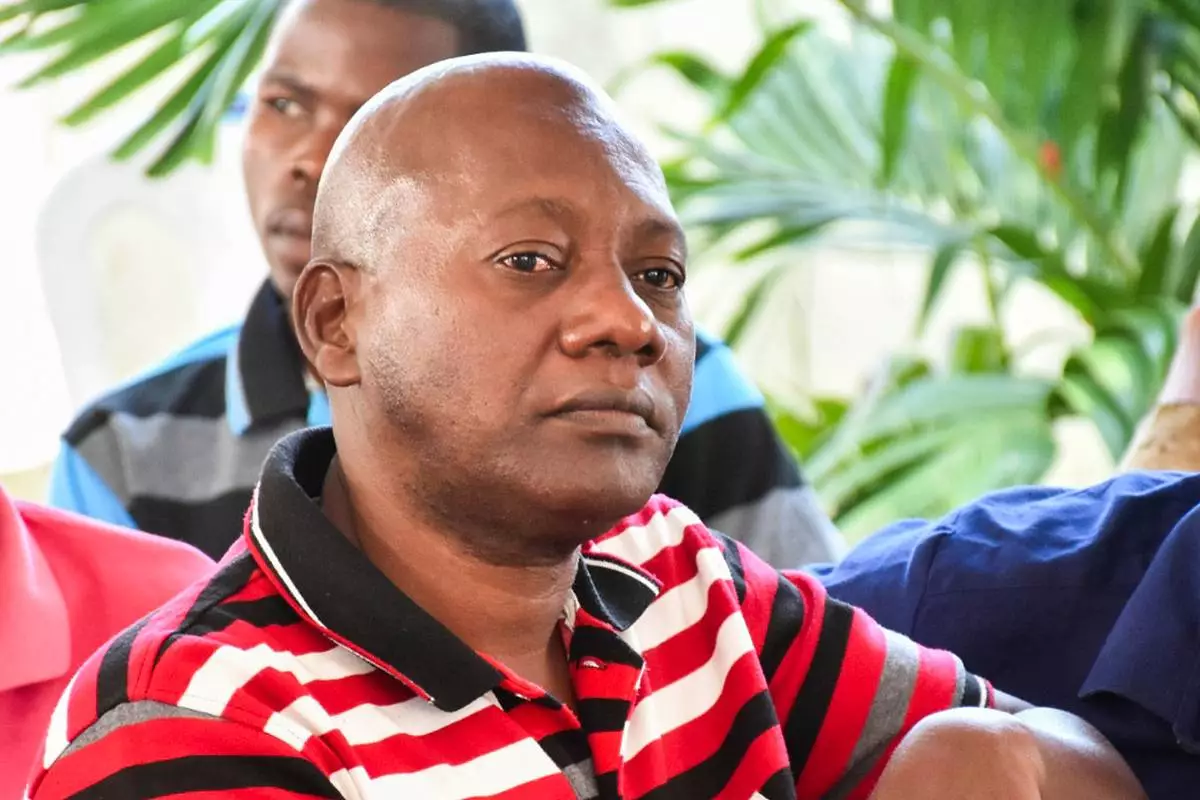
Good News International Church Pastor Paul Mackenzie attends court verdict where he is accused of murdering over 191 people, in Mombasa, Kenya, Monday, Oct. 19, 2026. (AP Photo/Brian Wachira)
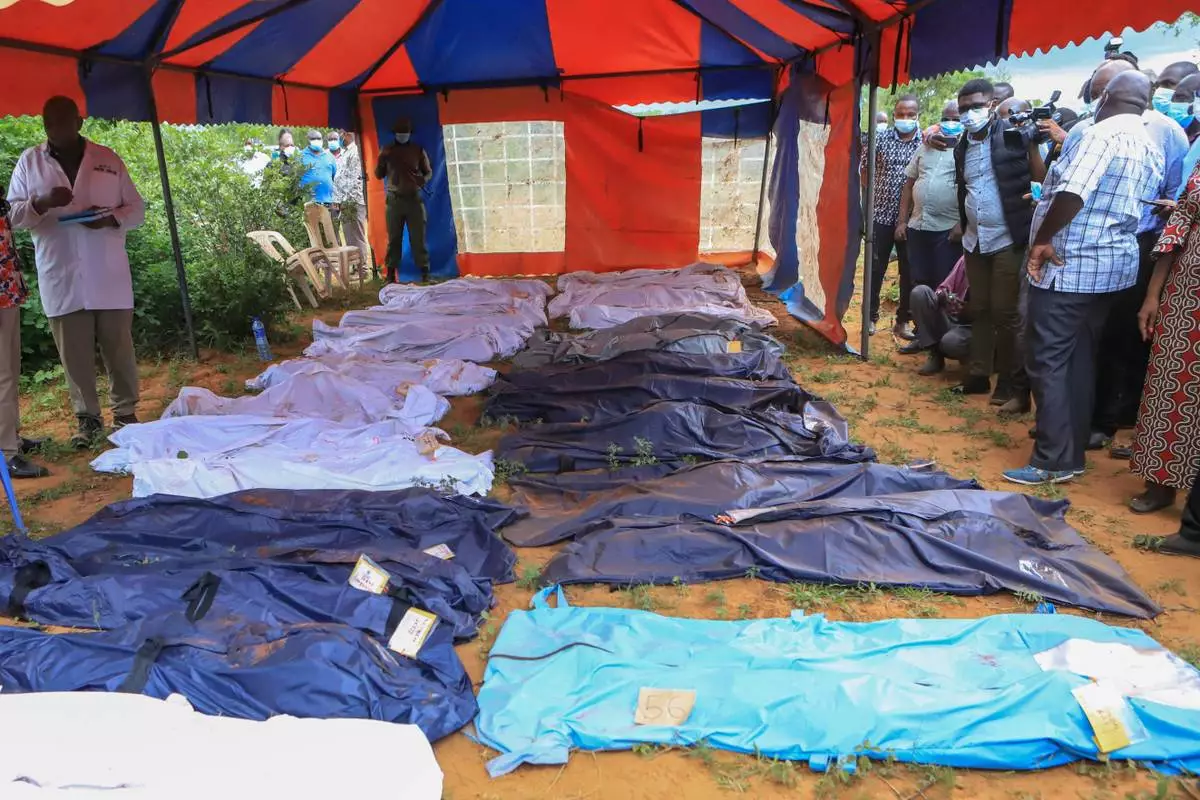
FILE - Body bags are laid out at the scene where dozens of bodies, believed to be followers of extremist evangelical leader Paul Mackenzie, were found in shallow graves in the village of Shakahola, near the coastal city of Malindi, in southern Keny, April 24, 2023. (AP Photo, File)
MELBOURNE, Australia (AP) — An Australian federal lawmaker remained in critical condition Tuesday after undergoing surgery for injuries sustained when she was hit by a car in what Prime Minister Anthony Albanese said was an apparently deliberate attack.
Helen Haines, a 65-year-old independent politician, was struck by a Toyota Land Cruiser SUV outside her electoral district office midafternoon Monday in the city of Wangaratta in Victoria state, police said. The driver was arrested and remained in police custody.
Albanese said the national counterterrorism team was investigating, incorporating police and intelligence agencies.
“This wasn’t an accident. There was a deliberate act, it would appear. We don’t know what the motivation is,” Albanese told the Australian Broadcasting Corp.
The 43-year-old driver was apprehended at the scene by members of the public and would be interviewed by investigators. He wasn't publicly identified and no charges had been announced on Tuesday morning.
Albanese said eyewitnesses had reported the suspect passed Haines in his vehicle as she stood by the trunk of her parked car. The car then turned and came back before the man allegedly drove into the politician, the prime minister said.
“This wasn't something with a car just going off the road,” Albanese told Australian channel News24. “This is something that is very clear was aimed at causing harm to Helen Haines.”
Home Affairs Minister Tony Burke told the ABC on Tuesday that the driver reversed and struck Haines a second time after initially hitting her, according to witness accounts.
Ricky Jefferies, a barber who ran out of his store to help detain the suspect, told reporters he searched the man's pockets and removed a knife. Police confirmed that a knife was found and said officers were investigating whether the incident was intentional.
Haines, who was first elected to the Parliament in 2019, was initially taken to a hospital in Wangaratta, a city of 30,000 people. Albanese said she had been airlifted later on Monday to a hospital in the state capital Melbourne, 236 kilometers (147 miles) away.
The episode has renewed safety concerns for Australian lawmakers in a country where politicians have historically been highly accessible to the public and usually go about their business without security officers present. However, public incitement against officials is growing.
Police reported in 2025 that threats against parliamentarians had doubled over the past three years. Official data showed more than 1,000 such threats against politicians in the 2025-2026 financial year.
Albanese said it was “unfortunate” that an increasingly polarized political climate had already led to security changes for Australia’s lawmakers.
“I think there has been a rise in temperature and there has been too much shouting, not enough discourse, not enough polite conversation and disagreement,” he said. There was ‘no question’ that social media played a part, Albanese added.
Victoria Police Acting Superintendent Ashley Mason said investigators considered Haines’ injury an “isolated incident.”
“We certainly do not have any intelligence that there is any further or any ongoing threat to any other person or the broader community,” Mason told reporters.
Albanese, along with other political party leaders and lawmakers, have praised Haines as an admired and well-intentioned legislator with integrity.
“Helen Haines is someone who was characterized by civil discourse and engaging constructively right across the Parliament,” the prime minister told News24.
Her political career is unusual in Australia. In her constituency, a grassroots community group campaign ousted a senior conservative lawmaker with their candidate, Catherine McGowan, in 2013. McGowan retired in 2019 and Haines was elected with the support of the same community group. She was reelected in 2022 and 2025. Few politicians outside the major parties in the Australian Parliament win more than a single election.
Around the world, political polarization has led security agencies to warn of growing threats to lawmakers. The United States has seen a rise in political violence over the past decade.
That includes the 2022 hammer assault on the husband of then-House Speaker Nancy Pelosi, a Democrat, in California; the 2024 assassination attempt on Donald Trump at a Pennsylvania rally during his presidential campaign as well as another on the president at the White House Correspondents’ Association Dinner in April; and the assassinations in 2025 of a Democratic Minnesota state lawmaker and her husband, and of conservative commentator Charlie Kirk in Utah.
In Britain, murders of politicians have also prompted bolstered security. Labour lawmaker Jo Cox was shot and stabbed in 2016 by a far-right extremist, while Conservative David Amess was stabbed in 2021 by an attacker inspired by the Islamic State group.
In July, the former British politician and reality TV contestant Ann Widdecombe was found beaten to death with a hammer at her home. A man has been charged with murder and terrorism-related offenses.
Graham-McLay reported from Wellington, New Zealand.

Australian Prime Minister Anthony Albanese speaks to Indepedent member of parliament, Helen Haines, in the House of Representatives at Parliament House in Canberra, Australia, Tuesday, Aug. 18, 2026. (Lukas Coch/AAP Image via AP )
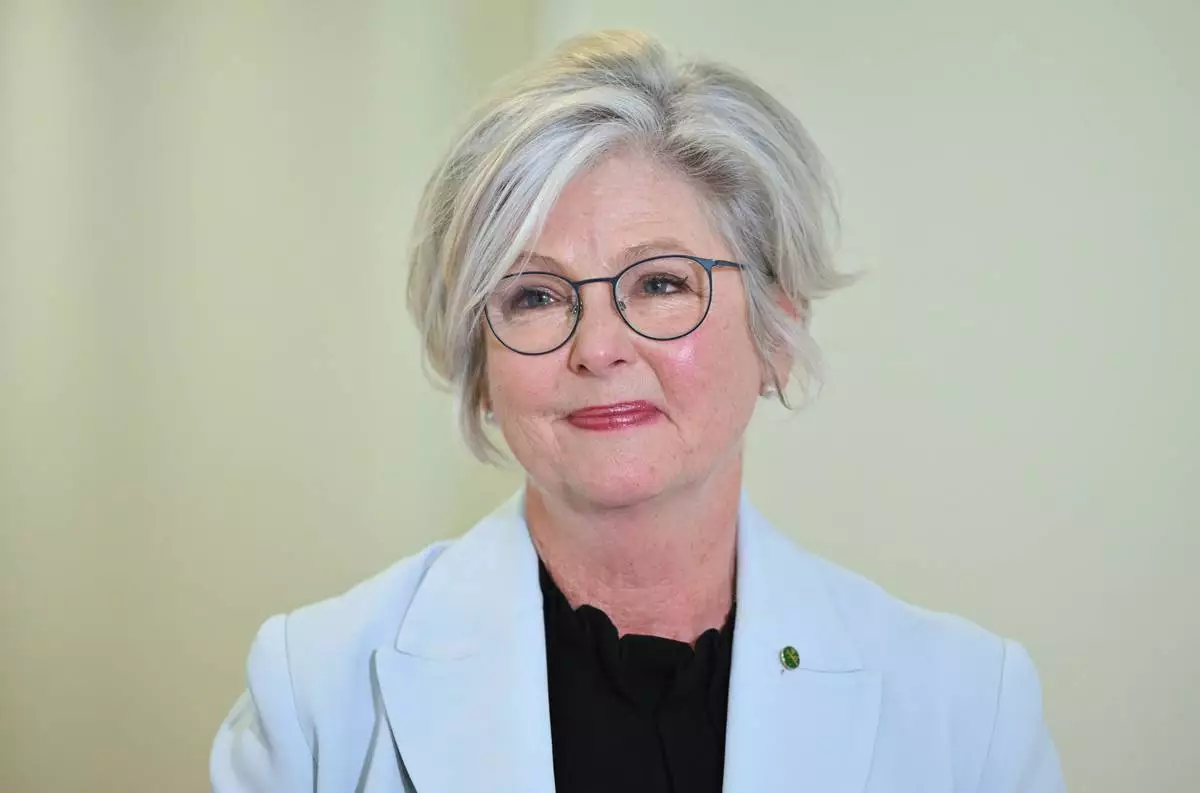
Australian independent member of parliament Helen Haines speaks to journalists in the Press Gallery at Parliament House in Canberra, Australia, Tuesday, Sept. 8, 2026. (Mick Tsikas/AAP Image via AP)