Across 38 seasons of “The Simpsons,” the Halloween-themed “Treehouse of Horror” episodes have always been a treat of spooky stand-alone storylines. On Sunday, the show surprised viewers with a major resurrection: Apu, the beloved Kwik-E-Mart operator who had not been heard for the better part of a decade, spoke once again in Springfield.
He and his wife, Manjula, were back with a meaty plotline — and the voices of actual Indian American actors: Sunil Malhotra, a veteran voice-over artist, and Janina Gavankar (“The Morning Show”).
“Bringing Apu back feels like a reclamation. It truly IS his homecoming,” Malhotra and Gavankar said Sunday in a joint Instagram post.
Apu's unheralded return is a remarkable twist to a yearslong discourse about how the character has represented a painful stereotype for some South Asian Americans. After a 2017 documentary by comedian Hari Kondabolu, “The Problem With Apu,” the character was largely exiled from the screen.
In “The Problem With Apu,” Kondabolu, a self-described fan of the Fox show, tried to process his misgivings. He interviewed a slew of celebrities of South Asian origin, including Kal Penn, Utkarsh Ambudkar and Hasan Minhaj, about growing up with the character. They shared memories of being bullied and called “Apu” as an insult. Adding to their view of Apu as just a caricature was that Hank Azaria, a white actor, voiced him.
With the full name of Apu Nahasapeemapetilon Jr., he felt like the “forever foreigner, someone who represents Indians in the United States through this sole typology of being a convenience store owner, being a recent immigrant, having this heavy accent, being really limited in this sort of like American identity,” says Bhoomi Thakore, an assistant professor of sociology at the University of Connecticut. Thakore notes that Kondabolu's film raised the notion that Apu was the only portrayal of an Indian character most people knew when he debuted in 1990.
Azaria stepped away from the role after the documentary, continuing to voice other “Simpsons” characters, as Apu fell silent, seen only in the background. Kondabolu, however, had never called for Apu to be canceled. On Monday, he praised “The Simpsons” for devising “a clever solution to all this” and hiring Malhotra and Gavankar.
“I’m also still proud of the public conversation about race and representation my documentary started,” he told The Associated Press in an emailed statement. “Finally, I’m hoping this stops all the hatemail in many languages that has been sent my way over the past decade.”
In a 2018 episode, “The Simpsons” responded to Kondabolu's documentary by having Lisa Simpson bemoan how “something that started decades ago and was applauded and inoffensive is now politically incorrect. ... What can you do?” The camera then panned to a framed photo of Apu. The gag was branded by some as weak for not directly addressing the controversy.
In a 2020 New York Times interview, Azaria, who by then hadn't voiced Apu in a few years, announced he would bow out because “it just didn't feel right.” Later that year, in response to racial reckoning demonstrations, “The Simpsons” announced it would no longer cast white voice actors as characters of color. The show then recast two Black characters, Carl Carlson and Dr. Julius Hibbert, with Black actors.
Kondabolu had not spoken with “The Simpsons” producers about Apu’s comeback, he confirmed to the AP, “but they didn’t owe me that.” And it does sound like Apu is here to stay.
“We love this character and wanted to bring him back in a smart, Simpsons-y way that allowed him to evolve,” executive producer Matt Selman said in a statement. “We’re excited by what Sunil has already brought to the role and look forward to seeing more of Apu in the future.”
A few weeks after “The Simpsons” responded to the documentary, author and producer Amar Shah wrote a series of social media posts and then a Washington Post op-ed on why he felt mostly sentimental toward Apu. When he watched Apu, he thought of his own Indian father hard at work as a convenience store owner and how that shaped his Florida childhood.
“Apu even now is a character that I wouldn't mind my kids seeing represented because they'll see aspects of themselves and of their own grandparents,” says Shah, reflecting on his 2018 piece. “I can totally empathize with someone of South Asian origin having a different POV (point of view) than me but this is my childhood. This is my story.”
After watching this latest episode, Shah didn't sense any significant difference with Malhotra's performance.
“Obviously, there's a different voice, tenor, texture and all that. But, the character is always going to be there, his genuine humanity,” Shah says. “I think if they had incorporated this change earlier, it would have been a lot better.”
Apu is being revived amid a climate of rising anti-South Asian and Indian hate. Stop AAPI Hate and other research groups have found online use of racist slurs and threats against South Asians and Indians have jumped in the past few years.
Texas Railroad Commission candidate Bo French, a Republican, recently posted a photo of South Asian University of Texas students cheering at a football game and called them “a problem.” Just last week, a man was charged with planning a mass shooting at a Hindu temple outside Chicago. Against that backdrop, Shah welcomes the show's careful approach reincarnating the character.
“It's great to see that the show has evolved in time and now, especially with the discrimination and, really, the targeting of South Asians and Indian Americans as of late — questioning our patriotism, our American identity and even whether we're college football fans,” he says.
The return also coincides with much more representation of prominent South Asian Americans, such as actor and showrunner Mindy Kaling, and people who have broken barriers in office, like New York City Mayor Zohran Mamdani and former Vice President Kamala Harris.
When Apu first appeared, says University of Virginia associate professor of media studies Shilpa Davé, he was one of the only consistent representations of South Asians on TV.
Now, she says, “South Asians have become a part of the landscape from ‘Bridgerton’ to … ‘Never Have I Ever’ and there’s a plethora of different kinds of representation.”
Associated Press journalist Mallika Sen contributed reporting.
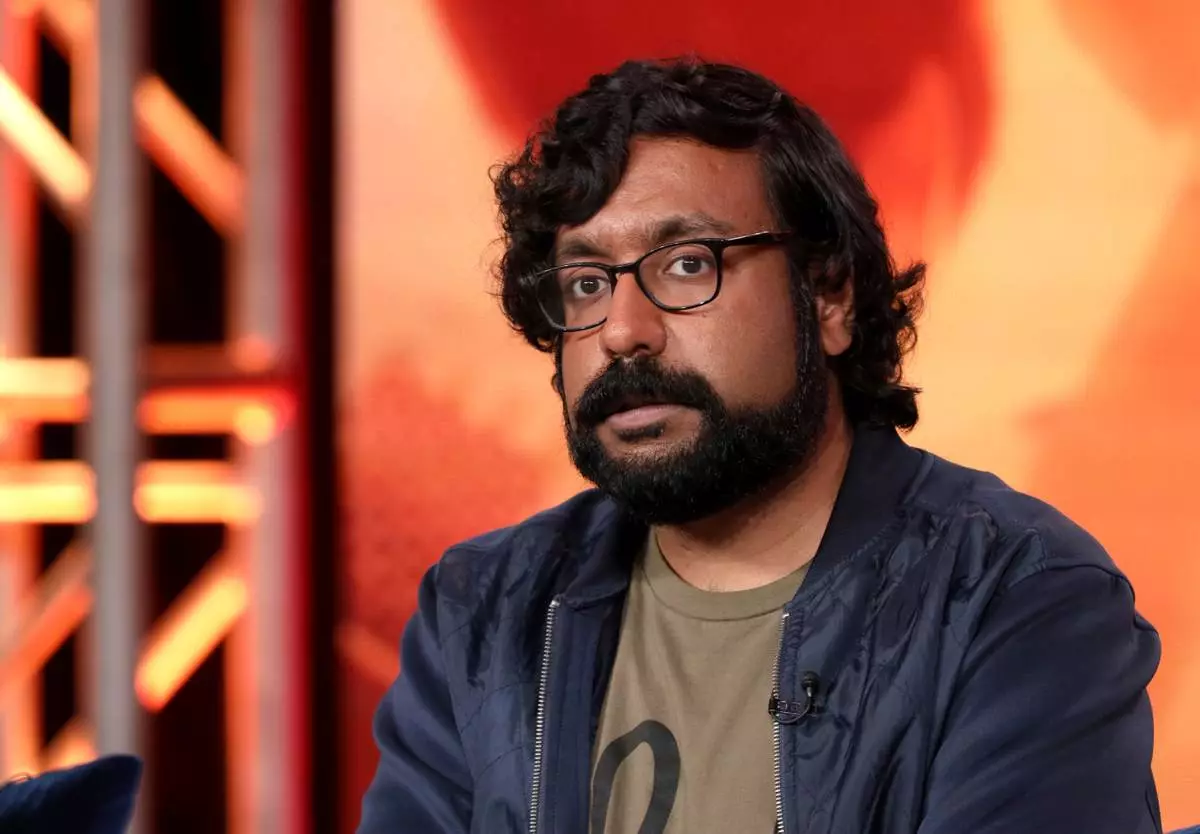
FILE - Hari Kondabolu speaks at the Asian Americans panel during the PBS Winter 2020 TCA Press Tour in Pasadena in Pasadena, Calif., on Jan. 10, 2020. (Photo by Willy Sanjuan/Invision/AP, File)
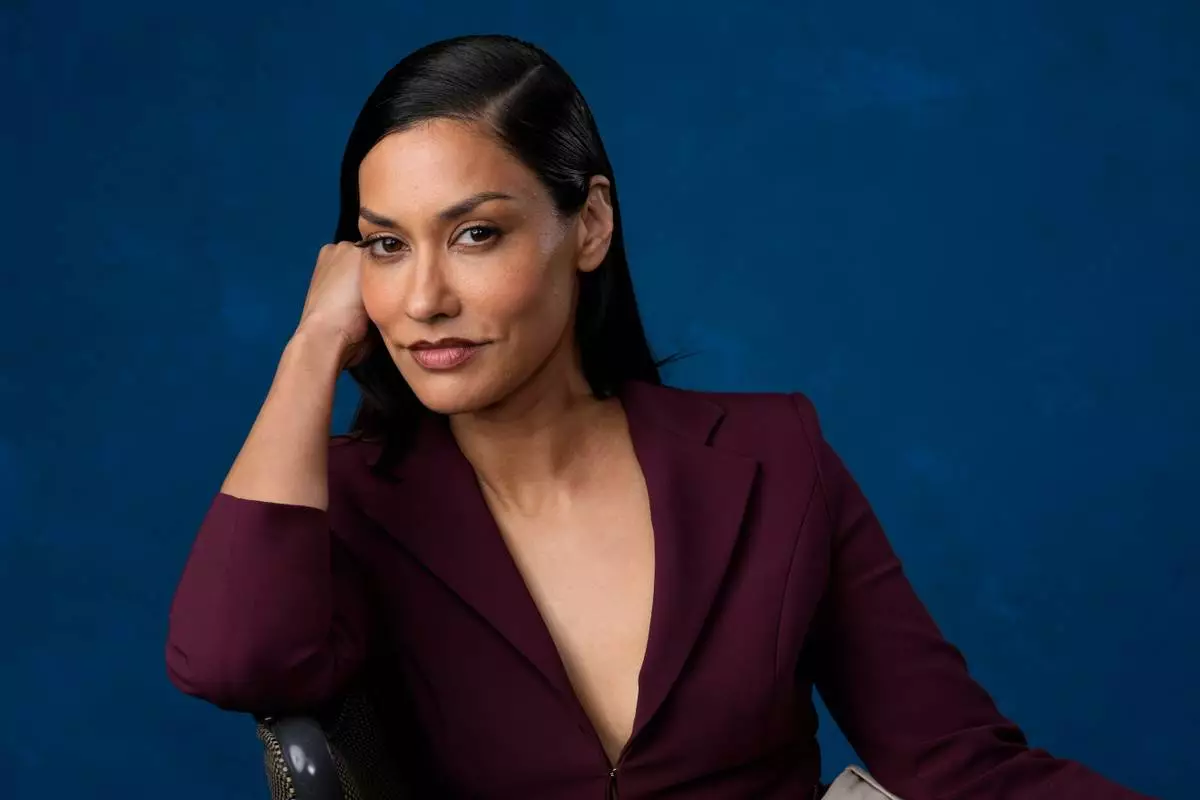
FILE - Janina Gavankar poses for a portrait to promote "Borderlands" during Comic-Con International in San Diego on July 27, 2024. (AP Photo/Chris Pizzello, File)
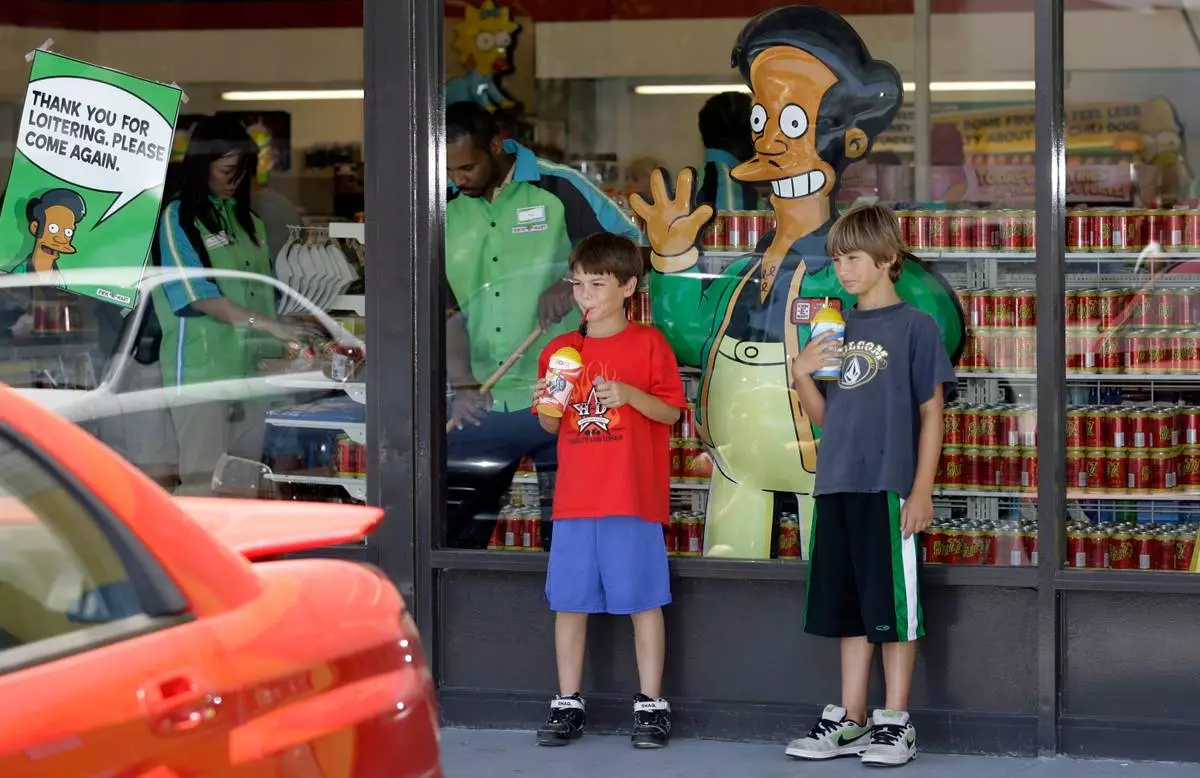
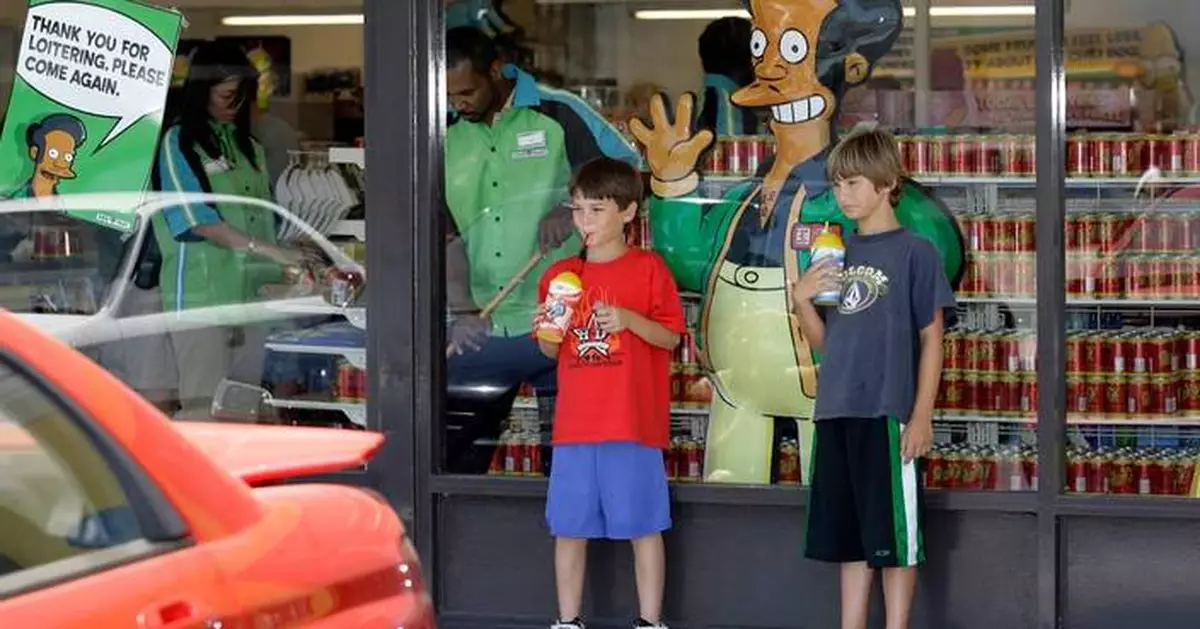
FILE - Children appear next to a window display featuring "The Simpsons" character Apu Nahasapeemapetilon Jr. outside a 7-Eleven Kwik-E-Mart in Burbank, Calif., on July 2, 2007. (AP Photo/Damian Dovarganes, File)