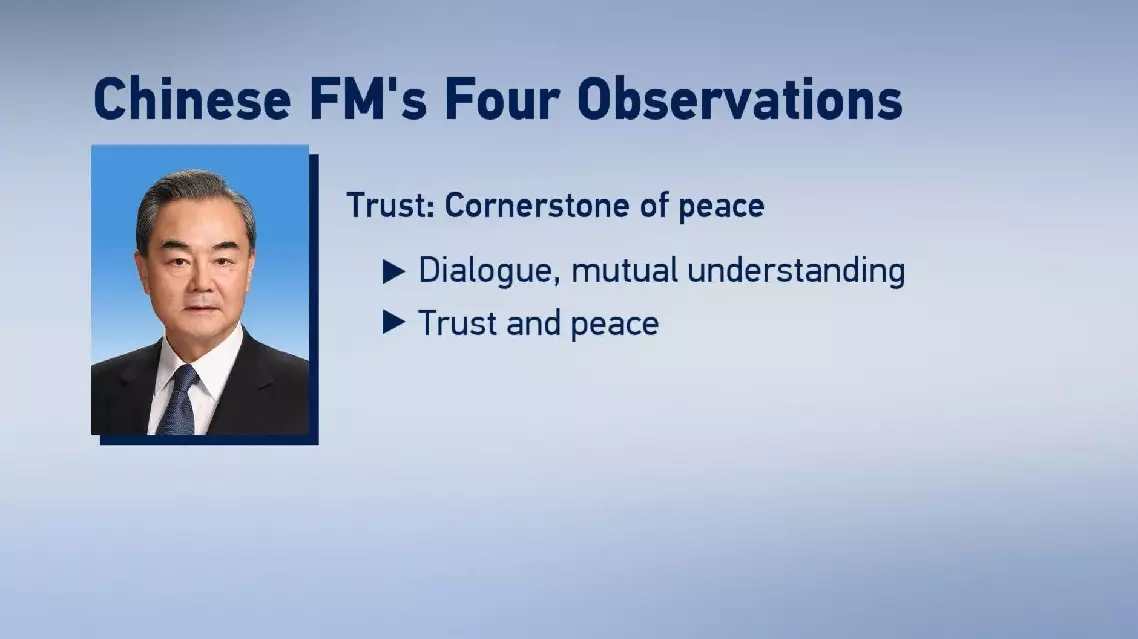
Chinese Foreign Minister Wang Yi on Monday offered a four-point summary of his just-concluded Eurasia tour: trust is the cornerstone of peace, friendship is a valuable asset, cooperation is a solid driving force, and partnership is a common goal.
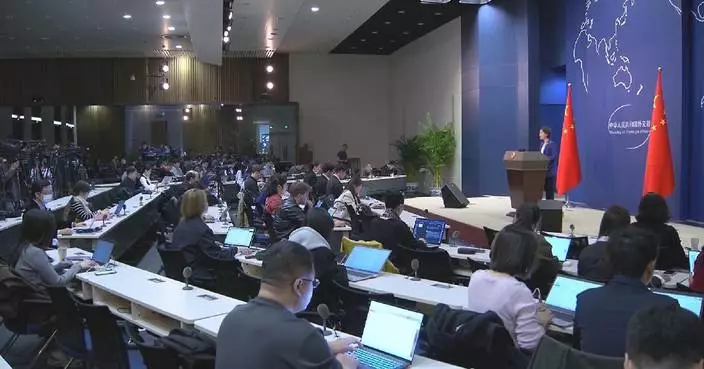
Wang, also a member of the Political Bureau of the Communist Party of China Central Committee, made the remarks while jointly meeting the press with Bulgarian Foreign Minister Velislava Petrova after their talks in Sofia. During his Eurasia tour, Wang, as special representative of Chinese President Xi Jinping, attended the Seventh Summit of the Conference on Interaction and Confidence Building Measures in Asia (CICA), and paid visits to Azerbaijan, Croatia, Montenegro and Bulgaria.
First, trust is the cornerstone of peace.
Wang said the world today is intertwined with chaos and changes, and the biggest problem it faces is the deficit of trust. From the Ukraine crisis to the Middle East conflict, resolving conflicts requires trust, and building trust requires communication, he added.
As a responsible major country, China has always worked for peace, Wang said. During the CICA summit, he held separate talks with Israeli and Palestinian leaders, met with representatives of other Middle Eastern countries, and heard Balkan leaders' views on the Ukraine crisis and the regional situation.
Wang noted that the clear message China conveyed to all parties is to remain confident and persistent, pursue dialogue and consultation, show mutual understanding and accommodation, rebuild trust and work together for peace.
China will always stand on the right side of history, fulfill its responsibilities as a major country in bridging the trust deficit and resolving crises and conflicts, and play its due role, he added.
Second, friendship is a valuable asset.
Wang said that Silk Road relics in Azerbaijan bear witness to the millennium-long friendship between the Chinese and Azerbaijani people.
Marco Polo, a household name in China, was born in what is now Croatia. The song "Bella Ciao," sung at the Tara River Bridge in Montenegro, evokes fond memories for a generation of Chinese people. The first Confucius Institute and the first Chinese Cultural Center in the Balkans were both established in Bulgaria.
Wang also said he was delighted to learn that contestants from Montenegro had won the global championship of the "Chinese Bridge" Chinese Proficiency Competition three times.
He noted that these friendly exchanges across time and distance carry forward the spirit of the ancient Silk Road and are vivid practices of mutual learning among civilizations on the Eurasian continent. Such valuable friendships should be given new contemporary meaning and continuously carried forward, Wang added.
Third, cooperation is a solid driving force.
Wang said all the four countries he visited during this tour are participants in and beneficiaries of Belt and Road cooperation, and many landmark cooperation projects have played an important role in the development of each country.
Taking the Gobustan solar power plant in Azerbaijan, the Peljesac Bridge in Croatia, the Bar-Boljare highway in Montenegro and China-Bulgaria energy storage cooperation as examples, Wang said that these cooperation projects are based on each country's actual conditions, meet the needs of the people and conform to the trend of the times.
China is ready to tap potential and improve efficiency with the four countries, consolidate cooperation in such traditional areas as economy and trade, investment and infrastructure, actively align the Belt and Road Initiative with the Middle Corridor, and strengthen cooperation in new quality productive forces such as artificial intelligence and green transition, so as to create new engines and inject new impetus into the development and revitalization of each country, he added.
Fourth, partnership is a common goal.
Wang said that China's foreign policy is to seek partnership rather than alliance and pursue dialogue rather than confrontation, and China advocates building a new type of international relations and promoting the democratization of international relations.
The three Balkan countries he visited this time are all good friends and good partners of China, with all hoping for the healthy and steady development of China-Europe relations and look forward to strengthening China-Central and Eastern European Countries (CEECs) cooperation, Wang said, voicing China's willingness to be an open, solid and trustworthy long-term strategic partner for Balkan countries.
China and these countries believe that state-to-state relations, regional cooperation and China-Europe relations run parallel to and reinforce each other, with the core being partnership, Wang said, adding that the three engines work in concert to achieve win-win outcomes.
The recent progress in China-EU trade and investment consultations shows that China and the EU can properly handle differences through dialogue and consultation, Wang said.
China always believes that openness leads to progress, while isolation only leads to backwardness, and is ready to work with the European side to adhere to the path of multilateralism, practice the concept of free trade, and jointly achieve win-win cooperation between China and Europe at a new and higher level, he added.
Wang noted that China-CEEC cooperation conforms to the trend of the times and the development needs of regional countries, and is an important mechanism conducive to European integration. China is ready to take the opportunity of the 15th anniversary of the China-CEEC cooperation mechanism next year to work with regional countries to advance the cooperation and upgrade its quality, he said.
Chinese FM highlights trust, friendship, cooperation, partnership on Eurasia tour