SINGAPORE, Oct. 20, 2026 /PRNewswire/ -- JJ Lin, Tia Ray and Lil Ghost brought their distinctive sounds to the Formula 1 Singapore Grand Prix on October 9, 2026, energizing the evening's entertainment in Singapore with performances that brought music and motorsport together for a global audience. The appearances were part of Tencent Music Entertainment Group (TME)'s efforts to bring leading artists from the Chinese-language music scene to international stages.
Chinese R&B diva and acclaimed singer-songwriter Tia Ray performed signature tracks including "Love Herby" and "Beautiful Day", blending Eastern influences with international musical elements to highlight the distinctive sound and global outlook of Chinese R&B. She had recently headlined a solo show at the Grammy Museum, making her the first Chinese female singer to do so. Visionary singer-songwriter Lil Ghost performed material from his new album "KUI", staging the world live premiere of his track "Wild Card", backed by a full-band lineup and performing songs including "Saturday Night". His commanding stage presence energized the crowd. Together, the two artists showcased contemporary Chinese-language music through their distinct styles, drawing interest from music fans and motorsport enthusiasts around the world.
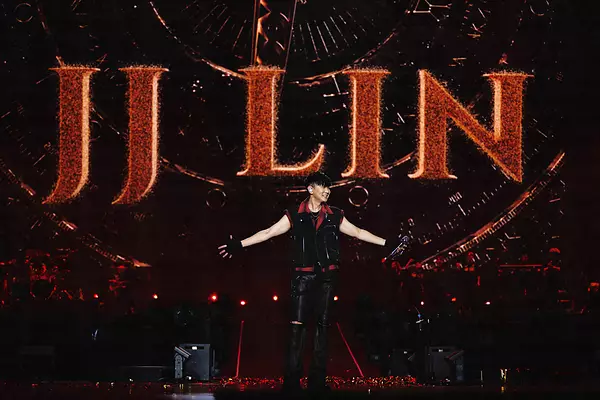
Asian pop superstar JJ Lin closed out the night on the main stage. After nearly six months of preparation, he brought together a 100-member international team for a 20-song show featuring three stage outfits and large-scale pyrotechnics. The set included the live debut of his new English-language single "RISE WITHOUT A SOUND". JJ also shared that he embedded secret snippets from his upcoming 2027 album within this performance, which he described as a miniature sequel to JJ20 Tour. A long-time Formula 1 enthusiast, JJ fulfilled his dream by performing at the race in his home country of Singapore, bringing his passions for music and motorsport together in one night.
The three artists enriched the event's entertainment lineup with a rich tapestry of Chinese‑language musical styles and live performances. Their appearances drew a positive response from both the artists and their fans. The participating artists expressed their excitement at taking the stage and how honored they felt to perform, with JJ describing it as a dream stage. Tia Ray's and Lil Ghost's sets generated widespread attention and discussion on Chinese social media, with many fans voicing their intent to travel to Singapore the following year to catch the shows and soak in the iconic Formula 1 race-weekend atmosphere. The enthusiastic fan reaction underscores music's potential to bridge artists, fans and major sporting events.
By combining motorsport with live entertainment, the Singapore Grand Prix gives audiences from different countries and regions an opportunity to discover a wide range of music. The collaboration gave artists from the Chinese-language music scene more opportunities to engage with international audiences. Leveraging the artists' reach and fan base, it has also stoked greater interest among Chinese music fans for the race and attending the event on-site.
Moving forward, TME will deepen its partnerships with the Formula 1 Singapore Grand Prix and other global collaborators, building on each artist's unique artistic identity across varied performance settings. These efforts will unlock more opportunities for Chinese-language artists to showcase their creations, exchange creative insights and forge bonds with global fans, while supporting partners to tap into China's music-loving audiences.
** This press release is distributed by PR Newswire through automated distribution system, for which the client assumes full responsibility. **

JJ Lin, Tia Ray & Lil Ghost Take the Formula 1 Singapore Grand Prix Stage With Support From TME
JJ Lin, Tia Ray & Lil Ghost Take the Formula 1 Singapore Grand Prix Stage With Support From TME

JJ Lin, Tia Ray & Lil Ghost Take the Formula 1 Singapore Grand Prix Stage With Support From TME
BEIJING, Oct. 20, 2026 /PRNewswire/ -- CATL today unveiled the innovative dual-electric range extension battery and the latest generation of heavy-duty battery-swapping solution to accelerate the electrification of road freight transportation.
Competition in electric heavy-duty trucking is moving beyond technical specifications toward full-lifecycle value. While battery swapping has made energy replenishment faster and more predictable, concerns about battery utilization, operating costs and residual vehicle value continue to affect fleet economics.
To address these challenges, CATL combines its dual-electric range extension battery with QIJI's strategy of standardization, new infrastructure and a full commercial ecosystem, bringing battery swapping and industry-wide collaboration together to accelerate heavy-duty truck electrification.
A Dual-Electric Approach to Range Extension
CATL's dual-electric range extension battery combines two independent yet complementary battery systems.
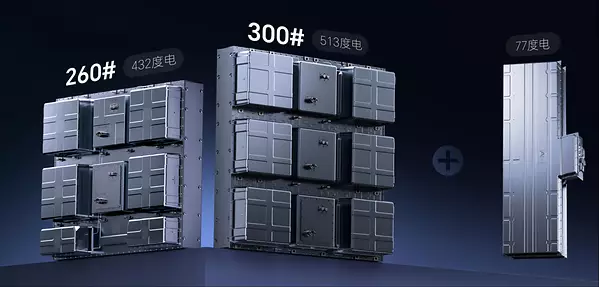
The main battery uses QIJI's standardized chassis-mounted swappable battery to maximize efficiency. A behind-the-cab range-extension power system, currently equipped with a 77kWh battery capable of 3C charging, provides backup power. Together, the systems maintain uninterrupted power delivery and provide redundancy for demanding operating conditions.
- Dual-System Power Redundancy
In conventional battery-swapping trucks, drivers often return for a swap with unused capacity because they are reluctant to run the battery low. Backup power from the range-extension battery increases the main battery's depth of discharge (DOD) from approximately 70% to over 95%, allowing it to be returned at less than 5% state of charge (SOC). At this threshold, CATL's seamless switching technology transfers power delivery to the range-extension battery within milliseconds, maintaining a continuous and stable power supply.
In conventional battery-swapping trucks, drivers often return for a swap with unused capacity because they are reluctant to run the battery low. Backup power from the range-extension battery increases the main battery's depth of discharge (DOD) from approximately 70% to over 95%, allowing it to be returned at less than 5% state of charge (SOC). At this threshold, CATL's seamless switching technology transfers power delivery to the range-extension battery within milliseconds, maintaining a continuous and stable power supply.
- "1+X" Architecture and Independent Upgrades
The system uses a "1+X" architecture. One standardized main battery maintains compatibility with the QIJI battery-swapping network, while the range-extension battery can be customized for specific conditions with options including ultra-high energy density, low-temperature resistance for cold climates, or ultra-high power.
The two battery systems can be developed and upgraded independently to meet their respective technical and operational requirements.
- Flexible Leasing and Battery Asset Management
The independently owned on-board range-extension battery stays with the vehicle as an asset throughout its service life, reducing reliance on immediate access to a swapping station. The main battery can be leased according to seasonal freight demand, helping fleets reduce rental costs during quieter periods and manage battery assets more flexibly.
This architecture combines the benefits of standardization with flexible vehicle configurations, making electric heavy-duty trucks more practical and economically viable across a wider range of applications.
QIJI Builds a Shared Battery Swapping Ecosystem
QIJI complements these improvements with a three-pillar strategy of standardization, new infrastructure and a full commercial ecosystem. It seeks to speed heavy-duty truck electrification with a value-chain ecosystem co-created by all stakeholders, where benefits are shared collectively.
- Standardization Supports Wider Adoption
To accommodate a wider range of truck models and operating conditions, QIJI has introduced the 260# (432 kWh) and 300# (513 kWh) standardized battery-swapping blocks alongside the existing 75# block.
The system enables battery swaps in just five minutes, with a 99.99% first-time success rate, helping fleets minimize downtime and maintain operational efficiency.
QIJI has also pioneered a battery-as-a-service (BaaS) model in which customers pay for the net energy charged rather than the energy discharged. This allows customers to retain the value of energy recovered through regenerative braking, reducing per-kWh battery rental costs for users on basic plans by up to 20%. Flexible battery leasing options allow customers to tailor rental periods to their needs, from second-hand vehicle transitions to seasonal demand. This will minimize idle costs and offer more flexible options for off-season downtime, further helping fleets manage operating costs.
- New Infrastructure Improves Resource Efficiency
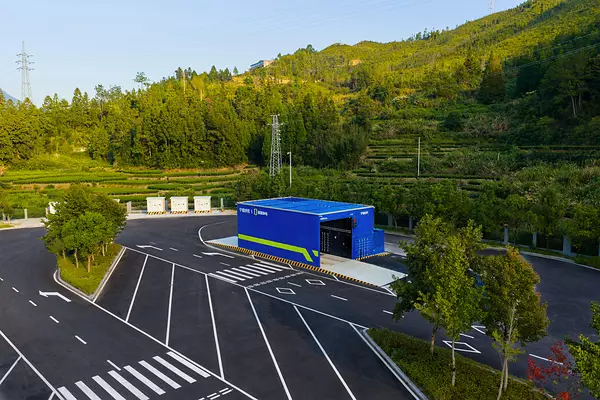
QIJI aims to make better use of four critical resources in long-haul freight: time, land, payload capacity and grid electricity. Rapid battery swapping reduces waiting times, while efficient station layouts serve more vehicles within the same footprint. Battery capacity is matched to transport needs, and centralized, coordinated charging makes better use of grid electricity. These measures aim to improve both resource efficiency and operational returns.
CATL plans to deploy 900 battery-swapping stations by the end of 2026 and 2,000 by 2027, with a long-term target of 10,000 stations nationwide in collaboration with its partners.
By connecting major freight corridors through a coordinated swapping network, QIJI aims to improve the efficiency and commercial viability of electric heavy-duty trucking.
- A Commercial Ecosystem Supports the Full Vehicle Lifecycle
QIJI connects truck manufacturers, financial institutions, insurers, channel partners and aftermarket service providers across the vehicle lifecycle, from purchase and operation to maintenance and resale, working together to build a comprehensive ecosystem of integrated products and services.
QIJI has introduced two partnership models: Battery Asset Service Partners and Energy Replenishment Service Partners. These models allow partners to participate in battery asset services and energy replenishment, extending their role beyond one-off vehicle sales to ongoing operations.
Through this integrated ecosystem, QIJI aims to turn the costs of the low-carbon transition into new growth opportunities, enabling stakeholders across the value chain to share the benefits of the new-energy era.
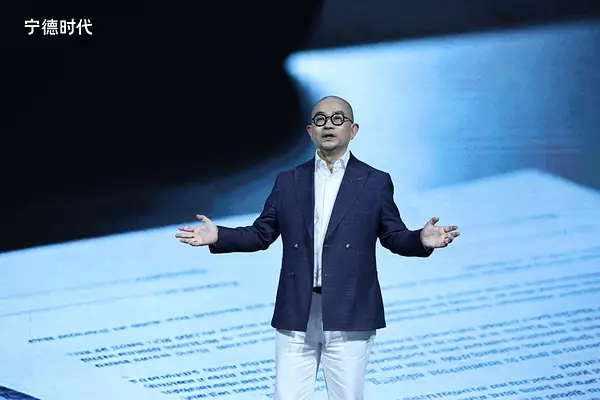
"The combination of the dual-electric range extension battery and QIJI battery swapping offers the best solution for electrifying heavy-duty trucks," said Jesse Yang, CEO of QIJI Energy.
New Batteries and Industry Partnerships
The initiative has also gained commercial traction, with agreements signed for 13,000 units at the event.
Aside from the dual-electric solution, CATL also introduced a new lineup of heavy-duty truck batteries tailored to different vehicle configurations and operating requirements at the event. The lineup includes rear-mounted ultra-light and ultra-thin batteries for weight- and space-sensitive applications, as well as chassis-mounted solutions for short-haul and long-haul operations.
** This press release is distributed by PR Newswire through automated distribution system, for which the client assumes full responsibility. **
CATL Unveils Dual-Electric Range Extension Battery to Accelerate Electric Heavy-Duty Truck Adoption
CATL Unveils Dual-Electric Range Extension Battery to Accelerate Electric Heavy-Duty Truck Adoption
CATL Unveils Dual-Electric Range Extension Battery to Accelerate Electric Heavy-Duty Truck Adoption