China's financial markets have become more open, global, and robust, while the gradual easing of cross-border capital flows could further widen the Chinese yuan's international use, the head of the Institute of International Finance (IIF) said on Monday.
Tim Adams, president and CEO of the IIF, a global association of financial institutions based in Washington, D.C., spoke to the China Global Television Network (CGTN) at the four-day Financial Street Forum in Beijing, which opened in the Chinese capital on Monday.
Adams said he has witnessed a number of significant changes since first visiting China decades ago, including deeper capital markets and strong investor interest in initial public offerings (IPOs), which underscore the country's growing role in global trade and finance.
"It has opened up substantially over [time]. I've been coming here for many, many years, and I think the market has opened up commensurate with China's growing role in the global economy, both in terms of trade but also in terms of greater financing, including, indeed, Chinese financial institutions going global. So China's economy is more global, China's financial sector is more global, financial institutions are more global. So that's one. Two is a deepening and broadening of the capital markets, and there's enormous interest in the capital markets here and investing here, especially in IPOs. The IPO market, as you've seen, has been incredibly robust," Adams said.
In Adams' view, China's continued reform and opening-up has changed how overseas investors view the country, which is now seen as a routine place to do business.
"I think it's just become much more mainstream, much more open. Investors feel much more comfortable here. It feels very normal to come here and do business. It's not unique anymore. It's sort of part of the global financial system and China's growing role in trade and commerce globally. Just the size of the Chinese economy. When I first started coming here, China's economy was probably 3 percent of global GDP. Now it's over 20 percent. So it's much more mature, much more open, much more robust and much more global," he said.
Turning to the questions posed by the current geopolitical, debt and liquidity risks, Adams said the answer begins with enhancing greater cooperation through more engagement at international forums such as the current event in Beijing.
"Working collaboratively is really important. And I was just in Bangkok [for] the IMF-World Bank Annual Meetings, as well as our own annual meetings. We at the IIF [have] 400 institutions from 65 different countries. So it's forums like the IIF, it's forums like the IMF, World Bank and the Financial Street Forum, which I'm attending here this week, where you bring in investors, bring in policymakers from around the world to identify where the problems are, and then work collaboratively to craft appropriate solutions," he said.
Adams said the growing international use of the yuan further highlights China’s increased standing as a global financial powerhouse, but believes going further would depend on how China opens up its capital markets.
"It has internationalized again, consistent with China's growing role in global trade. I think to do more and grow more robustly, you really have to open up the capital market, make the currency convertible, so that you have capital flows in and out. I think you need to further develop the domestic bond market, domestic equity market. Doing it slowly, gradually over time is very important. But it sends a signal to foreign investors that you can get capital in, you can get capital out, and that there are assets here across a full range of risk spectrum that you can invest in. And then if you're offshore, you want to be able to diversify, you want to be able to have hedging instruments, and all those things are developing, have been developing," he said.
"I think about the many years I've been coming here, how much more sophisticated and open the capital instruments and capital markets are. So I think there's a whole host of things that China has been doing, will continue to do, and I suspect we'll see more of it in the future," he added.
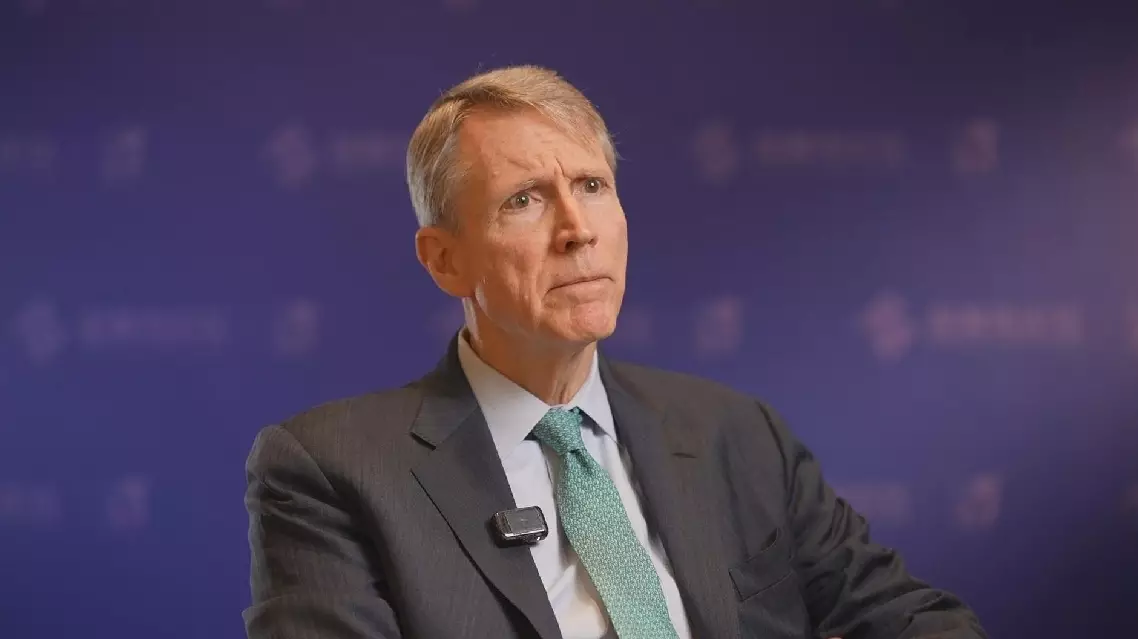
China’s financial markets becoming more global, robust: IIF chief