The Pearl White Edition of DJI's Breakthrough Dual-Lens Gimbal Camera Offers 17 Stops of Dynamic Range, 10-bit HDR Video, and Advanced D-Log 2 Color Science
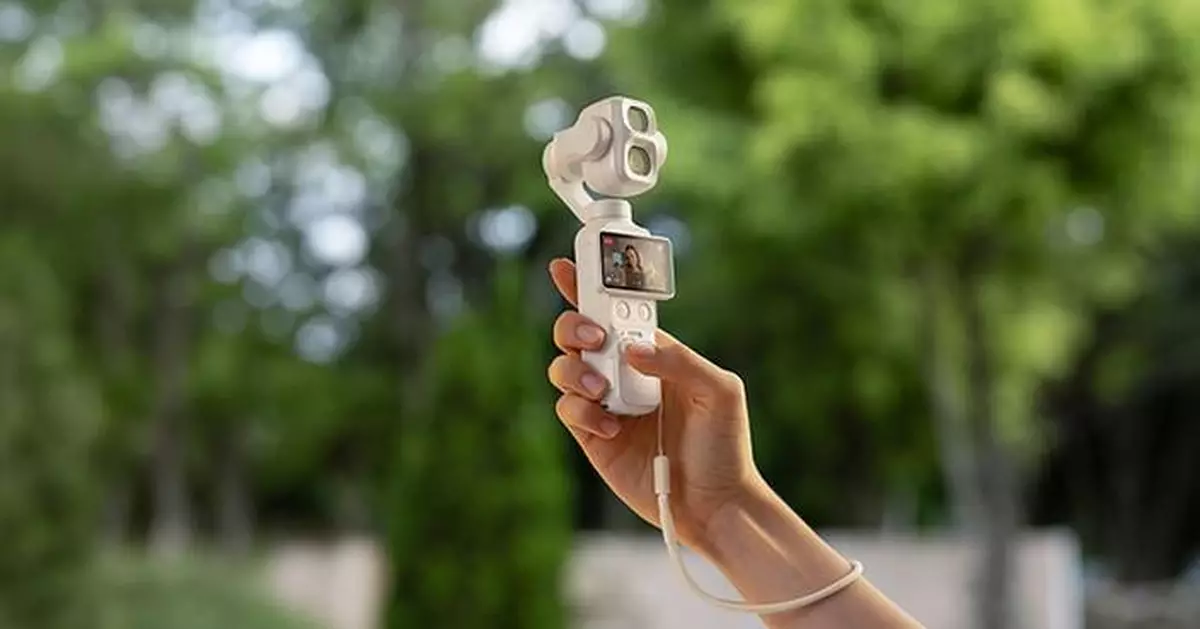
SHENZHEN, China, Oct. 20, 2026 /PRNewswire/ -- DJI, the global leader in civilian drones and creative camera technology, today announces the global availability of the Osmo Pocket 4P Pearl White. This elegant new colorway delivers the complete dual-lens filmmaking power of the acclaimed Osmo Pocket 4P, featuring a premium 1-inch CMOS sensor with 17 stops of dynamic range, the latest 10-bit D-Log 2 color profile, and dual lenses spanning 20mm to 60mm optical range. Crafted with mica-infused pearlescent pigments and multi-layer spray coating technology, the Pearl White finish reveals subtle, soft luminous shifts across different lighting conditions and viewing angles. It combines the restrained sophistication of a professional camera with the refined sophistication of quiet luxury that complements lifestyle photography, travel vlogging, and everyday storytelling—offering fashion-forward creators a new visual choice for their creative toolkit.
Professional Cinematic Storytelling with Style
The Osmo Pocket 4P Pearl White is engineered around two powerful lens configurations that transform how creators capture the world. The primary 20mm wide-angle lens features an all-new 1-inch CMOS sensor with an f/2.0 aperture, delivering up to 4K/240 fps video powered by cutting-edge LOFIC technology. Its 17 stops of dynamic range—typically found only in high-end cinema cameras—preserve exceptional highlight and shadow details even in challenging lighting including brilliant sunsets, backlit portraits, and high-contrast scenes. The new 10-bit D-Log 2 color profile captures over one billion colors, empowering creators to recover shadow and highlight detail with cinema-grade precision and maximum grading flexibility. Meanwhile, the premium 60mm medium-tele lens with f/1.8 aperture (f/6.3-equivalent depth of field) and 3× optical zoom up to 12× zoom create the signature shallow-focus portraiture that defines cinematic production. Combined with the gimbal's precision stabilization and professional-grade color science, these lenses enable creators to shoot with the intent of cinema directors—maintaining studio-level control and post-production mastery in a remarkably compact 230-gram form.
Creative Features For Modern Filmmaking
- Cinematic Slow Motion: Capture up to 8× ultra-HD slow motion at 4K/240 fps, turning dynamic moments—spinning subjects, flowing hair, cascading water—into mesmerizing slow-motion sequences with full optical detail intact.
- High-Resolution Stills: Capture up to 37MP photos with crystal-clear detail that can be reframed in post, ensuring creators never miss the perfect composition.
- 4K Live Photo: Automatically record 1.5-second clips in 4K for every photo, capturing the motion and narrative surrounding every frame.
- Intelligent Tracking: Intelligently follow subjects – such as people, vehicles, pets, or dynamic shapes–with ActiveTrack 8.0 and keep them perfectly framed even in complex scenes.
- Ultra-Fast File Transfer: Streamline editing workflows with USB 3.1 support and 800MB/s transfer speeds.
- Extended Creative Runtime: Capture every moment without interrupting workflows with up to 210 minutes of runtime on a single charge and fast-charging capability reaching 0–80% in just 18 minutes.
- Auto Media Transfer to iOS: Automatically transfers newly captured footage to iOS devices after powering off the camera for more streamlined mobile editing workflow. For optimal stability, pair with iPhone 16 series or later running iOS 26.4.1 or above, with camera battery level above 15%.
- HDR 10-bit Color Mode: Record in stunning high-dynamic-range 10-bit video, capturing over one billion colors for maximum post-production flexibility. Playback on HDR-compatible displays reveals the full visual richness of your footage.
Fully Compatible with the Osmo Ecosystem
The Osmo Pocket 4P Pearl White seamlessly integrates with DJI's versatile accessory ecosystem. Sold separately, this edition is compatible with the Osmo Pocket 4 Fill Light, premium ND and polarizing filters, wide-angle lens adapters, battery handle, and OsmoAudio microphones. This ecosystem approach empowers creators to build customized rigs tailored to their production needs, whether shooting solo or running complex multi-camera setups.
DJI Care Refresh
DJI Care Refresh, the comprehensive protection plan for DJI products, is now available for Osmo Pocket 4P Pearl White Edition. Accidental damage is covered by the replacement service, including natural wear, collisions, and water damage. For a small additional charge, you can have your damaged product replaced if an accident occurs.
DJI Care Refresh (1-Year Plan) includes up to 2 replacements in 1 year. DJI Care Refresh (2-Year Plan) includes up to 4 replacements in 2 years. Other DJI Care Refresh services include official warranty, international warranty service, and free shipping. For a complete list of details, please visit: www.dji.com/support/service/djicare-refresh
For more information, please refer to: www.dji.com/osmo-pocket-4p
Images and assets can be found at this link: https://bit.ly/4ixhJOm
¹ All data were measured using a production model of the Osmo Pocket 4P under controlled conditions. For more information, please refer to the official DJI website.
About DJI
Since 2006, DJI has led the world with civilian drone innovations that have empowered individuals to take flight for the first time, visionaries to turn their imagination into reality, and professionals to transform their work entirely. Today, DJI serves to build a better world by continuously promoting human advancement. With a solution-oriented mindset and genuine curiosity, DJI has expanded its ambitions into areas such as renewable energy, agriculture, public safety, surveying and mapping, and infrastructure inspection. In every application, DJI products deliver experiences that add value to lives around the world in more profound ways than ever before.
For more information, visit our:
** This press release is distributed by PR Newswire through automated distribution system, for which the client assumes full responsibility. **
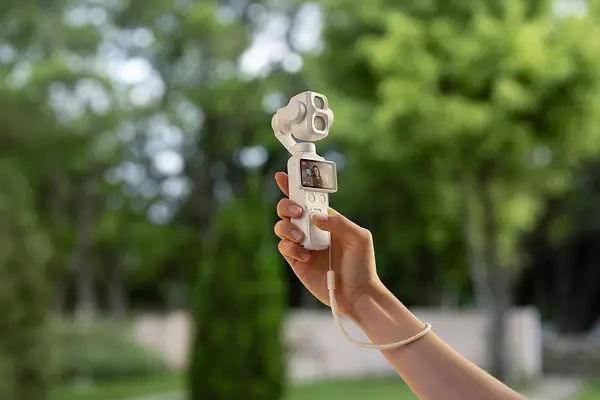
DJI Osmo Pocket 4P Pearl White Now Available, Bringing Style to Cinematic Creators Worldwide
BEIJING, Oct. 20, 2026 /PRNewswire/ -- CATL today unveiled the innovative dual-electric range extension battery and the latest generation of heavy-duty battery-swapping solution to accelerate the electrification of road freight transportation.
Competition in electric heavy-duty trucking is moving beyond technical specifications toward full-lifecycle value. While battery swapping has made energy replenishment faster and more predictable, concerns about battery utilization, operating costs and residual vehicle value continue to affect fleet economics.
To address these challenges, CATL combines its dual-electric range extension battery with QIJI's strategy of standardization, new infrastructure and a full commercial ecosystem, bringing battery swapping and industry-wide collaboration together to accelerate heavy-duty truck electrification.
A Dual-Electric Approach to Range Extension
CATL's dual-electric range extension battery combines two independent yet complementary battery systems.
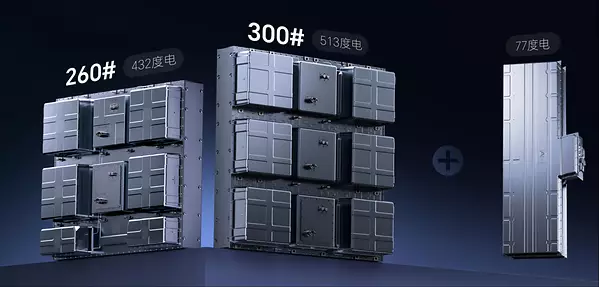
The main battery uses QIJI's standardized chassis-mounted swappable battery to maximize efficiency. A behind-the-cab range-extension power system, currently equipped with a 77kWh battery capable of 3C charging, provides backup power. Together, the systems maintain uninterrupted power delivery and provide redundancy for demanding operating conditions.
- Dual-System Power Redundancy
In conventional battery-swapping trucks, drivers often return for a swap with unused capacity because they are reluctant to run the battery low. Backup power from the range-extension battery increases the main battery's depth of discharge (DOD) from approximately 70% to over 95%, allowing it to be returned at less than 5% state of charge (SOC). At this threshold, CATL's seamless switching technology transfers power delivery to the range-extension battery within milliseconds, maintaining a continuous and stable power supply.
In conventional battery-swapping trucks, drivers often return for a swap with unused capacity because they are reluctant to run the battery low. Backup power from the range-extension battery increases the main battery's depth of discharge (DOD) from approximately 70% to over 95%, allowing it to be returned at less than 5% state of charge (SOC). At this threshold, CATL's seamless switching technology transfers power delivery to the range-extension battery within milliseconds, maintaining a continuous and stable power supply.
- "1+X" Architecture and Independent Upgrades
The system uses a "1+X" architecture. One standardized main battery maintains compatibility with the QIJI battery-swapping network, while the range-extension battery can be customized for specific conditions with options including ultra-high energy density, low-temperature resistance for cold climates, or ultra-high power.
The two battery systems can be developed and upgraded independently to meet their respective technical and operational requirements.
- Flexible Leasing and Battery Asset Management
The independently owned on-board range-extension battery stays with the vehicle as an asset throughout its service life, reducing reliance on immediate access to a swapping station. The main battery can be leased according to seasonal freight demand, helping fleets reduce rental costs during quieter periods and manage battery assets more flexibly.
This architecture combines the benefits of standardization with flexible vehicle configurations, making electric heavy-duty trucks more practical and economically viable across a wider range of applications.
QIJI Builds a Shared Battery Swapping Ecosystem
QIJI complements these improvements with a three-pillar strategy of standardization, new infrastructure and a full commercial ecosystem. It seeks to speed heavy-duty truck electrification with a value-chain ecosystem co-created by all stakeholders, where benefits are shared collectively.
- Standardization Supports Wider Adoption
To accommodate a wider range of truck models and operating conditions, QIJI has introduced the 260# (432 kWh) and 300# (513 kWh) standardized battery-swapping blocks alongside the existing 75# block.
The system enables battery swaps in just five minutes, with a 99.99% first-time success rate, helping fleets minimize downtime and maintain operational efficiency.
QIJI has also pioneered a battery-as-a-service (BaaS) model in which customers pay for the net energy charged rather than the energy discharged. This allows customers to retain the value of energy recovered through regenerative braking, reducing per-kWh battery rental costs for users on basic plans by up to 20%. Flexible battery leasing options allow customers to tailor rental periods to their needs, from second-hand vehicle transitions to seasonal demand. This will minimize idle costs and offer more flexible options for off-season downtime, further helping fleets manage operating costs.
- New Infrastructure Improves Resource Efficiency
QIJI aims to make better use of four critical resources in long-haul freight: time, land, payload capacity and grid electricity. Rapid battery swapping reduces waiting times, while efficient station layouts serve more vehicles within the same footprint. Battery capacity is matched to transport needs, and centralized, coordinated charging makes better use of grid electricity. These measures aim to improve both resource efficiency and operational returns.
CATL plans to deploy 900 battery-swapping stations by the end of 2026 and 2,000 by 2027, with a long-term target of 10,000 stations nationwide in collaboration with its partners.
By connecting major freight corridors through a coordinated swapping network, QIJI aims to improve the efficiency and commercial viability of electric heavy-duty trucking.
- A Commercial Ecosystem Supports the Full Vehicle Lifecycle
QIJI connects truck manufacturers, financial institutions, insurers, channel partners and aftermarket service providers across the vehicle lifecycle, from purchase and operation to maintenance and resale, working together to build a comprehensive ecosystem of integrated products and services.
QIJI has introduced two partnership models: Battery Asset Service Partners and Energy Replenishment Service Partners. These models allow partners to participate in battery asset services and energy replenishment, extending their role beyond one-off vehicle sales to ongoing operations.
Through this integrated ecosystem, QIJI aims to turn the costs of the low-carbon transition into new growth opportunities, enabling stakeholders across the value chain to share the benefits of the new-energy era.
"The combination of the dual-electric range extension battery and QIJI battery swapping offers the best solution for electrifying heavy-duty trucks," said Jesse Yang, CEO of QIJI Energy.
New Batteries and Industry Partnerships
The initiative has also gained commercial traction, with agreements signed for 13,000 units at the event.
Aside from the dual-electric solution, CATL also introduced a new lineup of heavy-duty truck batteries tailored to different vehicle configurations and operating requirements at the event. The lineup includes rear-mounted ultra-light and ultra-thin batteries for weight- and space-sensitive applications, as well as chassis-mounted solutions for short-haul and long-haul operations.
** This press release is distributed by PR Newswire through automated distribution system, for which the client assumes full responsibility. **

CATL Unveils Dual-Electric Range Extension Battery to Accelerate Electric Heavy-Duty Truck Adoption

CATL Unveils Dual-Electric Range Extension Battery to Accelerate Electric Heavy-Duty Truck Adoption
CATL Unveils Dual-Electric Range Extension Battery to Accelerate Electric Heavy-Duty Truck Adoption