Roiled by protests, France has drawn long looks from abroad at the state of its republic — both its divisive internal politics and economic decision-making.
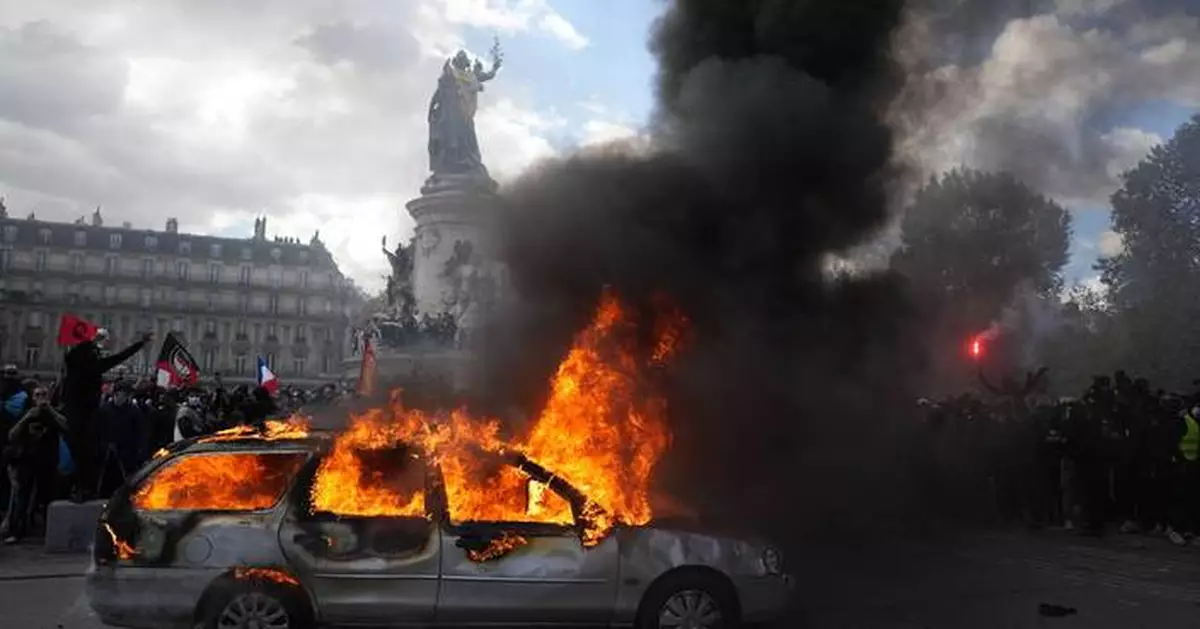
Mostly peaceful, if obstructive, school blockades by students this month morphed Saturday into wider upheaval and pockets of violence by youths over issues such as the rising cost of living -- which isn’t exclusive to France.
Carsten Brzeski, global chief of macro at ING bank, said “France is not Greece” — an allusion to the 2009 financial crisis that jolted the European Union. But France's inability to meet its spending and growth targets, as well as cost-cutting targets, is at the core of its economic woes.
Here's a breakdown of France’s key economic indicators and tax burdens as compared with other European Union countries, as well as policy decisions that may have contributed to stagnation and unrest.
France's public debt as a percentage of gross domestic product has ballooned over the nearly decade-long tenure of President Emmanuel Macron, emerging as a defining issue ahead of the race to succeed him next spring.
The public debt is “enormous,” says Gilbert Cette, an economics professor at Neoma Business School in Paris. “France’s entire economic policy is constrained by such a sizable debt level."
The wiggle room for policymakers is limited: They must either cut government spending or raise taxes, which are already among the highest in Europe.
Either cut government spending or raise taxes — already among the highest in Europe. France has shown “talent” in both raising spending and lowering taxes in recent years, said Cette.
The picture is worsening: Three weeks ago, the government said its budget would again overshoot EU spending limits and that the national debt is expected to grow to nearly 122% of GDP, a new record.
At the end of June, France's public debt stood at nearly 3.6 trillion euros (nearly $4.08 trillion), equivalent to 119% of GDP, according to figures from France’s national statistics agency.
“Greece’s credibility was destroyed by false statistics; France’s is being eroded by false promises and the inability or unwillingness to start fiscal and structural reforms,” ING's Brzeski wrote last week.
That's the share of France's economic output accounted for by government spending in terms of France's overall economic output, according to 2025 figures from Eurostat, the EU statistics agency. The average in the EU was just under 50%.
The figure shows the depth of the challenge that Paris faces: Because it's already devoting so much of the economy's output to public spending — including subsidies for businesses and costly outlays for health care and pensions — it has less room for maneuver.
Eurostat says that as of 2024, France — at 45.2% — was a close second behind Denmark in terms of total tax revenue and social contributions as a percentage of GDP. The EU average was just over 40%.
That was the yield on France's 10-year bond as of Tuesday. Higher borrowing costs mean the French government has less money to spend on pensions, education, health, defense and social programs.
An instructive comparison may be with the European Union's biggest economy, Germany. Berlin is currently paying about 3.4% on its equivalent — the ultra-safe Bund — and the spread between the yields on the French and German 10-year bonds has widened.
The International Monetary Fund's forecast for economic growth, an anemic figure compared with other developed countries.
Overall, the IMF predicts growth of 3.1% in total global economic output, and 2.1% in advanced economies, this year. France's expected growth rate is the lowest among developed countries — roughly one-third of Germany's and half of Italy's.
Japan's economy, with the second-lowest growth forecast, is expected to expand by 0.7%
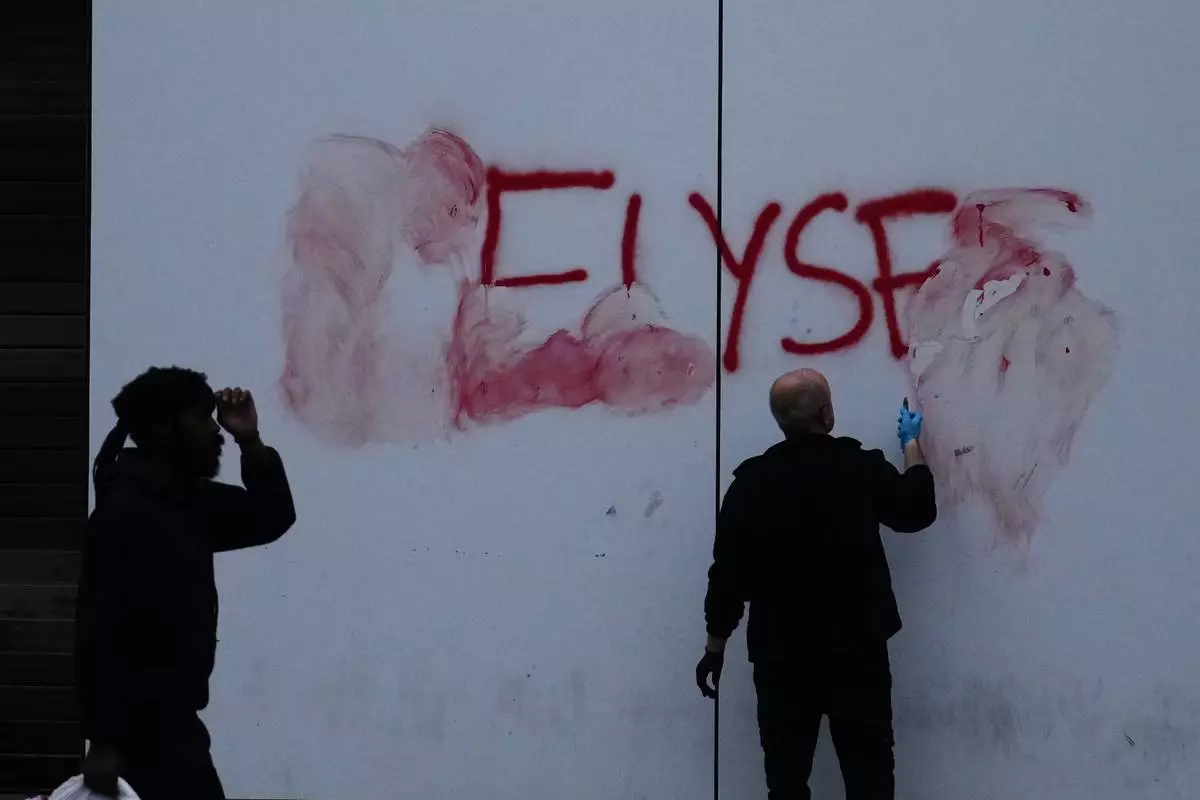
A man cleans a tag reading "Elysee" after violence erupted during nationwide protests against rising living costs and poor conditions in schools, in Paris, Monday, Oct. 19, 2026. (AP Photo/Christophe Ena)
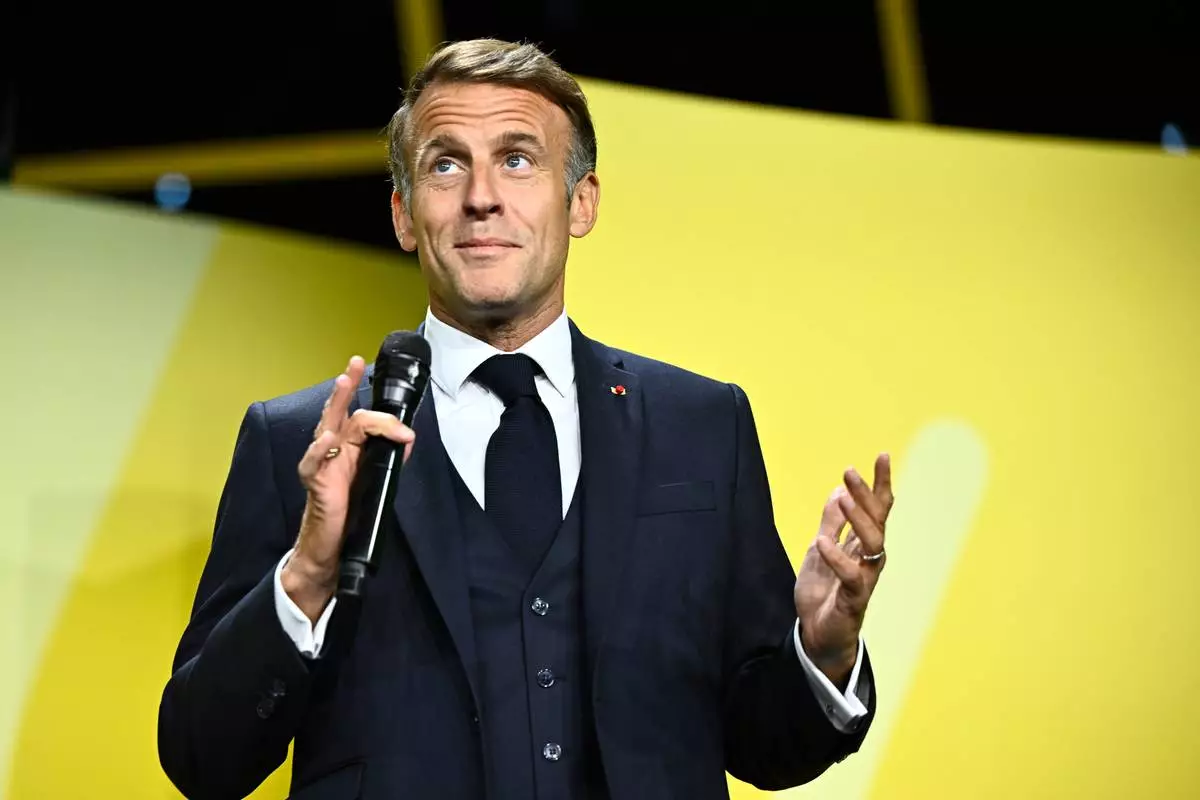
France's President Emmanuel Macron delivers a speech during the "Bpifrance Inno Generation (BIG) event" one of Europe's largest gatherings dedicated to entrepreneurs, in Paris, Thursday, Oct. 8, 2026. (Julien De Rosa/Pool Photo via AP)
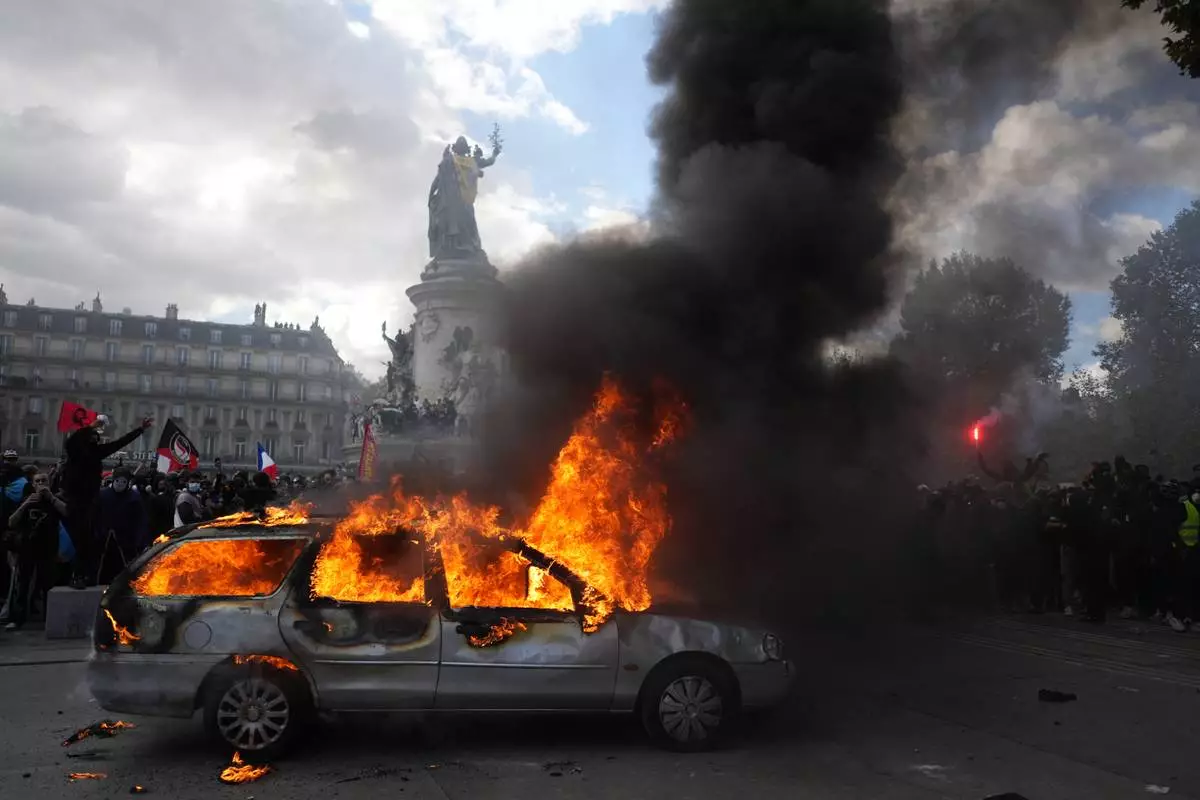
A car burns at Republique square during a protest against rising living costs, joining students' grievances, in Paris, Saturday, Oct. 17, 2026. (AP Photo/Thibault Camus)
MELBOURNE, Australia (AP) — A driver accused of intentionally causing serious injury to Australian federal lawmaker Helen Haines by hitting her with his car appeared in court for the first time on Wednesday as police said they were still investigating his apparent motivations. Meanwhile, Haines remained in critical condition after an apparent escalation in political violence that has shocked a nation where such crimes are rare.
The 65-year-old independent politician's condition hadn't changed since the day before, according to an update Wednesday morning from a Melbourne hospital where she was being treated. No further details have been officially supplied about the injuries she sustained when she was struck by a Toyota Land Cruiser SUV outside her office in the city of Wangaratta, in Victoria state, on Monday.
Police allege it was a “targeted” incident. Brendan Nugent, a 43-year-old man from nearby Tarrawingee, was charged Tuesday with intentionally causing serious injury, dangerous driving causing serious injury and causing harm to a federal official.
Court documents show Nugent also faces charges of cultivating and possessing cannabis.
When Nugent appeared in Wangaratta Magistrates' Court on Wednesday, he didn't apply for bail or enter a plea.
He will remain in custody until his next court appearance in February.
Nugent remained quiet in the dock as his lawyer Chirag Patel told Magistrate Allison Vaughan that his client was suffering from potential mental health issues and a concussion. The lawyer did not explain how Nugent had been concussed.
Patel said Nugent suffered from a neurological condition, idiopathic transverse myelitis, but had not been diagnosed with any mental health problems.
The rare condition damages the spinal cord’s protective myelin sheath and disrupts nerve signals between the brain and body. This leads to rapid muscle weakness, sensory loss, pain, and bladder and bowel dysfunction, according to the Cleveland Clinic medical center.
Investigators haven't ruled out “further serious charges,” Victoria Police Chief Commissioner Mike Bush told reporters in Melbourne on Wednesday. Bush wouldn't elaborate on the suspect's believed motivations but said the question would form the “centerpiece” of the police inquiry.
“There was nothing known to us that would have arisen or piqued our interest or given any indication that he was an immediate threat,” Bush said.
According to eyewitnesses cited by Prime Minister Anthony Albanese and other officials, the suspect drove past Haines as she stood at the trunk of her parked car, before turning and driving back to ram into her. The driver then reversed and struck Haines again, Home Affairs Minister Tony Burke said.
The suspect was subdued by a crowd of bystanders, one of whom removed a knife from the driver's pocket. Others rushed to help Haines, who was pinned between vehicles.
The lawmaker's family released a statement expressing thanks for the “swift assistance of bystanders” as well as health workers and police.
Haines, who was first elected to Parliament in 2019 and had been reelected twice since, was initially taken to a hospital in Wangaratta, a city of 30,000 people. She was airlifted later on Monday to a hospital in the state capital, Melbourne, 236 kilometers (147 miles) away.
Australian news outlets are widely reporting that Haines has had a leg amputated. The Alfred Hospital didn’t respond to a request for comment on the reports.
The suspect's father, Rod Nugent, released a statement Tuesday describing Haines as a “deeply respected, valued and much-loved member of our local community.”
“Helen has been our friend for more than 20 years and what happened to her yesterday is devastating and unfathomable,” the father said, adding that he would cooperate with police.
The incident shocked Australians, as political violence is uncommon in the country and politicians are highly accessible to the public. Most lawmakers are not accompanied by security details and go about their work and personal lives on their own.
The incident has provoked an outcry in Australia, partly because recent data shows that threats of political violence in the country have grown. Police reported in 2025 that threats against parliamentarians had doubled over the past three years, with more than 1,000 such threats against politicians in the 2025-2026 fiscal year.
Australia's Federal Police Commissioner Krissy Barrett told reporters Wednesday that the apparent attack was “what many had been dreading for some time."
Lawmakers were due to meet with Australia’s security agencies on Wednesday to discuss their safety. Such briefings are a regular occurrence but the latest meetings carried added weight after the week's events, some politicians said.
Albanese and lawmakers have this week urged their colleagues, reporters and the public to turn down the heat in increasingly fractious political debates. Many also said they hoped Australia’s easygoing culture of approachable politicians wouldn’t change.
Haines was not known for polarizing views. The daughter of dairy farmers and mother of three was a nurse, midwife and academic before entering politics, where she has advocated for health equity, rural prosperity and climate action.
Elsewhere in the world, authorities have warned of growing threats to lawmakers. The United States has seen a rise in political violence over the past decade.
That includes the 2022 hammer assault on the husband of then-House Speaker Nancy Pelosi; the 2024 assassination attempt on Donald Trump during his presidential campaign, as well as another on the president at the White House Correspondents’ Association Dinner in April; and the assassinations in 2025 of a Democratic Minnesota state lawmaker and her husband, and of conservative commentator Charlie Kirk.
In Britain, killings of politicians have also prompted bolstered security. Labour lawmaker Jo Cox was shot and stabbed in 2016 by a far-right extremist, while Conservative David Amess was stabbed in 2021 by an attacker inspired by the militant Islamic State group.
In July, the former British politician and reality TV contestant Ann Widdecombe was found beaten to death with a hammer at her home. A man has been charged with murder and terrorism-related offenses.
Graham-McLay reported from Wellington, New Zealand.
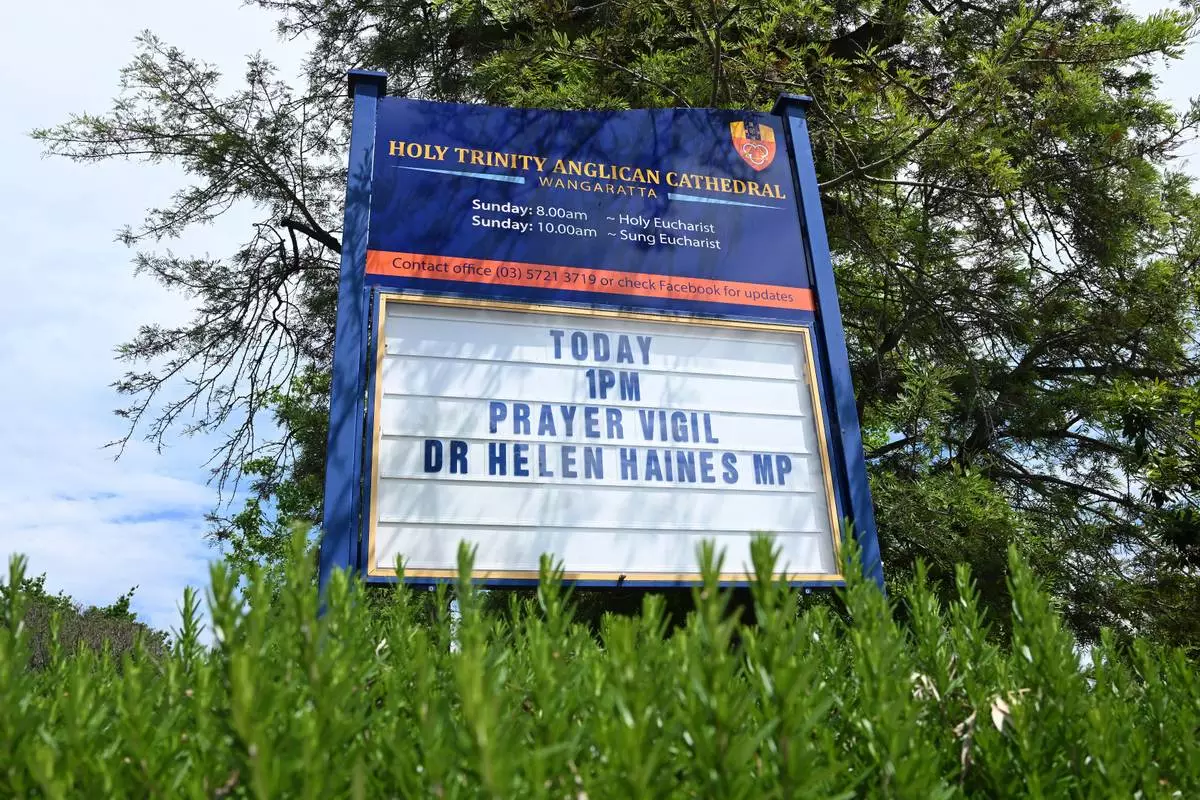
A church sign advertising a vigil for independent member of parliament Helen Haines at the Holy Trinity Anglican Cathedral in Wangaratta, Australia, Tuesday, Oct. 20, 2026. (James Ross/AAP Image via AP)
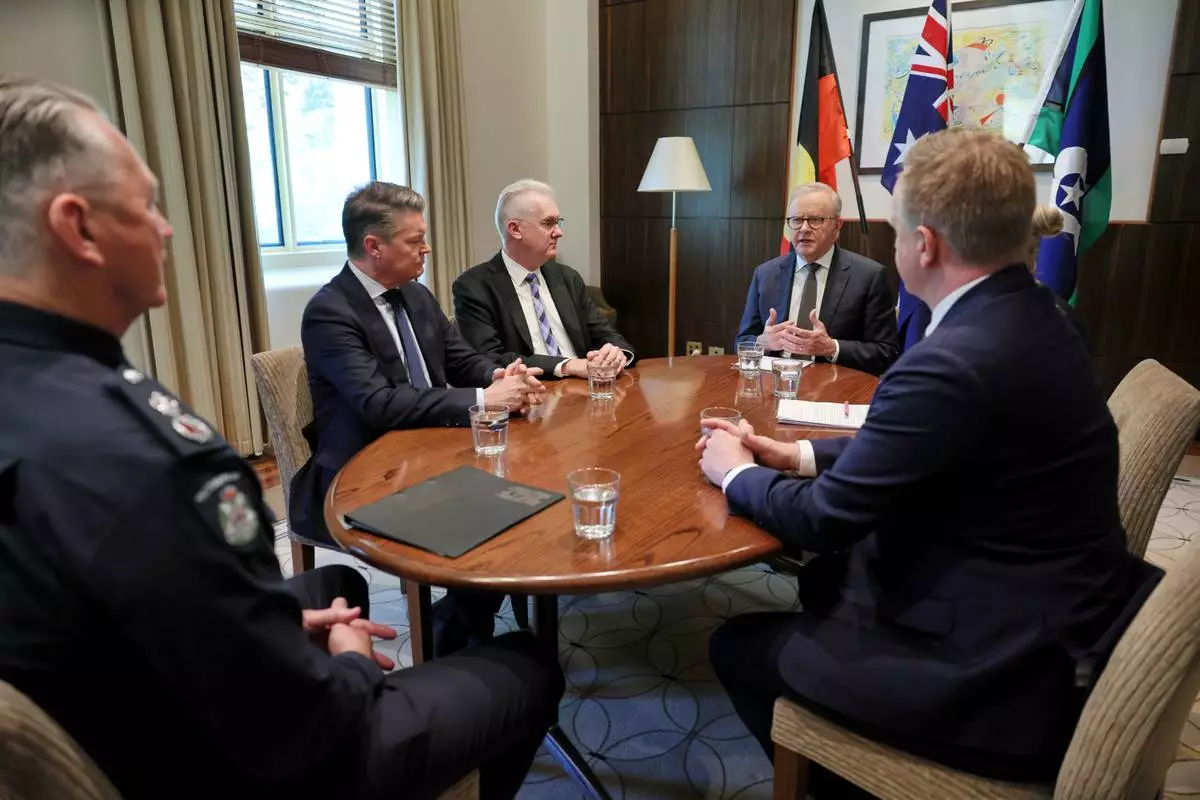
Australian Prime Minister Anthony Albanese, second right, Home Affairs Minister Tony Burke, third left, Victorian Premier Ben Carroll, Chief Commissioner of Victoria Police Mike Bush, left, Australian Federal Police Commissioner Krissy Barrett, obscured, and Victorian Police Minister Paul Edbrooke, right, hold a meeting following the attack on federal independent member of parliament, Helen Haines in Wangaratta, at the Commonwealth Offices in Melbourne, Australia, Tuesday, Oct. 20, 2026. (Con Chronis/AAP Image via AP)
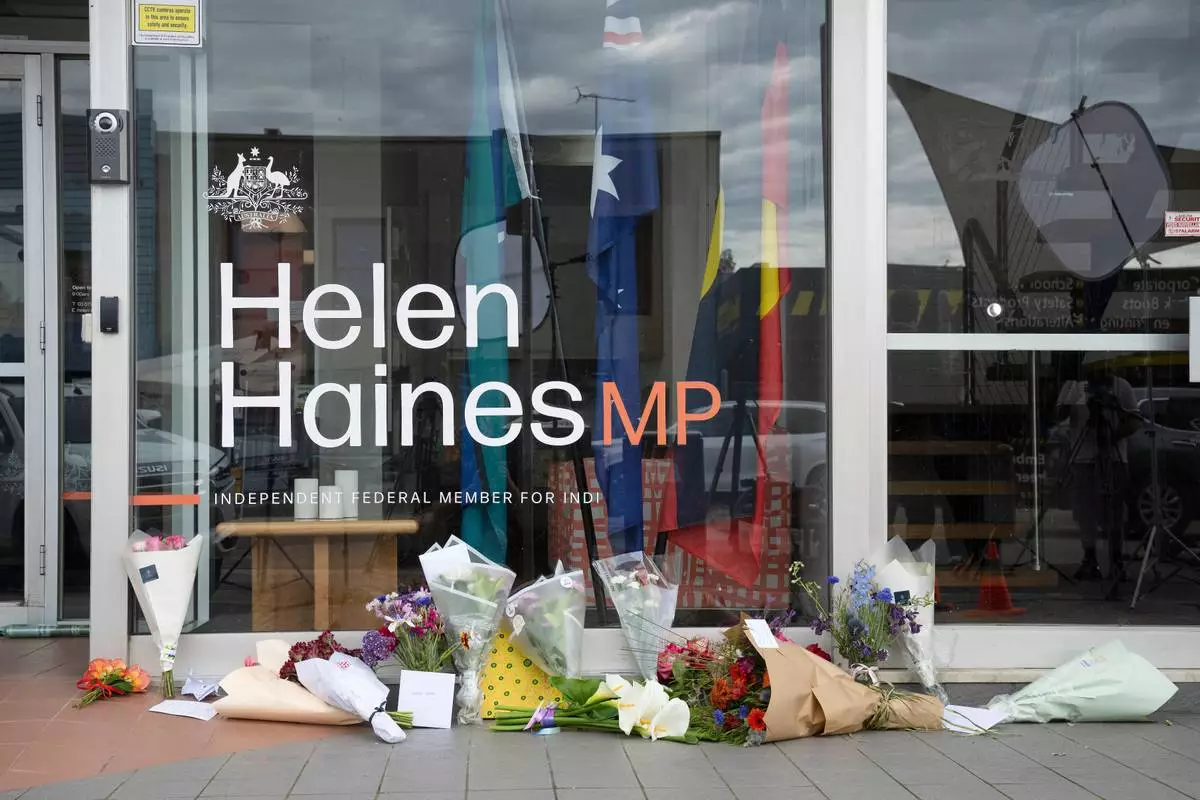
Tributes and flowers are placed outside the electoral office for independent member of parliament Helen Haines in Wangaratta, Australia, Tuesday, Oct. 20, 2026. (James Ross/AAPImage via AP)
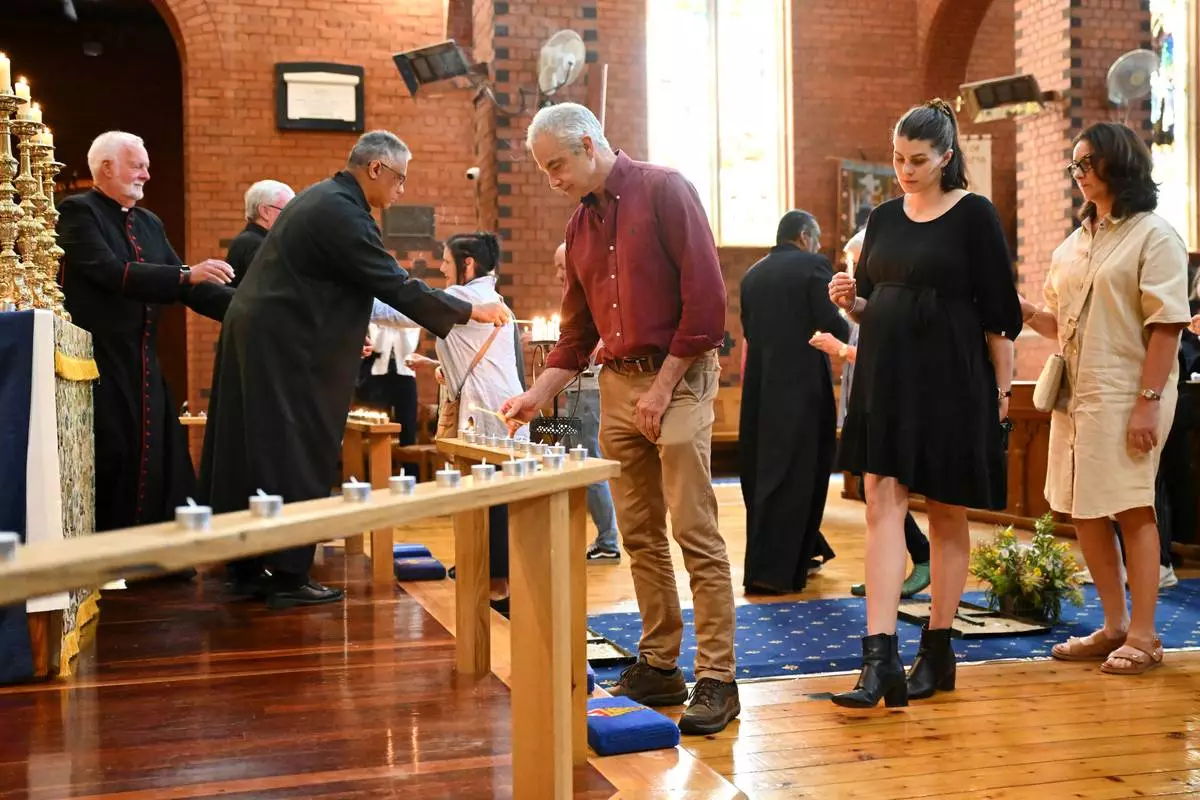
People line up to light a candle during a vigil for independent federal member of parliament, Helen Haines at the Holy Trinity Anglican Cathedral in Wangaratta, Australia, Tuesday, Oct. 20, 2026. (James Ross/AAP Image via AP)
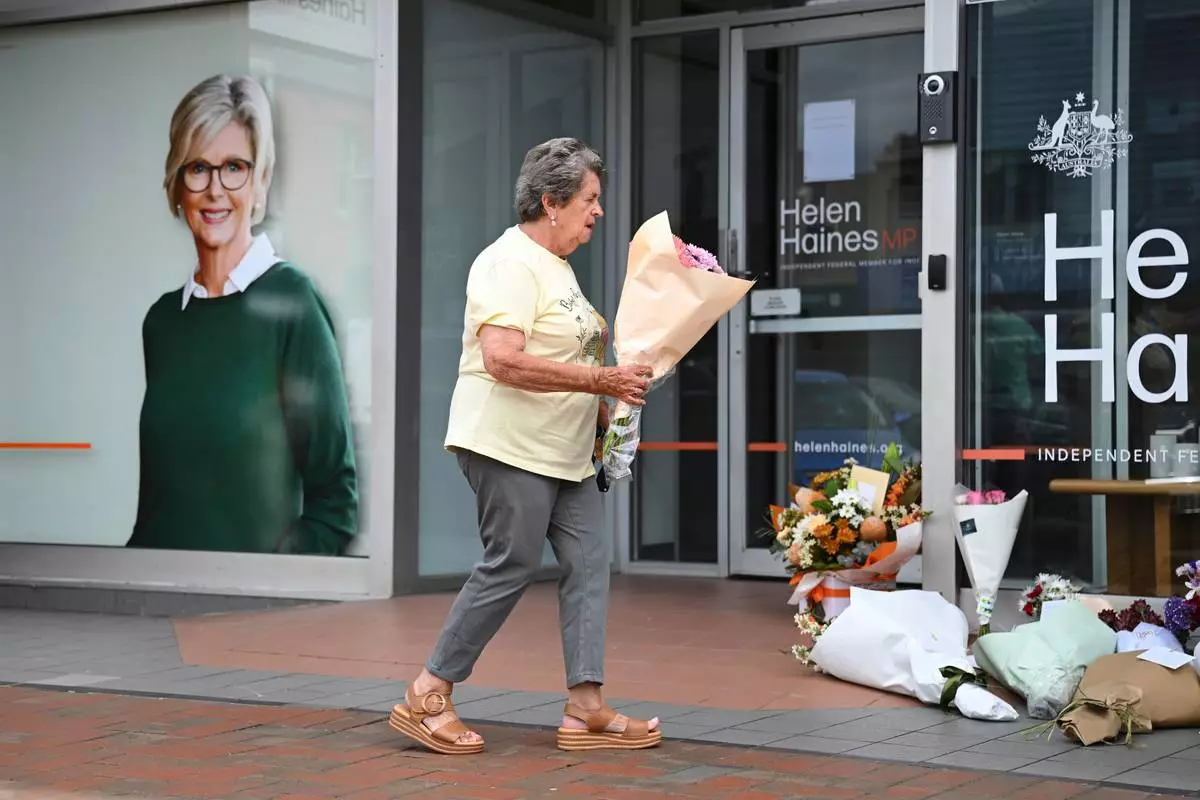
A woman delivers flowers at the electoral office of independent member of parliament, Helen Haines, in Wangaratta, Australia, Tuesday, Oct. 20, 2026. (James Ross/AAP Image via AP)