DH reminds public to take precautions against heat-related illnesses during very hot weather
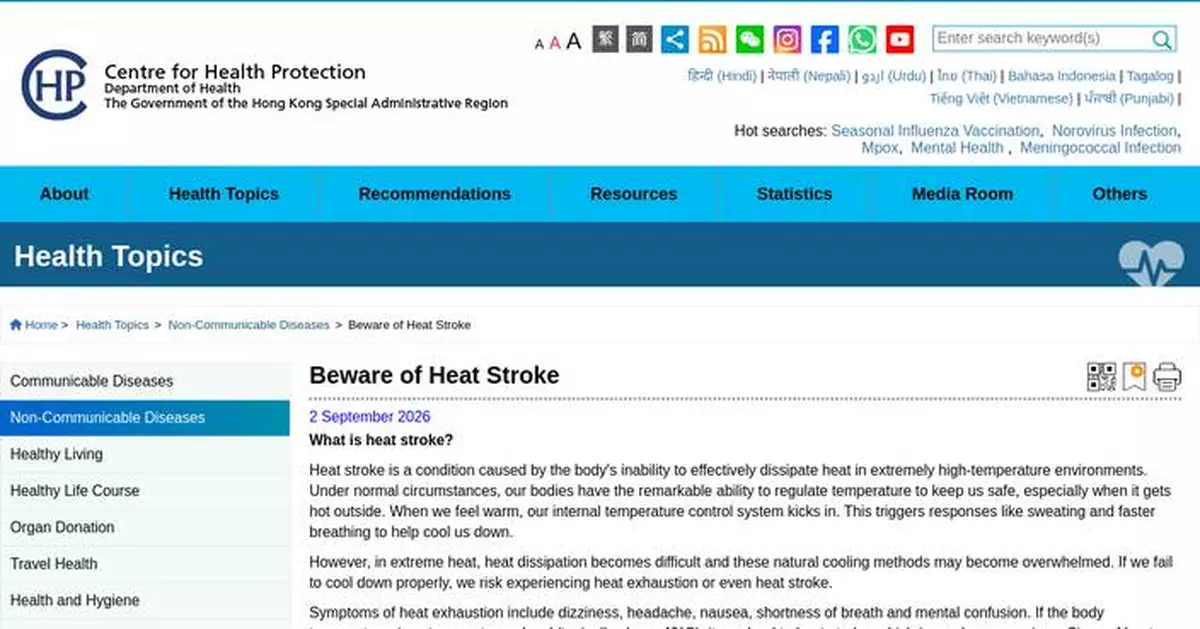
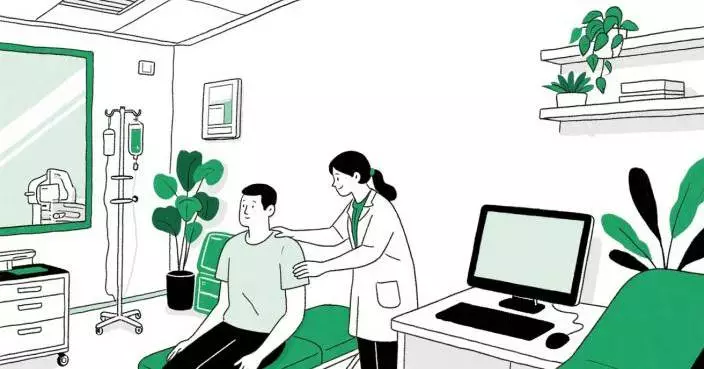
The Centre for Health Protection (CHP) of the Department of Health (DH) today (October 21) reminded members of the public to take appropriate precautions against heat-related illnesses, such as heat cramps, heat exhaustion and heat stroke, during very hot weather.
In a high-temperature environment, excessive sweating and difficulty in heat dissipation can cause stress to the body. Members of the public should take the following precautions:
- Hydrate in a timely manner to prevent dehydration;
- Wear light-coloured, loose-fitting and breathable clothing to minimise heat absorption and facilitate perspiration and heat dissipation;
- Keep indoor areas well ventilated and maintain appropriate temperature and humidity, e.g. by opening windows or using a fan or air-conditioning;
- Avoid strenuous exercise and prolonged activities such as hiking or trekking;
- Arrange outdoor activities in the morning or the late afternoon, if possible, and bring enough water; and
- Avoid beverages containing caffeine, such as coffee and tea, as well as alcoholic beverages, which may speed up water loss through the urinary system.
In addition, infants and children, the elderly, pregnant women, individuals with chronic illnesses such as heart disease or high blood pressure, overweight people and outdoor/manual workers are more susceptible to heat stroke. These groups should pay special attention to the following:
- Infants and young children: Avoid going outside when the temperature is high. If they must go outside, adults should ensure they stay in places with moderate temperatures and good ventilation or air-conditioning. Infants and young children should never be left unattended in a confined space such as a vehicle;
- The elderly, pregnant women, individuals with chronic illnesses and overweight people: Pay close attention to health conditions and seek help as soon as possible if experiencing any abnormalities in health indicators such as blood pressure, heart rate, etc or if there are fluctuations in health conditions. Avoid going out when the temperature is high. Make sure there is good ventilation, or turn on a fan or air-conditioner to keep an appropriate temperature indoors. High temperatures can also worsen the condition of people with chronic illnesses (such as cardiovascular and respiratory diseases). Therefore, they should have an ample supply of their usual medication and keep in contact with family members, neighbours and the community. People should seek immediate help if they feel unwell.
- Outdoor/manual workers: Reschedule work to cooler hours as far as feasible. If working in a hot environment is unavoidable, provide shade where practicable and use ventilation and heat dissipation equipment. Once work has begun, gradually adjust the pace of work and take breaks in the shade to regain strength.
The DH reminded the public that heat stroke is one of the most common health risks in hot weather. Over the past five years, there have been over 200 hospital admissions due to heat stroke each year in Hong Kong, with two to five fatal cases occurring mainly during the summer months from May to September. Vulnerable groups are more susceptible to heat stroke. Symptoms include dizziness, headache, nausea, shortness of breath or confusion. In severe cases, patients may suffer from convulsions or become unconscious, which can be life-threatening if they are not cooled down and resuscitated in a timely manner.
Members of the public are also advised to pay attention to the latest weather, as well as the real-time and forecasted ultraviolet (UV) index released by the Hong Kong Observatory (HKO). When the UV index is high (6 or above), the public should note the following:
- Avoid direct sunlight exposure to the skin and the eyes;
- Apply broad-spectrum, water-resistant sunscreen liberally, with a sun protection factor (SPF) of at least 30 or higher, when participating in outdoor activities. Reapply every two hours if staying outdoors for long periods, or after swimming, sweating or towelling off;
- While using DEET-containing insect repellents for personal protection against mosquito-borne diseases, apply sunscreen before insect repellent;
- Seek shade;
- Wear UV-blocking sunglasses;
- Wear loose-fitting clothing with long-sleeves; and
- Wear a wide-brimmed hat or use an umbrella.
If symptoms develop, such as dizziness, headache, nausea, shortness of breath or confusion, rest and seek help immediately, and seek medical advice as soon as possible.
For more health information, the public may visit theCHP's heat strokepage andUV radiation page; the HKO's Dial-a-Weather (1878 200),latestweather report and forecast,UV Indexand weather information forhiking and mountaineering; andpress releasesof the Labour Departmenton precautions against heat stroke for outdoor workers and their employers when the Heat Stress at Work Warning is in force.
Source: AI-found images
LCQ 18: Claims handled by Small Claims Tribunal
Following is a question by the Hon Christine Fong and a written reply by the Chief Secretary for Administration, Mr Chan Kwok-ki, in the Legislative Council today (October 21):
Questions:
The Small Claims Tribunal (the Tribunal) aims to provide a fast track for members of the public to resolve small civil claims without undergoing cumbersome proceedings. Currently, the Tribunal may only handle claims with a value of up to HK$75,000. This limit has remained unchanged for years since it was raised from HK$50,000 to its current level in 2018. There are views suggesting a need to review the aforementioned limit as the sums involved in commercial and civil disputes have risen amid Hong Kong's economic development and changes in property rents and general consumer price index in recent years. In this connection, will the Government inform this Council:
(1) of the number of claims received by the Tribunal in each of the past three years (2023 to 2025) and the nature of the major claims, broken down by the following claim amounts ((i) HK$25,000 or below, (ii) above HK$25,000 to HK$50,000, and (iii) above HK$50,000 to HK$75,000);
(2) of the number of cases over the past three years in which claimants have opted to expressly declare in their claim document that they abandon that part of their claim above the HK$75,000 limit in order to have their cases adjudicated by the Tribunal, given that the Small Claims Tribunal Ordinance (Cap. 338) provides that no claim shall be split or divided and pursued in separate proceedings in the Tribunal for the sole purpose of bringing the sum claimed in each of such proceedings within the jurisdiction of the Tribunal;
(3) whether the Tribunal's current judicial resources and staffing are sufficient to cope with the existing caseload, given that the respective average processing times for small claims (from filing of a case to first hearing) over the past three years (2023 to 2025) were 35, 41 and 41 days, according to the information provided by the Judiciary in response to the Finance Committee's examination of the Estimates of Expenditure 2026-2027;
(4) given that years have passed since the limit for claims handled by the Tribunal was raised in 2018, whether the Government and the Judiciary have reviewed the Tribunal's claim limit on a regular basis; if yes, when was the most recent review conducted, and what were its findings; if not, whether reconsideration will be given to further raising the claim limit (e.g. to HK$100,000 or higher) in light of the current economic environment and inflation rate, so as to alleviate the caseload of the District Court and provide the public with a more cost-effective channel for claims; and
(5) given that the Judiciary is implementing the integrated Court Case Management System by phases, whether the authorities have assessed if full implementation of electronic operations can further enhance the Tribunal's efficiency in case handling, thereby better preparing the technical support for raising the claim limit?
Reply:
President,
Based on the information provided by the Judiciary, the Government’s reply is as follows:
(1) and (2) According to the Small Claims Tribunal Ordinance (Cap. 338), the Small Claims Tribunal (SCT) currently deals with monetary claims not exceeding $75,000. The major types of claims handled by the SCT include debts, service charges, damage to property, goods sold, and consumer claims.
The respective number of cases filed to the SCT and the breakdown on the claim amount in the past three years (2023-2025) are appended below:
| Claim Amount (HK$) | Number of Cases Filed |
| 2023 (%) | 2024 (%) | 2025 (%) |
| ≤ 25,000 | 33 817 (65%) | 39 510 (69%) | 39 006 (70%) |
| > 25,000 - ≤ 50,000 | 7 820 (15%) | 8 180 (14%) | 7 862 (14%) |
| > 50,000 - ≤ 75,000 | 10 667 (20%) | 9 764 (17%) | 9 191 (16%) |
| Total | 52 304 (100%) | 57 454 (100%) | 56 059 (100%) |
The Judiciary does not maintain the other requested statistics.
(3) Despite the persistent heavy caseload of the SCT, with over 50 000 cases each year since 2023, the target average waiting time for the SCT has consistently been met. This is mainly attributed to the substantive and dedicated efforts of Judges and Judicial Officers as well as support staff made in encouraging parties to go through alternative dispute settlement mechanism (including mediation and out-of-court settlement) instead of trials. In 2025, over 90 per cent of the cases disposed of in the SCT were settled through alternative dispute settlement mechanism or withdrawal by parties. The current resource provisions are adequate to cope with the workload at the SCT. The Judiciary will continue to closely monitor the situation and flexibly deploy its resources to support the services at the SCT having regard to operational needs.
(4) The jurisdictional limit of the SCT was increased from $50,000 to $75,000 with effect from December 3, 2018. The increase was made having regard to a comprehensive and objective review, taking into account a host of factors, including the need to enhance access to justice, impact on demand for and operation of the SCT’s services, changes in economic indicators as well as stakeholders’ views. Since then, the Judiciary has been closely monitoring the caseload of the SCT.
According to statistics on cases filed with the SCT involving claim amounts exceeding $50,000, the annual number of such cases from 2020 to 2022 was around 43 per cent lower than that in 2019, due to the impact of the COVID19 pandemic on court operations. Although the caseload figures increased from 2023 to 2025, such cases remain around 31 per cent on average below the 2019 level. The percentage share of such cases has fallen considerably from around 26 per cent in 2019 to 20 per cent in 2023 and 16 per cent in 2025. There does not appear to be an imminent need for increasing the jurisdictional limit of SCT to $100,000.
Since any further adjustment of the jurisdictional limit of the SCT could have a significant impact on the administration of justice for parties of the affected cases, as well as SCT’s caseload, operation and delivery of its services to court users, the Judiciary considers it more prudent to monitor and collate data over a longer period with a view to assessing the need and timing for any further changes to the jurisdictional limit.
(5) The Judiciary has always been committed to enhancing the operational efficiency of the courts through the application of technology. The integrated Court Case Management System (iCMS) was extended to bulk claim cases at the SCT in October 2024, providing court users with one-stop servics including electronic filing, electronic payment, electronic document management, and checking case progress. As of September 2026, over 22 700 bulk claim cases have been initiated through the iCMS, accounting for around 74 per cent of the total number of such cases. The Judiciary is planning to further extend the iCMS to non-bulk claim cases and miscellaneous proceedings at the SCT in the first quarter of 2027. The full implementation of electronic operations will not only streamline administrative procedures but also enhance the efficiency and effectiveness of the SCT in handling a large volume of cases.

Source: AI-found images