LCQ 18: Claims handled by Small Claims Tribunal
Following is a question by the Hon Christine Fong and a written reply by the Chief Secretary for Administration, Mr Chan Kwok-ki, in the Legislative Council today (October 21):
Questions:
The Small Claims Tribunal (the Tribunal) aims to provide a fast track for members of the public to resolve small civil claims without undergoing cumbersome proceedings. Currently, the Tribunal may only handle claims with a value of up to HK$75,000. This limit has remained unchanged for years since it was raised from HK$50,000 to its current level in 2018. There are views suggesting a need to review the aforementioned limit as the sums involved in commercial and civil disputes have risen amid Hong Kong's economic development and changes in property rents and general consumer price index in recent years. In this connection, will the Government inform this Council:
(1) of the number of claims received by the Tribunal in each of the past three years (2023 to 2025) and the nature of the major claims, broken down by the following claim amounts ((i) HK$25,000 or below, (ii) above HK$25,000 to HK$50,000, and (iii) above HK$50,000 to HK$75,000);
(2) of the number of cases over the past three years in which claimants have opted to expressly declare in their claim document that they abandon that part of their claim above the HK$75,000 limit in order to have their cases adjudicated by the Tribunal, given that the Small Claims Tribunal Ordinance (Cap. 338) provides that no claim shall be split or divided and pursued in separate proceedings in the Tribunal for the sole purpose of bringing the sum claimed in each of such proceedings within the jurisdiction of the Tribunal;
(3) whether the Tribunal's current judicial resources and staffing are sufficient to cope with the existing caseload, given that the respective average processing times for small claims (from filing of a case to first hearing) over the past three years (2023 to 2025) were 35, 41 and 41 days, according to the information provided by the Judiciary in response to the Finance Committee's examination of the Estimates of Expenditure 2026-2027;
(4) given that years have passed since the limit for claims handled by the Tribunal was raised in 2018, whether the Government and the Judiciary have reviewed the Tribunal's claim limit on a regular basis; if yes, when was the most recent review conducted, and what were its findings; if not, whether reconsideration will be given to further raising the claim limit (e.g. to HK$100,000 or higher) in light of the current economic environment and inflation rate, so as to alleviate the caseload of the District Court and provide the public with a more cost-effective channel for claims; and
(5) given that the Judiciary is implementing the integrated Court Case Management System by phases, whether the authorities have assessed if full implementation of electronic operations can further enhance the Tribunal's efficiency in case handling, thereby better preparing the technical support for raising the claim limit?
Reply:
President,
Based on the information provided by the Judiciary, the Government’s reply is as follows:
(1) and (2) According to the Small Claims Tribunal Ordinance (Cap. 338), the Small Claims Tribunal (SCT) currently deals with monetary claims not exceeding $75,000. The major types of claims handled by the SCT include debts, service charges, damage to property, goods sold, and consumer claims.
The respective number of cases filed to the SCT and the breakdown on the claim amount in the past three years (2023-2025) are appended below:
| Claim Amount (HK$) | Number of Cases Filed |
| 2023 (%) | 2024 (%) | 2025 (%) |
| ≤ 25,000 | 33 817 (65%) | 39 510 (69%) | 39 006 (70%) |
| > 25,000 - ≤ 50,000 | 7 820 (15%) | 8 180 (14%) | 7 862 (14%) |
| > 50,000 - ≤ 75,000 | 10 667 (20%) | 9 764 (17%) | 9 191 (16%) |
| Total | 52 304 (100%) | 57 454 (100%) | 56 059 (100%) |
The Judiciary does not maintain the other requested statistics.
(3) Despite the persistent heavy caseload of the SCT, with over 50 000 cases each year since 2023, the target average waiting time for the SCT has consistently been met. This is mainly attributed to the substantive and dedicated efforts of Judges and Judicial Officers as well as support staff made in encouraging parties to go through alternative dispute settlement mechanism (including mediation and out-of-court settlement) instead of trials. In 2025, over 90 per cent of the cases disposed of in the SCT were settled through alternative dispute settlement mechanism or withdrawal by parties. The current resource provisions are adequate to cope with the workload at the SCT. The Judiciary will continue to closely monitor the situation and flexibly deploy its resources to support the services at the SCT having regard to operational needs.
(4) The jurisdictional limit of the SCT was increased from $50,000 to $75,000 with effect from December 3, 2018. The increase was made having regard to a comprehensive and objective review, taking into account a host of factors, including the need to enhance access to justice, impact on demand for and operation of the SCT’s services, changes in economic indicators as well as stakeholders’ views. Since then, the Judiciary has been closely monitoring the caseload of the SCT.
According to statistics on cases filed with the SCT involving claim amounts exceeding $50,000, the annual number of such cases from 2020 to 2022 was around 43 per cent lower than that in 2019, due to the impact of the COVID19 pandemic on court operations. Although the caseload figures increased from 2023 to 2025, such cases remain around 31 per cent on average below the 2019 level. The percentage share of such cases has fallen considerably from around 26 per cent in 2019 to 20 per cent in 2023 and 16 per cent in 2025. There does not appear to be an imminent need for increasing the jurisdictional limit of SCT to $100,000.
Since any further adjustment of the jurisdictional limit of the SCT could have a significant impact on the administration of justice for parties of the affected cases, as well as SCT’s caseload, operation and delivery of its services to court users, the Judiciary considers it more prudent to monitor and collate data over a longer period with a view to assessing the need and timing for any further changes to the jurisdictional limit.
(5) The Judiciary has always been committed to enhancing the operational efficiency of the courts through the application of technology. The integrated Court Case Management System (iCMS) was extended to bulk claim cases at the SCT in October 2024, providing court users with one-stop servics including electronic filing, electronic payment, electronic document management, and checking case progress. As of September 2026, over 22 700 bulk claim cases have been initiated through the iCMS, accounting for around 74 per cent of the total number of such cases. The Judiciary is planning to further extend the iCMS to non-bulk claim cases and miscellaneous proceedings at the SCT in the first quarter of 2027. The full implementation of electronic operations will not only streamline administrative procedures but also enhance the efficiency and effectiveness of the SCT in handling a large volume of cases.

Source: AI-found images
LC: Speech by CS in presenting Government Minute in response to Report No. 85 and No. 86 of Public Accounts Committee
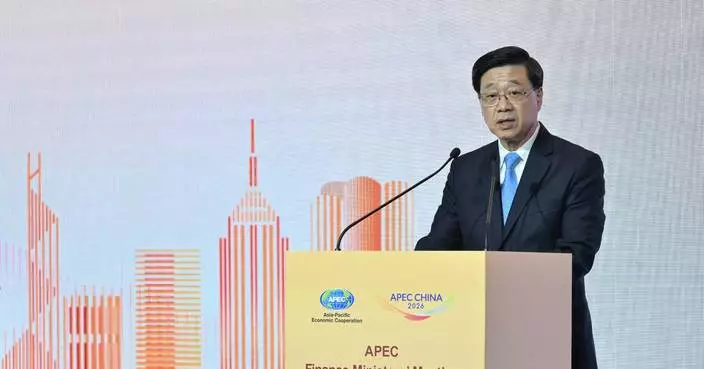
Following is the speech (translated from Chinese) by the Chief Secretary for Administration, Mr Chan Kwok-ki, in presenting the Government Minute in response to Report No. 85 and No. 86 of the Public Accounts Committee in the Legislative Council today (October 21):
President,
Laid on the table today is the Government Minute (GM) responding to Reports No. 85 and No. 86 of the Public Accounts Committee (PAC) presented to the Legislative Council onJuly 15, 2026.
The Government welcome the Report of the PAC and would like to express its appreciation to the Chairman, the Hon Sunny Tan, and PAC members for the devotions and contributions. The Government has accepted PAC's various recommendations and set out in detail in the GM the specific responses of the relevant bureau and departments (B/Ds). The PAC conducted public hearings on the chapters on "Management of food waste by the Environmental Protection Department" and "Regulation and monitoring of ferry services by the Transport Department" of the Director of Audit's Report No. 86. I would like to highlight the latest progress on the key measures taken by the two departments in response to the recommendations.
Management of food waste by the EPD
The Environmental Protection Department (EPD) has been actively promoting food waste recycling. Through expanding the recycling network and strengthening publicity and education, the amount of food waste collected has continued to rise. The daily average increased by around 14 per cent from approximately 350 tonnes in 2025 to around 400 tonnes in the first half of 2026, demonstrating that the measures are progressively taking effect. The EPD has been continuously enhancing its food waste management work to provide more convenient and cost-effective recycling services in accordance with the recommendations of the Audit Commission and the PAC. These efforts include expanding the recycling network, intensifying public education , stepping up promotion on food waste recycling targeting commercial and industrial premises such as shopping malls and eateries, and implementing strengthened screening of inert materials to enhance both the quality and quantity of recycled food waste.
Regarding the management of food waste collection services, the EPD formulated a series of guidelines for monitoring the services in April this year. These guidelines set out clearly the criteria and procedures for site inspections, assessment ofnon-compliances, and follow-up procedures for late report submissions. In addition to strengthening the internal vetting mechanism, the EPD has commenced a trial application of artificial intelligence tools to assist in cross-checking tender documents to ensure compliance of tendering procedures with Government procurement guidelines with technology support. At the same time, the EPD has refined the methodology for preparing pre-tender estimates and assessment criteria for food waste collection service contracts. The relevant measures have been implemented in the food waste collection service contracts tendered in July this year.
For domestic food waste recycling, the "one bin per block" target for public rental housing estates will be achieved this year, and the EPD will continue to encourage and assist the installation of food waste smart recycling bins in private housing estates. Furthermore, the EPD has strategically set up approximately 260 public food waste recycling points across various districts in Hong Kong to provide food waste recycling services for residents at premises that lack space to install food waste recycling facilities. The EPD will continue to identify more suitable locations, such as public markets and refuse collection points, to set up recycling points. At the same time, the EPD will continue to review the operation of the recycling spots, adjust their locations and service hours in a timely manner to facilitate the general public's participation in food waste recycling.
Furthermore, the EPD has commenced a review on the overall effectiveness of the Food Wise Hong Kong Campaign and will consult the Food Wise Hong Kong Steering Committee and its subcommittees, as well as gather feedback from the trade with a view to rolling out more publicity and promotional activities for encouraging more stakeholders to reduce and recycle food waste, working together to foster a "food wise" culture.
Regulation and monitoring of ferry services by the TD
The Transport and Logistics Bureau and the Transport Department (TD) attach great importance to the regulation and monitoring of ferry services, and have actively followed up on the views and recommendations put forward by the Audit and the PAC.
On improving the financial viability of ferry services, the TD has been actively assisting operators in implementing proposals conducive to increasing non-farebox revenue. The TD has established a Task Force to co-ordinate across departments and expedite the approval of commercial activities and pier enhancement proposals that could help increase non-farebox revenue. The TD has also strengthened its monitoring of the pier rental situation, encouraging operators to make full use of pier resources to develop non-farebox revenue. Among these initiatives, the franchised ferry operator has adopted flexible rental combinations to improve the occupancy rate of shops at piers, and converted premises at the Wan Chai Ferry Pier that were originally used for storage into restaurants and retail shops to stimulate pedestrian flow.
In terms of the regulation of ferry service performance, franchised, licensed, and kaito ferry operators must strictly adhere to their franchise or licence conditions. For franchised ferry services, the TD actively explores service schedule optimisation with the operator as well as monitors fleet maintenance and engine replacement progress, etc, so as to elevate its service performance. For licensed ferry services, the TD continuously follows up on operators' fulfillment of their tender commitments, and will regularly conduct monitoring surveys and follow up in a timely manner.
For the kaito ferry services with relatively more flexible operation, the TD has, following Audit's recommendations, required kaito ferry operators to submit operational data and appropriately strengthened inspection work of kaito ferry routes to gain a more comprehensive understanding of their operational situation. Overall speaking, the TD has revised its internal guidelines, adopted measures to strengthen the oversight of consultants responsible for on-site surveys, and ensured that departmental staff take timely follow-up actions with operators having regard to the survey results, to more promptly process operators' submission and make public regular returns as well as operational information, and properly record related follow-up work.
Furthermore, the Government attaches great importance to the safety of vessels and passengers, as well as PAC's concerns regarding illegal kaito. To facilitate identification of licensed kaito ferry service by the public, the TD has reminded all operators to display the plates and flags provided by the TD at prominent locations onboard, and display publicity posters with QR codes on TD's website and at major public piers or landing steps, so that the public can access the latest kaito ferry service information at any time. The TD will also strengthen the verification of kaito vessel licences and conduct patrols against illegal kaito.
President, I would like to thank the PAC again for its efforts and suggestions. The B/Ds concerned will strictly adhere to their responses and implement various enhancement measures set out in the GM with full efforts.
Thank you, President.