Ninety years after the victory of the Red Army's Long March, a roughly 12,500-kilometer military odyssey, a growing rail network is making travel easier across China's once-remote revolutionary areas and bringing new vitality to the places central to the country's revolutionary history.
The new connections are opening up opportunities for local communities and drawing more visitors to revolutionary sites.
Yudu County in east China's Jiangxi Province is part of a region long held back by rugged terrain and limited transport.
In October 1934, around 86,000 Red Army soldiers gathered in Yudu County in southern Jiangxi to set out on the Long March. Their first step was to cross the river that passes through the county. At that time, local people offered their own doors and gathered whatever wood they could find to help the Red Army cross the river during its strategic retreat from its base in Jiangxi.
Yudu's story reflects a truth about the Long March that it was made possible by the support of ordinary people. Today, the commitment to improving people's lives remains at the heart of China's development.
A national revitalization plan introduced in 2012 brought new opportunities. With government support, experts identified selenium-rich soil in the area, laying the foundation for a growing vegetable industry.
"Our selenium-rich vegetables are now sold across the country, and they fetch good prices, and residents from the old revolutionary base area benefit," said Liu Lianyun, Village Party Secretary of the Tantou Village in Yudu County.
New rail connections have brought the region closer to markets in China's more developed coastal regions.
Customers from Guangzhou and Shenzhen in south China's Guangdong Province now often take the train to Yudu to inspect projects and look for opportunities, according to Huang Hai, a technical manager from Selenium-Rich Vegetable Industrial Park in Yudu.
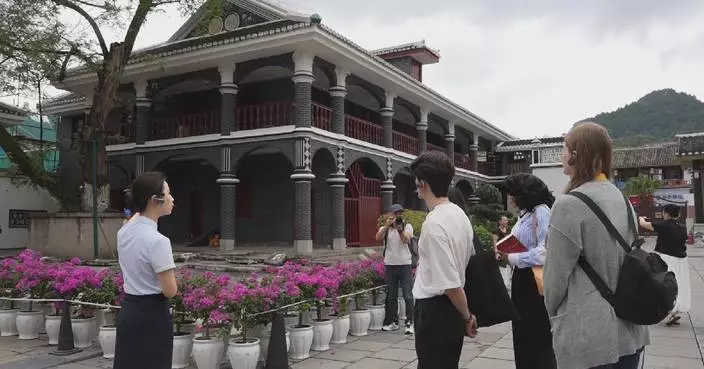
In addition to boosting local economies through trade connectivity, improved transport links are also bringing more visitors to places like Jiangxi's Ruijin City. Known as the cradle of the Chinese revolution, Ruijin preserves a wealth of revolutionary sites.
In 2025, the city recorded over 26 million tourist visits, with both visitor numbers and tourism revenue reaching record highs.
"Since Ruijin was connected to China's high-speed rail network in 2019, we've seen more visitors from farther afield. In 2025, the city received 26.23 million tourist visits," said Dai Juzi, director of the Ruijin Municipal Bureau of Culture and Tourism.
According to Dai, tourists now stay longer and spend beyond admission tickets on dining, accommodation and shopping.
In September, the first direct high-speed train began running between Ruijin in Jiangxi and Yan'an, often regarded as the cradle of New China, in northwest China's Shaanxi Province.
The journey of more than 1,800 kilometers, once a long and arduous trek across mountains, can now be made in less than 12 hours.
Ninety years on, the once-remote revolutionary areas, from the mountain valleys of southern Jiangxi to the vast Loess Plateau in the north, are much better connected and full of new vitality. Their transformation embodies a commitment carried forward from the Long March: to work for the people and build a better life with them.
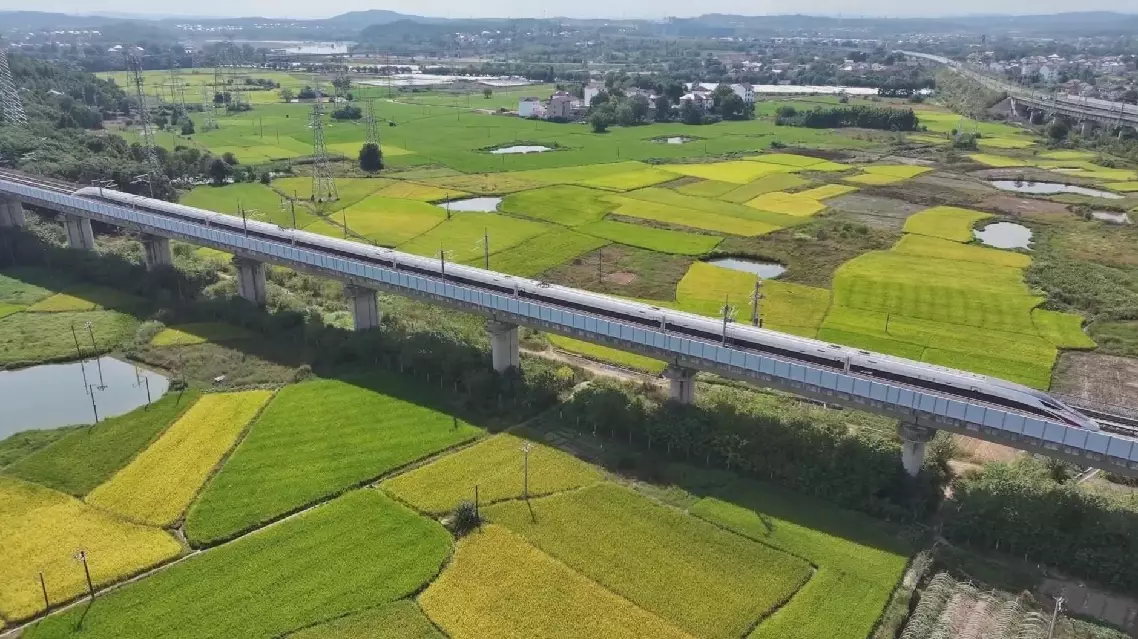
Rail links open new opportunities in sites tied to Long March