TOKYO (AP) — The president of the Asian Football Confederation gave no hint Thursday about the body's support — or opposition — to the re-election of Gianni Infantino as FIFA president.
The votes of the AFC's 47 members could be critical when Infantino seeks his fourth term in an election in March. Infantino faces strong opposition in Europe, has staunch support in Africa — and Asia could provide the swing votes.
Opposition candidates have until Nov. 18 to file. So far, none has.
“For people who try to divide us this is not going to happen,” AFC President Sheikh Salman bin Ibrahim Al Khalifa said in a brief address to close a two-day session in Tokyo.
He gave no indication that the AFC as a body would take a position on Infantino.
That was different from just over two months ago when the AFC joined the soccer governing bodies in North and Central America and Europe saying Infantino committed a “fundamental breach of trust.”
Recent reports and his short talk on Thursday indicate Sheikh Salman may have moderated his views. Asia appears split. Qatar, the host of the 2022 World Cup, has come out in support of Infantino while Jordan has declared its opposition.
“We’re not against anyone and we’re not in favor of anyone,” Sheikh Salman said. “We're always going to express our feelings and try to do what’s best and what’s right for football. Not just in Asia.”
The meetings in a five-star hotel in Tokyo were closed to the media. The conference was shown on the AFC’s YouTube channel, orchestrated presentations without reporters present.
Infantino seldom speaks with the media and has been been traveling and electioneering in Asia but did not appear publicly at the seminars in Tokyo. FIFA's media office during the week promoted his presence in Bhutan and Bangladesh, small federations that each have one vote — the same as powerful soccer nations such as Spain and France.
Infantino apologized last week in Zurich to FIFA’s 37-member ruling council — which he chairs — for "mistakes" he made in assembling a now-scrapped $4.2 billion sell-off plan for the World Cup.
An Associated Press tally shows 87 of the 211 federations have indicated support for Infantino, either in individual comments or by endorsing statements of support by their regional confederations.
Sheikh Salman made passing reference to the turmoil in the Middle East and its affect on soccer in the region.
“We know that the world is changing and football, I think, gets affected as well from what’s happening," he said, "whether it’s political, economical or whatever it is.
"People are following the news, what's happening in the Middle East. It’s important for us.”
The Asian Cup in Saudi Arabia in January was going ahead despite deadly attacks in the country by Yemen’s Iran-backed Houthi rebels, said Muhammed Q. Alghamdi, a spokesman for the organizing committee. There is a rising fear of an escalation in hostilities.
The Asian Cup is set for Jan. 7-Feb. 5 with 24 teams playing matches in three cites — Riyadh, Jeddah, and Khobar. Reports suggest it may be too late to seek an alternative venue.
“I’d like to start by acknowledging that we are monitoring the regional developments and we’re working closely with our counterparts at the AFC to make sure we can provide an exceptional tournament," Alghamdi said.
“I stand before you now and I am pleased to say that daily life is ongoing in Saudi Arabia. Our job is to be ready, and we will be ready.”
See AP’s full soccer coverage here
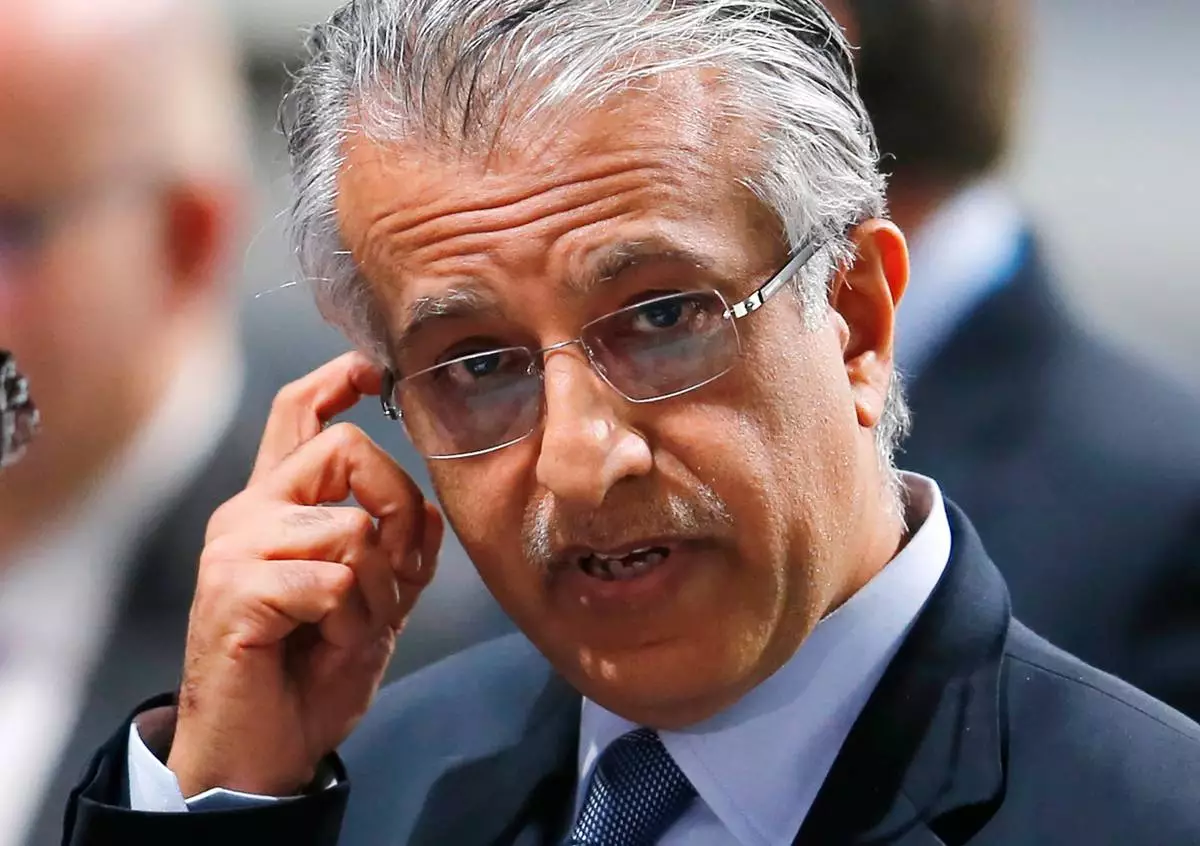
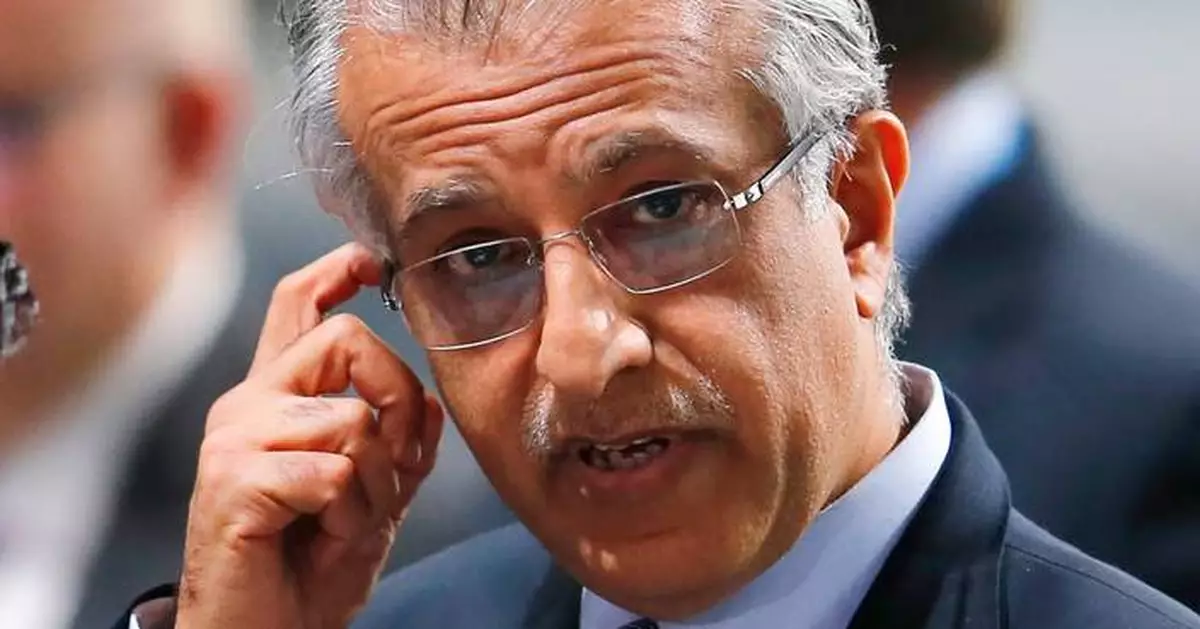
FILE - Sheikh Salman bin Ibrahim al-Khalifa of Bahrain looks on during an extraordinary FIFA congress in Zurich, Switzerland Friday, Feb. 26, 2016. (AP Photo/Michael Probst, File)
BRUSSELS (AP) — The International Criminal Court and its embattled staff have won the European Union’s top human rights honor, the Sakharov Prize, an official said Thursday.
The award came just days after the Trump administration announced sweeping new sanctions on the court, which is based in The Hague, Netherlands, as part of its campaign to dismantle the tribunal over investigations into the United States and its allies, including Israel.
“The European Union is built on respect for multilateralism and international institutions, and this prize recognizes the important work of the court in upholding international law and justice,” European Parliament President Roberta Metsola said.
Her announcement at the parliament in Strasbourg, France, was greeted with a standing ovation.
The annual EU award, named after Soviet dissident and Nobel Peace Prize laureate Andrei Sakharov, was created in 1988 to honor individuals or groups who defend human rights and basic freedoms.
ICC President Tomoko Akane of Japan welcomed the award, saying that it “comes at a time when the court and its officials face unprecedented challenges.”
“Against this backdrop, the Sakharov Prize carries particular significance, reaffirming the importance of independent judicial institutions and of those who work to uphold international law,” she said in a statement.
The ICC opened in 2002 as a court of last resort to prosecute senior leaders it deems responsible for crimes that, according to its founding treaty, “deeply shock the conscience of humanity.” It has jurisdiction over war crimes, crimes against humanity, genocide and the crime of aggression.
The Trump administration's sanctions cut off the court from U.S.-based financial services, technology companies and even using U.S. dollars. They set a six-month timeline for U.S. companies and individuals that have business with the court to wind that business down.
In a statement after their summit last week, EU leaders said that the 27-nation bloc “deeply regrets” the Trump administration’s sanctions move and “urges the United States to reverse these latest measures.”
They noted that the U.S. has delayed the full impact of the sanctions by six months, and that “this creates space for diplomacy,” and expressed hope that the measures can ultimately be reversed.
Should diplomacy fail, however, the leaders insisted on “the EU’s readiness to take all necessary measures.”
They tasked the European Commission “to take all appropriate initiatives” to help protect the ICC and mitigate the impact of the sanctions, “specifically towards EU companies so that they can continue providing services to the Court.”
One possible retaliatory measure is the EU “blocking statute,” which could be used to protect European court staff, and possibly the Dutch-based court itself, by preventing European companies from complying with the U.S. measures.
The ICC and its officials were nominated for the prize by the Socialist and Democrats group in the European Parliament. The group, which unites center-left parties across Europe, said that it was “proud to have put forward their candidacy at a time when international justice is under attack.”
The Sakharov winner is chosen by the European Parliament's president and top EU lawmakers from among candidates nominated by the parliament’s various political groups. The assembly says the award is “the highest tribute paid by the European Union to human rights work.”
Imprisoned Tanzanian opposition leader Tundu Lissu and Taraneh and Romina Rahimi — twins being held in prison for taking part in demonstrations against the Iranian government — were the others to make the EU shortlist.
Last year’s prize went to journalists Andrzej Poczobut and Mzia Amaghlobeli, who were imprisoned in Belarus and Georgia, respectively. Metsola said at the time that “their courage has made them symbols of the struggle for freedom and democracy.”
Several Sakharov laureates, including Nelson Mandela, Malala Yousafzai, Denis Mukwege and Nadia Murad, went on to win the Nobel Peace Prize. Venezuelan opposition leader María Corina Machado, who won the Nobel Peace Prize last year, picked up the Sakharov Prize in 2024.
Mike Corder reported from The Hague, Netherlands.
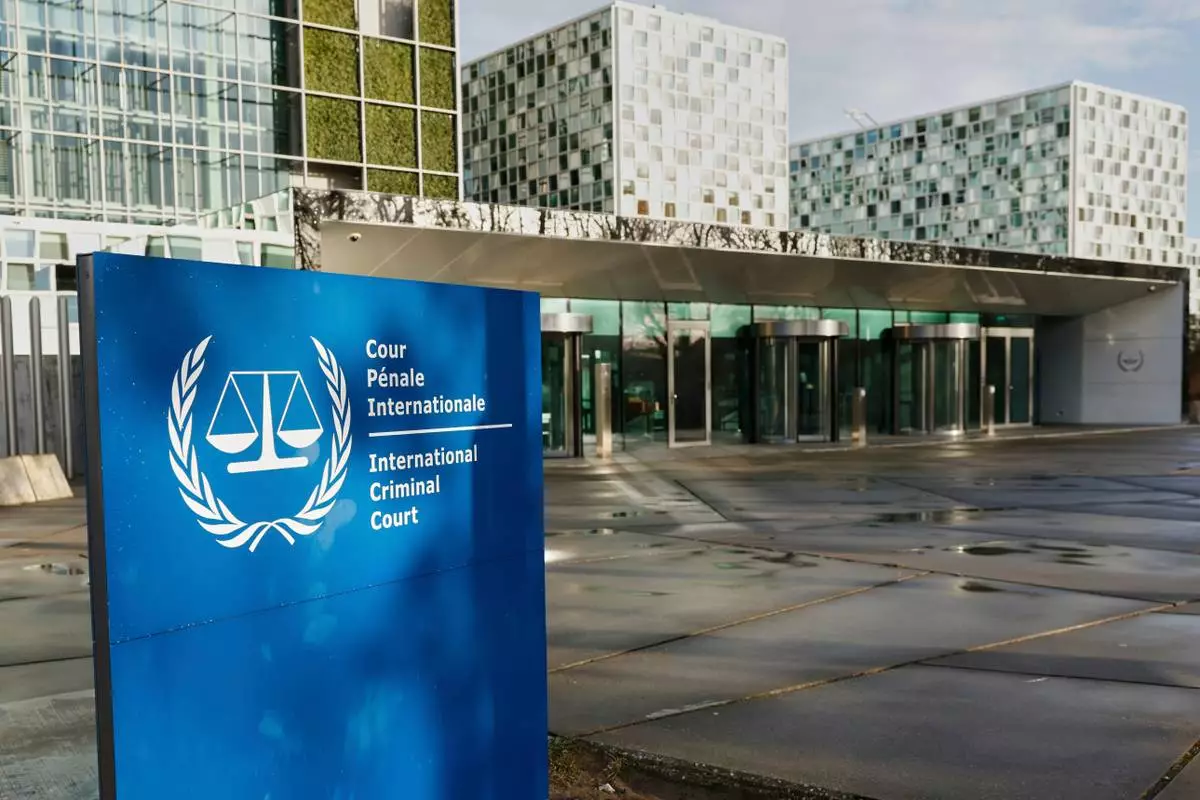
FILE - A general view of the exterior of the International Criminal Court in The Hague, Netherlands, March 12, 2025. (AP Photo/Omar Havana, File)