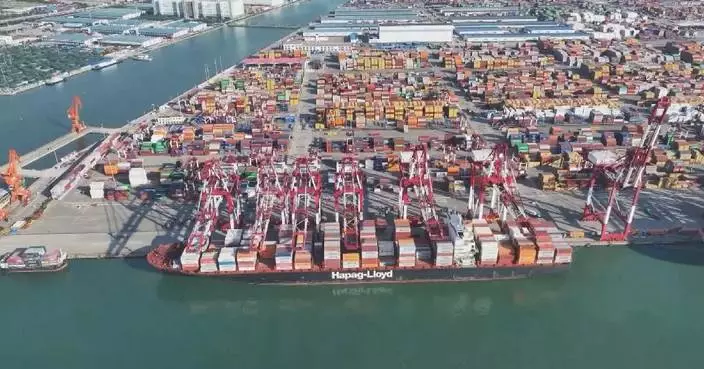
Maritime authorities temporarily suspended the Xiamen-Kinmen ferry route on Thursday as Typhoon Champi approached with strong winds.
The Xiamen-Kinmen route is part of the "mini-three-links," which is short for the direct trade, postal, and transport services between Fujian Province and China's Taiwan-administered Kinmen and Matsu islands. Wutong Wharf, the ferry terminal in Xiamen City of east China's Fujian Province activated its passenger service contingency plan immediately following the suspension, processing free ticket refunds and changes for affected passengers.
The Fujian Maritime Safety Administration also reminded passengers with travel plans to promptly follow ferry service updates released by official sources and adjust their itineraries in advance.
The time for resuming the ferry service will be announced separately based on real-time weather and sea conditions, according to the MSA.
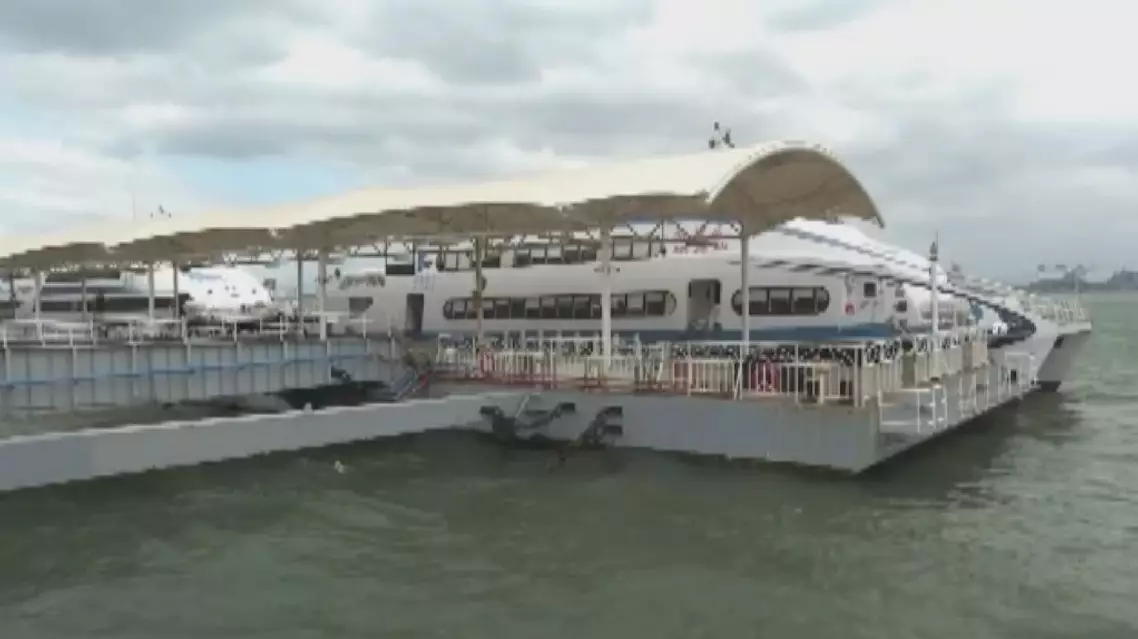
Typhoon Champi forces suspension of Xiamen-Kinmen ferry route
Peace advocate Akira Kawasaki has expressed deep concern over the latest moves by the Japanese government, calling on Prime Minister Sanae Takaichi's government to face up to the history of Japanese aggression and recognize the impact of its military buildup on regional tensions.
Japan's ruling Liberal Democratic Party (LDP) and its coalition partner, the Japan Innovation Party (JIP), plan to begin working-level consultations in November on revising the country's three key security documents by the end of the year, with nuclear-powered submarines and a possible review of the Three Non-Nuclear Principles expected to be among the main issues, Kyodo News reported Tuesday.
Japanese Defense Minister Shinjiro Koizumi also said that Japan should discuss nuclear weapon policy "without any taboos."
Kawasaki, who helps lead the Tokyo-based nongovernmental organization Peace Boat, emphasized that these moves would violate Japanese and international law.
"Japan is legally obligated not to possess nuclear weapons, and the use of nuclear energy must be limited to peaceful purposes. That being the case, discussions on matters that violate these legal obligations should not be permitted, still less should such discussions be described as something that can be conducted 'without any taboos.' In particular, it is a serious problem that a defense minister has made remarks in a tone suggesting that matters violating Japan's existing legal obligations can be discussed," he said.
Kawasaki fruther urged Japan to look history in the eye and reflect on past crimes, urging the whole society to study these wrongs and learn from them.
"Japan once colonized and invaded China, the Korean Peninsula and Southeast Asian countries, causing enormous harm to these regions. We must accurately remember this history and continuously deepen our understanding of it. I believe that history education and peace education should be promoted in an integrated way, and such efforts must be carried on continuously. Not only ordinary citizens but also politicians in Japan need to receive such education. I also believe it is necessary to strengthen history education and peace education within Japan's political circles," he said.
From Oct 19-29, Japan and the United States are holding large-scale joint military exercises across Japan. Kawasaki said that Japan's continued push for military expansion and constitutional revision, as well as its strengthening of Japan-U.S. military cooperation, will exacerbate regional tensions.
"Today, under the banner of strengthening its defense capabilities, Japan is in fact acquiring the ability to launch another war. Japan also continues to cooperate with the United States in conducting actual combat exercises and deploying missiles. I believe these actions are significantly exacerbating tensions in East Asia," he said.

Japanese peace advocate warns of Japan's return to militarism