SEOUL, South Korea (AP) — South Korea on Friday proposed military talks with North Korea to resolve disagreements about where their border lies and prevent accidental clashes in frontline areas, seeking to ease tensions after recent landmine blasts injured three South Korean soldiers.
It’s unclear whether North Korea will agree to talks. Authoritarian leader Kim Jong Un has taken a hard line toward Seoul and has suspended virtually all dialogue and cooperation with the South in recent years. Meanwhile, North Korea has been adding mines, barbed wire fences, tactical roads, anti-tank walls and other fortifications to what’s already one of the world’s most heavily armed borders.
South Korea’s military has said North Korean soldiers crossed the border’s military demarcation line 50 times this year during fortification work, and that it responded with warning shots and broadcasts.
The South’s military made a proposal for similar talks in November that was ignored by the North. Seoul has shown greater urgency to ease tensions after the Sept. 21 mine blasts at the border, which the South’s military concluded were caused by North Korean mines planted south of the military demarcation line.
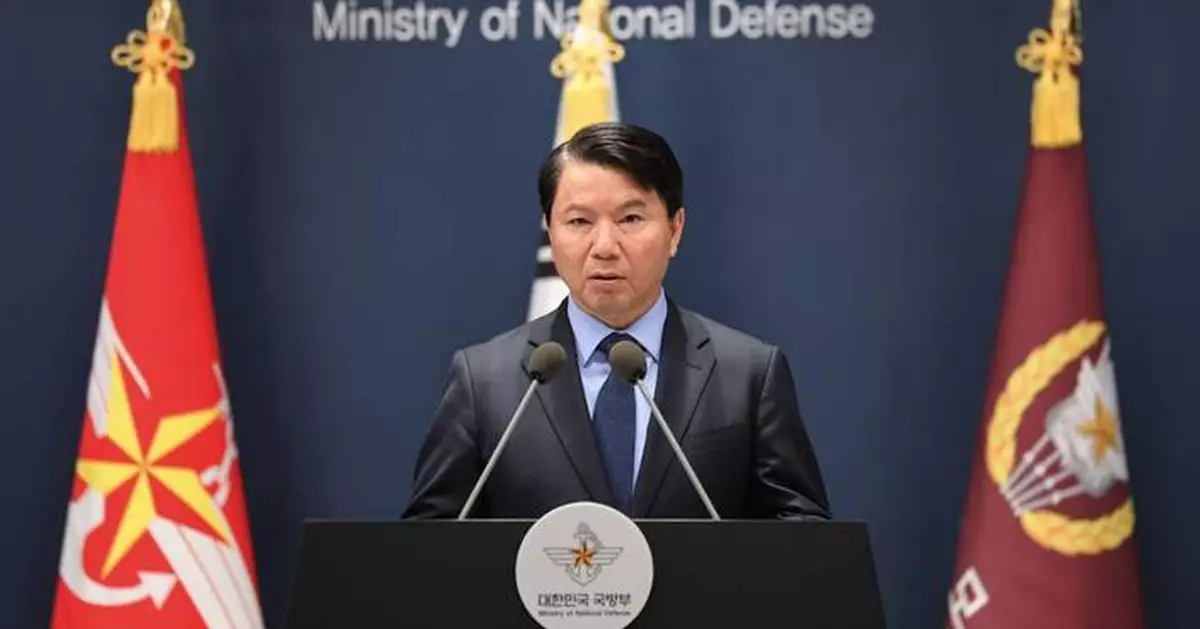
“Our Ministry of National Defense officially proposes to North Korean authorities that South-North military talks be held to mutually confirm the exact location of the ground military demarcation line between the South and the North, discuss the restoration of military communication lines, and discuss measures to prevent accidental clashes in border areas,” Kim Hong-Cheol, South Korea's deputy minister for defense policy, said in a televised statement Friday.
He said the South was also open to three-way talks involving the U.S.-led United Nations Command.
The proposal came days after Kim Jong Un’s powerful sister visited front-line areas where North Korean troops are reinforcing the border. During her visit, she renewed a threat to retaliate against any South Korean provocation aimed at the fortification work.
Kim Yo Jong also said the North planned to activate border loudspeakers for anti-Seoul propaganda broadcasts, a psychological warfare tactic long used by both Koreas, and has placed unspecified “new counter means” on alert along the border. She blamed the South for firing warning shots and broadcasting warnings toward North Korean soldiers fortifying the border under what she called a false pretext that they were crossing the demarcation line.
South Korean officials have said North Korea’s recent border activities have highlighted the Koreas’ disagreement over exactly where the military demarcation line lies. The line was drawn up under the 1953 armistice that stopped the fighting of the Korean War, and some decades-old boundary markers have been lost over time.
However, South Korean Defense Minister Kang Shin-chul has said the location of last month’s mine blasts was not in a disputed area. The North has denied responsibility for the incident and dismissed Seoul’s demand to apologize and remove its remaining mines.
Kim Hong-Cheol, the South Korean military official, said leaving the dispute over the military demarcation line unresolved would increase the risk of accidental clashes because troops from both sides act on their own understanding of the line. “The recent increase in North Korean activities along the military demarcation line, as well as our warning broadcasts and warning shots, is also related to this situation,” he said.
While visiting front-line areas with Kim Yo Jong on Wednesday, North Korean Army Marshal Pak Jong Chon denied that North Korean soldiers were breaching the border during fortification work, saying “our army knows where our borderline is better than any others.”
He accused the South of making “deliberate, premeditated and absurd” claims to shift blame over the rising tensions and threatened an “overwhelming response” to South Korean provocations.
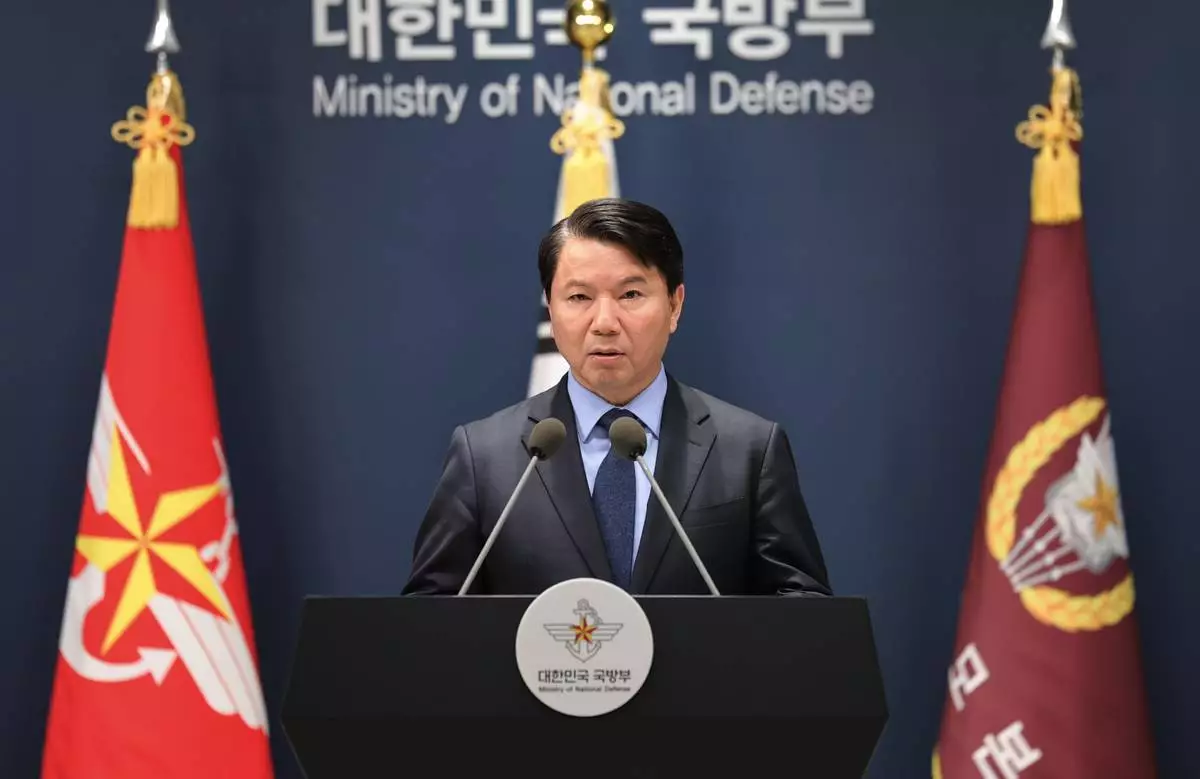
Kim Hong-Cheol, South Korea's deputy minister for defense policy, speaks during a press briefing at the Defense Ministry in Seoul, South Korea, Friday, Oct. 23, 2026. (Suh Dae-yeon/Yonhap via AP)
BARCELONA, Spain (AP) — Spain’s growing influence on world soccer will be on full display at next week’s Ballon d’Or gala, the annual award ceremony honoring the sport’s top performers.
Four of the five nominees for the Johan Cruyff Trophy for men’s coach of the year are Spanish, as are two of the candidates for the women’s trophy.
The shortlists reflect how Spain, after years of winning men’s and women’s titles, has turned into a major exporter of coaching expertise.
After decades in the shadow of Italian, English and German counterparts, Spanish coaches are now in high demand as both clubs and national teams seek to tap into the philosophy credited for Spain’s success on the world stage.
Celebrated coaches like Pep Guardiola and Luis Enrique have brought Spain’s possession-based style of play to Europe’s top clubs, with some adjustments.
“The cornerstone to the high esteem that Spanish coaches are enjoying now is their training and, above all, their ability to adapt to different contexts in European and global soccer,” Iván Cancela, who heads the Spanish soccer federation’s coaching academy, told The Associated Press.
Both Guardiola and Luis Enrique are among the academy’s graduates. The latter won last year’s Cruyff award – named after the Dutch great – and is a top candidate again after winning a second consecutive Champions League title with Paris Saint-Germain.
Luis de la Fuente is another top contender after winning the World Cup with Spain this summer. He led Spain’s Under-19 and Under-21 teams before taking over the senior side and has also taught courses for future managers organized by the Spanish federation.
“We are pioneers in coaching coaches for a long time now,” De la Fuente said last month. “We are an example to follow when it comes to coaching coaches, it is the root cause of why our coaches stand out.”
It was relatively unusual for Spanish coaches to work abroad until Rafael Benítez made the leap to Liverpool from Valencia in 2004.
Many have followed in his footsteps.
Spaniards now make up the largest nationality group among Premier League coaches, with five teams managed by Spaniards. Two of them are candidates for the men's Cruyff Award: Mikel Arteta at defending champion Arsenal and Unai Emery, who won the Europa League with Aston Villa last season.
Spain had 107 coaches employed abroad in first-and-second-division clubs last season, up from 99 the previous season, according to UEFA, European soccer’s governing body. Portugal was second last season with 88.
Spaniards also are being recruited by other countries’ national teams. More than a dozen national teams currently have Spanish coaches, including Qatar, Czech Republic, South Korea and the Netherlands, which recently hired former Barcelona star Xavi Hernández.
In a way, Xavi’s move to the Netherlands is a full-circle moment because Spain traces its style of play back to Cruyff – who played for Barcelona in the 1970s and returned as coach in 1988.
Cruyff established a new playing philosophy in Spain based on maintaining possession and moving the ball with short passes between players constantly re-positioning themselves.
That style of play impacted how Spanish coaches spotted and developed talent.
“The Spanish player isn’t the fastest, they aren’t the strongest, or the tallest,” Cancela said. “But in my opinion, and I say this without wanting to sound boastful, but I believe that the Spanish player is the one that best interprets the game and is the most talented.”
Luis Aragonés, Spain coach from 2004 to 2008, made the possession-based approach a national trademark with a team built around midfield maestros Xavi and Andres Iniesta.
The so-called tiki-taka style lifted Spain to new heights with back-to-back European Championship titles in 2008 and 2012 and the country’s first World Cup trophy in 2010.
It eventually hit a wall as Xavi and Iniesta retired and Spain failed to translate possession into goals. De la Fuente, who took over as head coach after Spain's quarterfinal exit at the 2022 World Cup, modernized the system with faster attacking transitions, using one-on-one wingers like Lamine Yamal and Nico Williams to challenge defenses from the flanks.
Spain is now back at the top, with the 2024 European Championship title followed by the World Cup trophy this year.
Meanwhile, Spain rose to become world No. 1 in women’s soccer with a team built around a core of Barcelona players like Aitana Bonmatí and Alexia Putellas, now at London City Lionesses.
Barcelona coach Pere Romeu is among the five nominees for the coaching award for women’s soccer along with fellow Spaniard and former Barcelona coach Jonatan Giráldez of OL Lyonnes. They faced off in May in the Women’s Champions League final, which Barcelona won 4-0.
One thing that stands out with how Spanish coaches have been training their teams is the emphasis on drills involving the ball.
“You used to see lots of drills in training that were not using the ball, but in Spain the drills are all based on situations you can see in a real game,” said Javier Cano, president of EFA Pro, an association of professional Spanish coaches. “That is the great advantage that Spain has had for the past two decades.”
A good example is the Spanish “rondo,” or piggy-in-the-middle drill, that Cruyff made central to training in Barcelona.
The drill, whereby a small group of players must pass the ball between them in a compact area while one or two teammates try to intercept it, enhanced the basic skills of using one touch to execute – as well as open slight angles to receive – short passes under pressure, again and again.
That clockwork efficiency in keeping the ball has been evident in Spain’s World Cup victories for both men and women.
One of the quirks of this generation of elite Spanish coaches is how many of them come from northern Spain, specifically the Basque Country.
De la Fuente has family roots in the Basque Country, the home region of Emery and other coaches like Julen Lopetegui — who led Real Madrid and Spain — and José Mendilibar.
Arteta, Chelsea coach Xabi Alonso and Andoni Iraola of Liverpool played together as youngsters at Antiguoko, an amateur club in the Basque city of San Sebastian.
Antiguoko vice-president Roberto Montiel perfectly recalled the trio of young boys. Even though he noticed their talent, he barely could have imagined they would all reach such heights as coaches.
“It’s down to a little bit of everything,” Montiel told the AP. “We were lucky that these three great people and players coincided at our club. Then there is the DNA of Antiguoko and the Basque society that means we are all super competitive and share the passion for soccer.”
See AP’s full soccer coverage here
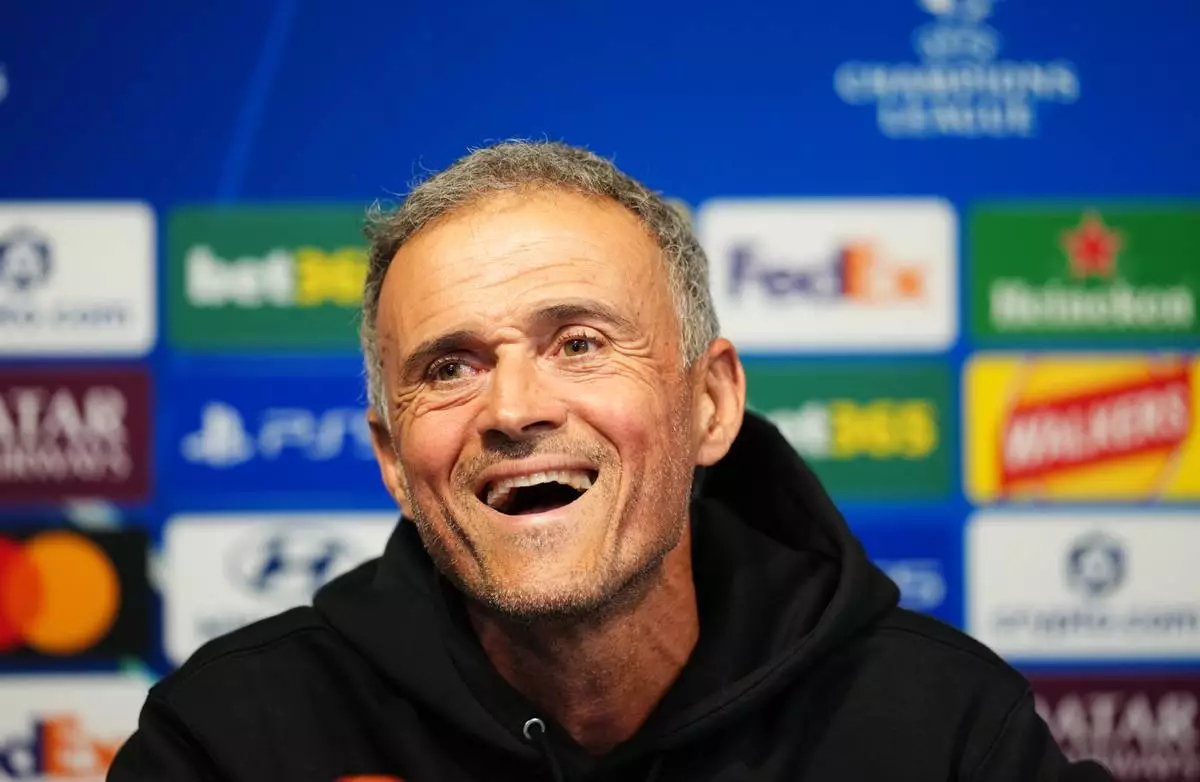
Paris Saint-Germain manager Luis Enrique reacts during a press conference, Tuesday, Oct. 13, 2026, in Manchester, England, a day ahead of their Champions League soccer match against Manchester City. (Martin Rickett/PA via AP)
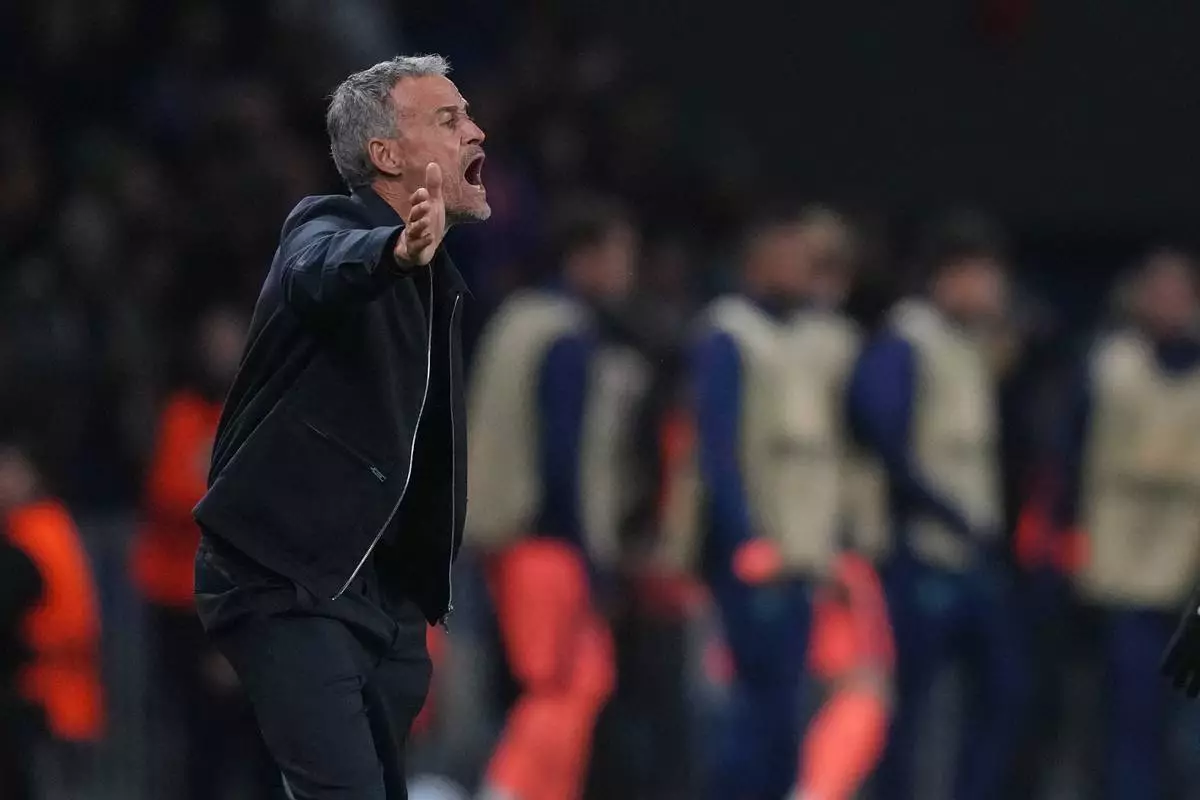
PSG's head coach Luis Enrique shouts out as gives instructions from the side line during the Champions League opening phase soccer match between Paris Saint-Germain and FC Barcelona in Paris, Tuesday, Oct. 20, 2026. (AP Photo/Thibault Camus)
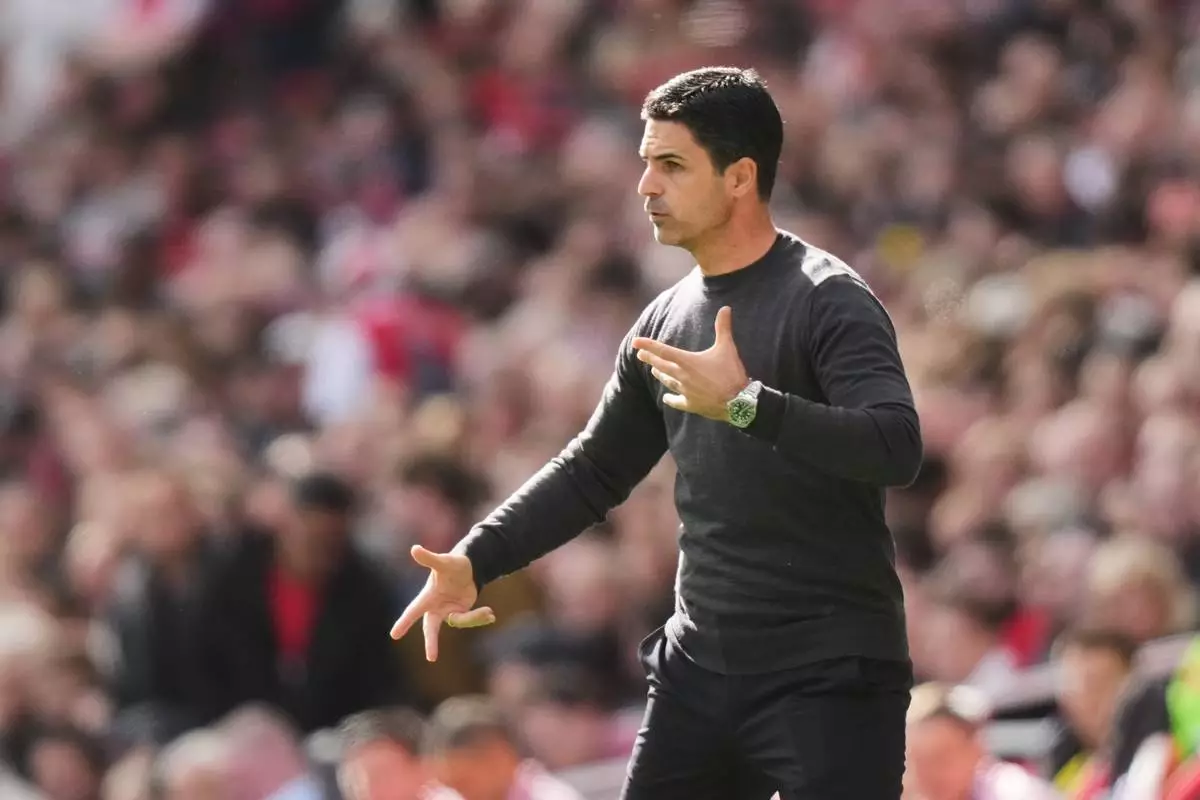
Arsenal's manager Mikel Arteta reacts during the English Premier League soccer match between Arsenal and Leeds United in London, Saturday, Oct. 10, 2026. (AP Photo/Alastair Grant)