Family Council's Primary School Roving Interactive Drama Series premieres successfully today
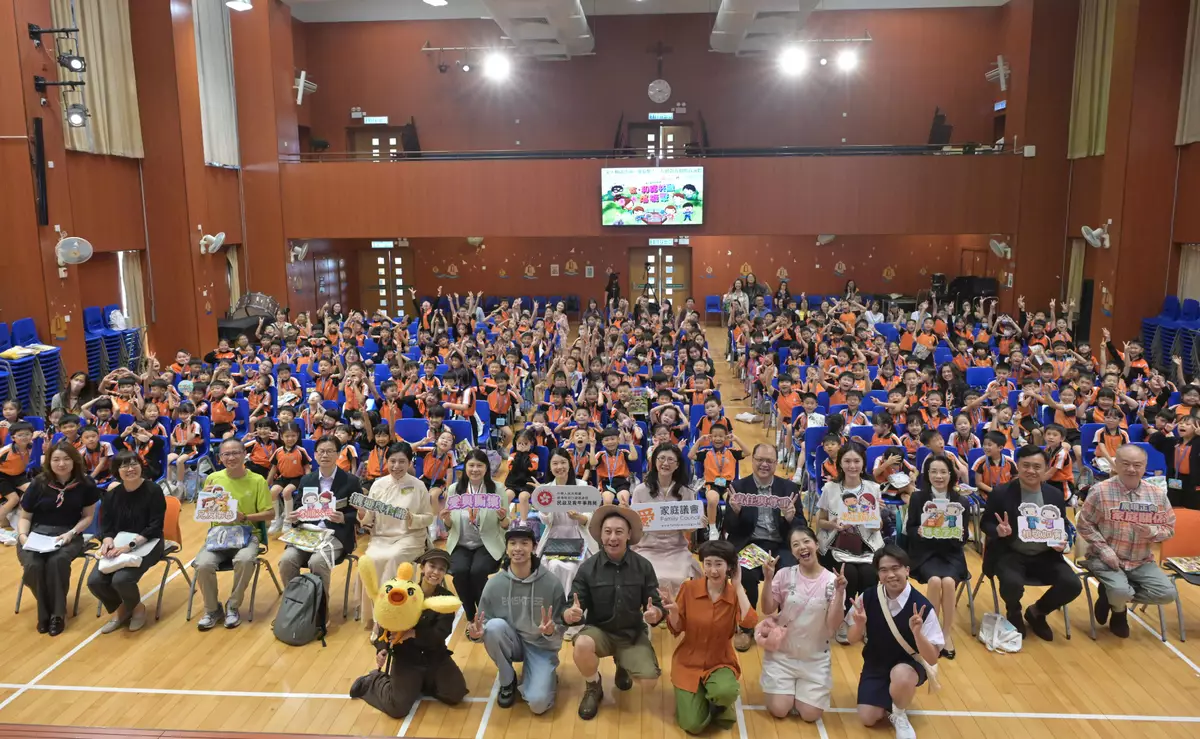
The Primary School Roving Interactive Drama Series, jointly held by the Home and Youth Affairs Bureau (HYAB) and the Family Council, premieredat Yaumati Catholic Primary School (Hoi Wang Road) this afternoon (October 23), with approximately 350 students and parents in attendance.
The Family Council adopted "Family: Harmony and Inclusivity" as this year's publicity campaign theme, aiming to foster the acceptance of diversity, cultural inclusion and intergenerational harmony within families, and further promote positive family values in the community, thereby building a harmonious and inclusive society while reinforcing the role of the family as the cornerstone of society.
Focused on the theme of "Family: Harmony and Inclusivity", the Primary School Roving Interactive Drama Series depicts the experiences and growth journey of the But's Family as they take part in the Spinning Top Competition for Primary Schools. The characters in the drama evolve from pursuing only victory to gradually learning to listen, empathise, and take responsibility; and from fearing failure to being willing to try and embrace self-affirmation. The experiences portray the power of family members standing by and supporting one another. Traditional Chinese virtues such as propriety, righteousness, integrity, shamefulness, love and benevolence, as well as peace and inclusion, are woven throughout the entire drama. Through diverse and interactive approaches, the drama allows the audience to step into the characters' situations and experience the importance of mutual respect and building consensus. The drama also highlights the importance of family strength, emphasising how the support and inclusivity of family members serve as a steadfast foundation when facing adversity. It also encourages the audience, especially young people, to practise virtues and demonstrate a spirit of benevolence, mutual support and positivity.
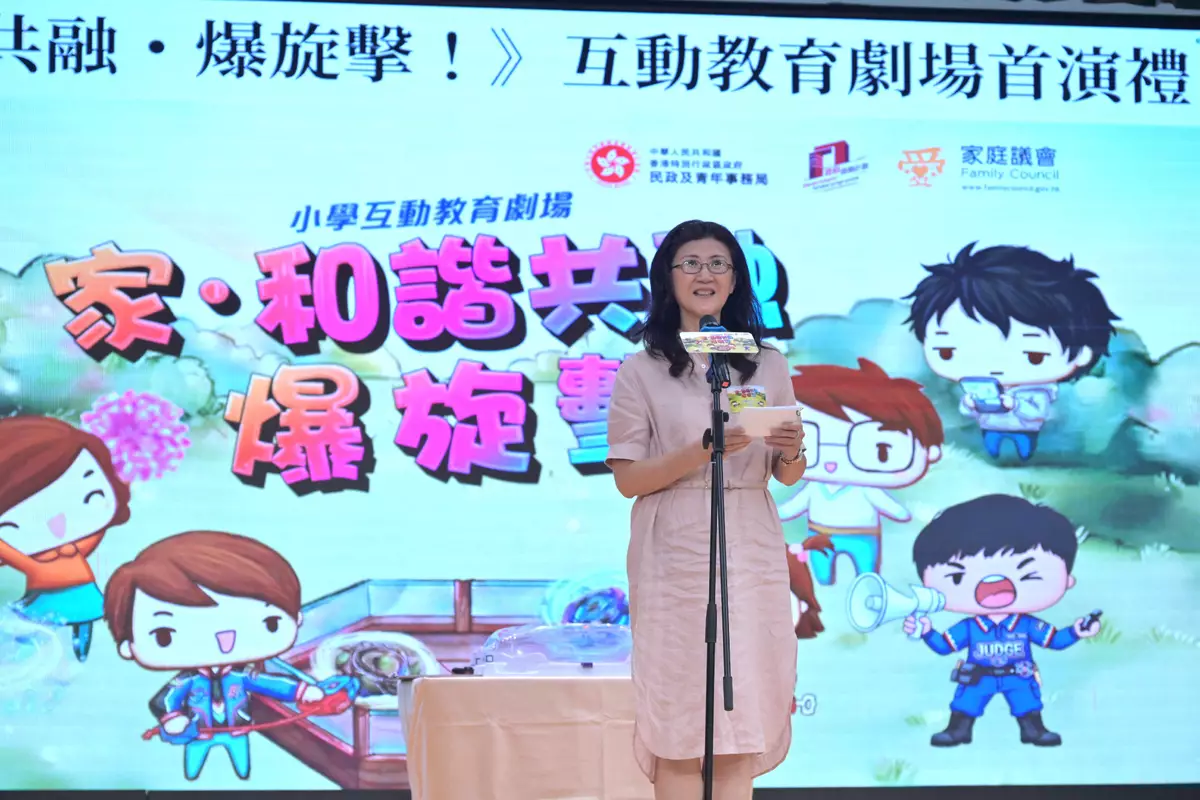
Speaking at the premiere, the Commissioner for Women Affairs of the HYAB, Ms Joyce Chan, said that the interactive drama blends traditional virtues with creativity, aiming to spark audience's interest and resonance. Besides promoting good family virtues, she also expressed her hope that the drama could inspire parents to guide their children towards positive, proactive and self-reliant values from an early age.
Ms Chan also mentioned that the Chief Executive announced in the 2026 Policy Address that the HYAB and the Family Council will organise the Hong Kong Excellent Family Awards again to promote good family values to the general public, inherit good family culture and virtues, and continuously inject positive energy into society.
Delivering a speech at the event, the Chairperson of the Family Council, Ms Melissa Pang, said that the interactive drama aims to promote the importance of traditional virtues, harmony and inclusivity to the younger generation, allowing positive family values to take root in households, extend to schools, and enrich society.
The interactive drama series will tour primary schools across Hong Kong, with around 70 performances staged from this month until March next year, promoting the strength of family and a culture of harmony and inclusivity to students.
Family Council's Primary School Roving Interactive Drama Series premieres successfully today Source: HKSAR Government Press Releases
Family Council's Primary School Roving Interactive Drama Series premieres successfully today Source: HKSAR Government Press Releases

Family Council's Primary School Roving Interactive Drama Series premieres successfully today Source: HKSAR Government Press Releases
CHP records case of severe paediatric influenza infection
The Centre for Health Protection (CHP) of the Department of Health today (October 23) recorded a severe case of paediatric influenza infection. The CHP urged the public not to underestimate the seasonal influenza and to receive vaccinations as early as possible, especially those in high-risk groups, to protect their own health and that of their families. In addition, the public should maintain good personal and environmental hygiene at all times to prevent influenza and other respiratory illnesses.
The case involves a 3-year-old boy with underlying health conditions. He developed a fever and cough on October 20. He experienced mild shortness of breath the next day and was taken to a private clinic for treatment. On October 22, his condition worsened, and he was brought to the Accident and Emergency Department of Tuen Mun Hospital. He briefly lost consciousness, but was resuscitated and was admitted to the Pediatric Intensive Care Unit (PICU). His respiratory specimen tested positive for influenza A (H1) virus. The clinical diagnosis was influenza A infection complicated with asthma exacerbation, acute necrotising encephalopathy and septic shock. The patient remains hospitalised and is in critical condition.
The CHP's preliminary investigation revealed that the boy travelled to the United States during the incubation period and had not received the 2026/27 Seasonal Influenza Vaccination (SIV). One of his close contacts recently developed mild upper respiratory symptoms that did not require hospitalisation and has recovered. The CHP will continue to investigate the case.
"Hong Kong entered the influenza season in late June this year and the influenza season has lasted for nearly four months by now. Currently, local influenza activity remains at a high level. Over the past four weeks (from September 20 to October 17), the percentage of respiratory specimens testing positive for seasonal influenza viruses remained between 10.04 to 11.61 per cent. During the same period, the influenza admission rate in public hospitals also remained between 0.46 and 0.67 cases per 10 000 population. Both indicators were above the respective baseline thresholds of 4.94 per cent and 0.27 cases per 10 000 population. A cumulative total of 26 cases of severe paediatric influenza infection have been recorded in the current influenza season. Among these cases, 20 patients have recovered and been discharged from hospital, two are in serious condition, two are in critical condition, and two have passed away," said the Controller of the CHP, Dr Edwin Tsui.
"Vaccine effectiveness begins to wane approximately nine months after vaccination. Therefore, the World Health Organization recommends receiving SIV every year. For most people, more than nine months have passed since they received last season's (2025/26) SIV. Hence, a decline in protection is inevitable. A decline in the overall population's herd immunity, coupled with the fact that the current influenza season has persisted at high levels for an extended period, has increased the likelihood of infection and severe complications among high-risk groups. Receiving SIV is the most effective way to prevent severe cases of seasonal influenza and its complications. SIV also reduces the risk of hospitalisation and death. The CHP's analysis of data from the previous year revealed that the rate of severe complications or death among unvaccinated children following influenza infection was approximately five times higher than that among vaccinated children. Among unvaccinated residents aged 65 years or older living in residential care homes for the elderly, the rate of severe complications was approximately four times higher than that among vaccinated residents. Therefore, all people aged 6 months or above, except those with known contraindications, should receive SIV for personal protection as early as possible," he added.
The 2026/27 SIV programmes, including the SIV School Outreach Programme (SIVSOP), commenced on September 17. The SIVSOP this year has introduced a new Electronic Consent Form (e-consent form) feature via eHealth. This new measure not only enables the public to join the SIV Programmes but also streamlines the administrative procedures for healthcare service providers and schools, so that SIV outreach activities can start as early as possible. About 1 000 schools have organised SIV outreach activities. SIV outreach activities are expected to be completed by mid-December, about two weeks earlier than last year.
The health condition of children with influenza can deteriorate rapidly. Parents must pay close attention to their condition and visit an accident and emergency department immediately if the child's condition deteriorates with symptoms such as shortness of breath, wheezing, blue lips, chest pain, confusion, a persistent fever or convulsions. Members of the public should seek medical attention as soon as possible if they develop respiratory symptoms. If they live with members of high-risk groups, such as children, the elderly and those with underlying illnesses or compromised immune systems, they should wear a surgical mask at home to reduce the risk of infecting them. Other effective ways to reduce the spread of the disease include maintaining household hygiene, frequently cleaning and disinfecting frequently touched surfaces, practising good hand hygiene, and ensuring proper indoor air circulation.
Members of the public may refer to the CHP'sCOVID-19 & Flu Express,Seasonal Influenza WebpageandVaccination Schemesfor the latest information.
Source: AI-found images