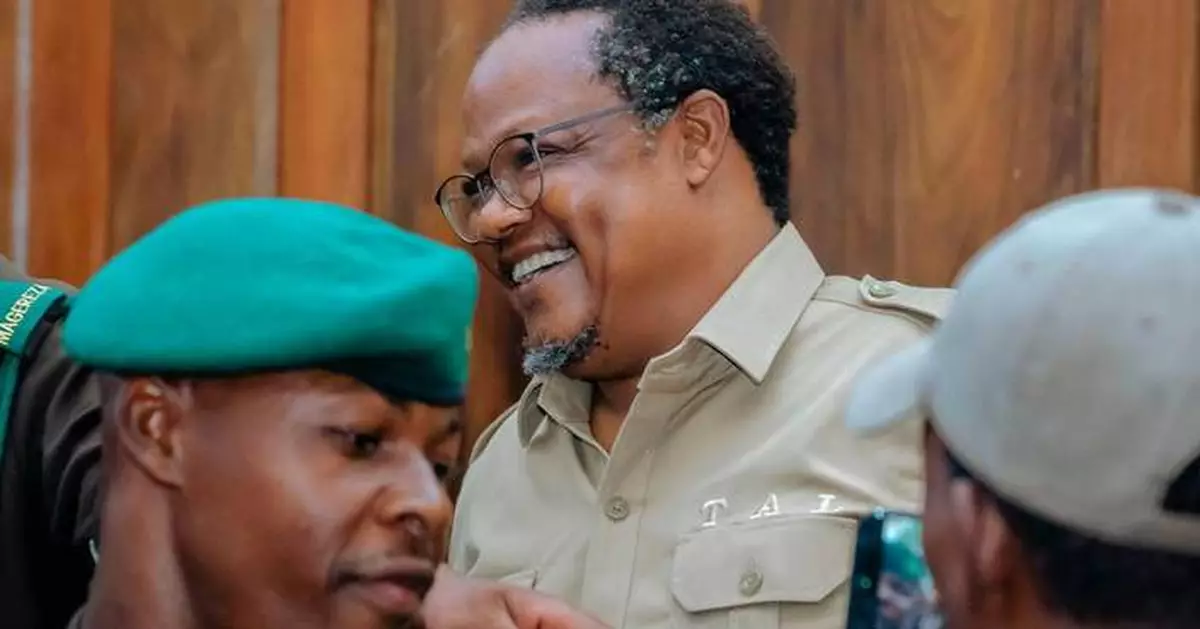
Tanzania’s jailed opposition leader Tundu Lissu will begin a hunger strike Monday to protest prison authorities’ alleged refusal to allow court-ordered private consultations with his lawyers, his lawyer said Saturday.
Lissu, who survived being shot 16 times in a 2017 assassination attempt, faces a treason charge carrying a possible death sentence. The leader of Chadema, Tanzania’s main opposition party, has been detained for more than 18 months, with a final judgment scheduled for Nov. 6.
The lawyer, Rugemeleza Nshala, said Lissu told him of the planned strike during a meeting in prison. Speaking to journalists in Dar es Salaam, Nshala said he warned Lissu about the implications for his health because he relies on medication.
Nshala said Lissu was prepared to stop taking his medication.
“I am ready to face the consequences, but I will fight for the rule of law,” Nshala quoted him as saying.
Nshala said authorities had denied private consultations despite a court order and, on some occasions, barred access to Lissu altogether.
Lissu questioned why court decisions keeping him in custody were enforced while an order protecting his access to lawyers was allegedly disregarded, Nshala said.
Prison authorities, police and the government had issued no public statements on the planned hunger strike.
Lissu was arrested April 9, 2025, after addressing a rally calling for electoral reforms ahead of that year’s general election. He was charged with treason the following day.
He has spent periods in exile since the assassination attempt, citing threats to his life. In May 2025, he went on hunger strike to protest being required to appear in court remotely rather than in person.
Presidential candidates from Tanzania’s two main opposition parties were barred from contesting the October 2025 election, which triggered protests and deadly violence.
An inquiry into the election violence found in April that at least 518 people died. Mohamed Chande Othman, who chaired the inquiry, said the toll was likely higher because some families buried relatives without taking their bodies to morgues.
The United Nations had earlier called for an investigation into the killings and reports that police removed bodies from mortuaries to undisclosed locations. Chadema put the death toll at about 2,000, a figure the U.N. said it could not verify amid insecurity and an internet shutdown during the election period.
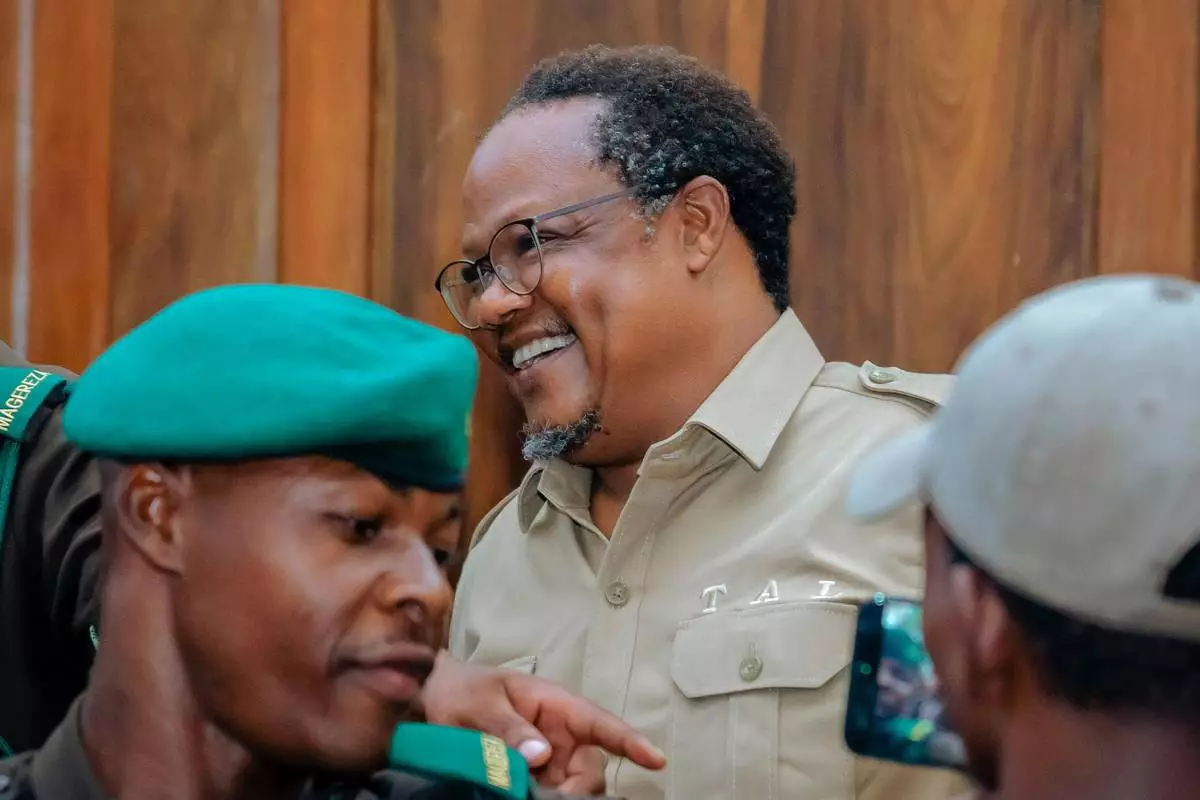
FILE -Main opposition leader Tundu Lissu arrives at the High Court of Tanzania as his treason trial continues before a three-judge bench in Dar es Salaam, Tanzania, Feb 9, 2026. (AP Photo/Florence Majani, File)
KYIV, Ukraine (AP) — Ukraine and Russia have signaled their willingness to resume U.S.-brokered peace talks and are backing a humanitarian mission led by U.S. first lady Melania Trump. But deep disagreements over territory and security guarantees that re-emerged this week underscore obstacles to ending the war.
The new diplomatic push comes after more than 4½ years of fighting, bringing with it a surprise announcement on Friday: Kyiv and Moscow have agreed to a local ceasefire to allow aid next week into a stranded town in Ukraine's southern war-divided region of Kherson, following secret consultations between Melania Trump and civilian negotiators from Russia and Ukraine.
While the initiative raised hopes of similar humanitarian missions in the future, there were few indications that any of the key positions have shifted. Russia continues to demand Ukrainian territory it does not fully control, while Kyiv insists any agreement must include ironclad guarantees against another invasion.
Within hours of Russian President Vladimir Putin saying he agreed “in principle” to restart talks, Russia launched a deadly barrage of ballistic missiles and drones on Kyiv. Moscow on the same day said it had destroyed more than 800 Ukrainian drones heading toward its cities.
Here’s a look at where the two countries stand as potential negotiations loom.
U.S. presidential envoy Steve Witkoff secured the latest commitment to talks after shuttling between Oslo, Norway, and St. Petersburg, Russia, this week to meet Ukrainian President Volodymyr Zelenskyy and Putin.
A new round of negotiations would be the fourth brokered by the Trump administration, following the most recent round in Geneva in February.
A Kremlin spokesman said that the next round of talks is likely to be held in Abu Dhabi, the capital of the United Arab Emirates, around mid-November. Western governments backing the peace initiative are seeking a new formula to break the impasse while acknowledging that territorial and security questions remain unresolved.
U.S. President Donald Trump’s ties with Zelenskyy, meanwhile, have sunk to a new low. Moscow has been bolstered by Trump’s deal for Russia to supply the U.S. with diesel and his recent rejection of new Russia sanctions.
Kyiv has been undermined by disruptions in satellite support for its drones after rejecting a call by the U.S. president to halt strikes on Russian oil infrastructure. Ukrainian leaders fear the moves will embolden Putin, giving him little incentive to compromise at the negotiating table.
As Trump increased pressure on Zelenskyy, accusing him of being an obstacle to peace, Witkoff secured the release of an American who had been jailed for more than four years on charges of fighting as a mercenary in Ukraine. The envoy described the Russian leader as a “humanitarian” at their meeting in St. Petersburg — a remark met with consternation in Ukraine.
While both sides back calls for new talks, Russia and Ukraine are still far apart on their terms for a settlement, while their armies remain locked on the battlefield and they pummel each other with daily long-range strikes.
Central to Russia’s demands is full control of four Ukrainian regions it illegally annexed months after the start of the full-scale invasion in 2022: Donetsk, Luhansk, Zaporizhzhia and Kherson, in addition to Crimea, which Moscow seized in 2014.
Russia currently occupies about 20% of Ukraine but has failed to capture all the territory in the regions over which it claims sovereignty.
In a long list of demands, Moscow also wants Ukraine to withdraw forces from all four annexed regions, renounce its bid to join NATO, reduce the size of its military and drop restrictions against the Russian language and a Moscow-affiliated branch of the Orthodox Church.
Speaking on state television late Thursday, Putin said Moscow remains "ready to negotiate and seek solutions to this difficult, complex situation,” before adding: “But if some prefer a different path, so be it. In any case, all the objectives of the special military operation will be achieved.”
Zelenskyy — who for months has publicly advocated for peace talks — argues that giving up land would leave Ukraine more vulnerable to future attacks. Kyiv views security guarantees as essential to prevent Russia from restarting the war in the future.
The Ukrainian president has reaffirmed support for a ceasefire that would freeze front-line positions, followed by talks on conditions for ending the war. Moscow has rejected a break in hostilities until a comprehensive agreement on its terms is reached.
While Kyiv and Moscow have maintained limited contact to organize prisoner exchanges and the return of fallen soldiers, previous talks have made no progress on the security arrangements needed to sustain a peace deal.
Ukraine believes security guarantees backed by Western allies are essential to any future settlement, ideally in the form of NATO membership — an option Vladimir Putin has rejected. Ukraine expects to heavily rely on its own army as the main security guarantee with financial backing from its allies.
Other elements of security guarantees being discussed range from NATO membership, which the U.S. administration has currently ruled out, direct guarantees from the United States in what Zelenskyy has described as an “Article 5-like format” and backing by the European-led 30-country alliance known as the Coalition of the Willing.
Article 5 of the NATO charter contains the alliance's mutual-defense guarantee, which establishes that an attack on one is an attack on all.
“All of these guarantees are possible on the basis of a strong Ukrainian army — in terms of both numbers and quality — with clear funding, and not a small amount. Our colleagues in Europe and America know this,” Zelenskyy told reporters Thursday at a briefing.
Following the massive attacks on Kyiv and other cities this week, he argued that only increased Western pressure on Moscow would change its calculations about future peace talks.
“It is important to keep trying to find the right solutions to end this war,” Zelenskyy wrote in an online post. “But when Russia responds to negotiations with ballistic missiles, real pressure on Russia is needed to bring about different steps — steps toward ending the killing.”
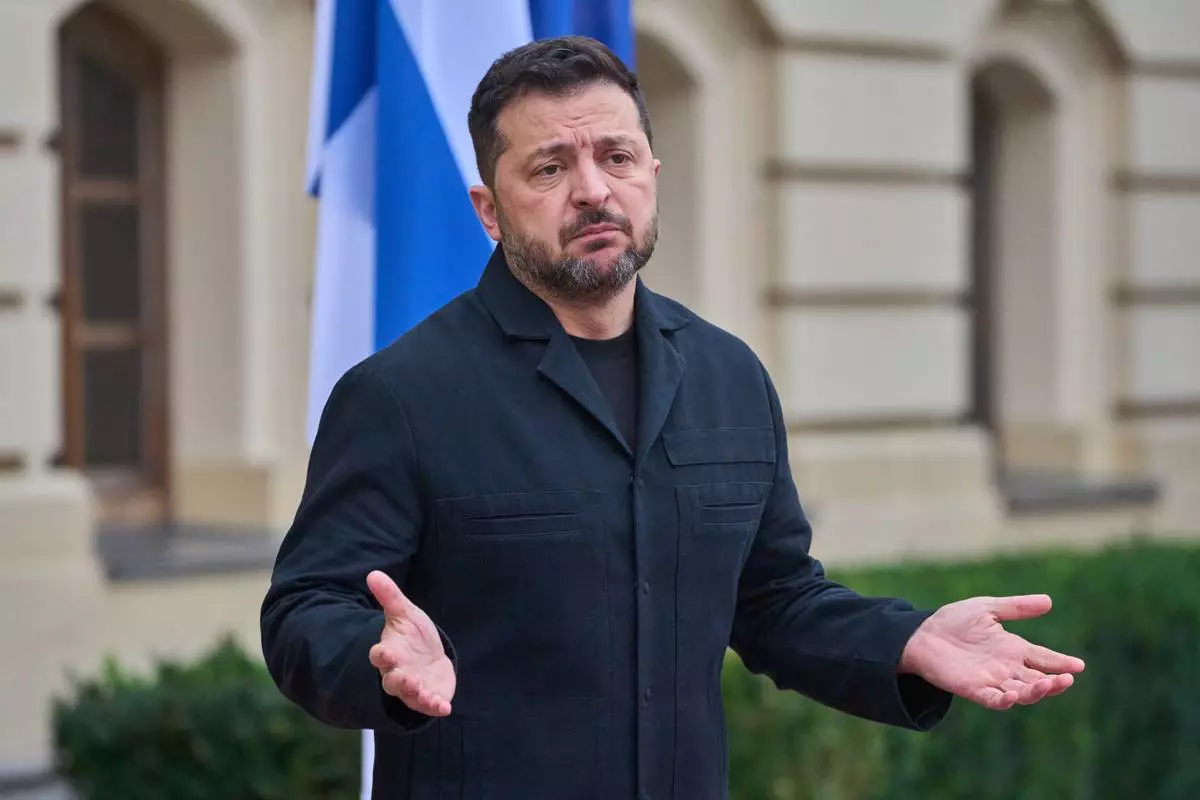
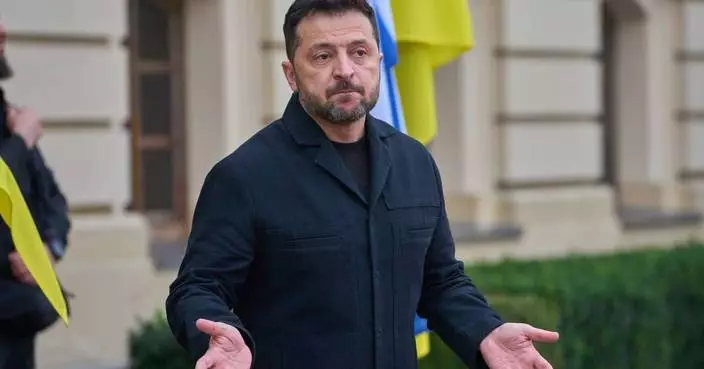
Ukraine's President Volodymyr Zelenskyy answers media questions before his meeting with Finnish Prime Minister Petteri Orpo in Kyiv, Ukraine, Thursday Oct. 22, 2026. (AP Photo/Efrem Lukatsky)
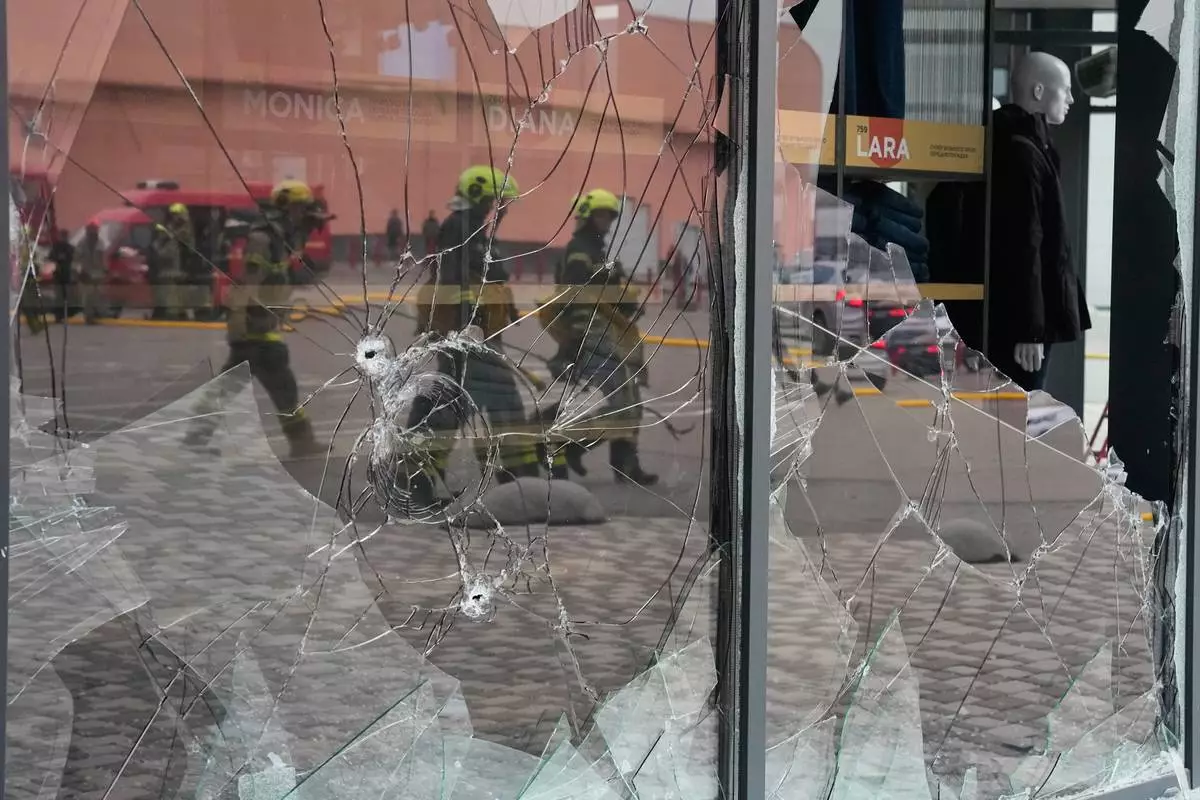
Firefighters are reflected in the broken glass after a Russian missile attack in central Kyiv, Ukraine, Thursday, Oct. 22, 2026. (AP Photo/Efrem Lukatsky)
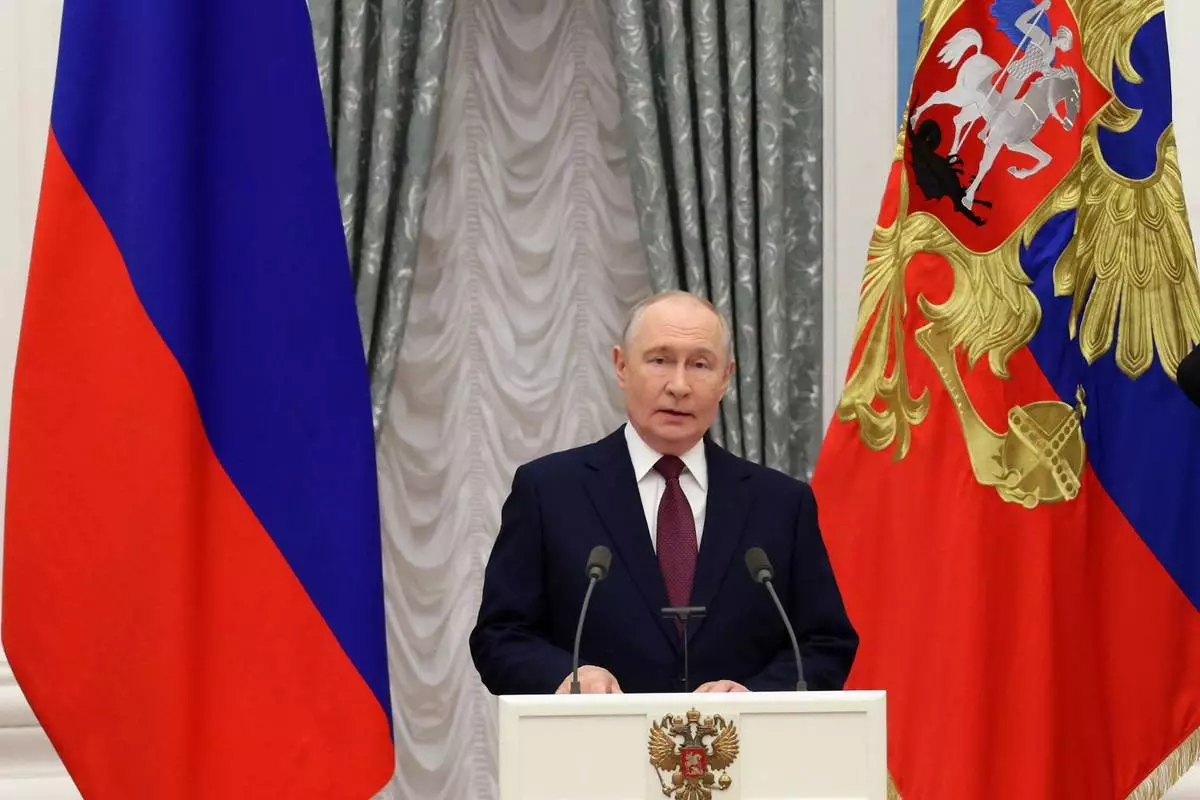
Russian President Vladimir Putin delivers his speech at the presentation of a banner of the Federal Customs Service at the Kremlin in Moscow, Thursday, Oct. 22, 2026. (Gavriil Grigorov/Sputnik, Kremlin Pool Photo via AP)
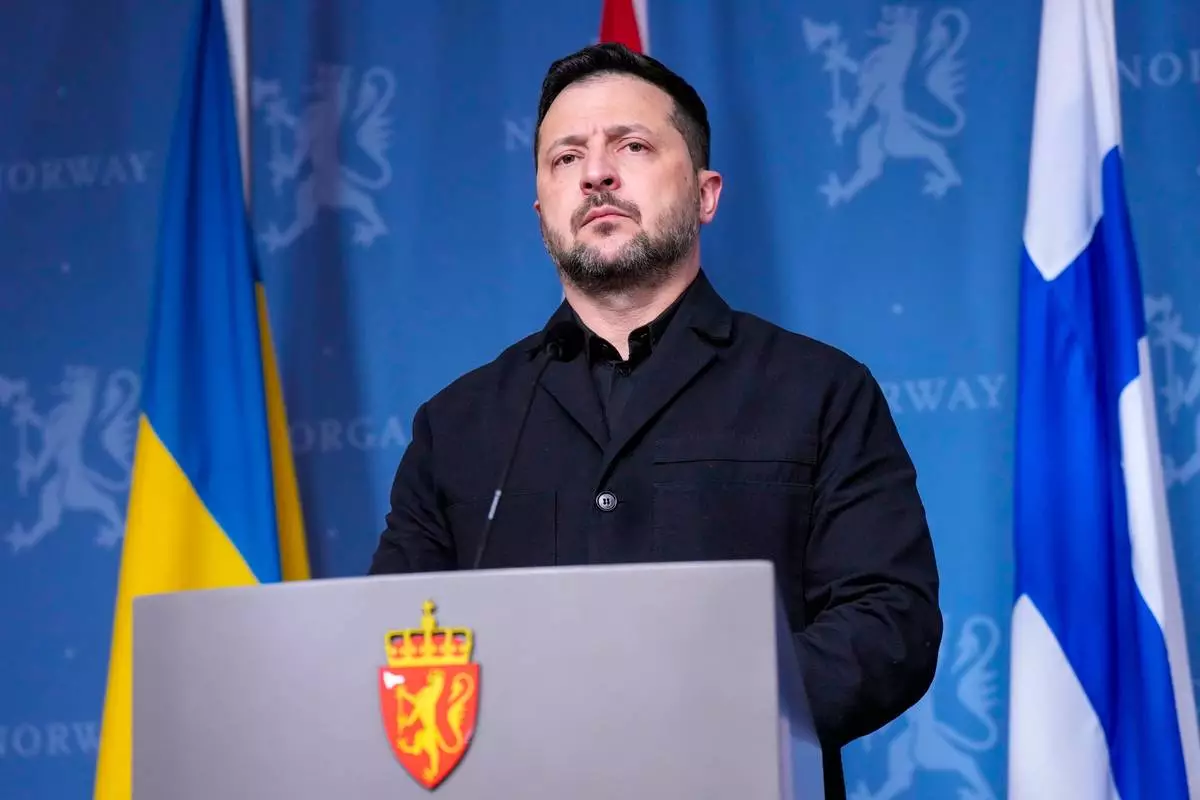
Ukrainian President Volodymyr Zelensky speaks during a press conference on Tuesday, Oct. 20, 2026 in Oslo, Norway. (Lise Åserud/NTB Scanpix via AP)
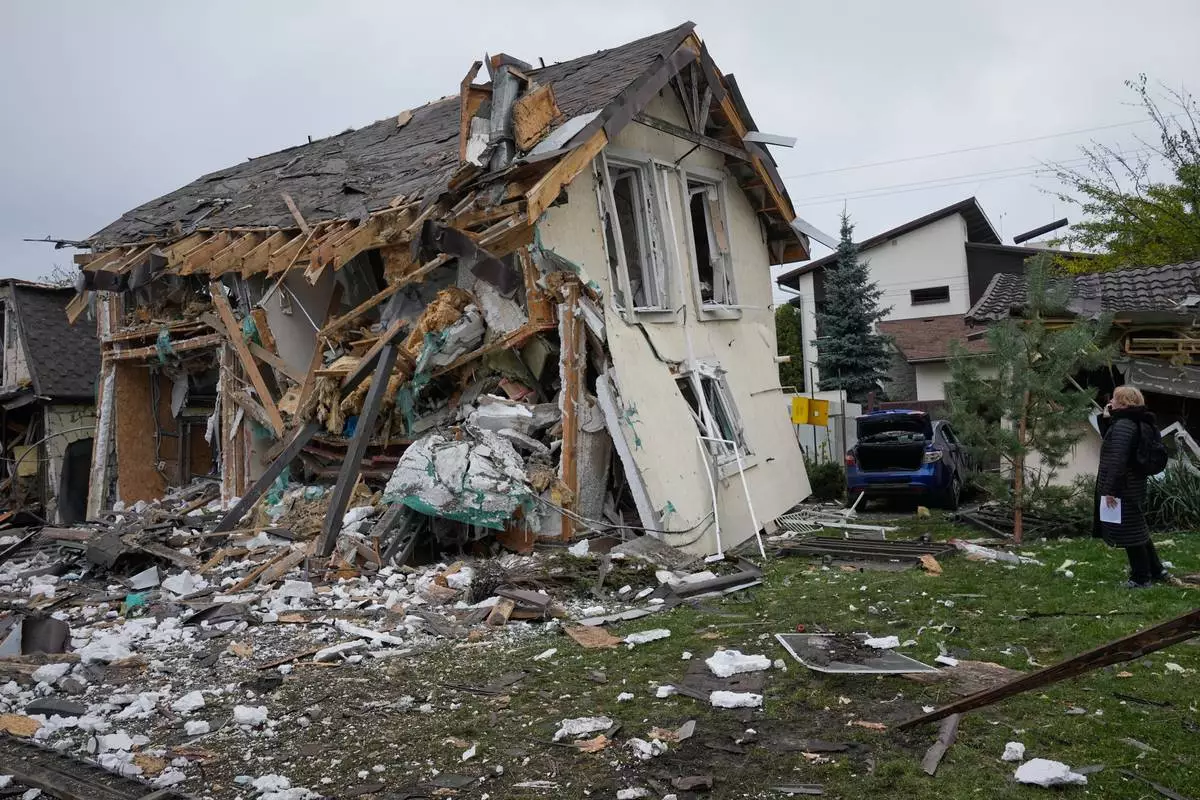
A woman looks at residential house destroyed in a Russian missile strike in Kyiv, Thursday, Oct. 22, 2026. (AP Photo/Efrem Lukatsky)