China's Ministry of Agriculture and Rural Affairs on Saturday conducted a pilot release of two Yangtze finless porpoises into the Honghu section of the Yangtze River in Hubei Province.
Two finless porpoises from the Laowan Oxbow of the Yangtze River in Hubei, were successfully released into the river after a year of rewilding training. Both of them are adult males aged between five and six years old.
Following the release, the Yangtze River Fisheries Administration under the ministry will organize scientific research institutions to conduct positioning and tracking of the two porpoises for approximately three months, continuously monitoring and evaluating their adaptability and health condition.
The Yangtze finless porpoise, known as the "smiling angel" of the river, is a national first-class protected wild animal in China.
The trial release marks a new step in China's ex-situ conservation efforts for the species, the only freshwater subspecies of the finless porpoise that is living in the middle and lower main streams of the Yangtze River for 25 million years.
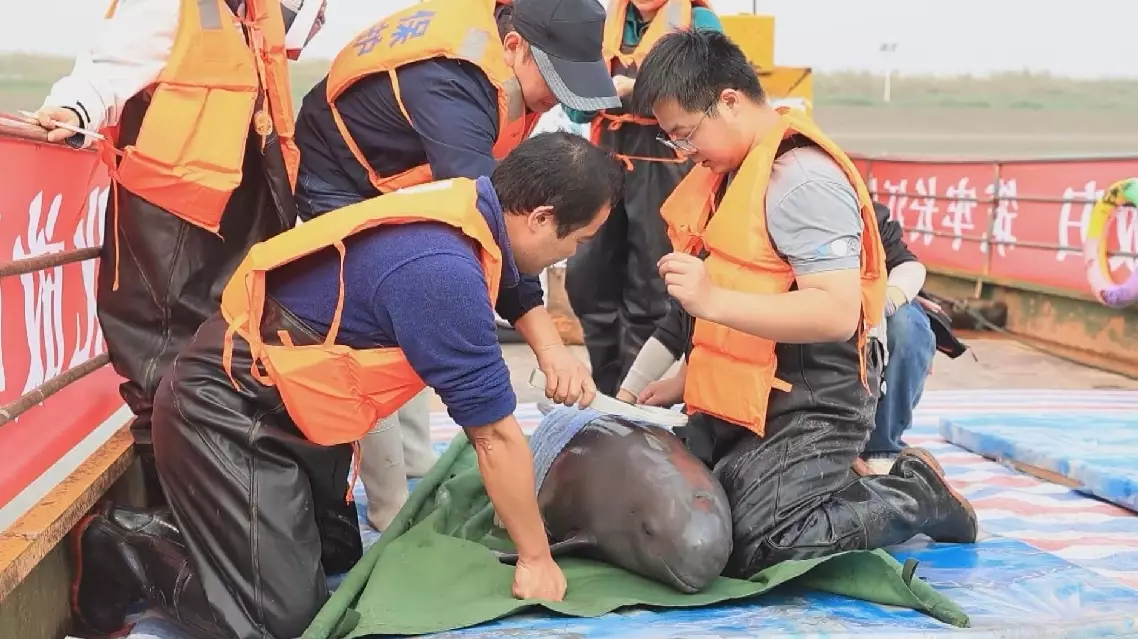
China releases two finless porpoises into Yangtze River in pilot rewilding effort
Repeated Israeli military incursions and operations in southern Syria have severely disrupted the daily lives and livelihoods of residents in Beit Jinn, a village near the Golan Heights.
Walid Akasha, the head of Beit Jinn village, noted that Israeli military vehicles frequently appear in the area known locally as "Ayn al-Kurum," leaving local farmers in constant fear and uncertainty.
"In the Ayn al-Kurum area, such incursions occur almost every day -- or, at the very least, every other day. Residents live in constant fear. We suffer greatly from explosions and shelling. Last night, they (the Israeli forces) fired rockets; shrapnel from the rockets landed inside people's homes. Had anyone been sitting outside at the time, they could easily have been struck by the shrapnel. Even walking along the road, one risks being hit. The shrapnel could be lethal," he said.
Grape farming is a vital lifeline for local families, but Israeli military presence in the fields has driven many young people away from their orchards. Their farmland sits right before their eyes, yet they cannot cultivate.
"Residents dare not go to their own vineyards, for fear that the Israelis might detain them. We worry that our names could appear on a wanted list; consequently, many young people avoid going to their own farmland, terrified of being targeted by the Israeli authorities. We live in a constant state of fear and anxiety, which is compounded, in particular, by drones' persistent roar that we hear from morning until night," said Walid.
For many residents, even home is no longer a safe haven. Umm Muhammad, a local resident of Beit Jinn, recalled a harrowing Israeli raid on her house.
"They (the Israeli forces) ordered us to lie face down on the ground, we refused. Then, they ordered us to sit where we were, without moving. We went inside the house to wake the children, fearing that something might happen. When we tried to leave our home, they demanded that we stay put for 20 minutes, warning that if we disobeyed, they would open fire on us," she said.
Though the soldiers eventually left, Umm Muhammad said the raid never truly ended for her family. Even now, the sound of a drone flying over the village triggers intense anxiety in her children, with any sight of military vehicles or sound of distant gunfire bringing the terror of that day flooding back.
"The children are in a constant state of fear, especially when they are at school. They are at a complete loss, unsure whether to go home or stay at school. Even my young granddaughter is terrified; she keeps saying that we must hide, because they (the Israeli military) have previously shelled the area and opened fire," she said.
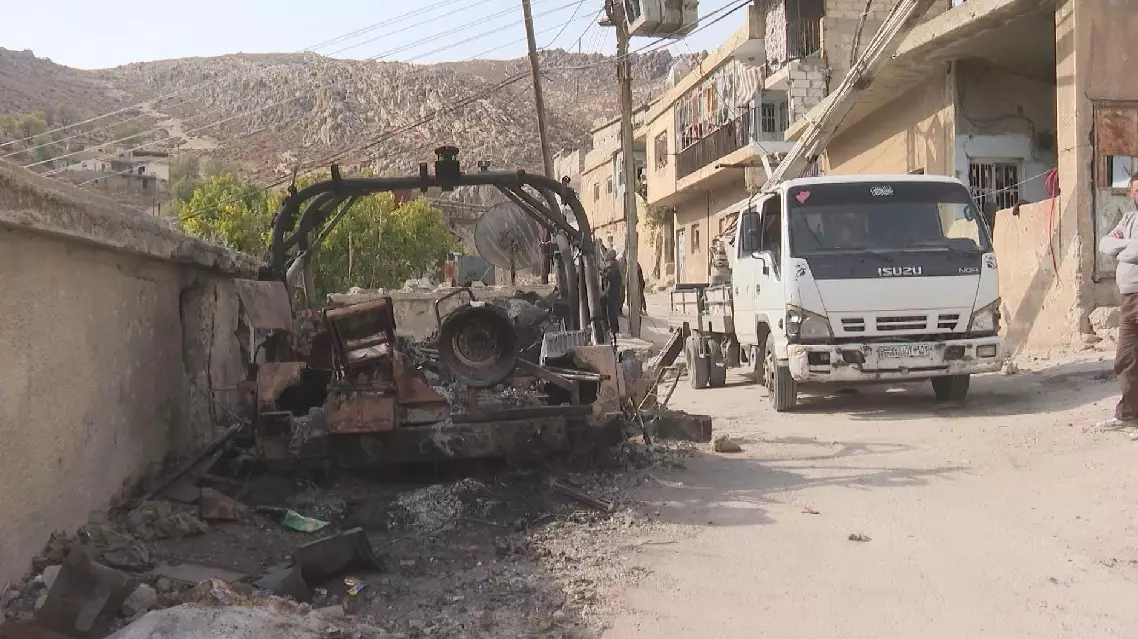
Israeli military operations in southern Syria disrupt livelihoods in border village