NEW YORK (AP) — DC Studios scored a modest, R-rated win with “Clayface,” landing a $24 million opening weekend, according to studio estimates Sunday. But the biggest success story in theaters remained A24’s Elizabeth Holmes documentary “You Can See Everything,” which pulled in $19.5 million in its first weekend of wide release.
The Nathan Fielder, Lance Oppenheim-directed “You Can See Everything” increased from 855 locations to 2,655. In expansion, it continued to blow away expectations. With $45.1 million in two weeks, it already ranks among the highest grossing documentaries ever.
“You Can See Everything” has turned into a sensation partly by drawing waves of Gen Z moviegoers. Its awards season prospects are also growing. If “You Can See Everything” is nominated for best picture at the Oscars, it would be the first documentary nominated for Hollywood's top prize.
“A24 invested a reported $7 million in an interesting but complicated idea without a beginning, middle or end, that’s turned into a zeitgeist film about money, dreams, truth and reality,” said David A. Gross, who publishes the box office newsletter FranchiseRe.
In 3,458 theaters, Warner Bros.’ “Clayface” narrowly edged the A24 release for first place. That’s a solid start for the Gotham City villain tale and the third theatrical release for DC under the stewardship of James Gunn and Peter Safran. A bid to meld body horror with a comic book movie, it stars Tom Rhys Harries as Matt Hagen, a rising movie star who undergoes an experimental facial surgery after a mob boss disfigures him.
While such an opening would have been a flop for most superhero films, “Clayface” was budgeted at only $44 million — a fraction of the expense of most comic book films. It added $19 million internationally.
That was enough to offer some stability, and assured profitability, to DC Studios following the disappointment of “Supergirl.” Earlier this year, that film grossed just $126 million worldwide on a $170 million production budget.
Audiences gave “Clayface” an “A-” CinemaScore, a high grade for a horror release. Reviews were also largely good. The competition for horror audiences can be fierce in October, but “Clayface” may end up the top genre draw of the month.
“Clayface is a great example of studios taking chances, with DC venturing into R-rated horror and body horror, something that’s certainly not your typical comic book movie,” said Paul Dergarabedian, head of marketplace trends for Rentrak.
Last weekend’s top film, the video game adaptation “Street Fighter,” sank like a stone, dropping 72% with $8.6 million in its second weekend. The Paramount Pictures release, made for about $80 million, has grossed $46.9 million domestically in two weeks.
“Wildwood,” the latest stop-motion animated film from the Portland, Oregon-based studio Laika, debuted in third place with $11.8 million in 2,779 locations. The film, directed by Laika chief executive Travis Knight, rode excellent reviews and strong audience scores (an “A” CinemaScore) to a notable improvement over the studio’s previous release: 2019’s “The Missing Link” (a $5.9 million opening).
But “Wildwood” is still unlikely to generate a profit, given that it cost $100 million to make. The PG-13 fantasy follows a teenage girl who enters an enchanted forest to find her abducted baby brother.
“Wicker,” a comic fable starring Olivia Colman and Alexander Skarsgård, launched with an excellent $5.8 million in 1,471 theaters. Acquired for $2.5 million out of Sundance by Black Bear Pictures, the well-reviewed “Wicker” is a quirky love story about a fisherwoman (Colman) who has the local basket maker weave her a husband (Skarsgård).
The weekend’s other new releases were either hard to find or little seen.
Taika Waititi’s critically panned “Klara and the Sun,” adapted from Kazuo Ishiguro’s novel, made just $725,000 at 880 theaters for Sony Pictures.
Amazon MGM opted not to even report grosses for Sacha Baron Cohen's poorly received mockumentary “Ali G: Who Iz I?”
Though Cohen took the rare step of conducting numerous interviews as himself, and not in character, “Ali G: Who Iz I?” was almost absent on its opening weekend. The film's theatrical footprint was shrunk considerably as Cohen faced backlash in the U.K. over cultural appropriation and racial caricatures.
With final domestic figures being released Monday, this list factors in the estimated ticket sales for Friday through Sunday at U.S. and Canadian theaters, according to Rentrak:
1. “Clayface,” $24 million.
2. “You Can See Everything,” $19.5 million.
3. “Wildwood,” $11.8 million.
4. “Street Fighter,” $8.6 million.
5. “Wicker,” $5.8 million.
6. “Other Mommy,” $3.9 million.
7. “Sense and Sensibility,” $3.4 million.
8. “Whalefall,” $3.2 million.
9. “Verity,” $3.1 million.
10. “Resident Evil,” $3 million.

Sacha Baron Cohen discusses the film "Ali G: Who Iz I?" at The 92nd Street Y on Wednesday, Oct. 21, 2026, in New York. (Photo by Andy Kropa/Invision/AP)

Olivia Colman, left, and Alexander Skarsgård arrive at the premiere of "Wicker" on Tuesday, Oct. 20. 2026, at the DGA Theater Complex in Los Angeles. (Photo by Jordan Strauss/Invision/AP)
RIO DE JANEIRO (AP) — Brazil's Supreme Court justice rules to extend presidential voting nationwide for 2 hours shortly after polls closed.
THIS IS AN APNewsAlert. Check back for updates. AP's earlier story is below.
Brazilians were voting in Sunday’s polarizing presidential runoff between incumbent President Luiz Inácio Lula da Silva and Flávio Bolsonaro, a contest that will determine whether the U.S. will significantly expand its growing influence in Latin America.
A win for Bolsonaro would signify a pivot to the right by Latin America’s most populous country and its largest economy, in a year when Trump allies have scored victories in Chile, Peru and Colombia. A victory for Lula would leave Brazil and Mexico with left-of-center leaders.
Polls showed the two candidates, who need more than 50% of the vote to become Brazil’s next leader in January, in a neck-and-neck race. The election pits the left-of-center veteran politician Lula against Bolsonaro, an ally of U.S. President Donald Trump and the son of imprisoned former President Jair Bolsonaro.
Both presidential candidates had asked Brazil’s electoral court to extend voting hours in some cities. Lula’s request came after issues in nine states with buses that provide transportation to polls. Bolsonaro’s request was due to heavy rains in Brazil’s south. The electoral court had not issued a response at poll close.
Bolsonaro bested Lula by more than 2.2 million votes in the first round of the election earlier this month. However, more than 33 million voters out of nearly 160 million did not turn out.
Bolsonaro and Lula have opposing ideological views on issues ranging from U.S.-Brazil relations and climate change to social welfare.
In many ways, Brazil’s runoff vote is another tight rematch between the country’s two polarized political forces that trigger passion as much as loathing. Four years ago, Lula beat Bolsonaro’s father by the narrowest margin since the country’s return to democracy in 1985.
Lula, who first governed Brazil between 2003 and 2010, has faced a tough reelection battle because of concerns about the cost of living and security. Bolsonaro made a tough-on-crime approach the cornerstone of his campaign and pledged to bring down food costs while Lula, trying to lure undecided voters, has invested in costly incentives.
Both have been hit by corruption suspicions involving family members and allies, with Bolsonaro implicated in a sprawling scandal rocking Brazil. Lula previously spent more than a year in prison on corruption convictions that were eventually annulled.
As Bolsonaro voted at a school in Rio de Janeiro, his supporters shouted “Lula, thief, your place is in prison” while Lula’s supporters chanted in his support.
“The time of real change has arrived,” Bolsonaro said. “Brazil can’t go on for another four years on its current trajectory.”
Eduardo Bolsonaro, Flávio Bolsonaro’s brother and a 42-year-old former lawmaker, spoke to supporters at a polling station in Miami, Florida.
“What we really need is freedom,” he said, calling for judicial reform. “Most of the people here are coming to vote to free Jair Bolsonaro... we need to reform the judiciary, we need to free the political prisoners.”
Lula voters turned out Sunday driven by his history of supporting marginalized people and working to lift Brazilians out of poverty.
“Lula is a man of the people and he knows what it’s like to be poor,” Luzia da Souza, who runs a bar in Rio de Janeiro, said. "I find it impossible not to vote for him.”
Anderson Falcão, a 43-year-old journalist in Brasilia who sported a red shirt in support of Lula, said he worried about Bolsonaro’s long-term political vision, which he called “exclusionary.”
“It’s a project that harms the less fortunate, harms the worker, women, the forest, the Amazon,” he said.
Bolsonaro voters, many of whom wore yellow and green Brazil jerseys in support of the senator, said they want change.
“Things are really expensive and taxes are too high,” Fabianne Borges Santoro, a 45-year-old physiotherapist in Rio de Janeiro, said. She added that she once voted for Lula’s party but now associates it with corruption.
Kelvin Gomes Pimental, a 28-year-old data analyst in Brasilia, voted for a third-party candidate in the first round, making his vote a decisive one in this election. He ultimately decided to vote for Lula.
“It’s not even about Flávio himself. It’s also very much about the management of the other Bolsonaro government. He wanted to stage a coup,” he said. “These issues scare me a little.”
Diogo Furtado, a 35-year-old Uber driver in Rio de Janeiro, didn’t vote the first time because of his work, but said he'll vote blank on Sunday. He said that neither candidate convinced him.
“Brazil needs a new candidate,” Furtado said. “But unfortunately our country has become dominated by two names: Lula and Bolsonaro."
In Bahia state, a stronghold for Lula, whose voters tend to live in areas that depend more heavily on buses, at least 75 public buses were prevented from leaving municipal garages during the presidential runoff vote, according to a state electoral judge. He ordered the arrest of the mobility secretary of the capital Salvador, Pablo Souza, in relation to the case.
President of Brazil’s Superior Electoral Court, Kassio Nunes Marques did not confirm if voting would be extended, which Lula requested in Salvador and Sao Paulo, where issues were also reported.
“We will not be robbed by mayors, governors or businessmen," Lula told press. “These people need to respect democracy.”
International observers earlier in the day said that voting was occurring peacefully and with transparency and did not immediately comment on the incident.
Lula criticized the U.S. president before Brazil's election, speaking about the risks of U.S. intervention in Brazilian elections after the Trump administration imposed high tariffs against Brazilian exports and classified drug-trafficking groups as foreign terrorist organizations. Experts say the moves may have been intended to make Lula look soft on crime.
Flávio Bolsonaro has touted his proximity to the White House and insisted that Brazil needs to strike better deals with the Trump administration, including in the rare minerals economy. Brazil estimates that its deposits hold up to 21 million tons, second only to China. He denies he's being helped by the U.S. government.
Trump said Sunday that he is watching the election but declined to endorse a candidate.
Savarese reported from Sao Paulo. Brigida reported from Brasilia.
Follow AP’s coverage of Latin America and the Caribbean at https://apnews.com/hub/latin-america
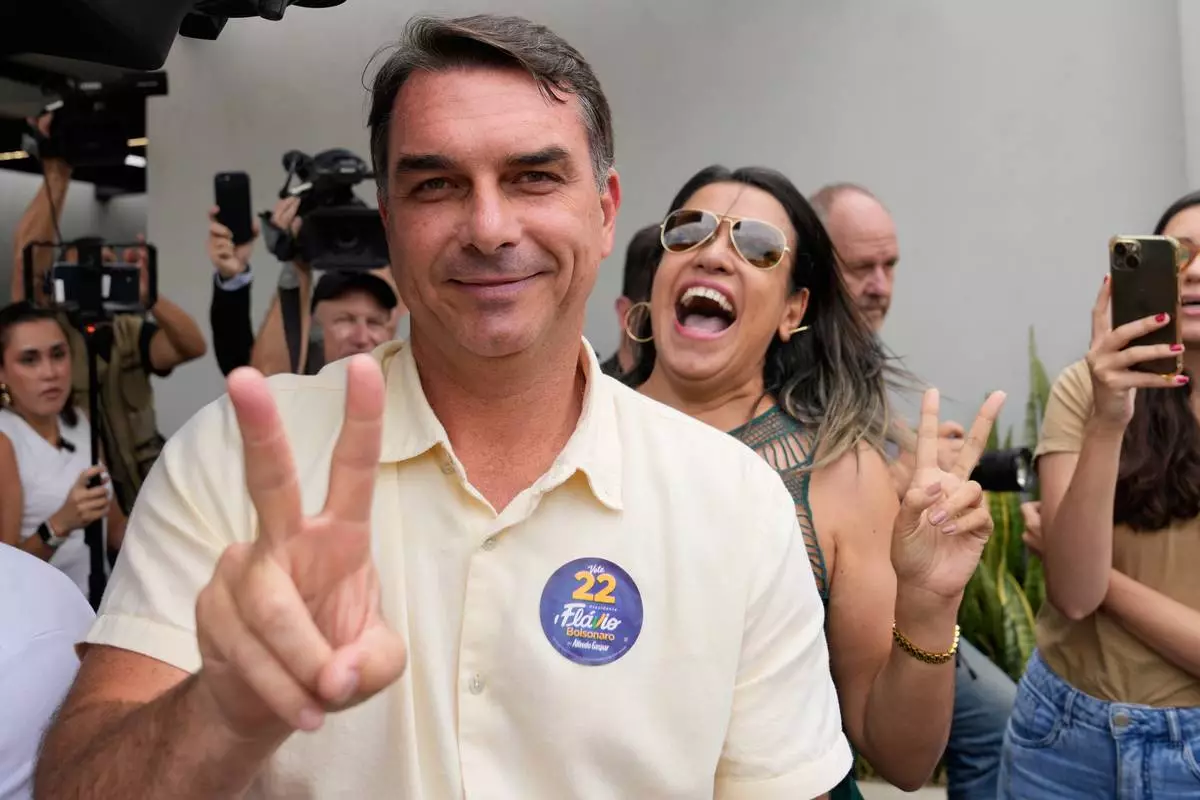
Opposition presidential candidate Sen. Flávio Bolsonaro flashes a victory sign as he arrives in Brasilia, Brazil, on the day of the presidential runoff election, Sunday, Oct. 25, 2026. (AP Photo/Eraldo Peres)
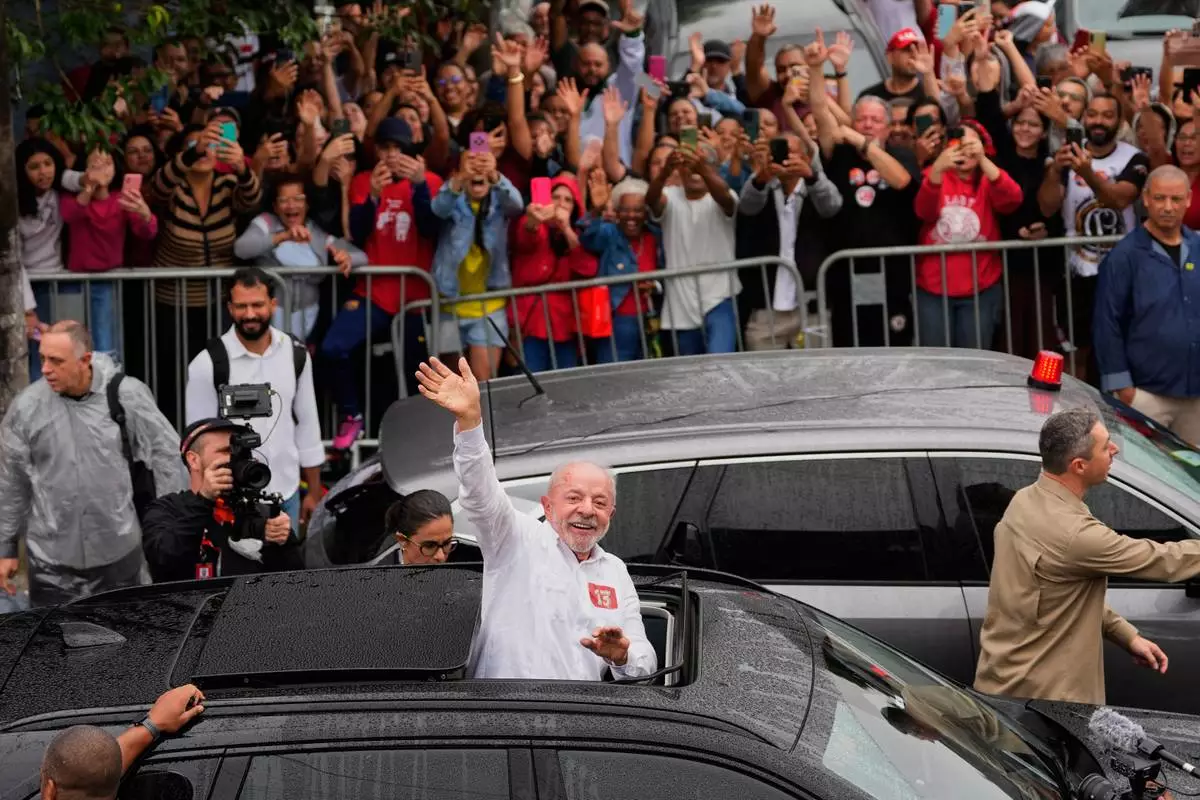
President Luiz Inacio Lula da Silva, who is seeking reelection, waves after voting in the presidential runoff in Sao Bernardo do Campo, Brazil, Sunday, Oct. 25, 2026. (AP Photo/Andre Penner)
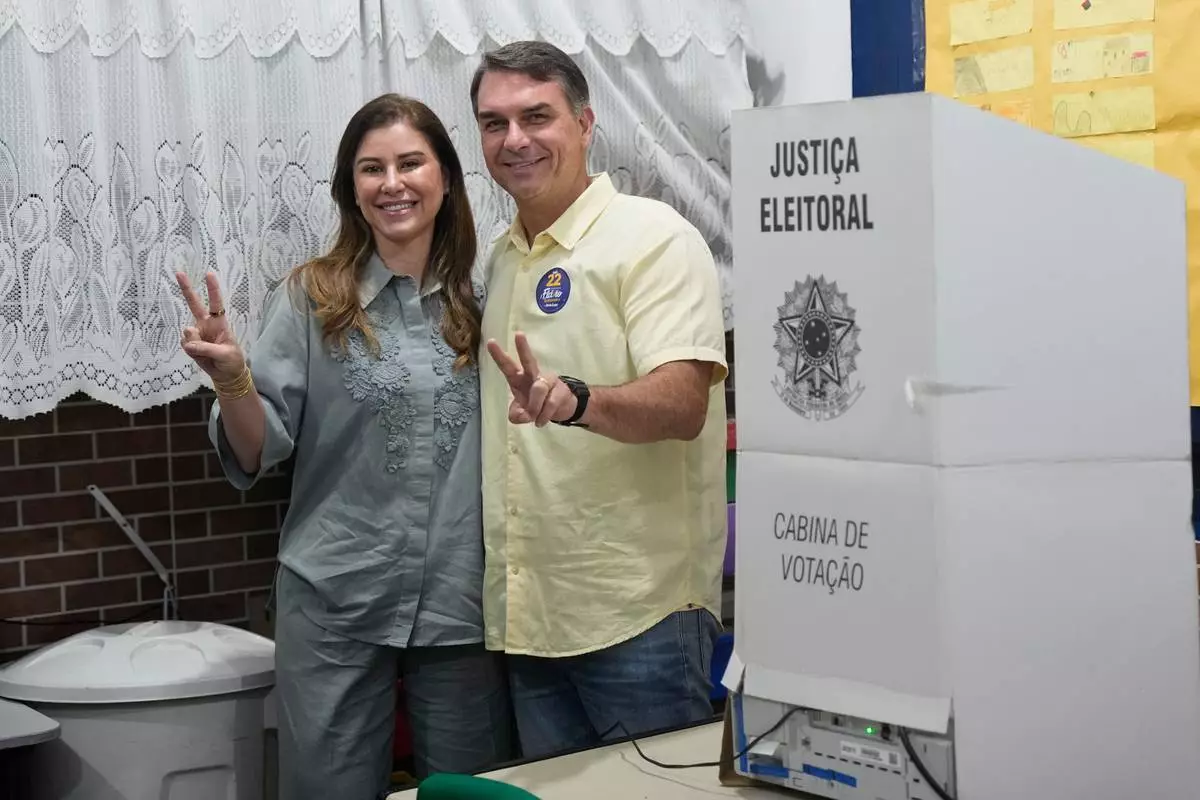
Opposition presidential candidate Sen. Flavio Bolsonaro and his wife Fernanda Bolsonaro give a thumbs during the runoff presidential election in Rio de Janeiro, Sunday, Oct. 25, 2026. (AP Photo/Silvia Izuierdo)
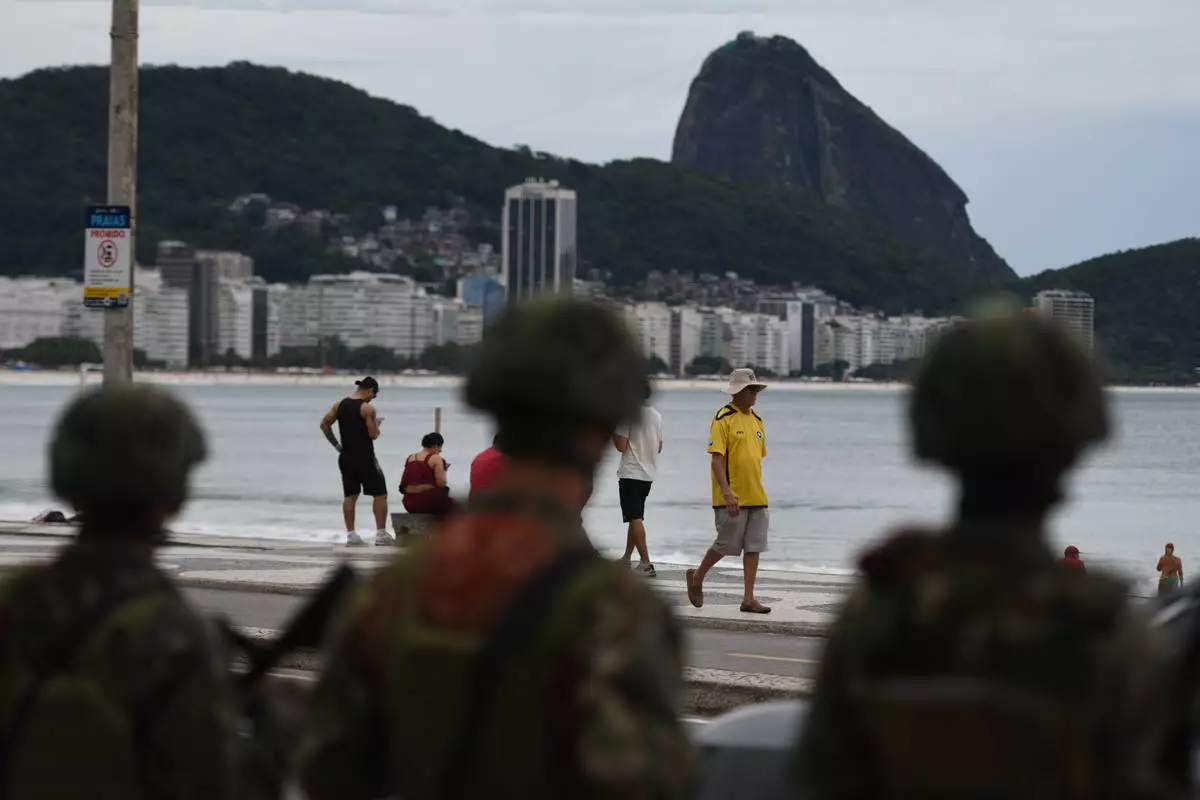
People walk along the beach during the presidential runoff in Rio de Janeiro, Sunday, Oct. 25, 2026. (AP Photo/Lucas Landau)
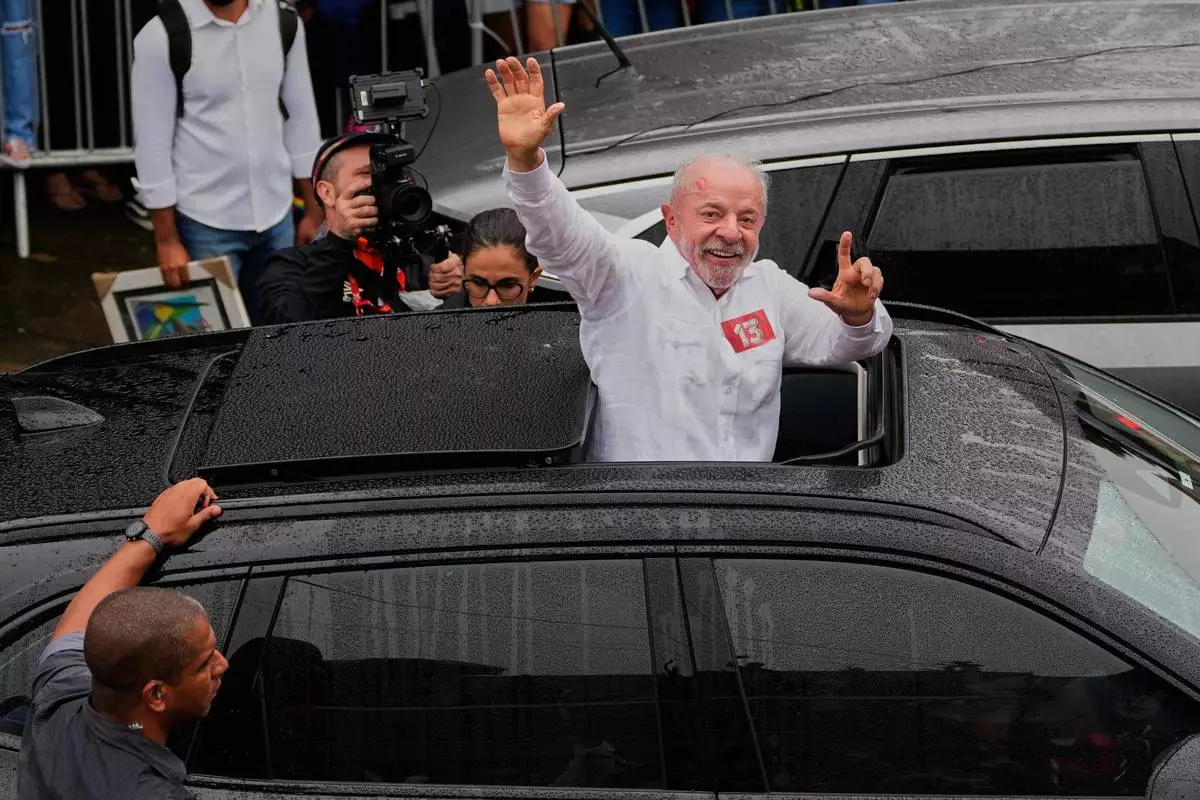
President Luiz Inacio Lula da Silva, who is seeking reelection, waves after voting in the presidential runoff in Sao Bernardo do Campo, Brazil, Sunday, Oct. 25, 2026. (AP Photo/Andre Penner)
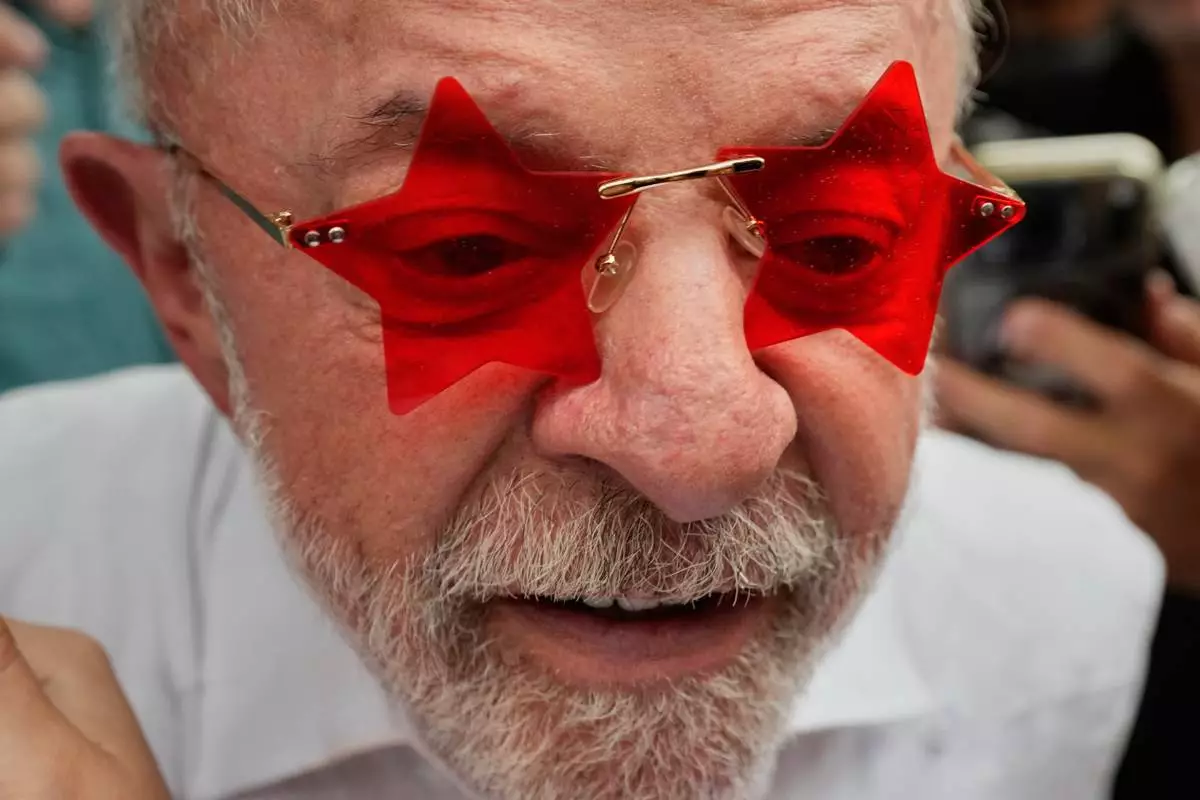
President Luiz Inacio Lula da Silva, who is seeking reelection, wears glasses given to him by a supporter after voting in the presidential runoff in Sao Bernardo do Campo, Brazil, Sunday, Oct. 25, 2026. (AP Photo/Natacha Pisarenko)
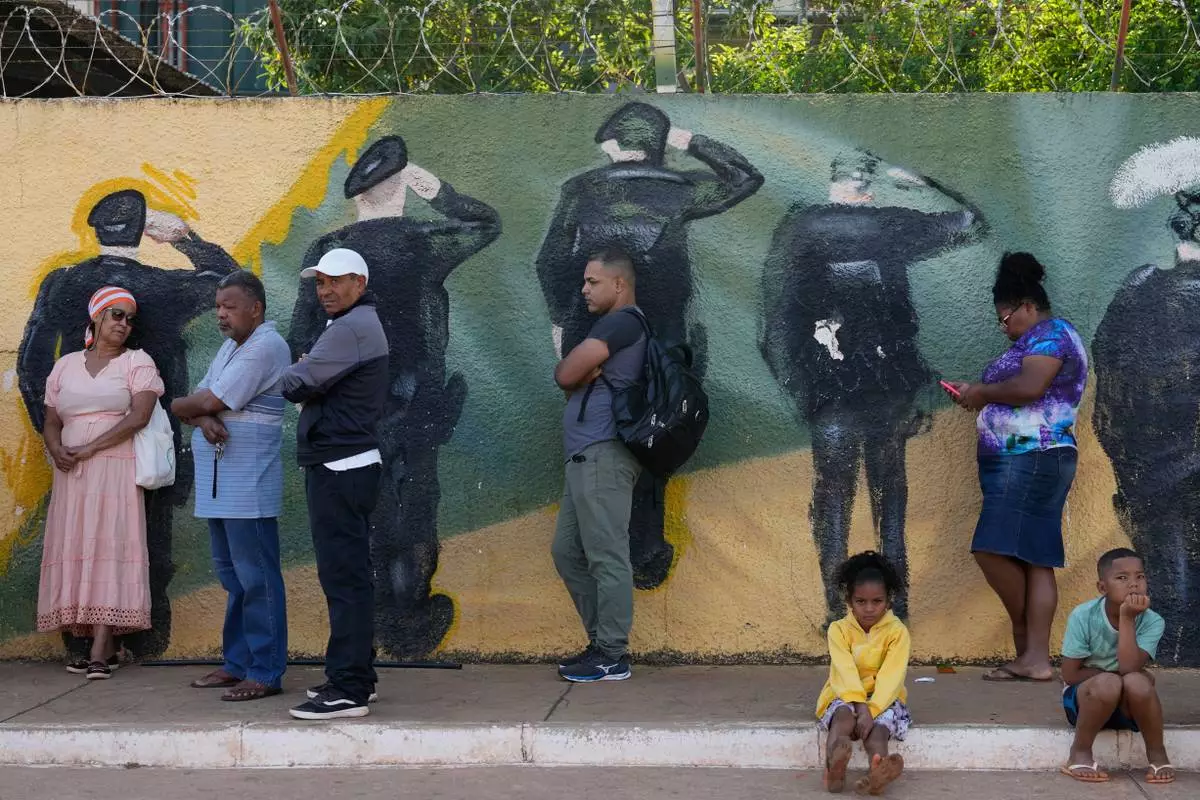
Voters line up at a polling station during the presidential runoff in Brasilia, Brazil, Sunday, Oct. 25, 2026. (AP Photo/Eraldo Peres)
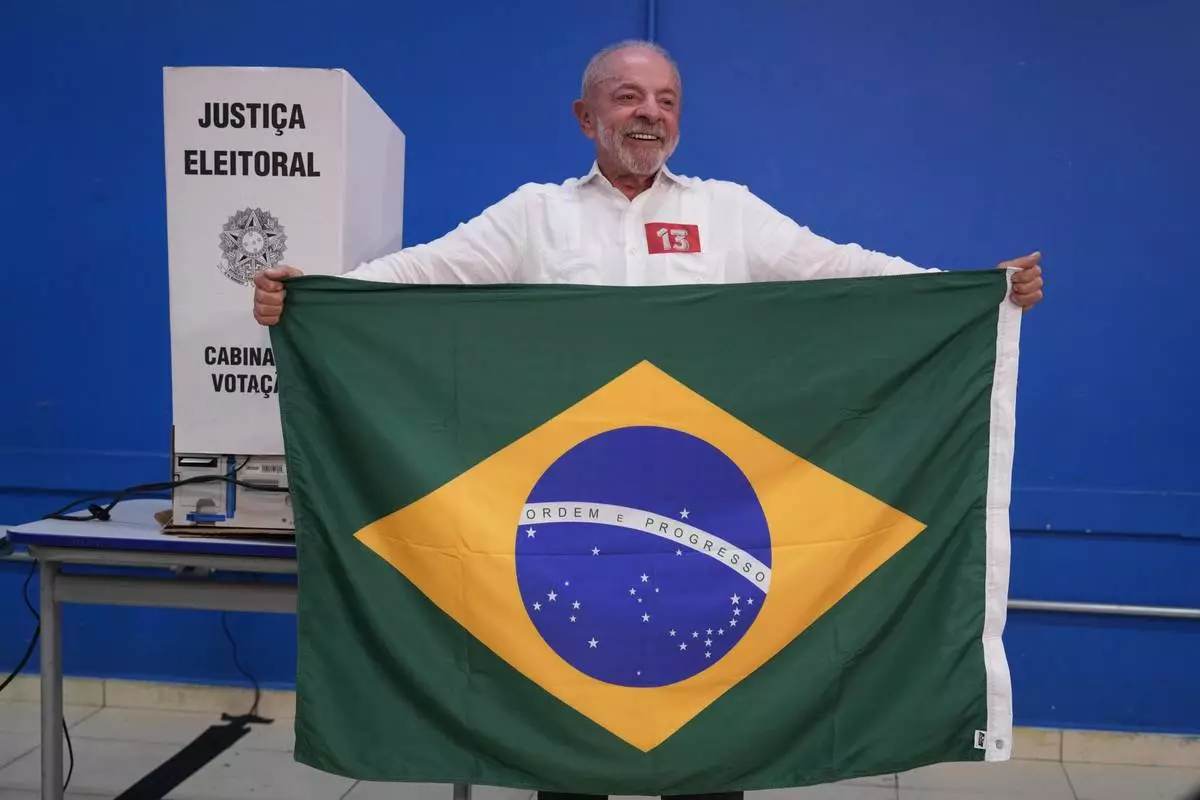
President Luiz Inacio Lula da Silva, who is seeking reelection, displays a Brazilian flag before voting in a presidential runoff in Sao Bernardo do Campo, Brazil, Sunday, Oct. 25, 2026. (AP Photo/Andre Penner)
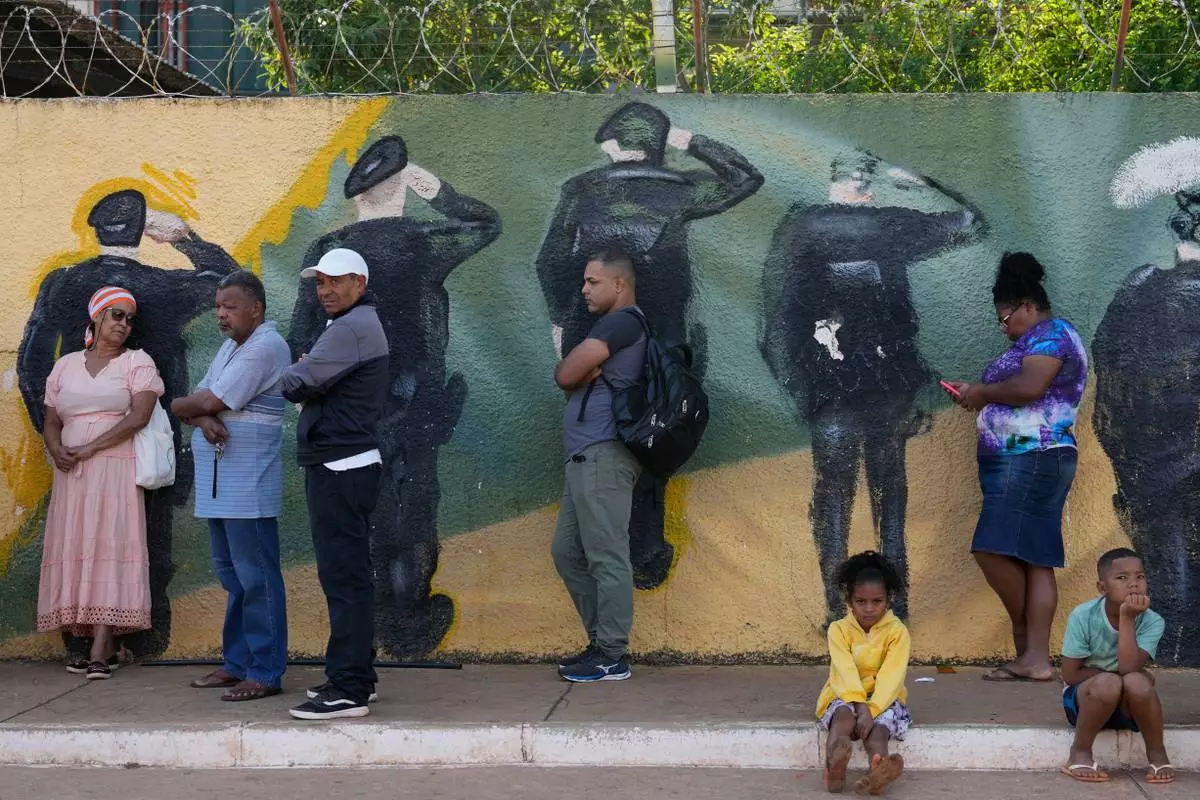
Voters line up at a polling station during the presidential runoff in Brasilia, Brazil, Sunday, Oct. 25, 2026. (AP Photo/Eraldo Peres)
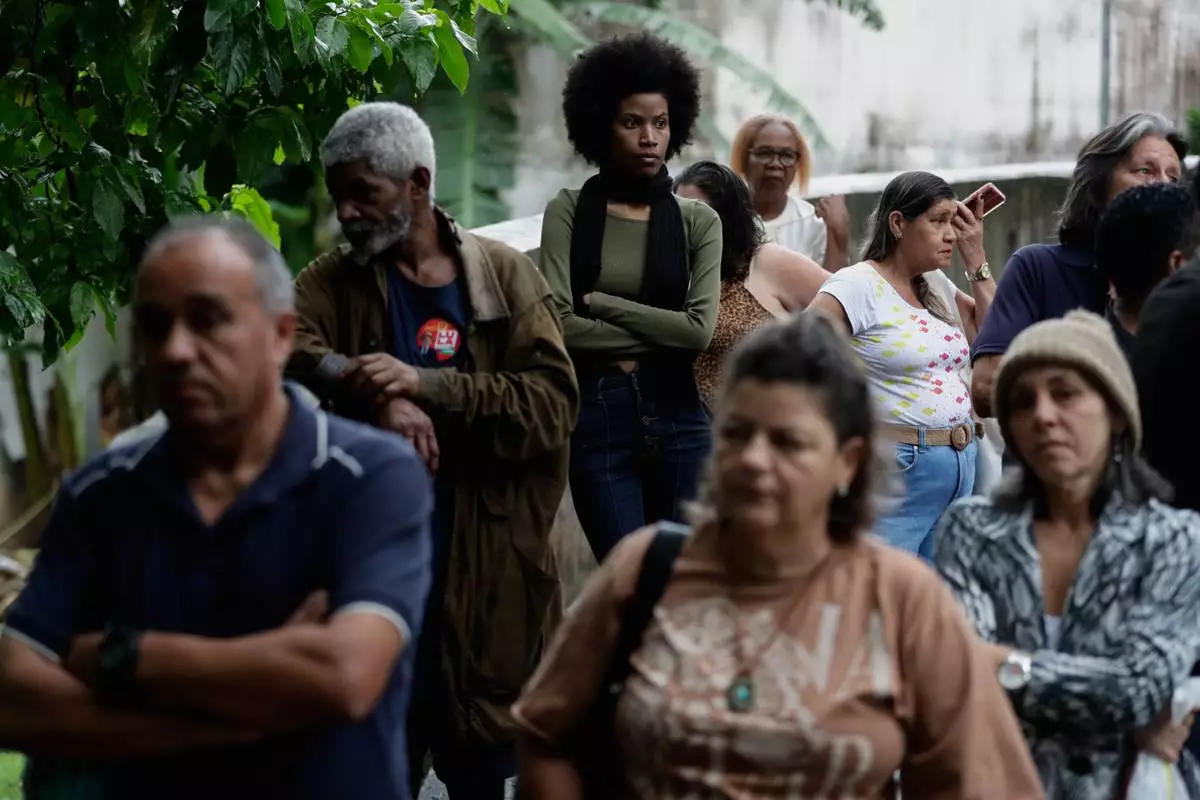
Voters line outside a polling station up during the presidential runoff in Rio de Janeiro, Sunday, Oct. 25, 2026. (AP Photo/Bruna Prado)
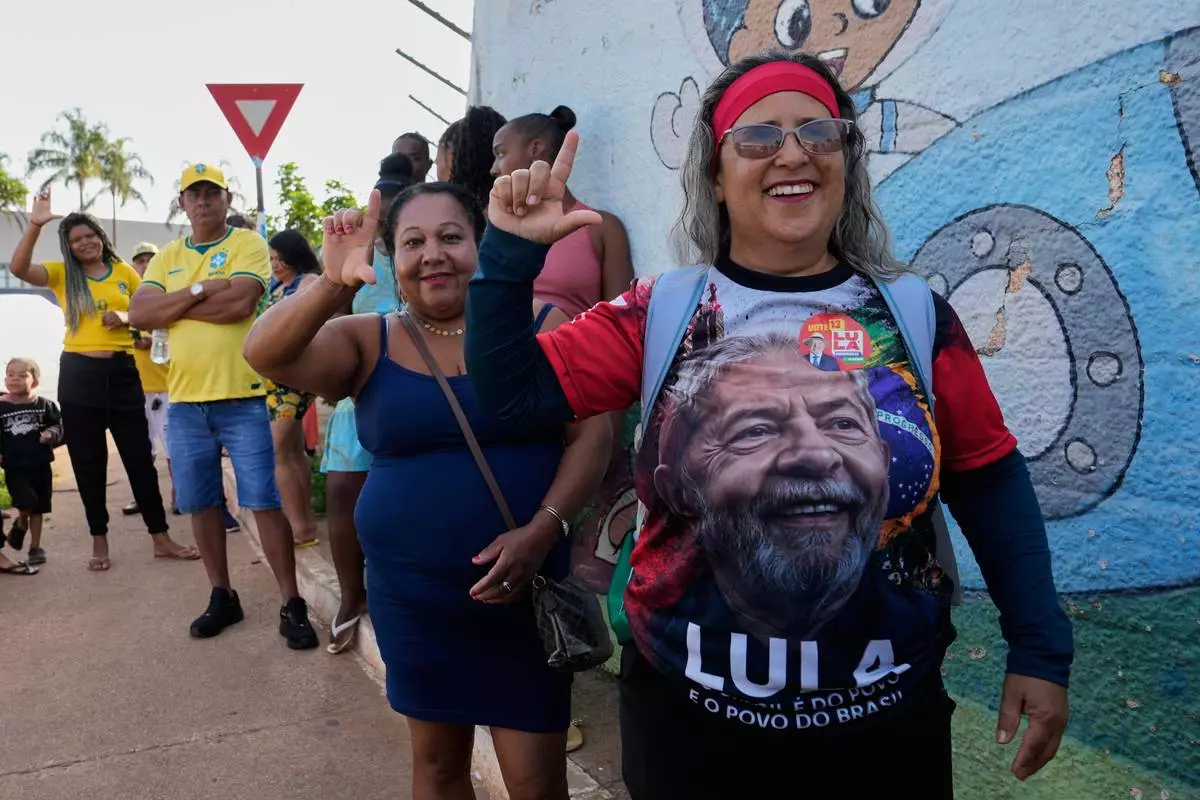
A supporter of President Luiz Inacio Lula da Silva, who is seeking reelection, lines up at a polling station during a presidential runoff in Brasilia, Brazil, Sunday, Oct. 25, 2026. (AP Photo/Eraldo Peres)
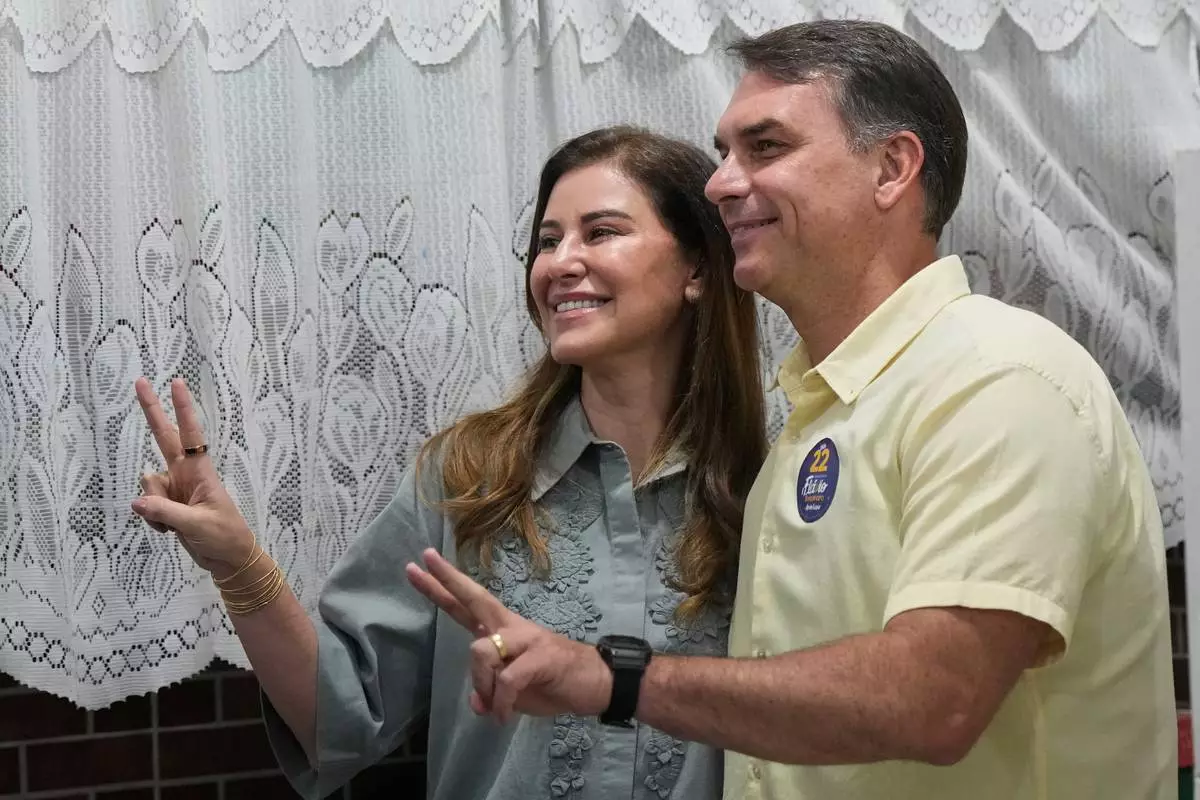
Opposition presidential candidate Sen. Flavio Bolsonaro and his wife Fernanda Bolsonaro give a thumbs during the runoff presidential election in Rio de Janeiro, Sunday, Oct. 25, 2026. (AP Photo/Silvia Izquierdo)
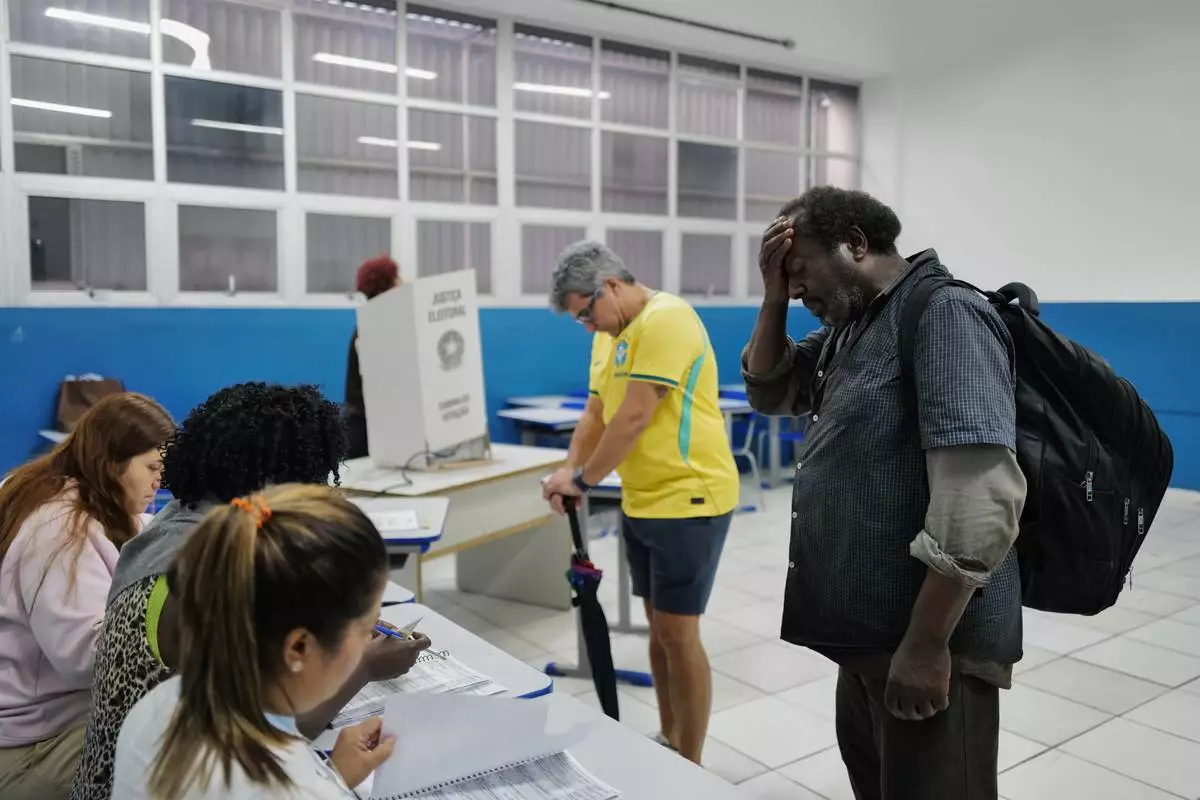
Voters wait to cast their ballots during a presidential runoff in Rio de Janeiro, Sunday, Oct. 25, 2026. (AP Photo/Lucas Landau)
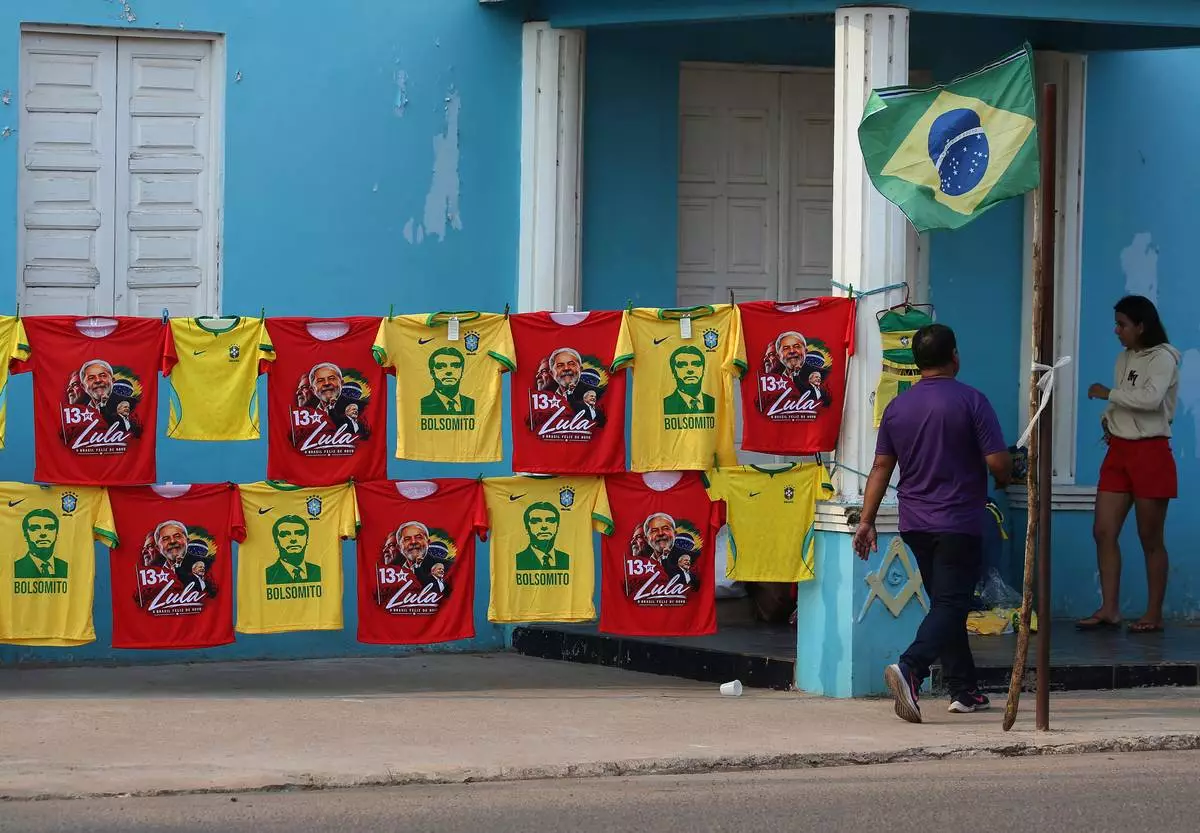
Red T-shirts depicting Brazilian President Luiz Inacio Lula da Silva, who is running for reelection, and yellow T-shirts depicting opposition presidential candidate Sen. Flavio Bolsonaro hang for sale outside a building ahead of Brazil's presidential runoff election in Autazes, Amazonas state, Brazil, Saturday, Oct. 24, 2026. (AP Photo/Edmar Barros)
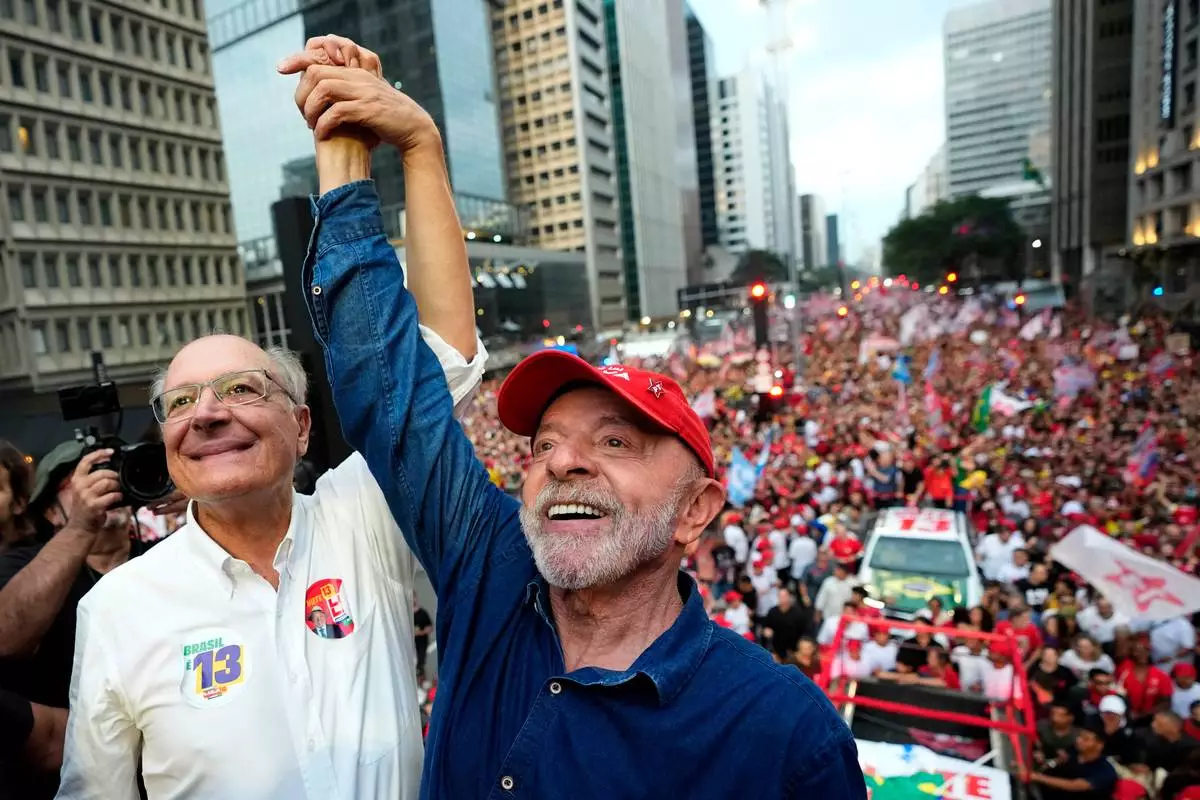
Brazilian President Luiz Inacio Lula da Silva, right, who is running for reelection, and his running mate Geraldo Alckmin raise their arms in unison at the end of their final campaign rally, a day ahead of the presidential runoff election in Sao Paulo, Brazil, Saturday, Oct. 24, 2026. (AP Photo/Natacha Pisarenko)
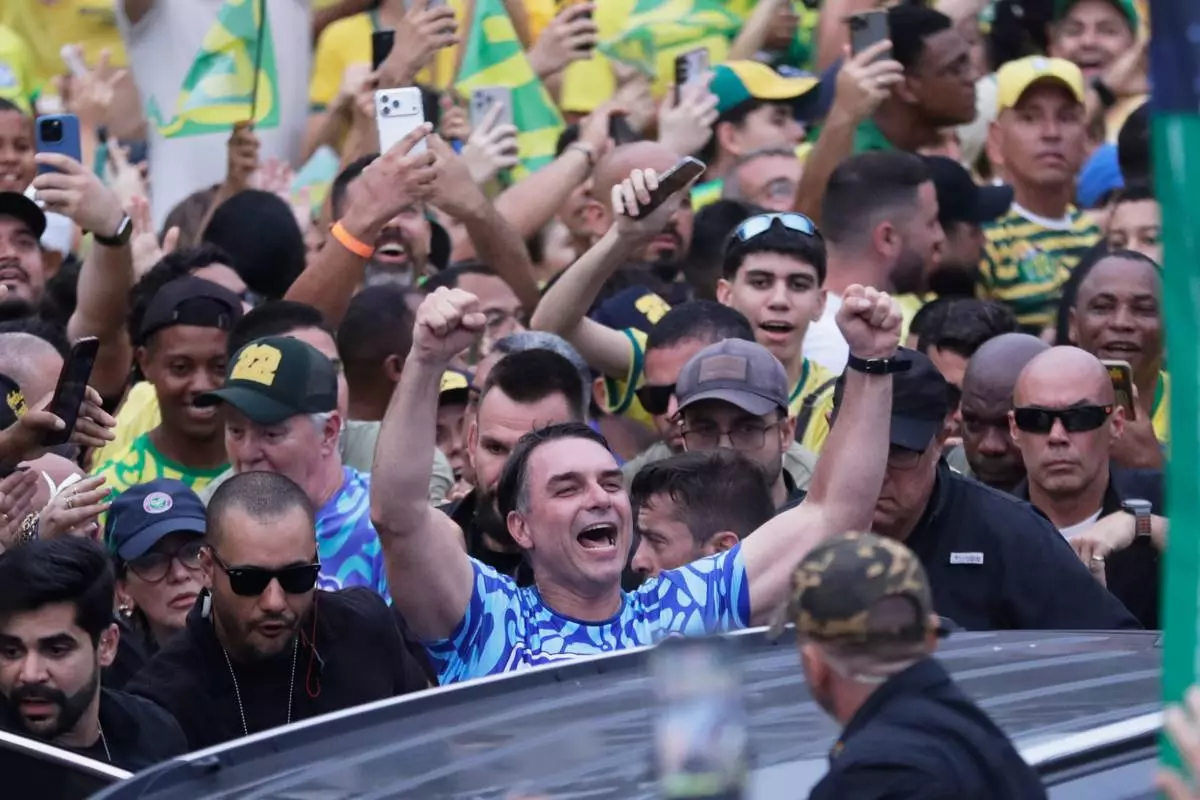
Opposition presidential candidate Sen. Flavio Bolsonaro, center, leaves after his final campaign rally a day ahead of the presidential runoff election in Rio de Janeiro, Saturday, Oct. 24, 2026. (AP Photo/Bruna Prado)
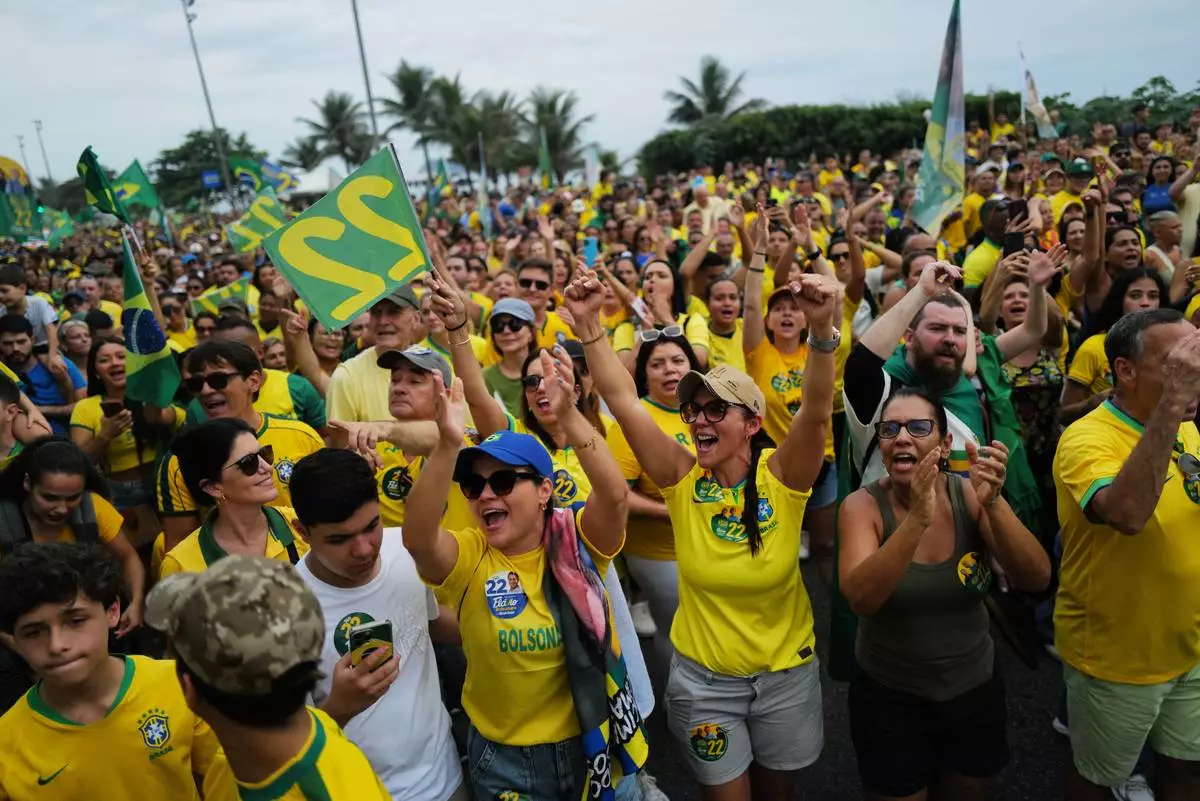
Supporters of opposition presidential candidate Sen. Flavio Bolsonaro cheer during his final campaign rally a day ahead of the presidential runoff election in Rio de Janeiro, Saturday, Oct. 24, 2026. (AP Photo/Lucas Landau)
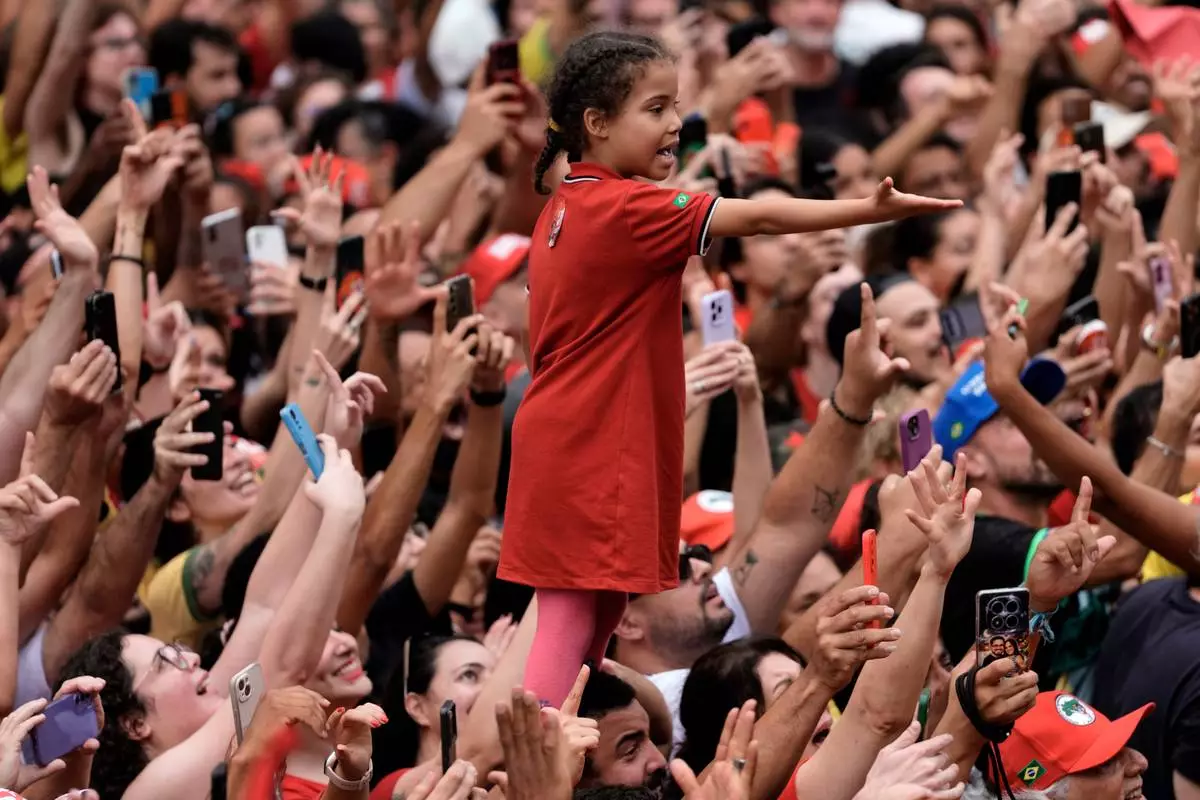
A girl standing on a man's shoulders reaches out amid a crowd of supporters of Brazilian President Luiz Inacio Lula da Silva, who is running for reelection, during his final campaign rally, a day ahead of the presidential runoff election in Sao Paulo, Brazil, Saturday, Oct. 24, 2026. (AP Photo/Natacha Pisarenko)