KAMPALA, Uganda (AP) — Uganda is reinforcing border controls to stop the spread of the deadly Ebola virus and now requires citizens returning from neighboring Congo to spend 21 days in quarantine at their own expense, the Health Ministry said Sunday, as investigators examine how a woman who traveled from Uganda to Nigeria contracted the disease.
The outbreak in Congo has killed thousands, but Uganda has recorded no confirmed cases since declaring its outbreak over on July 28. It first established border controls in May, restricting all but essential travelers, including humanitarian workers and truck drivers, subject to screening.
Travelers with a history of travel to Congo cannot transit through Uganda, including on chartered flights.
Under the new measures announced Sunday, nonessential Congolese travelers will be returned through the nearest border crossing at their own expense, while those entering illegally face prosecution, the Ugandan ministry said.
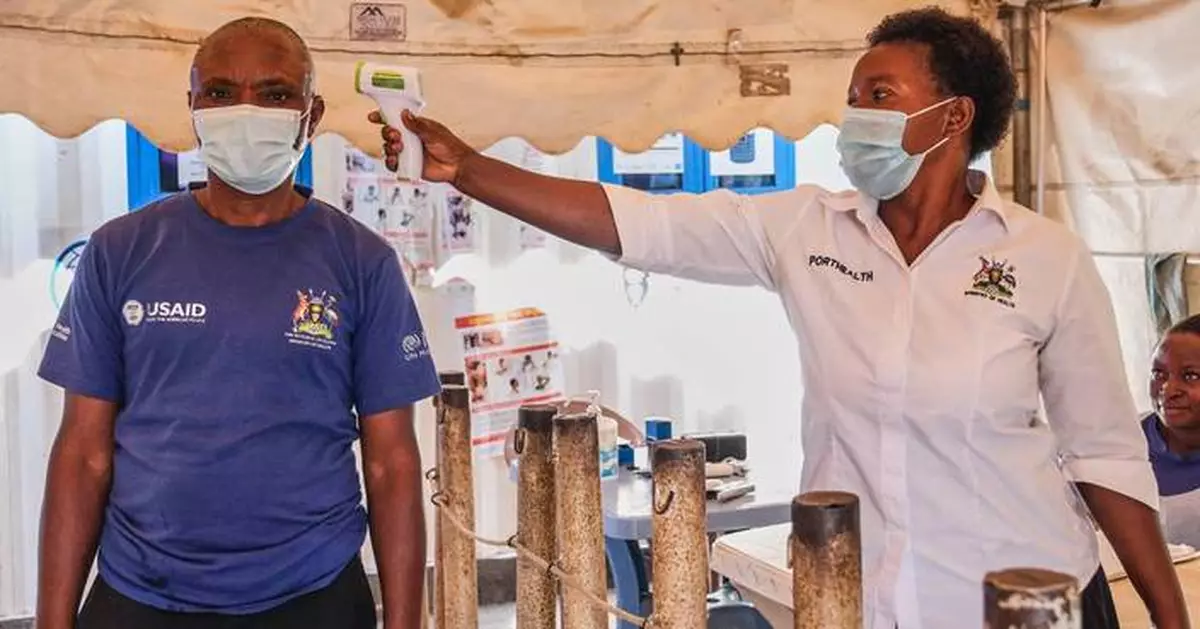
Screening has intensified at Entebbe International Airport and land borders. All arrivals must complete a passenger locator form and undergo health screening, including diplomats and United Nations personnel.
Asked about reports that Nigeria’s first Ebola patient had not visited Congo, Health Minister Chris Baryomunsi said Ugandan investigators had not established whether she traveled there. He said she had relatives in Uganda and Congo and held two passports, one of them Ugandan. He did not identify the second issuing country.
Switzerland’s foreign ministry told The Associated Press on Friday that the woman, married to a Swiss diplomat in Nigeria, had not visited Congo and was believed to have contracted Ebola while traveling to Uganda.
Baryomunsi said Nigerian authorities had not provided all the information Uganda needed. Investigators are working with Nigeria and international partners to review genomic findings and verify her movements and interactions in Uganda and en route to Abuja. Findings will be released later, Baryomunsi said.
Nigeria’s Health Minister Muhammad Pate said Friday that the woman's infection appeared closely related to Kenya’s first case, while cautioning that this did not necessarily establish the transmission route.
The Africa Centers for Disease Control and Prevention previously said both patients passed through Entebbe airport on Oct. 3. Where the Nigerian patient contracted Ebola remains unresolved.
Uganda also said all 60 contacts of Kenya’s first patient, including border personnel, hotel staff and transport operators, completed 21 days of monitoring without symptoms and were released from follow-up.
The patient, a 40-year-old Kenyan man living in Congo, traveled through Uganda and arrived in Kenya Oct. 3. He tested positive and died Oct. 5. Eight contacts subsequently tested positive; a 65-year-old close relative died Friday, bringing Kenya’s death toll to two.
Uganda said it had deployed Ebola experts to Congo to help contain the Bundibugyo Ebola strain.
For more on Africa and development: https://apnews.com/hub/africa-pulse
The Associated Press receives financial support for global health and development coverage in Africa from the Gates Foundation. The AP is solely responsible for all content. Find AP’s standards for working with philanthropies, a list of supporters and funded coverage areas at AP.org.
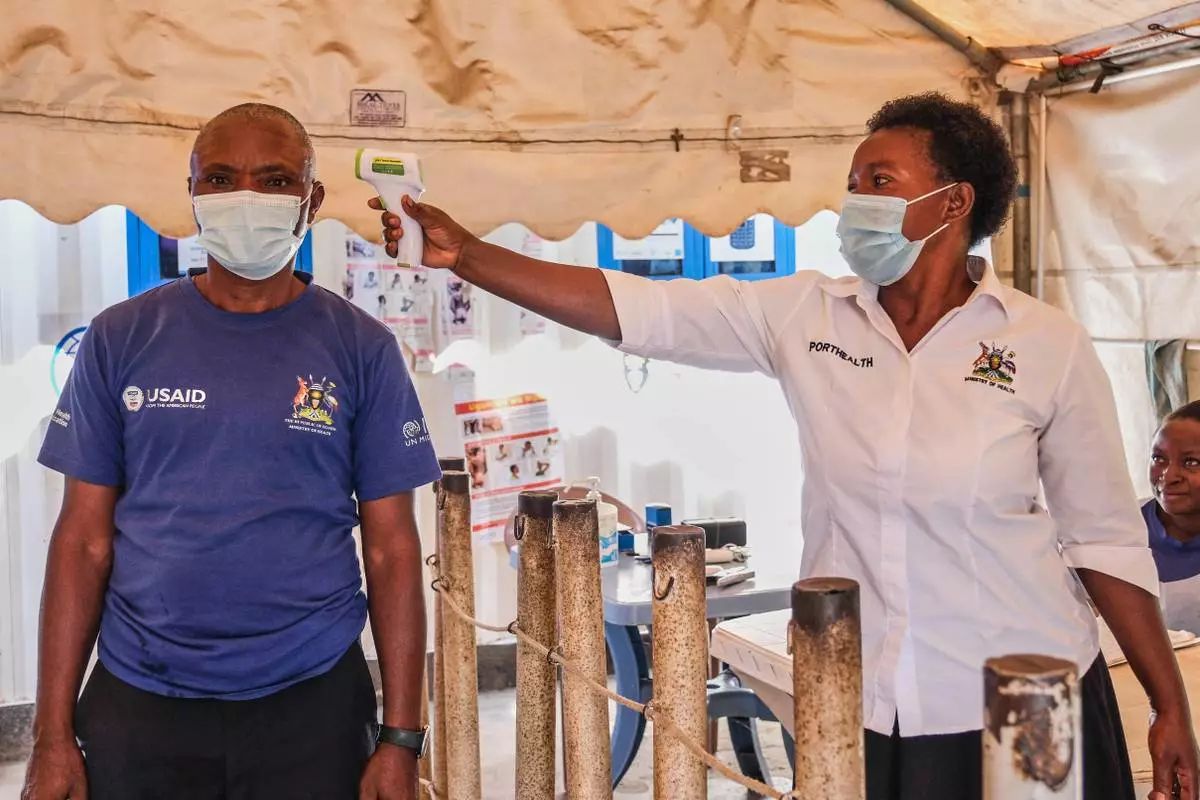
FILE - A health worker checks an individual's temperature at a temporary health clinic at the Mpondwe border crossing linking Uganda and the Democratic Republic of the Congo, June 4, 2026. (AP Photo/Hajarah Nalwadda, File)
CAIRO (AP) — Many Iranians are bracing for a return to all-out war as Israeli and U.S. leaders sharpen their threats ahead of elections in both countries in the coming days, and as Iran’s leaders remain defiant despite mounting pressure.
Israeli Prime Minister Benjamin Netanyahu, who faces a close vote Tuesday, says Iran's leadership must be eliminated. U.S. President Donald Trump vows to “finish the job” in Iran eight months after the war began, as a third aircraft carrier and thousands of troops make their way to the region. Some fear attacks just after the U.S. midterms on Nov. 3.
The Associated Press spoke with Tehran residents who described growing anxiety. Some were preparing to leave the capital. Iran's president has accused the U.S. of disrupting negotiations that have shown little sign of progress for months.
Fereshteh Hajipour, 35, the mother of a toddler, said she was stockpiling over-the-counter medicines and food for fear of a “possible war and bigger bombs.”
Iran's leadership believes that Trump likely will order new strikes regardless of the results in the midterm elections, and “they are planning for the scenarios so they can take remedial measures,” said a former government official and foreign policy professor at the University of Tehran, Sasan Karimi.
“They’ve accepted that he will attack us again, before or after the elections,” Karimi said.
Iran has again threatened U.S. military bases and allies in the Middle East, and has warned that it could attack new targets, including undersea data cables that snake through the Strait of Hormuz. This month has seen the highest number of reported attacks on commercial ships transiting the strait since the war’s opening weeks in March.
Meanwhile, a U.S. naval blockade of Iranian ports has restricted oil exports on which Iran's government depends, increasing the economic pain as each side tries to outlast the other. Trucks have piled up at borders as Iran's trade shifts to overland.
The blockade has caused medicine shortages in Iran, though there is no sign of shortages of food or other essential goods. Iranians have seen livelihoods and purchasing power crumble as their currency’s value has reached record lows, losing much of its value in the past year. Inflation has soared.
Iranian officials have accused the U.S. of aiming to foment unrest.
“Economic warfare is the main axis of the war against us,” Iran’s parliamentary chief and lead negotiator in past rounds of talks with the U.S., Mohammad Bagher Qalibaf, told a gathering of officials this month.
President Masoud Pezeshkian said Iran faces “a dangerous turning point” as the government seeks to manage growing economic problems and find consensus within the Islamic Republic’s fractious power structure.
Memories are fresh of the nationwide protests sparked by economic pressures that led to a deadly crackdown weeks before the war.
Even for middle-class Iranians, affording basic groceries has become difficult. Prices for staples have risen steeply since the war began. Rice is over 60% more expensive, and beef over 150%.
Mohammad Mohammadi, 36, said a trip to the supermarket can burn through half a monthly mid-range salary of 400 million rials (roughly $150).
Despite the high prices, Mohammad Abedi, 39, said the rising attacks on the Strait of Hormuz spurred him to buy extra supplies for his family, including dried dates, cooking oil and rice.
“I’m worried that the situation could get worse,” he said.
Political moderates are calling for a deal with the U.S. to salvage the economy.
“With the increase in the exchange rate, the conditions for governing the country have become difficult for the executive branch,” warned politician Mohsen Hashemi Rafsanjani in an editorial this month in the reformist daily Saazandegi.
But economic pressure won’t change Iran’s negotiating positions, said Karimi, the former official who served under Pezeshkian. “This is a tested thing. No economic pressure will convince people here to make a deal.”
Karimi added: “Tehran is calculating based on resistance, because they are convinced that will change the calculations of the other side.”
There has been little said publicly about negotiations via mediators after Trump rejected an Iranian proposal last month to end the war and fully open the Strait of Hormuz within a week if Washington met certain conditions like lifting the blockade.
Tehran is dotted with bombed-out buildings from U.S. and Israeli strikes during the height of the war in March and April. Thousands of homes were damaged or destroyed.
Hashem Vajdani, 45, a gym trainer, said he plans to leave the city as anxiety grows.
“I have already packed my belongings to go to a safer town in the north of the country,” he said. “Today I bought more canned food, crackers and extra blankets.”
There are concerns that new fighting could bring a higher toll for Iranian civilians. Thousands have been killed in the war. Trump has repeated threats to take out power plants and other infrastructure.
Anger at the U.S. president has found expression in a billboard set up days ago at a major Tehran square. Passersby have gawked at a Trump impersonator languishing behind bars as footage airing behind him shows a deadly strike on a wedding party in southern Iran that was blamed on the U.S.
Staring up at the cage, Farzaneh Arabzadeh, 30, said she hoped the scene would happen in reality. Trump said he launched the war to help Iranians, she said, but he “put our people in a worse situation.”
The elections in Israel and the U.S. are expected to reflect voters' anger over the war and other issues. Trump’s political support could be weakened, while Netanyahu is in a tight race at a time of anger over Hamas' Oct. 7, 2023, attack, and a series of inconclusive wars in Gaza, Lebanon and Iran.
Israel's elections are especially important, Tehran-based analyst Rahman Ghahremanpour said. If Netanyahu stays, there is a higher chance of all-out war resuming because of his willingness to take major risks, he added.
Tehran residents said neither election is likely to improve relations.
“It makes no difference. Their hostility toward us remains unchanged,” said Rasool Ghanbari, 50.
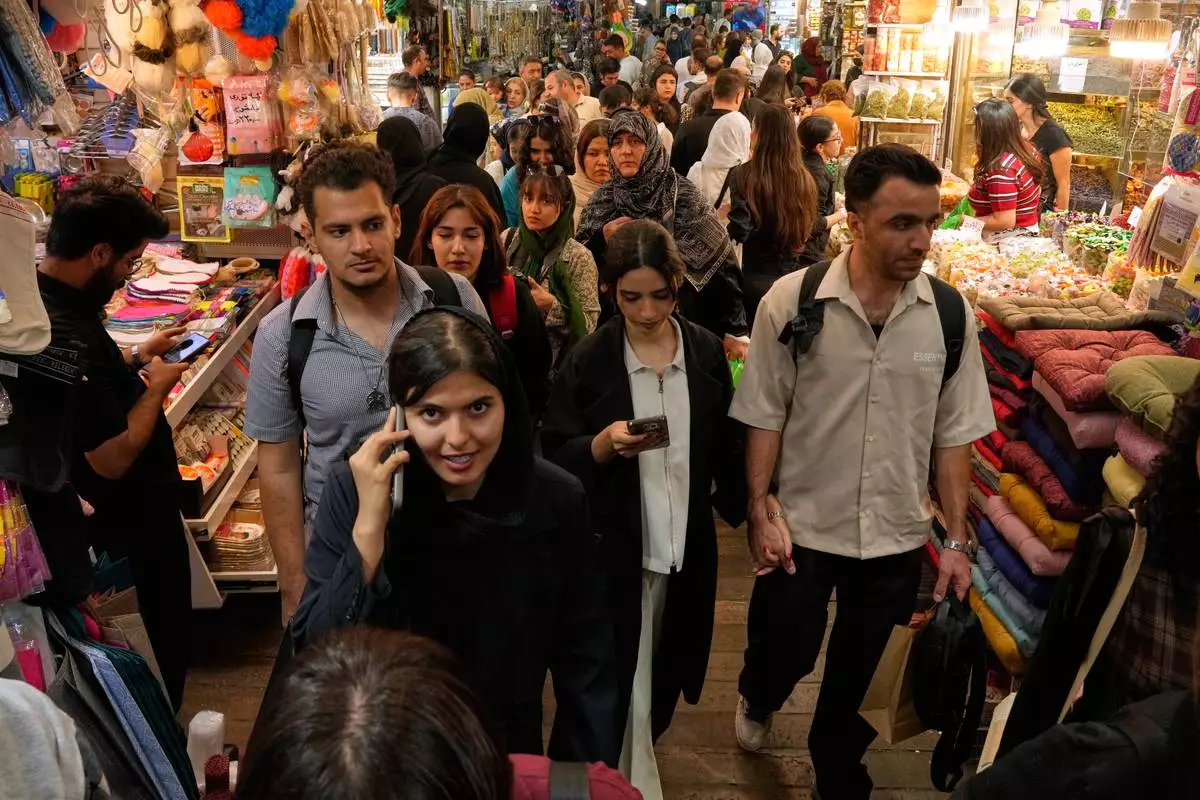
People walk at Tajrish traditional bazaar in Tehran, Iran, Thursday, Oct. 22, 2026. (AP Photo/Vahid Salemi)
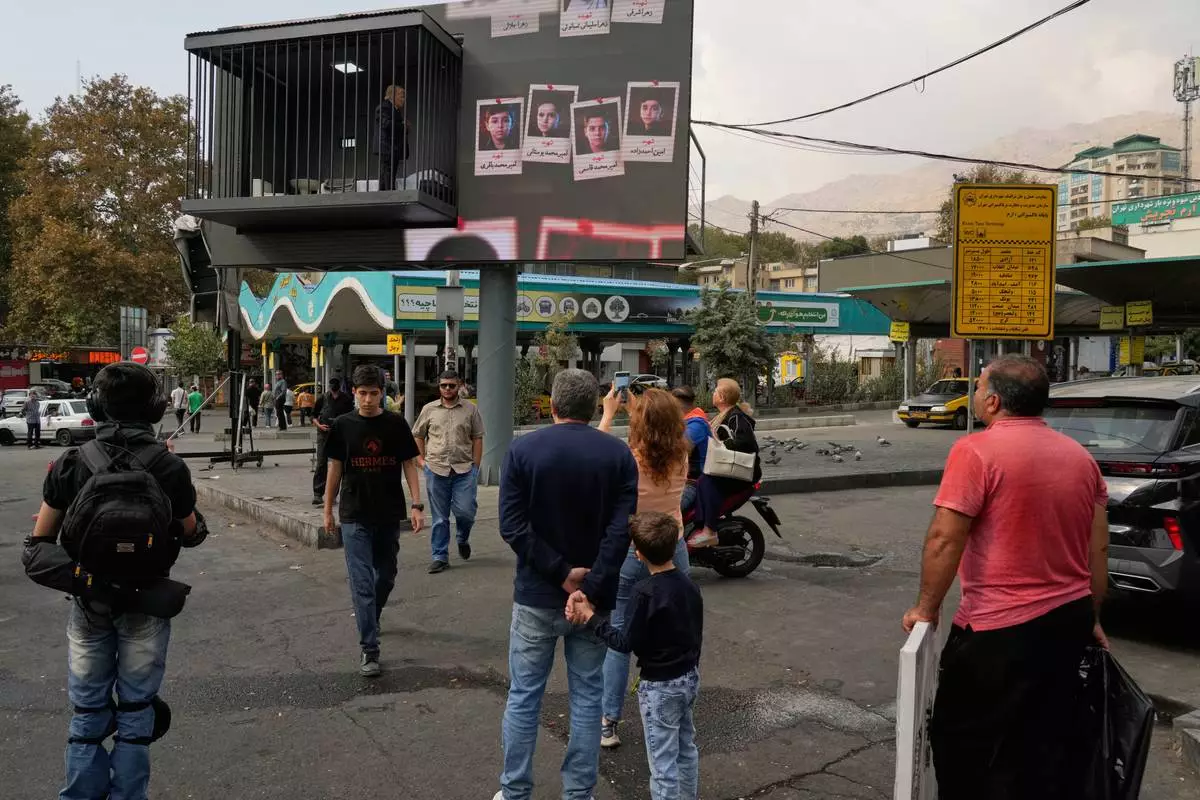
People look at a billboard installation featuring an actor portraying U.S. President Donald Trump behind bars in a mock prison cell as the screen shows portraits of some school boys who were killed after their school was hit by a strike in southern city of Minab on Feb. 28, in Tajrish Square in Tehran, Iran, Friday, Oct. 23, 2026. (AP Photo/Vahid Salemi)
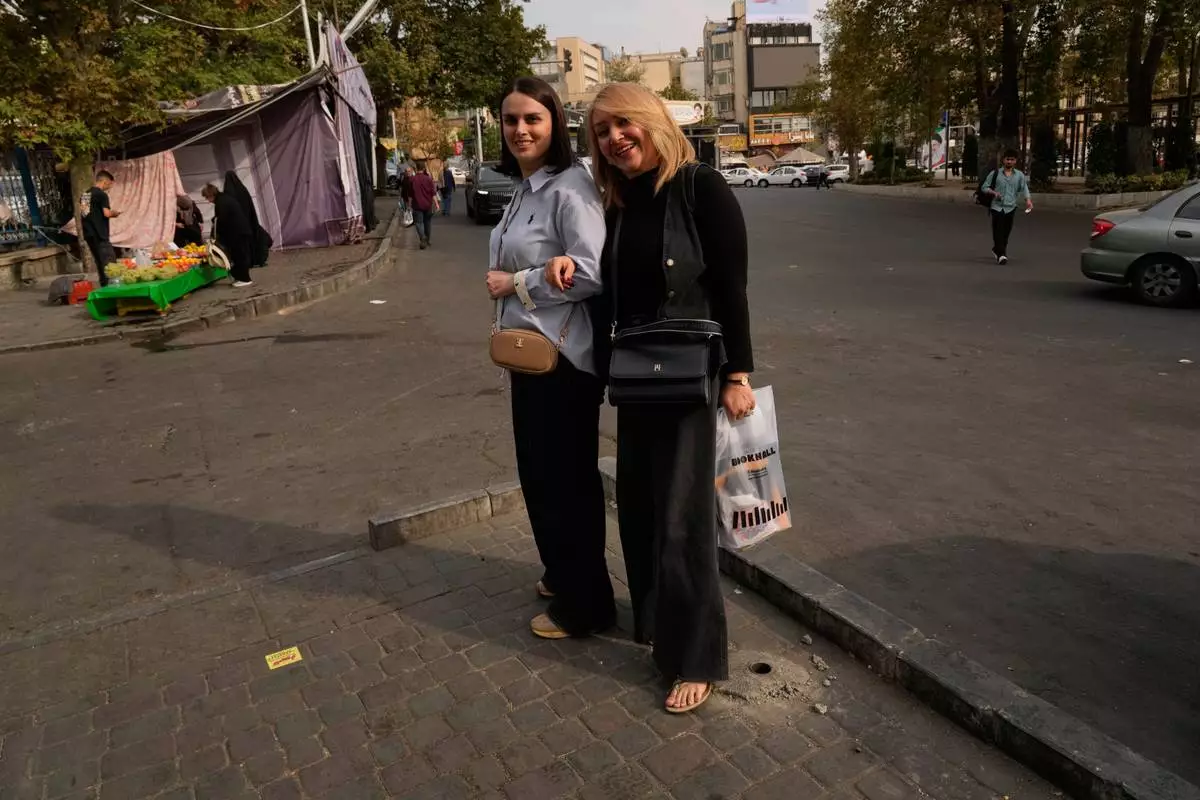
Women pose for a photo in Tajrish Square in Tehran, Iran, Thursday, Oct. 22, 2026. (AP Photo/Vahid Salemi)
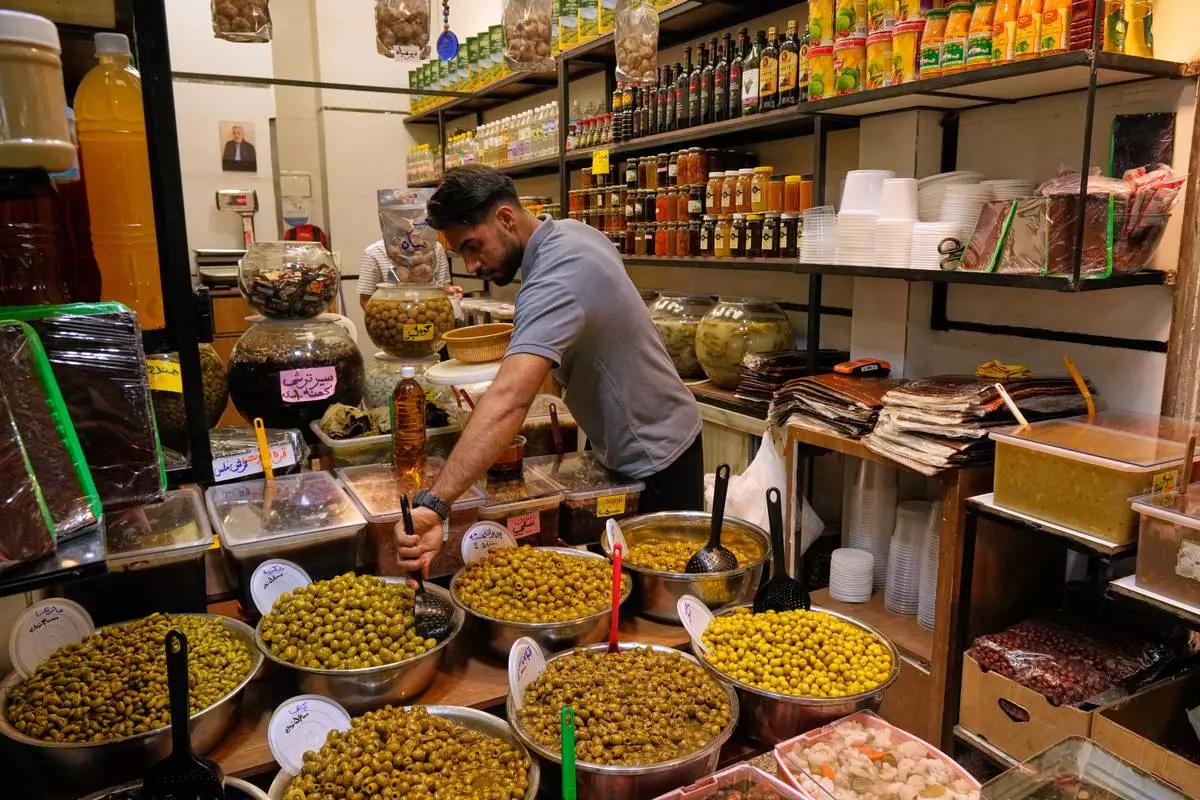
A shopkeeper arranges olives at his shop at Tajrish traditional bazaar in Tehran, Iran, Thursday, Oct. 22, 2026. (AP Photo/Vahid Salemi)
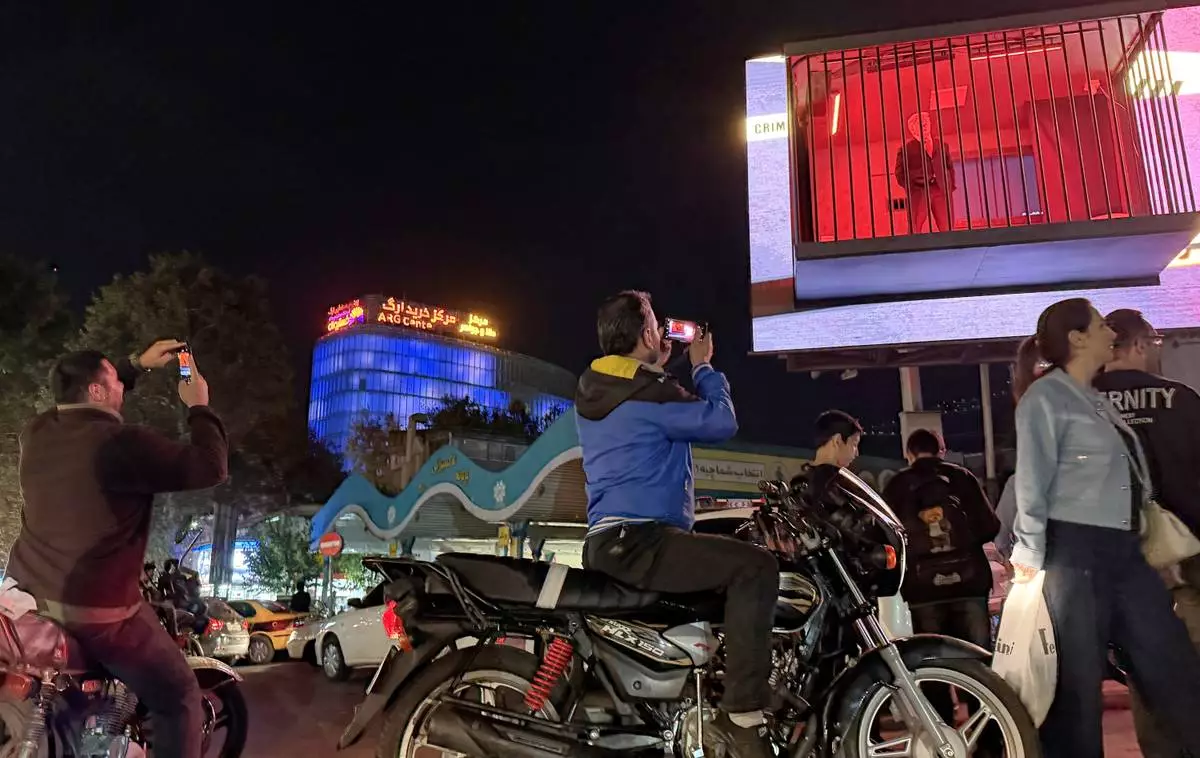
People take pictures of a billboard installation featuring an actor portraying President Donald Trump behind bars in a mock prison cell in Tajrish Square in Tehran, Wednesday, Oct. 21, 2026. (AP Photo/Vahid Salemi)