Brazilian incumbent President Luiz Inacio Lula da Silva of the ruling Workers' Party won Sunday's presidential runoff election, according to official results released Sunday by Brazil's Superior Electoral Court.
With 99.96 percent of the votes counted, Lula received 51.78 percent of the valid votes, compared with 48.22 percent for Flavio Bolsonaro, the Liberal Party's presidential candidate and son of former Brazilian President Jair Bolsonaro, according to the official tally.
Voting in Brazil's presidential runoff ended at 19:00 Brasilia time (2200 GMT) on Sunday, two hours later than originally scheduled, following a Supreme Federal Court (STF) ruling extending voting hours amid disruptions caused by public transportation problems and heavy rains in several parts of the country.
Lula will be sworn in on Jan. 5, 2027, for a four-year term, marking his fourth election as Brazil's president.
Brazil's presidential election follows a two-round majoritarian system. To win in the first round, held on Oct. 4, a candidate must secure more than half of the valid votes. Flavio Bolsonaro finished ahead of incumbent Lula, winning about 47 percent of the valid votes against Lula's roughly 45 percent. As neither candidate crossed the 50-percent threshold, the two advanced to a runoff, which Lula won.
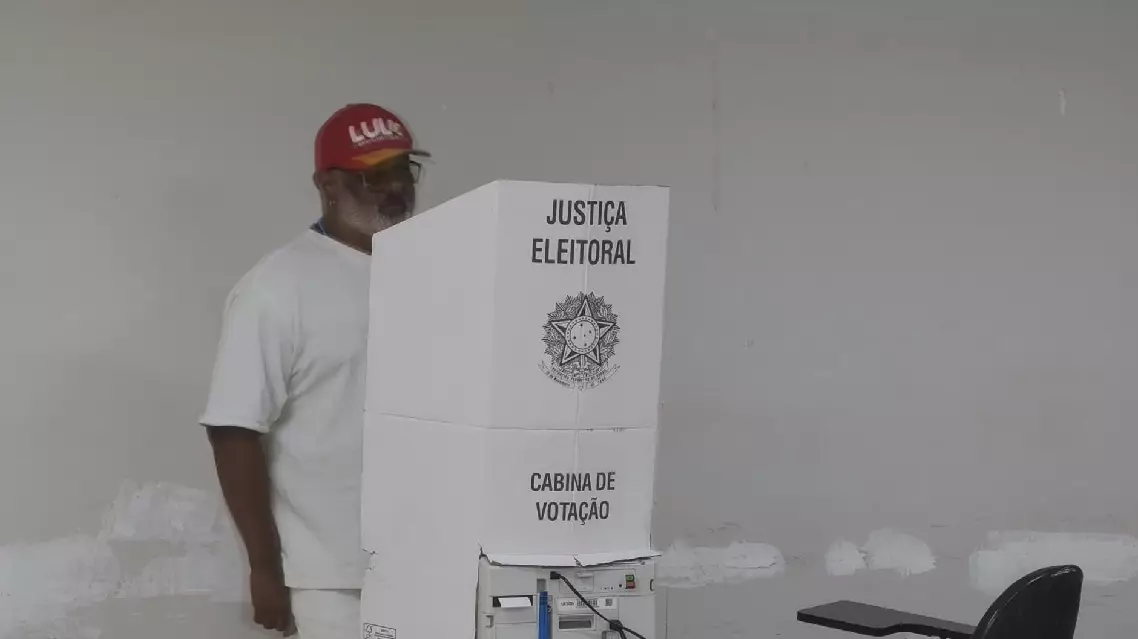
Lula re-elected Brazilian president in runoff victory