Yemen's Houthi group continued strikes on targets in Saudi Arabia on Sunday, while Saudi authorities said they intercepted missiles launched by the group, and reported two injuries.
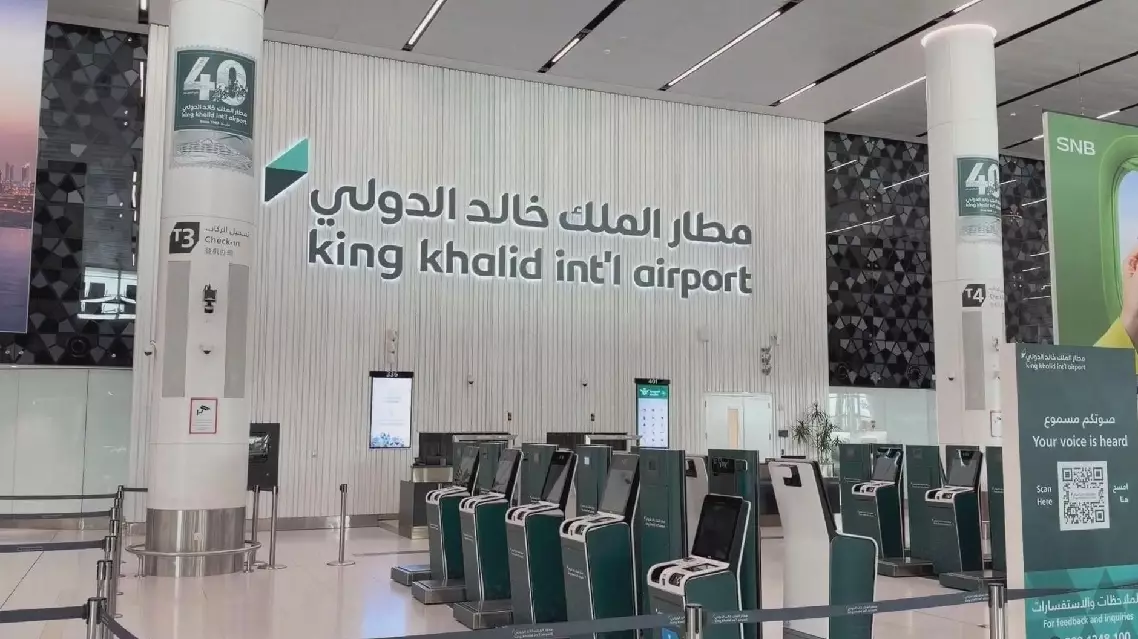
The Houthi group announced that it launched dozens of ballistic missiles in three separate attacks on Saudi Arabia, with the first targeting King Khalid International Airport and "successfully achieving its objective."
Additional attacks struck King Khalid Air Base in Khamis Mushait and a Saudi Border Guard naval base in Jazan.
Houthi military spokesman Yahya Sarea renewed warnings to airlines, employees and travelers advising against the use of King Khalid International Airport, which he described as "unsafe." He also issued a broader warning against using Saudi airspace, while exempting the airspace over Mecca and Medina.
Earlier Sunday, Sarea said Saudi forces carried out 56 air and missile strikes over the past 24 hours, targeting what he described as "civilian sites" in the provinces of Hajjah, Lahj, Amran, Saada, Al-Jawf, Taiz and Ibb.
The Saudi-led coalition said Sunday it intercepted and destroyed a total of 12 missiles and two drones launched toward the kingdom, including a ballistic missile and two drones targeting the Riyadh region.
The Saudi General Directorate of Civil Defense confirmed a Saudi citizen and an Asian resident were injured when debris from two intercepted ballistic missiles fell in Khamis Mushait and Ahad Rafidah governorates, with three residential buildings and seven vehicles damaged.
The Houthi group said Sunday's attacks came in response to what it described as "Saudi aggression" on Sanaa and other Houthi-held areas a day earlier that left "dozens of people killed or wounded, including women and children."
Houthis continue strikes on Saudi targets, Saudi reports injuries
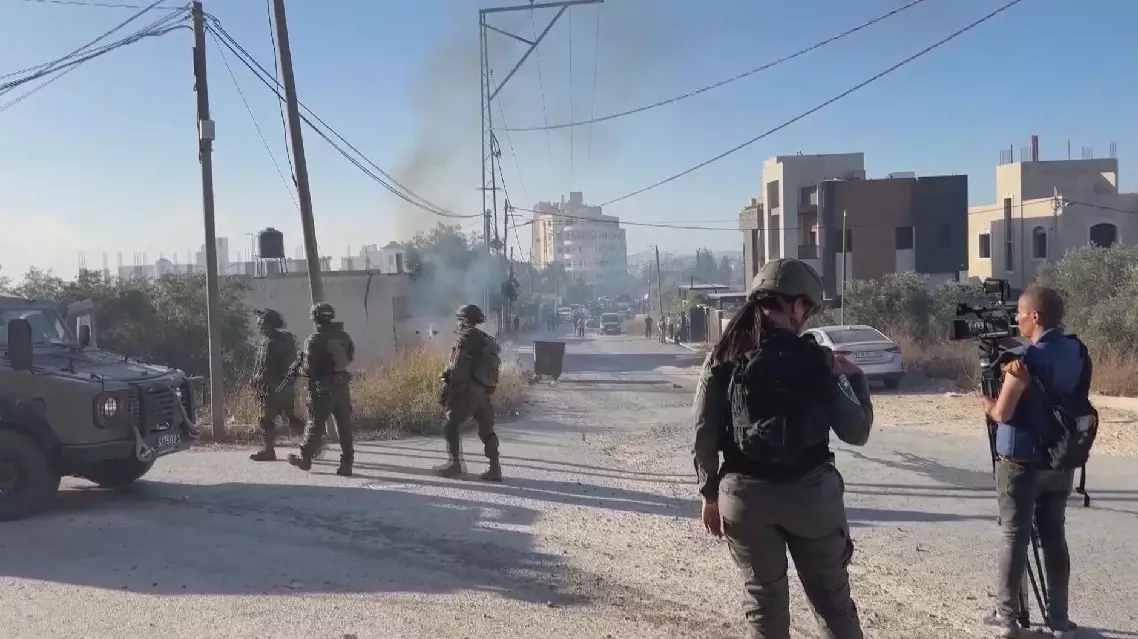
Israeli military operations have affected hundreds of Palestinian families, with more than 2,000 civilians directly impacted in Hebron region in the West Bank, the official Palestinian News and Information Agency (WAFA) reported Sunday.
WAFA said the Israeli military has continued its operations and maintained a blockade in the Hebron region since Friday, resulting in the forced demolition and destruction of numerous Palestinian civilian and commercial facilities, as well as significant property damage.
The report said that on Sunday, the Israel Defense Forces (IDF) forcibly demolished a residential building in western Hebron, used heavy machinery to destroy several commercial facilities and leveled thousands of square meters of surrounding agricultural land.
In addition, the IDF intensively installed various military roadblocks and closed iron gates, cutting off main roads and severely disrupting local supply chains and the movement of people, it said.
On the same day, Israeli Jewish settlers also leveled land belonging to Palestinian civilians in southern Hebron and set up tents in preparation for establishing an outpost for a Jewish settlement, according to WAFA.
It said the Hebron regional government announced on Sunday that several local cities would establish joint emergency operations centers operating 24 hours a day, mobilizing all available municipal resources to assist residents affected by the Israeli military operations. Local authorities are currently expediting the drafting of a legal document to be formally submitted to the International Criminal Court.
According to WAFA, incidents of the Israeli military destroying Palestinian civilian property and attacks by Israeli Jewish settlers also occurred in other parts of the West Bank.
The Israeli army used heavy machinery to level large swaths of land and forcibly uprooted dozens of olive trees in the midst of the harvest season in a Palestinian village west of Ramallah to build a road unilaterally planned by Israel leading to a nearby Jewish settlement, it said.
In a Palestinian village near Nablus, Israeli Jewish settlers attacked and detained several Palestinian farmers harvesting olives, forcibly transferring them to a nearby Jewish settlement, according to the news outlet.
Israeli military operations impact over 2,000 people in West Bank's Hebron