Stringing work on the Yangtze River crossing section of the ±800-kilovolt Gansu-Zhejiang ultra-high-voltage direct-current (UHVDC) transmission project is set to be completed on Monday in Wuhu City, east China's Anhui Province, with the project's Anhui section expected to be fully connected by the end of the month. The project is a key part of China's west-to-east power transmission program, which channels electricity from the energy-rich west to the country's industrial east.
The line runs about 2,370 kilometers from the Wuwei converter station in northwest China's Gansu Province to the Shaoxing converter station in east China's Zhejiang Province, passing through six provinces, with a capacity of eight million kilowatts.
It is also the world's first UHVDC undertaking to employ flexible direct-current technology at both the sending and receiving ends, a design that allows the magnitude and direction of electric current to be regulated with precision and enables the grid to absorb substantial volumes of renewable energy.
The full line is scheduled to be completed and put into operation in 2027. Deliveries from Gansu to Zhejiang are then expected to top 36 billion kilowatt-hours a year, with renewables accounting for more than half.
As a result, carbon dioxide emissions are forecast to fall by 17 million tonnes a year, supporting coordinated energy development between western and eastern China and the country's green and low-carbon transition.
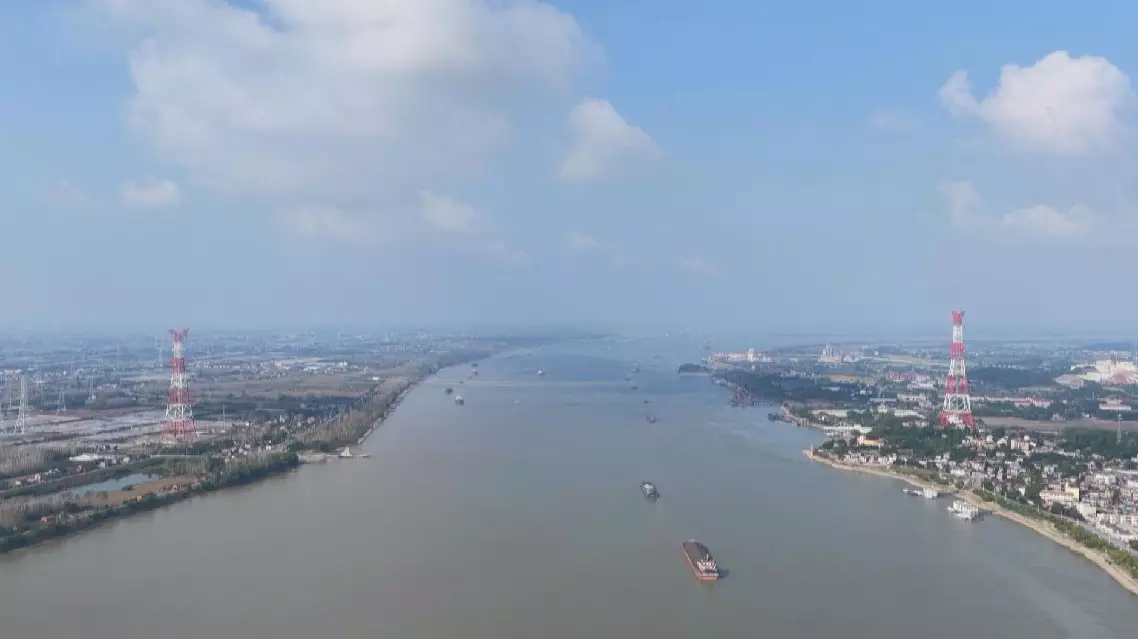
China's Gansu-Zhejiang UHVDC project to complete Yangtze River crossing stringing