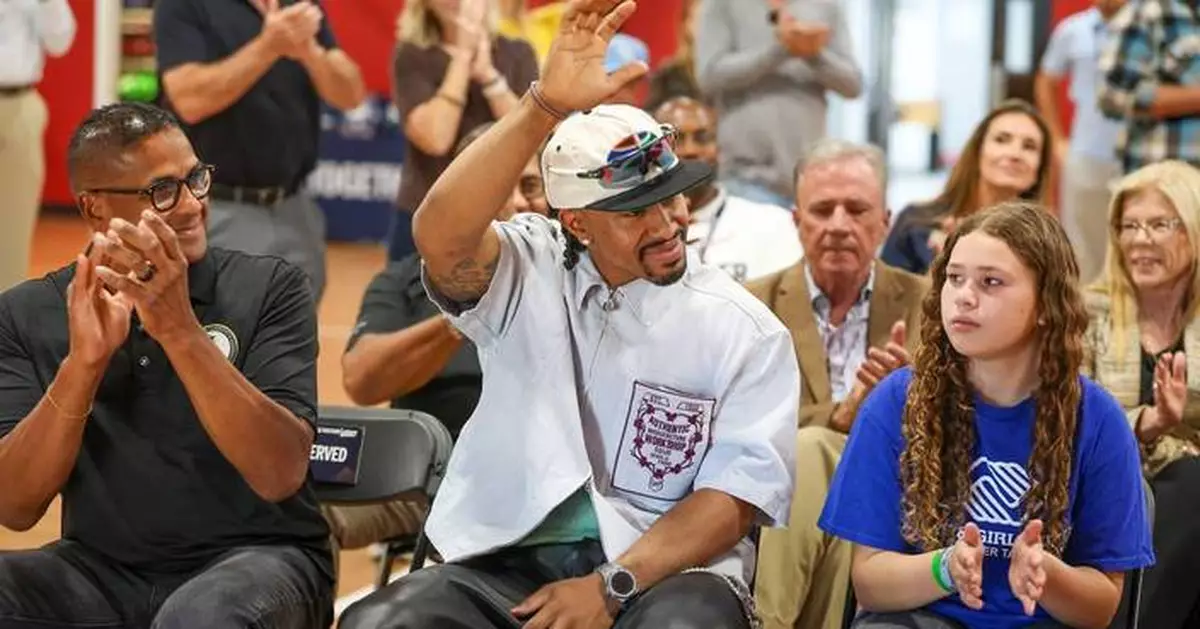
ST. PETERSBURG, Fla. (AP) — New York Mets shortstop Francisco Lindor has won the Roberto Clemente Award from Major League Baseball for his humanitarian work.
Lindor was to receive the award before Game 3 of the World Series on Monday night.
“I remember going to history classes in Puerto Rico for second, third and fourth grade,” Lindor said. “You learn about Roberto Clemente and you learn about Spaniards and Christopher Columbus. So it’s so cool to sit here and be recognized, recognized for going out there into communities and give and help and in this case with the Lindor Leaders guide through the process of life.”
A five-time All-Star, Lindor became the fifth recipient of Puerto Rican descent to receive the award after Edgar Martinez (2004), Carlos Delgado (2006), Carlos Beltrán (2013) and Yadier Molina (2018).
"Just like the Delgados, the Beltráns, the Martinezes, the Molinas inspired my generation, hopefully this inspires another generation to continue to care for others, continue to love your neighbors, continue to give back," Lindor said.
“Sometimes us athletes can be seen like we’re so far away from the general public, but we’re not. We are in the communities. We are giving back and we are helping. I’m looking forward to — hopefully this is going to give me a bigger platform to continue to help and create better opportunities for people back home," he added. “So hopefully the young generation that's coming up, they’re saying, man, I would like to be like Francisco a little bit but like Clemente, because we’re all trying to be like Clemente.”
Lindor and his wife, Katia, have worked with Children’s Miracle Network Hospitals; the SEEN Foundation, a disability advocacy group; Special Olympics Florida; and Boys & Girls Clubs of America.
He donated to relief efforts in Puerto Rico after hurricanes Maria and Fiona, restored athletic facilities in his hometown of Caguas and donated more than $1 million to build Lindor Hall at the Montverde Academy, a school he graduated from in Monteverde, Florida.
Lindor launched a Lindor's Leaders development initiative for students in the sports medicine program at Bayside High School in New York and funded backpacks and school supplies in Queens, the New York City borough where the Mets' Citi Field is located.
Clemente was a 15-time All-Star from Puerto Rico who was killed in a plane crash on New Year’s Eve 1972 while attempting to deliver supplies to earthquake victims in Nicaragua. The award is given annually to a major league player who represents the sport through character, community involvement, philanthropy and positive contributions on and off the field.
See AP’s full MLB coverage here
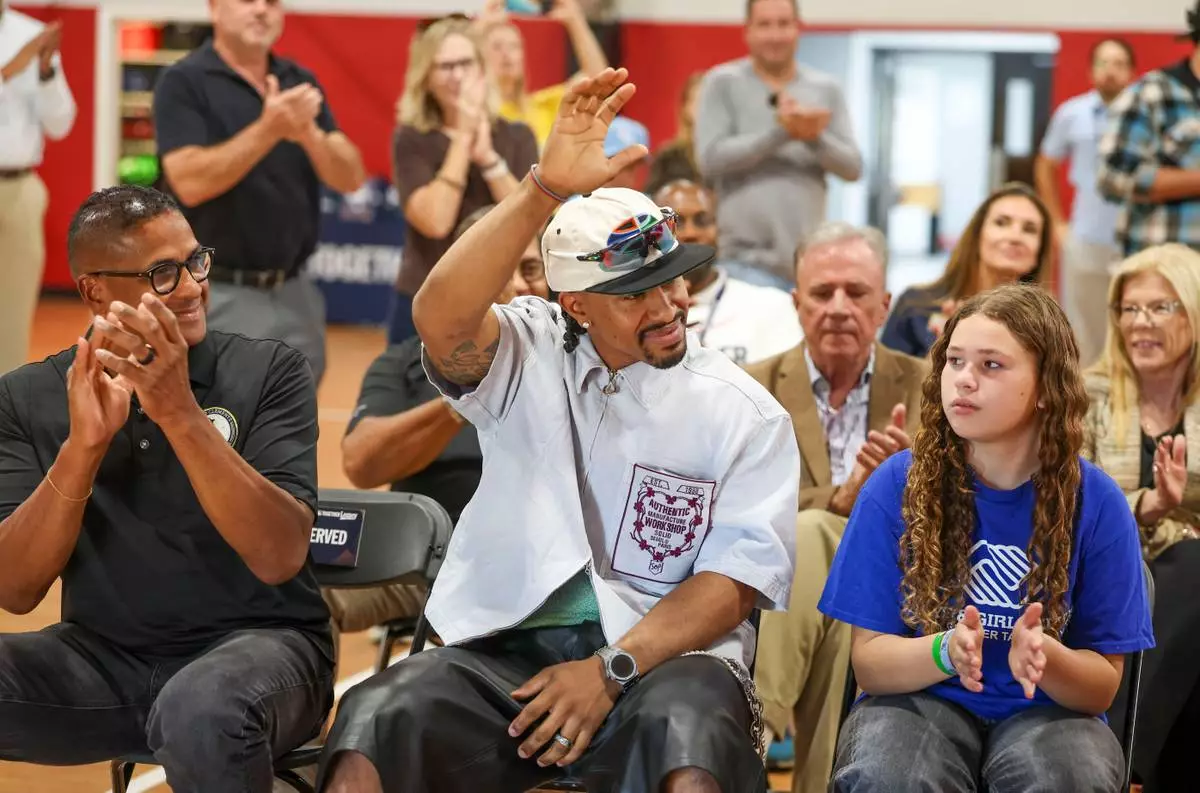
New York Mets shortstop and winner of the Roberto Clemente Award, Francisco Lindor, center, waves as he is introduced during an event at the Boys & Girls Clubs of Greater Tampa Bay Monday, Oct. 26, 2026 in Pinellas Park, Fla. (AP Photo/Chris Urso)
CORINTH, Miss. (AP) — President Donald Trump heads Monday to Mississippi, as he continues a closing midterm campaign blitz that highlights Republicans' challenges ahead of an election that could drastically shift power in Washington and statehouses across the country.
Mississippi, among the nation's most reliably Republican states, is not where the party envisioned needing a late-October stop from the president. But GOP Sen. Cindy Hyde-Smith faces a stiff challenge from Scott Colom, one of many Democratic underdogs that have managed to expand the House and Senate battleground maps because of widespread voter discontent over inflation, the Iran war and other aspects of Trump’s second presidency.
The evening rally with Hyde-Smith will kick off a week that continues to pit Trump against former President Barack Obama, the Democrat he first succeeded in 2017, and former Vice President Kamala Harris, the Democrat he defeated in 2024 to return to power. Trump's itinerary has been taking him to many states that he won comfortably in 2024.
Other top nominees and surrogates are greeting voters — almost 30 million of whom have already cast ballots — as Republicans scramble to protect their threadbare majority in the House, shore up a Senate majority that was once thought secure and maintain the GOP's national advantage in state capitals.
Minnesota was the center of the progressive movement’s effort to leverage many Americans’ economic struggles, as Democratic Senate nominee Peggy Flanagan, the current lieutenant governor, welcomed House Progressive Caucus Chairwoman Pramila Jayapal, D-Wash., to advocate for a national health insurance plan to achieve universal coverage.
“Everywhere I go on this tour I meet Minnesotans who are working hard and doing everything right and still can’t afford to take care of themselves or the people they love,” said Flanagan, who is backed by progressive Sen. Bernie Sanders of Vermont. Flanagan is running against former sportscaster Michele Tafoya for the open seat.
If passed, the healthcare bill, which would include added benefits such as dental, vision, and hearing coverage, could save up to $1 trillion in healthcare spending, Jayapal said at the conference.
“We desperately need to build a completely different system and stop tinkering around the edges of a sick care system,” said Jayapal, who is the lead author and sponsor of the bill.
Harris was to campaign in neighboring Wisconsin with Milwaukee County Executive David Crowley, who faces Rep. Tom Tiffany, a Trump ally, for governor. Crowley would be the state’s first Black governor if elected to lead the battleground state.
In Georgia, Democratic Sen. Jon Ossoff and gubernatorial nominee Keisha Lance Bottoms are getting an assist from Kentucky Gov. Andy Beshear, chairman of the Democratic Governors Association and a likely 2028 presidential candidate, two days after Trump made his second October visit to the state.
Vice President JD Vance was headed to Kansas on behalf of Sen. Roger Marshall, who finds himself locked in a tight contest with Democratic nominee and United Methodist megachurch pastor Adam Hamilton in a state that hasn't elected a Democratic senator since 1932.
House Democrats also continue to expand their spending footprint, with the House Majority PAC announcing almost $2.5 million in new spending in Minnesota and Indiana districts that had been considered solid GOP territory earlier in the cycle.
The Minnesota seat has been reliably Republican for generations, other than a recent stretch when Tim Walz, the state's two-term governor and Democrats' 2024 vice presidential nominee, represented the sprawling, heavily rural district.
But it's Trump's visit to Mississippi that perhaps brings the midterm landscape into the sharpest relief with just a week of campaigning left before votes are tallied.
To be sure, Hyde-Smith, who is vying for her second full term, remains the favorite in a state Trump won three times by an average of nearly 20 percentage points.
But Colom, a local prosecutor who would make history as Mississippi's first Black senator since post-Civil War Reconstruction, is looking to parlay inflation, Trump's lagging popularity and Hyde-Smith's mistakes into an upset.
Colom has outpaced Hyde-Smith in fundraising since he launched his campaign last year, and he caught national attention this month with an ad that played off Hyde-Smith dismissing beef prices — driven higher by Trump's tariffs and fuel spikes resulting from the Iran war. The ad features Hyde-Smith, a former state agriculture commissioner, saying that consumers “have so many other proteins to choose from,” followed by several characters, and then Colom, saying Mississippi should “pick another senator instead.”
Colom's campaign followed with a social media video that featured an AI-generated Hyde-Smith dodging questions about that controversy and other issues. The Democrat took down the video after the Mississippi attorney general said it could violate state law barring the use of deepfakes so close to Election Day.
Senate Democrats’ super PAC, meanwhile, has been a late entry in the contest, with a $1.2 million investment — a paltry sum compared with Senate contests in more populous states like Texas or Georgia but an amount that can go farther in Mississippi’s smaller television markets.
Mississippians have not chosen a new Democratic senator since 1947, and Democrats last won a Senate race there when that senator, the onetime segregationist John Stennis, won his last reelection in 1982.
South Carolina has emerged as another unexpectedly competitive Senate race where a Democratic victory by Dr. Annie Andrews over Sen. Darline Graham, who was appointed to succeed her late brother, would rank as a seismic upset.
Trump announced Monday that he'd be returning to the state on Thursday for his second general election visit on Graham's behalf. Andrews, meanwhile, touted a bipartisan endorsement Monday from two former South Carolina governors, Republican David Beasley and Democrat Jim Hodges. Andrews’ campaign says more than 100 Republicans have joined her “Republicans for Annie” coalition.
Republicans currently hold a 53-47 Senate majority, meaning Democrats must flip at least four seats for a change in control. The GOP began the cycle with a 220-215 advantage in the House, but a national gerrymandering fight made nine Democrats-held seats friendlier to Republicans based on 2024 presidential outcomes in those districts.
Barrow reported from Atlanta. Associated Press reporters John Hanna in Topeka, Kansas; Meg Kinnard in Columbia, South Carolina; and Laura Turbay in St. Paul, Minnesota, contributed.
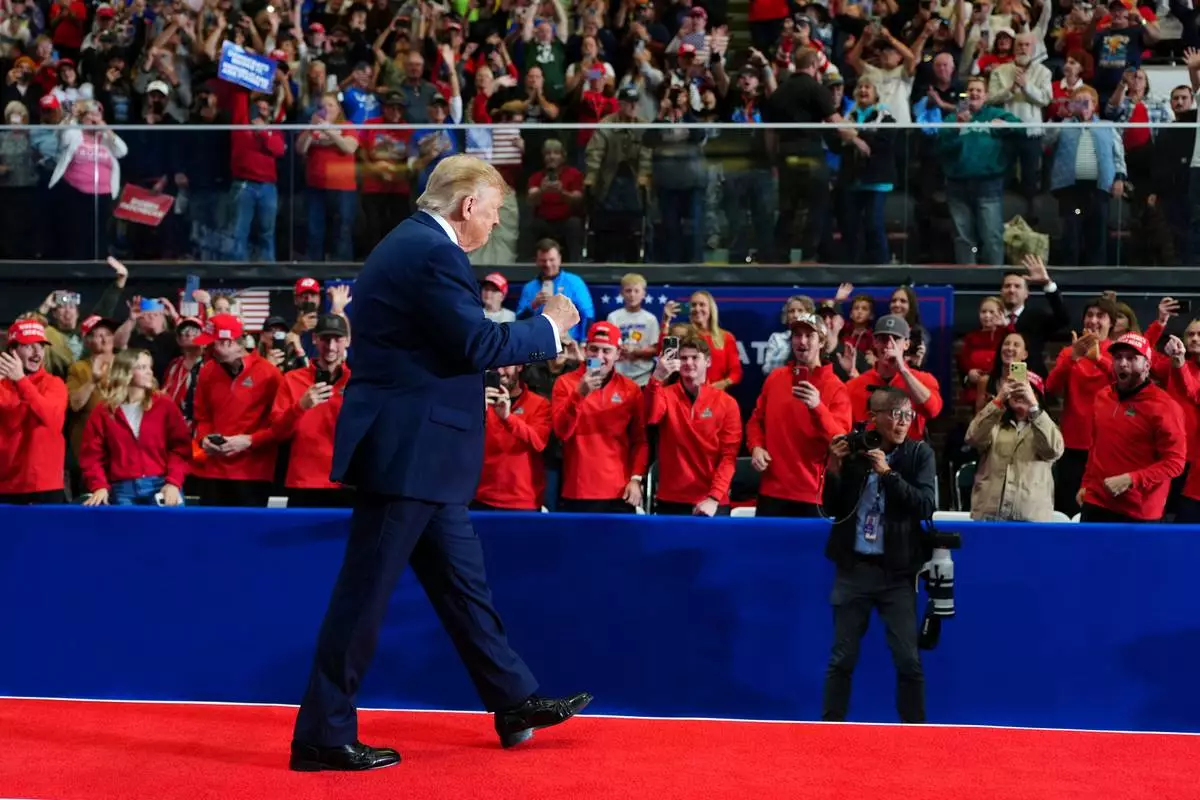
President Donald Trump arrives to speak during a campaign rally at McMorran Place Sports and Entertainment Center, Sunday, Oct. 25, 2026, in Port Huron, Mich. (AP Photo/Julia Demaree Nikhinson)