MADISON, Wis. (AP) — Wisconsin is back in the AP Top 25 for the first time since 2023 after producing arguably the best victory of coach Luke Fickell’s four-year tenure.
A look at Wisconsin’s remaining schedule after its 24-7 victory over then-No. 16 Southern California indicates the 25th-ranked Badgers (5-2, 3-1 Big Ten) might have a shot to at least match their combined win total from the last two seasons.
But they’re not about to look that far ahead, considering the magnitude of this week’s challenge. The Badgers go on the road Saturday to face Iowa (5-2, 2-2), which has beaten them each of the last four years by a combined 118-26 margin.
“There’s a lot of things that haven’t gone well for us in this rivalry game,” Fickell said Monday. “We need to do a whole lot to change it. It’s not going to be easy. I don’t know if there’s a tougher place to play in the country.”
After Wisconsin allowed 329 yards rushing in a 42-10 loss at Iowa two years ago, the Badgers did 42 pushups at the end of each practice the following spring to remind them of that embarrassing performance.
Iowa then beat the Badgers even more decisively last year, a 37-0 drubbing at Wisconsin that marked the Hawkeyes’ highest point total in Madison and their first shutout win at Camp Randall Stadium since 1929.
Wisconsin has taken a different approach this year after adding 34 transfers who didn’t play against Iowa those last two seasons. The Badgers spent more time focusing on building their own culture and developing chemistry rather than dwelling on their rivalries.
Even so, Fickell understands what’s at stake this week.
“Rivalries are what makes college football,” Fickell said. “We’ve got to make sure we understand this is a rivalry — this is the Heartland Trophy.”
Wisconsin has come a long way since those last two blowout losses to Iowa. Saturday’s game should serve as a measuring stick for the Badgers’ progress.
The Badgers went 4-8 last year after a 5-7 finish in 2024 that snapped what had been a Power Four-leading streak of 22 straight winning seasons. Rather than making a coaching change, then-athletic director Chris McIntosh brought Fickell back while promising a greater financial investment in the program.
Those increased resources helped Wisconsin sign all those transfers, including 27 from other Bowl Subdivision programs.
Wisconsin’s offense remains a work in progress, as Colton Joseph passed for just 58 yards against USC. The Badgers have made up for it on defense and special teams.
Wisconsin is allowing 4.14 yards per play to match Indiana for the second-lowest average of any FBS team, behind Michigan’s 4.10. The Badgers have an FBS-leading five blocked punts or kicks.
The difference in talent level has been evident in Big Ten competition.
Wisconsin’s 24-20 victory at then-No. 13 Penn State last month has lost a bit of luster now that the Nittany Lions have dropped four straight games. The rout of USC solidified Wisconsin’s status as one of the nation’s more improved teams.
“This is what Wisconsin deserves,” said outside linebacker Sebastian Cheeks, who recorded 2 1/2 sacks against USC. “Hopefully we get to the point where when we beat ranked teams, this is the standard again. This is what we do as a team.”
USC had minus-17 yards rushing — a figure impacted by five sacks — that marked the second-fewest the Badgers had given up in school history. USC’s seven points represented the second-lowest output for any of Lincoln Riley’s teams in his 10-year head coaching career.
Wisconsin is in the Top 25 for the first time since September 2023, when it was 19th before a 31-22 loss at Washington State. The Badgers are one win away from becoming bowl eligible, and their favorable November schedule puts bigger goals within reach.
The Badgers’ next three opponents after Iowa — Rutgers, Maryland and Purdue — are a combined 7-14. Wisconsin closes the regular season by hosting Minnesota (5-2, 3-1), which has beaten the Badgers four of the last five years.
“I’m happy for this community, happy for these fans, but we’ve just got to keep stacking it,” Cheeks said. “We’ve got a big game coming up.”
AP freelance writer Tamira Madsen contributed to this report.
Sign up for Top 25 poll alerts here, visit the Top 25 here and see AP’s full college football coverage here
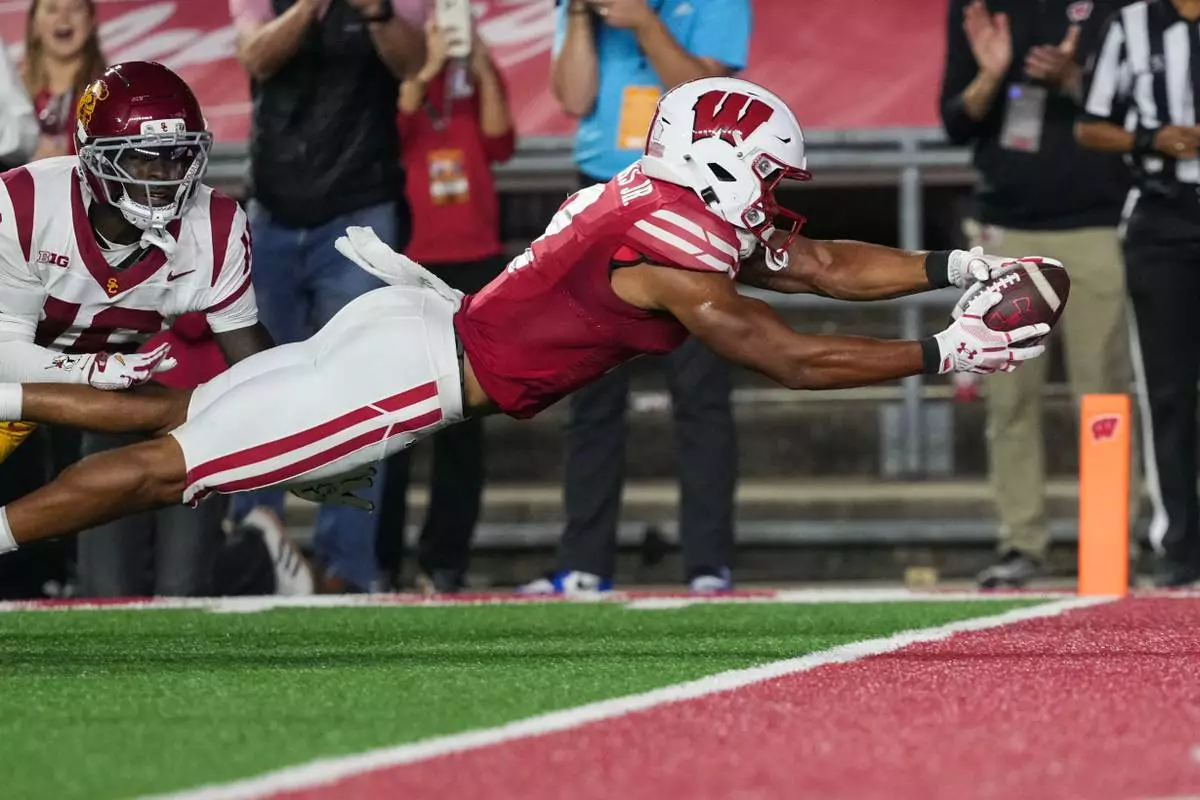
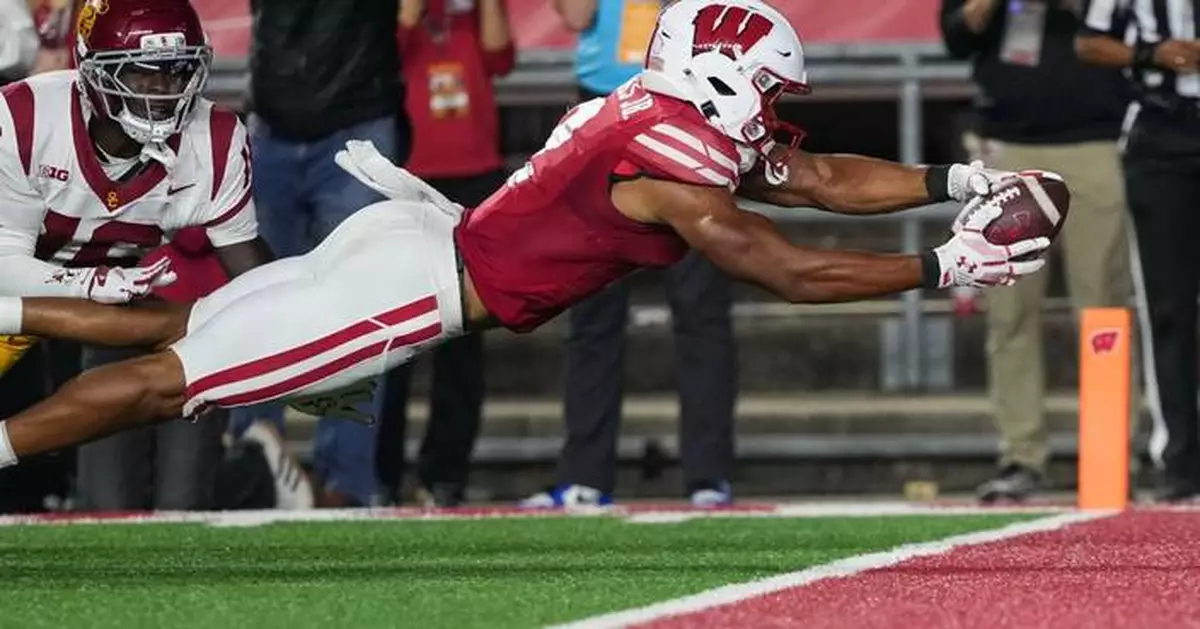
Wisconsin wide receiver Chris Brooks Jr., right, dives for a touchdown during an NCAA college football game against Southern California, Saturday, Oct. 24, 2026, in Madison, Wis. (AP Photo/Ross Harried)
BRASILIA (AP) — President Luiz Inácio Lula da Silva 's comeback to win Brazil’s presidential runoff Sunday is already facing its first hurdle as his competitor, Sen. Flávio Bolsonaro, challenges the results, setting the stage for a possible showdown between the country’s two polarizing political forces.
Lula, who convinced an extra 10.4 million voters to support him in the runoff, is expected to take office on Jan. 5, 2027, for his fourth non-consecutive term. He will serve as a counterweight in a region where leaders are shifting to the right and aligning with U.S. President Donald Trump. Bolsonaro, son of former President Jair Bolsonaro, promised to cozy up to the Trump administration.
At a news conference Sunday, Bolsonaro said he planned to request an annulment of the election following a chaotic extension of voting at the request of both candidates. However, it's unclear what legal avenue he would have to do that. His father, now serving a 27-year sentence for a coup attempt, contested his loss to Lula four years ago. Flavio Bolsonaro visited his father, who is under house arrest, on Monday, the younger Bolsonaro's public relations office said.
Early signs from Brazil’s institutions and from leaders across the region, including conservative presidents who oppose Lula, suggest the results will be respected nationally and internationally. Trump has yet to weigh in.
Even with the vote extension, Lula’s win was decisive. The soon-to-be 81-year-old incumbent won more than 64 million votes compared to just under 60 million for Bolsonaro, a margin of nearly 4%.
President of Brazil’s electoral authority, Kassio Nunes, who was appointed to the Supreme Court by ex-president Jair Bolsonaro, was among those who recognized Lula’s victory Sunday.
“This is a really uphill battle for Flavio Bolsonaro. Important Brazilian power brokers are closing ranks behind Lula, sometimes begrudgingly," said Brian Winter, Brazil analyst and editor-in-chief of Americas Quarterly.
“I sense that Brazilian power brokers that matter don’t really want to go down the path of a truly contested election,” he said.
The key to Lula’s win was the additional 14.1 million voters who showed up for the second-round election, including those who voted for other candidates in the first round. Analysts say three-quarters of those votes went to Lula, handing him the victory. And notably, the first round set a record for the number of Brazilians who decided not to vote, while the second round had the least number of abstentions ever.
Lula gave his digital campaign to lawmaker André Janones, who mounted a fierce and persistent social media operation that mobilized many of those previously uncommitted voters. Janones' key tool was a channel on messaging app WhatsApp called “Lula's Army,” which gathered almost 11 million people and mobilized them to campaign via social media for the incumbent.
Janones “basically embraced the right’s style of aggressive politics, very intense, constant messaging,” said Oliver Stuenkel, a professor of International Relations at Fundação Getulio Vargas in Sao Paulo.
“The defeat in the first round jolted the Lula campaign into action. The strategy during the first round was lackluster and saw a lot of infighting,” Stuenkel said.
Juliano Cortinhas, international relations professor at the University of Brasília, said Lula's social media initiative in the runoff was also key to pressuring Meta, the owner of Instagram, WhatsApp and Facebook, to end what the president's campaign denounced as bias helping Bolsonaro.
Brazil’s top electoral court ruled on Oct.15 that Meta must adopt measures that assure equal treatment of the two presidential candidates, which the company later said it addressed.
There was “external interference we were suffering by major platforms,” Cortinhas said. “It wasn't only Meta, many others were using their algorithms to repost many images and many messages of the far-right, and they did not do the same to the left.”
It was the first time since 1989 that a candidate came from behind in the first round to win in the second.
Results show voter turnout surged overall, particularly in wealthier metropolitan centers, but Lula achieved his highest gains in lower-income municipalities where his base was already established. He mobilized former non-voters, those who voted blank in the first round and supporters of third-party candidates.
Jorge Henrique Oliveira Sena, a 26-year-old maintenance worker in Brasilia, was one of those who didn’t vote in the first round. Neither candidate excited him much, but he cast his vote for Lula. “It’s not a question of supporting, but between the two, I had more of a connection with him,” he said.
Brazil holds general elections every four years, and its electronic voting machines have made the tallying process quick and secure.
Brazilian authorities adopted electronic voting machines in the 1990s to combat fraud and the system has been largely reliable since then. Results are usually reported mere hours after polls close.
In the lead-up to the 2022 vote, Jair Bolsonaro repeatedly cast unfounded doubts on Brazil’s electronic voting system. No significant fraud has ever been detected.
But the usually swift voting process was thrown into disarray Sunday after a last-minute decision to extend voting nationwide at both candidates’ requests.
Lula made the request because of issues with public transportation in metropolis, Sao Paulo, and the northeastern city of Salvador, two of his strongholds. Bolsonaro requested it after heavy rains in the south, which he won by a strong margin in the first round.
The decision was made by a Supreme Court justice mere minutes before polls were set to close at 5 p.m. and the speed of Brazil’s counting process meant many polling stations didn’t receive the news until they were already wrapping up.
Yet given the reliability of Brazil's voting system and Lula's win by a significant margin, a path to annul the results could be difficult for Bolsonaro.
Benjamin Gedan, senior fellow and director of the Stimson Center Latin America program, said Bolsonaro's rejection of his loss was not surprising.
“False claims of fraud are becoming commonplace, though that does not make them any less dangerous," he said. He noted “Lula’s margin of victory, and the quick recognition of the result by conservative leaders in the region."
Nevertheless, Lula still faces challenges moving forward, including political polarization in the country, a possible fiscal crisis and a right-wing Congress in which Bolsonaro's party will have more seats than any other. Bolsonaro himself remains a senator, though his term ends in January.
“We shouldn’t underestimate the power of the Bolsonaro family," said Winter, the Brazil analyst. "They can make life difficult for Lula for weeks and months to come.”
Savarese reported from Sao Paulo.
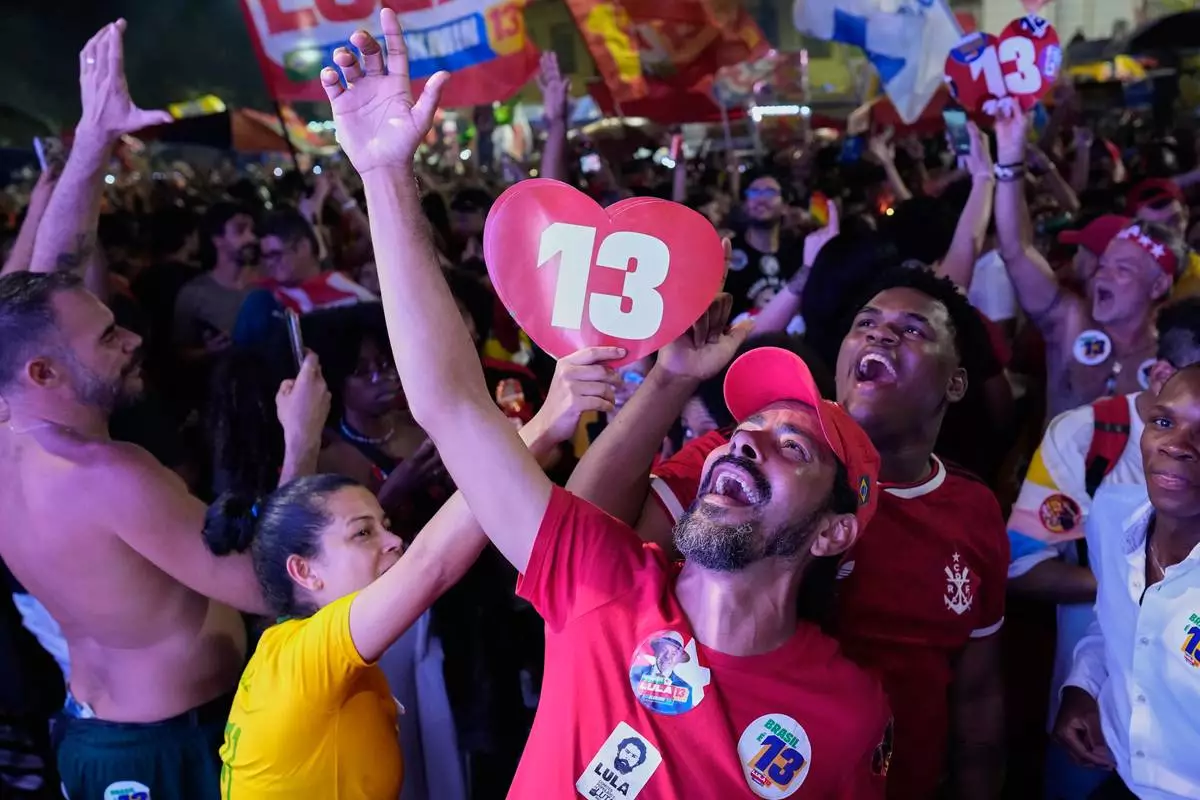
Supporters of President Luiz Inacio Lula da Silva celebrate after he wins a fourth term in the presidential runoff in Rio de Janeiro, Brazil, Sunday, Oct. 25, 2026. (AP Photo/Silvia Izquierdo)
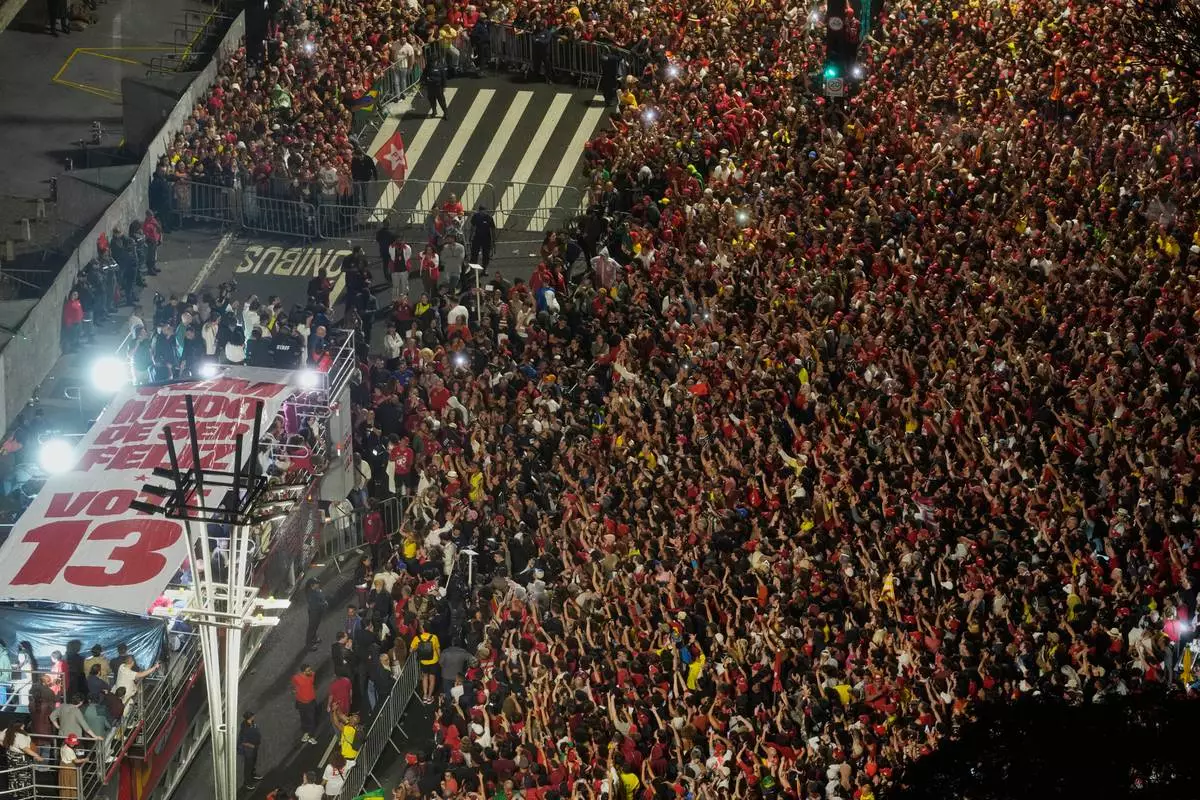
President Luiz Inacio Lula da Silva addresses supporters during a victory rally after winning a fourth term in the presidential runoff on Paulista Avenue in Sao Paulo, Brazil, Sunday, Oct. 25, 2026. (AP Photo/Andre Penner)
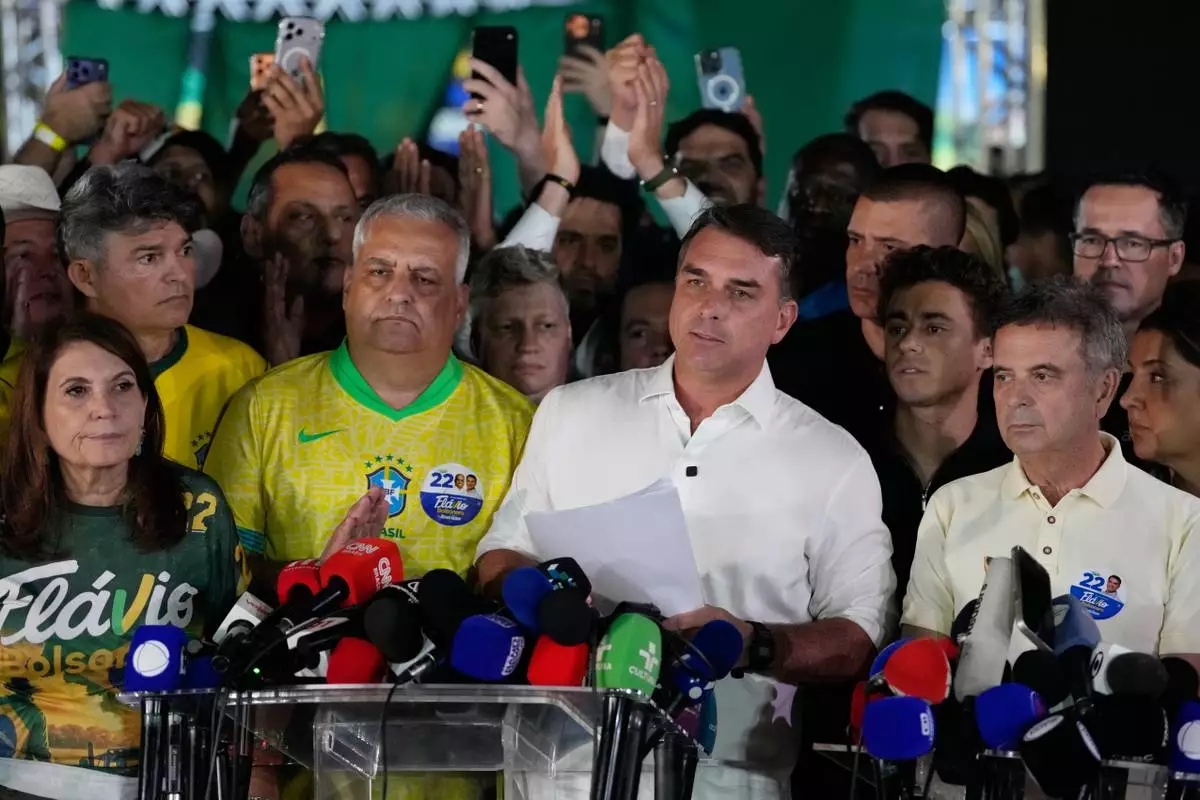
Opposition presidential candidate Sen. Flavio Bolsonaro speaks after the presidential runoff in Brasilia, Brazil, Sunday, Oct. 25, 2026. (AP Photo/Eraldo Peres)
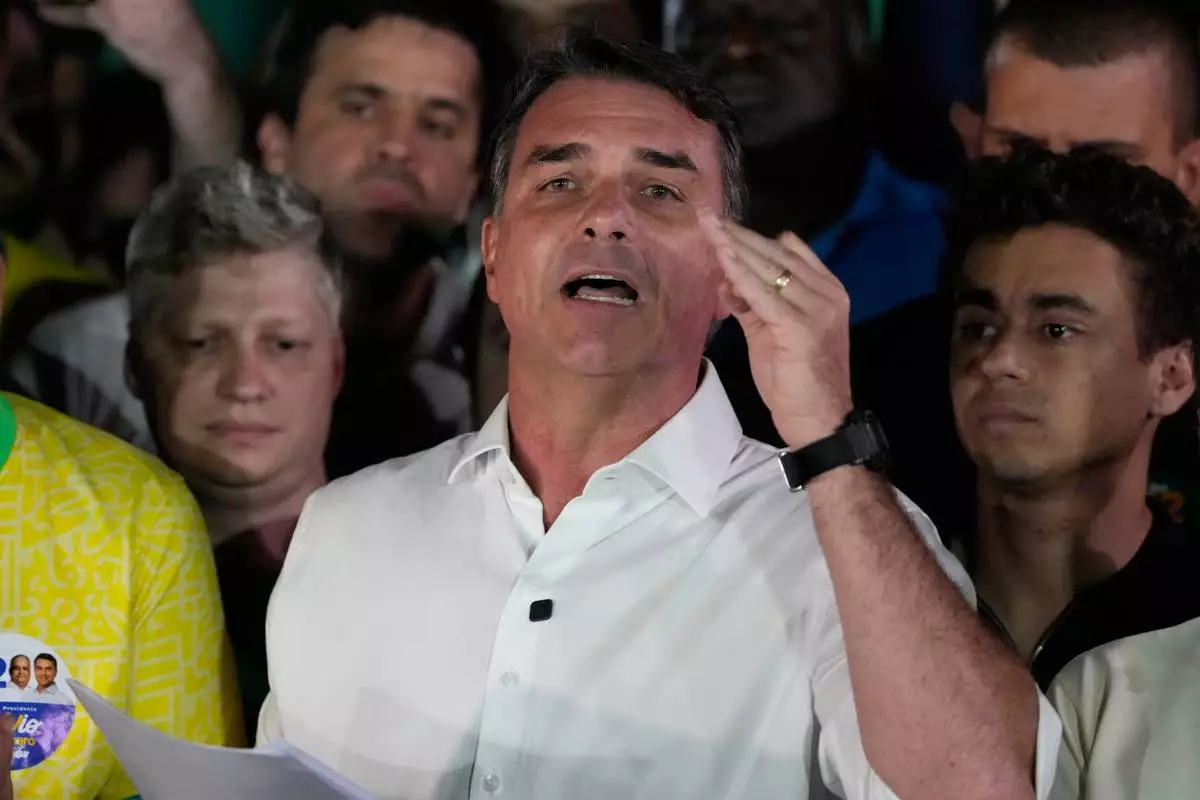
Opposition presidential candidate Sen. Flavio Bolsonaro speaks after the presidential runoff in Brasilia, Brazil, Sunday, Oct. 25, 2026. (AP Photo/Eraldo Peres)
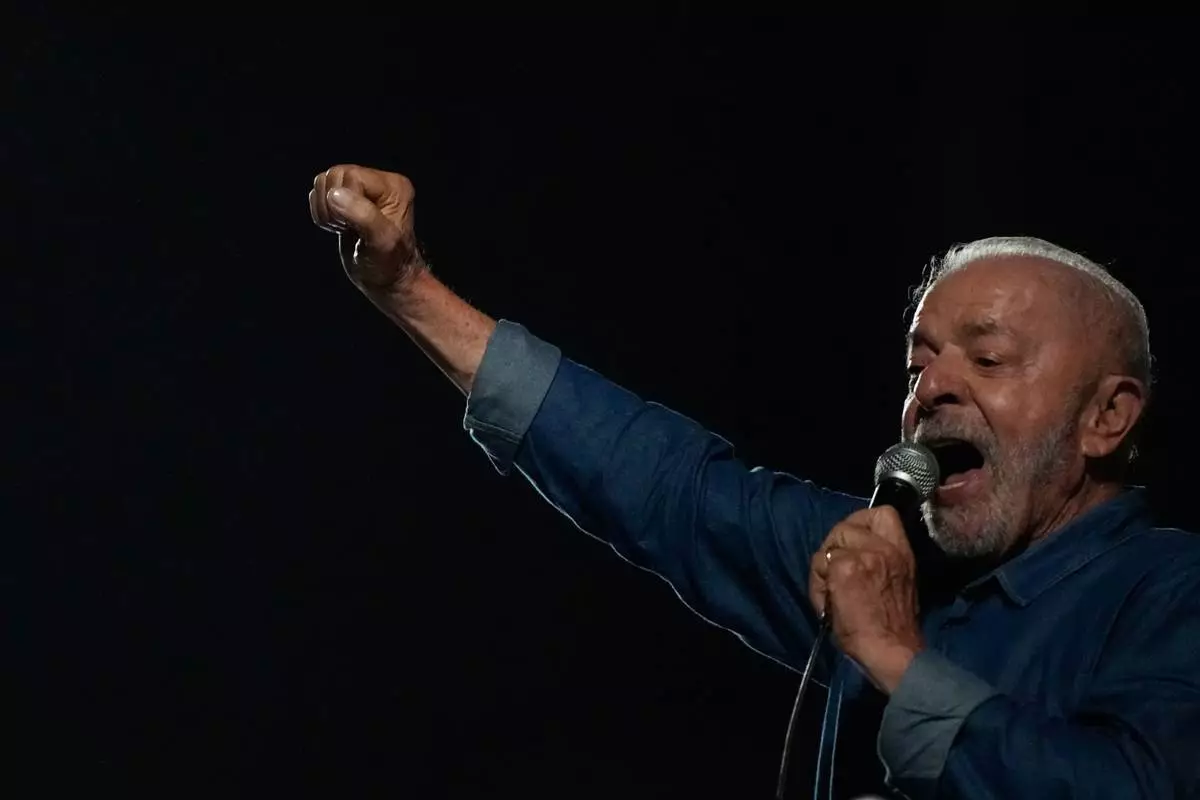
President Luiz Inacio Lula da Silva addresses supporters during a victory rally after winning a fourth term in the presidential runoff on Paulista Avenue in Sao Paulo, Brazil, Sunday, Oct. 25, 2026. (AP Photo/Natacha Pisarenko)