Skip to Content Facebook Feature Image

Another penalty-filled performance leaves the Packers fuming after 20-17 loss to the Lions

Sport

Another penalty-filled performance leaves the Packers fuming after 20-17 loss to the Lions
Sport

Sport

Another penalty-filled performance leaves the Packers fuming after 20-17 loss to the Lions

2026-10-27 05:16 Last Updated At:05:41

Penalties have caused problems all season for the Green Bay Packers, who have been flagged more times per game than any other NFL team.

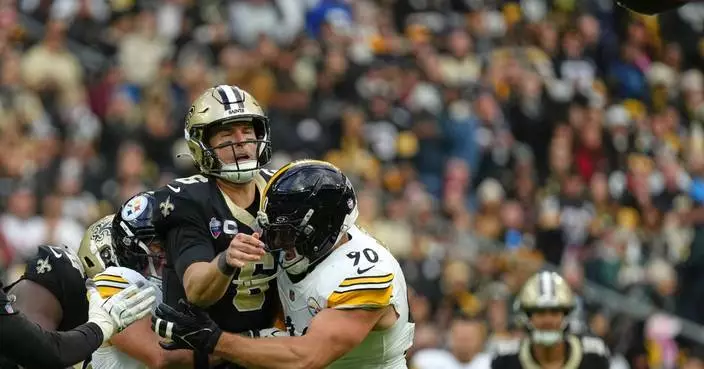
The Packers (4-3) were penalized seven times for 76 yards in the second half of a 20-17 loss at Detroit that came down to Jake Bates’ 22-yard field goal as time expired on Sunday. Some Green Bay players believe they weren’t treated fairly.

“I feel like the refs were on their side the whole day, if you ask me," defensive tackle Devonte Wyatt said after the game.

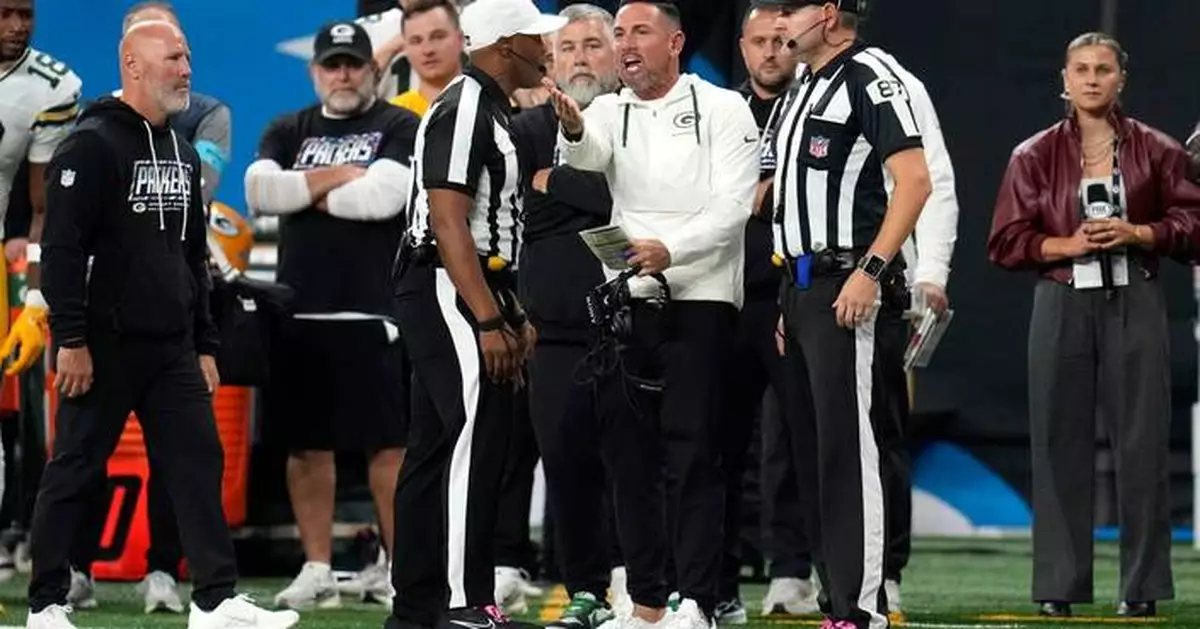
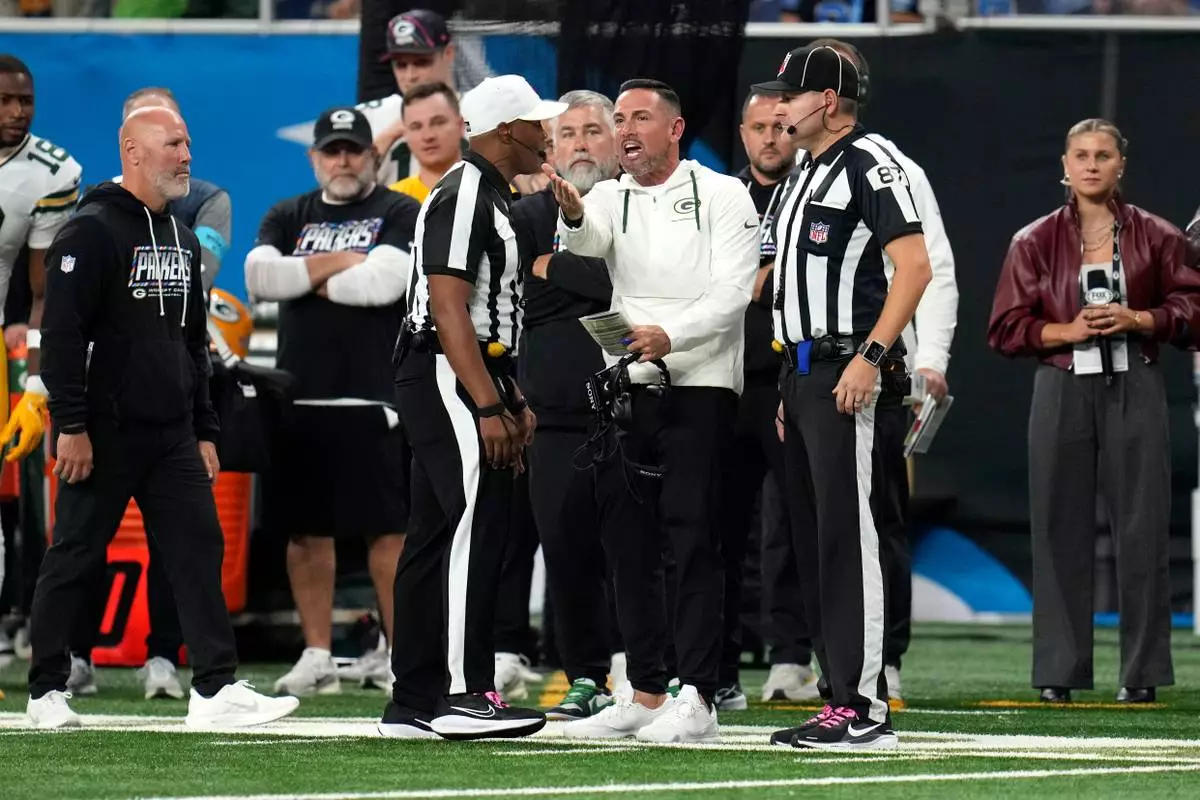
Green Bay coach Matt LaFleur could be seen on the sideline expressing frustration over what the Packers perceived as questionable calls.

Defensive lineman Karl Brooks was called for roughing the passer on the drive that led to Detroit’s winning field goal.

“That’s teach-tape tackle. That’s not roughing the passer,” Dean Blandino, a Fox rules analyst and former NFL vice president of officiating, said during the telecast.

In the third quarter, Detroit's Amon-Ra St. Brown got tackled after catching a pass, then started running again before Wyatt brought him down. Wyatt was called for unnecessary roughness, and Jared Goff threw a 10-yard touchdown pass to Jameson Williams two plays later.

LaFleur and Wyatt said after the game that they didn’t hear a whistle before St. Brown got up.

“We ruled the play was over,” referee Alex Moore told a pool reporter. “I can’t honestly hear if there was a whistle or not, but the tackler made the tackle, the play was over. Then, there was an additional action, and he basically tackled him again with force after the play was over.”

On Detroit’s next series, Brenton Cox was called for roughing the passer to nullify a third-and-10 incompletion and Brandon Cisse was penalized for pass interference to wipe out his interception. That series ended with the Lions losing the ball on downs at the Green Bay 6-yard line.

Packers quarterback Jordan Love was called for intentional grounding on the first play of the fourth quarter after he threw the ball in the area of tight end Tucker Kraft. Love threw a third-and-21 interception two plays later.

Moore said the ball couldn’t merely be in the direction of Kraft and that “it has to actually reach where he is if it doesn’t get to the line of scrimmage” to avoid an intentional grounding penalty.

“That is not grounding,” Blandino said on the telecast.

Green Bay has been penalized a league-high 9.3 times per game. The Packers have 78 penalty yards per game for the NFL’s second-highest average, below the Carolina Panthers' 79.2.

“You got to play above it,” LaFleur said. “I thought there were some tough calls, but it is what it is.”

Packers safety Xavier McKinney says he wants other defenses to get the same treatment from officials that Green Bay’s defense is receiving. According to Sportradar, the Packers have committed an NFL-high eight roughing-the-passer penalties, while their opponents haven't been called for that a single time this season.

“Sometimes we’re not seeing the same calls for our quarterback,” McKinney said. “We’re not seeing the same calls for our offensive guys. I just don’t really understand.”

Green Bay’s defense limited Detroit’s high-powered offense to its lowest point total of the season. The Packers stopped Detroit on each of its fourth-down attempts. Goff threw an incompletion on fourth-and-goal from the 5, and Keisean Nixon stuffed Jahmyr Gibbs for a 2-yard loss on fourth-and-1 from the Detroit 24 with the score tied in the fourth quarter. … Green Bay’s offense went 3 of 4 on fourth down.

The Packers didn’t score at all in three of their four red-zone possessions. Two of those series ended in missed field-goal attempts. Green Bay also went for it on fourth-and-4 from the Detroit and lost the ball on downs. … Even with Josh Jacobs back on the field, the Packers didn’t get much from a rushing attack that ranks last in the NFL. Green Bay gained 60 yards on 19 carries. … Dropped passes remain a major issue. Jacobs had a potential 17-yard tiebreaking touchdown pass go off his hands with 3 1/2 minutes left.

Nixon’s fourth-down stop of Gibbs in the fourth quarter could have been the play of the game if Green Bay’s offense had capitalized. … Cisse had a pass interference penalty to nullify his interception, but he had quality coverage on Detroit’s last two plays of that series to thwart a Lions scoring opportunity.

K Trey Smack sent a 26-yard field goal wide right on Green Bay’s first series and had a 35-yarder blocked when the score was tied with 3:21 remaining.

C Sean Rhyan left with an ankle injury in the first quarter. Jacob Monk took over for him and hurt his quadriceps shortly afterward. Monk was placed on injured reserve Monday, meaning he must miss at least the next four games. Those injuries forced the Packers to turn to John Williams, whose only previous career action came on special teams.

1 — The number of field goals from 35 yards or closer missed by any NFL kicker other than Smack this season.

Green Bay gets right back at it Thursday night by hosting Carolina. The Panthers won 16-13 at Lambeau Field last season. The Panthers (3-3) are coming off a 43-13 home loss to the Tampa Bay Buccaneers.

__

See AP’s full NFL coverage here
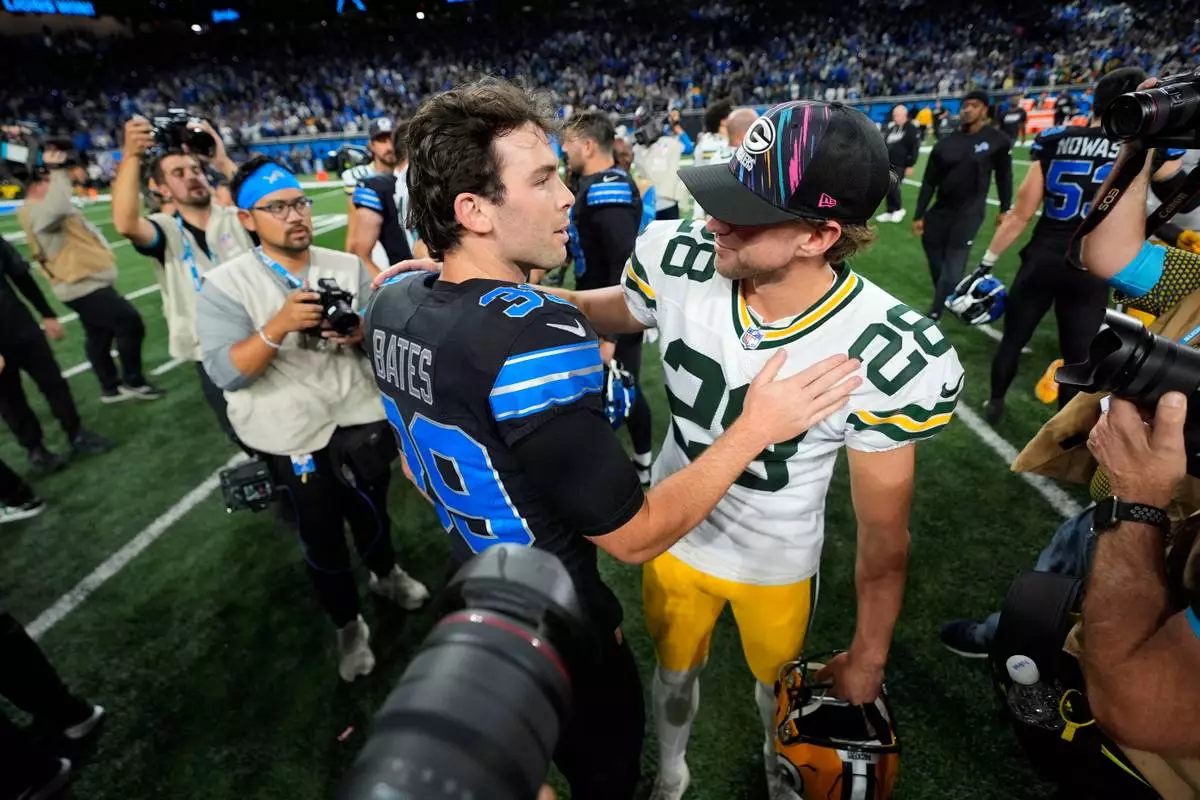
Detroit Lions kicker Jake Bates (39) talks with Green Bay Packers kicker Trey Smack (28) after an NFL football game, Sunday, Oct. 25, 2026, in Detroit. (AP Photo/Paul Sancya)
Detroit Lions kicker Jake Bates (39) talks with Green Bay Packers kicker Trey Smack (28) after an NFL football game, Sunday, Oct. 25, 2026, in Detroit. (AP Photo/Paul Sancya)

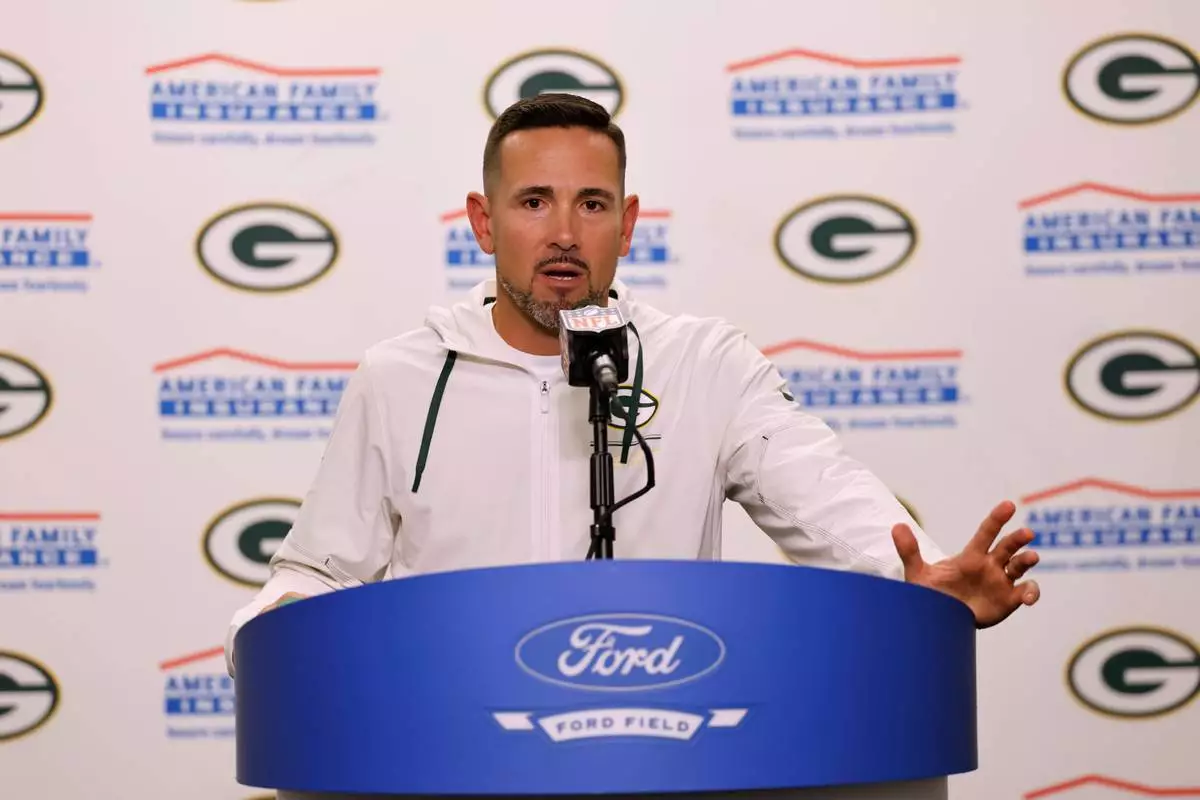
Green Bay Packers head coach Matt LaFleur speaks during a news conference after an NFL football game against the Detroit Lions, Sunday, Oct. 25, 2026, in Detroit. (AP Photo/Rey Del Rio)
Green Bay Packers head coach Matt LaFleur speaks during a news conference after an NFL football game against the Detroit Lions, Sunday, Oct. 25, 2026, in Detroit. (AP Photo/Rey Del Rio)

Green Bay Packers head coach Matt LaFleur, center, questions a call during the second half of an NFL football game against the Detroit Lions, Sunday, Oct. 25, 2026, in Detroit. (AP Photo/Paul Sancya)

Green Bay Packers head coach Matt LaFleur, center, questions a call during the second half of an NFL football game against the Detroit Lions, Sunday, Oct. 25, 2026, in Detroit. (AP Photo/Paul Sancya)
LOS ANGELES (AP) — An appeals court on Monday declined to rule on whether California elections officials can count roughly 20,000 ballots that the Justice Department alleges belong to noncitizen voters.

The 2-1 decision sets the Trump administration and state officials up for another legal showdown on the matter on Tuesday in front of a federal district judge, giving the federal government a very short window to compel California to sequester votes before the Nov. 3 elections.

The decision marks the latest in a string of legal setbacks for President Donald Trump’s administration as it seeks to assert greater federal control over state-run elections. Noncitizen voting has been a central focus of Trump’s political messaging for years, although available data indicates it is exceedingly rare.

Although the panel primarily ruled it was premature for an appeals court to get involved, two of the three judges also wrote separate concurrences making it clear they wouldn’t support setting aside ballots at this late date. One judge dissented, arguing that federal law bars noncitizens from voting and compels California to vet the potentially illegal ballots before they are counted. The failure to do so, he wrote, would cause irreparable harm to the election.

The Republican administration sued election officials in the heavily Democratic state in mid-October, accusing them of failing to meet a 48-hour deadline to review a list of 20,000 people it alleged were likely noncitizens on the state’s voter rolls. The administration asked the judge to stop the state from counting those ballots until immigration status checks could be completed. The Justice Department made similar demands Monday in Washington, another state with races that will help determine control of the U.S. Senate and House.

After a district judge had scheduled an Oct. 27 hearing on the issue, the federal government appealed to the 9th Circuit Court, arguing that a faster decision was needed to prevent the further counting of votes.

But two of the three 9th Circuit Court judges rejected that argument on Monday, writing that the federal government “failed to allow the district court adequate opportunity to consider” their initial request to sequester the ballots in question.

The time-sensitive emergency that the federal government used to justify the appeal, wrote Gabriel Sanchez, a circuit judge appointed by President Joe Biden, was at least in part “the product of the United States’s own decisions” to file so close to the elections, after votes had already started to get counted.

The federal government was delayed “in realizing that existing California state law governs the issuance and processing of ballots, in recognizing that California has millions of registered voters and processes ballots on a schedule aligned with that scale, and in communicating to the court its desired relief,” Sanchez wrote.

He wrote that setting aside the ballots at this stage “would transform California’s election rules for an election that is already underway” and “usher in electoral chaos.”

Judge Mark J. Bennett, who was nominated by Trump, also said that the federal government’s arguments weren’t supported by the law, writing that it appeared the administration had no power under the Constitution to force California to separate the ballots.

Judge Patrick Bumatay, who was appointed by Trump, forcefully dissented against the ruling. He argued that federal law precludes “California from commingling ballots likely cast by aliens with legitimate ballots, because it encourages and induces illegal voting. Stopping that practice for those identified as likely noncitizens is the bare minimum.”

Bumatay also affirmed the federal government's arguments about the need for an urgent ruling to sequester the ballots. While he conceded that the federal government could potentially prosecute fraudulent voters after the election, Bumatay said that the federal government “has an interest in stopping the illegal voting in the first place.”

California Attorney General Rob Bonta, a Democrat, hailed Monday’s ruling against the Republican administration as a “welcome speed bump to Trump’s disgusting attacks on the Constitution and our country’s democracy.”

In a statement, he urged voters to cast ballots early and “participate in democracy, don’t become disillusioned.”

Neither the Justice Department nor the Office of the U.S. Attorney in the Central District of California immediately responded to an emailed inquiry asking for comment.

FILE - The U.S. Department of Justice logo is seen on a podium before a news conference, May 4, 2026, in Washington. (AP Photo/Julia Demaree Nikhinson, File)

FILE - The U.S. Department of Justice logo is seen on a podium before a news conference, May 4, 2026, in Washington. (AP Photo/Julia Demaree Nikhinson, File)

Recommended Articles