As autumn deepens, the desert poplar forests in Makit County, northwest China's Xinjiang Uygur Autonomous Region, have gradually turned golden and entered their best viewing season, drawing droves of visitors from near and far.
Makit County is home to over 19,000 hectares of desert poplar forests. With desert poplars standing proud in the sand, and water poplars nestling along the banks of the Yarkant River, the golden foliage creates a striking autumn scene in the heart of the arid wilderness.
"This is my first time admiring the desert poplar trees up close. It's hard to imagine that poplars can take root and grow in an arid desert. The scenery is both unique and magnificent, with the desert and the poplars setting each other off. I've truly felt Xinjiang's exceptional natural beauty. It's well worth the trip," said Zhao Nanyu, a visitor from Guangzhou of south China's Guangdong Province.
"From a distance, the poplar forest looks like a sea of gold. I've never seen a poplar tree before, and I took lots of photos and posted them on my social media," said Qu Yanyu, a visitor from Yulin in northwest China's Shaanxi Province.
The desert poplar is a rugged species of tree, known as "guardian of the desert". It is resistant to low temperatures, drought and saline-alkali soil, and serves as an ideal windbreak and sand-fixation plant.
Since the beginning of this year, Makit County has continued to advance ecological protection in the Yarkant River basin, poplar forest management and wetland restoration, building a solid ecological barrier at the desert's edge. What was once riverbank wetland has been transformed step by step into an ecological and cultural park with clear water, lush forests and beautiful scenery.
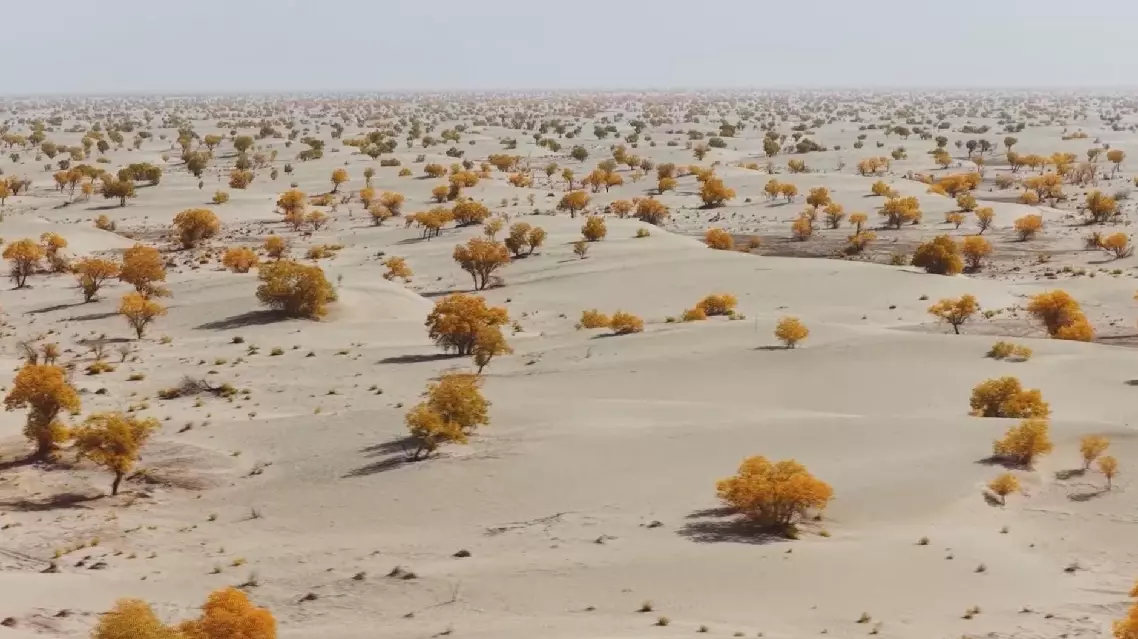
Desert poplar forest in Xinjiang draws crowds to appreciate stunning autumn views
Thousands of people gathered in Cape Town for a weekend of colorful kites at the 32nd Cape Town International Kite Festival this October 24 and 25, as the giant shapes floating above the city carried a serious message about mental health and community support.
First organized by Cape Mental Health in 1994, the event is Africa's oldest kite festival. Organizers said it serves as a reminder that one in four people in South Africa lives with a mental health condition, with many struggling to access help.
For 32 years, kite flyers from across the globe have gathered in Cape Town to see this spectacular sight, but these shapes taking over the clouds carry more than just wind. They carry a vital message about human connection and mental health.
"So many people are battling with everyday life circumstances that we are exposed to. In South Africa, in particular, we see high crime rates, gender-based violence, poverty. These are all risk factors that impact on people's mental health. More than one billion people globally live with a mental health condition. In South Africa, it's one in four who live with a mental health condition. We're seeing an increase in prevalence, particularly amongst our young people. The Cape Town Kite Festival really provides this platform to encourage people to put up their hand and say, 'I need help,'" said Ingrid Daniels, CEO of Cape Mental Health.
The festival also raises funds for free mental health services across the Western Cape.
"Looking at something beautiful. I think [it] gives everybody hope. It's not just about the beauty. It's about the message it gives and the color of the sky. It's everybody. It's a rainbow of colors," said Frans Marais, an honorary kiter at the festival.
"Today, I am here to support the awareness around it and for people to be comfortable to talk about it, because many people, they suffer in silence. And that is where actually the problem lies," said Bernadine Chilwane, a festivalgoer.
Indeed, raising awareness is only the first step. Breaking the stigma around mental health means making it easier for people to speak up and ask for help.
"There are a lot of people in the world that hide their mental health and don't actually tell their families and get to tell their families about. There's always someone in your friend group or your family that you can actually tell what you're actually going through," said Kyra Blackenberg, a volunteer at Cape Mental Health.
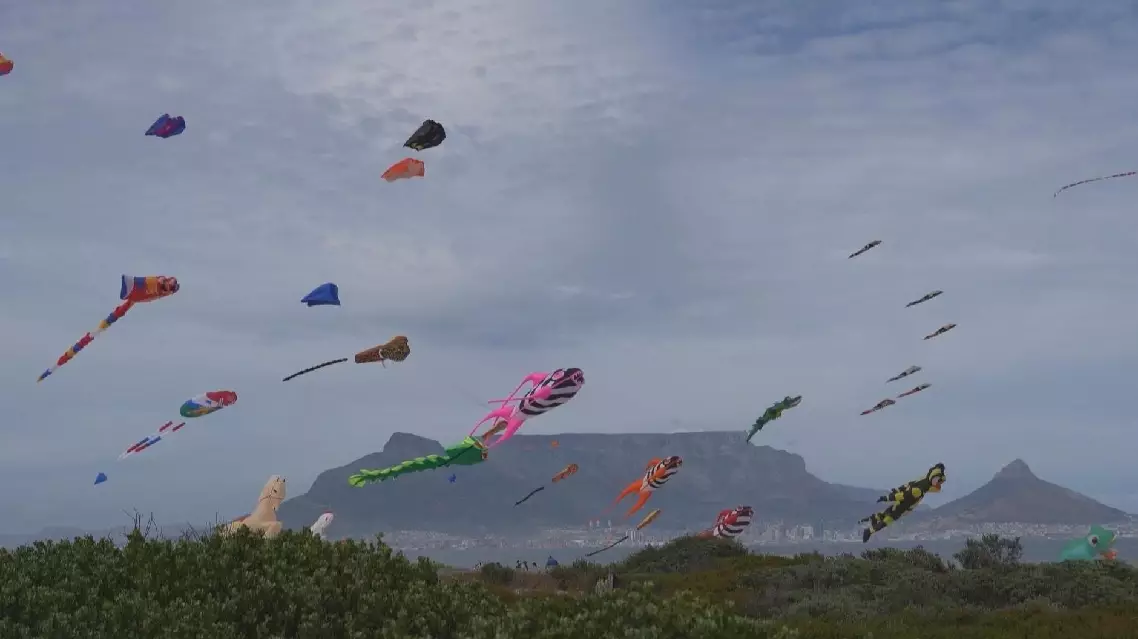
Cape Town Int'l Kite Festival helps raise mental health awareness