Japanese scholars and peace advocates are pushing back against the militarization of university research, cautioning that Prime Minister Sanae Takaichi's aggressive defense expansion could steer the nation toward renewed conflict.
On Oct. 20, the Japanese Defense Ministry announced the 2026 selection results for its security technology research promotion program, with 47 research projects chosen. Among them, a Nagoya University project on next-generation communication technology was selected.
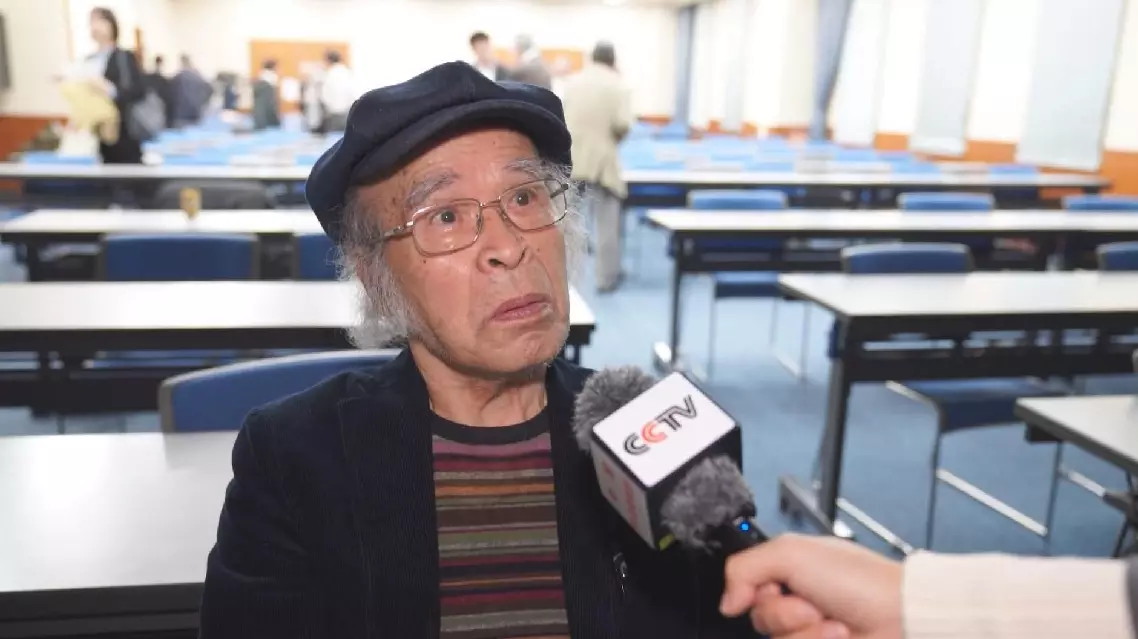
Professor Emeritus Yasukawa Junosuke of Nagoya University opposed the university's cooperation with military institutions. He said the university must face its responsibility in Japan's past war of aggression, learn from history, and prevent academic research from being used for war again.
"If one examines the history of Nagoya University itself during Japan's past war of aggression against China, it becomes clear that the university, through mechanisms such as the mobilization of students, pushed its undergraduates into the conflict, even forcing students as young as 19 or 20 to graduate early. While Nagoya University was certainly not the only institution to mobilize its students for the war, its Peace Constitution, a document intended to address the university's responsibilities and the wrongs it committed during that period, fails to make any mention of these actions. Given that the university once helped instigate and support a war of aggression, a grave error indeed, any such Peace Constitution ought to have explicitly acknowledged this history and pledged that such mistakes would never be repeated. Yet, these crucial points are entirely absent. In my view, it is precisely because the reflection and subsequent actions taken at the time were insufficient that Nagoya University has ended up where it is today, following the adoption of that Peace Constitution," he said.
Yasukawa also criticized Takaichi for lacking a proper understanding of war responsibility and for dragging Japan back into war.
"At the time, Takaichi was still a lawmaker, not prime minister. She clearly stated that she had nothing to do with the past war of aggression and therefore would not consider what responsibility she should bear. Regrettably, such a person now represents Japan and is leading the country toward war," he said.
Rally participants also expressed concern over Japan's moves to continuously increase its defense budget, expand missile deployments, and develop its domestic arms industry, and argued that Japan should face its historical responsibility, uphold its peace constitution, and avoid repeating the mistakes of war.
"Japan has already doubled its military spending. On top of that, it plans to raise military spending to 3.5 percent of GDP as the U.S. demands. What are they buying? Weapons with lethal capability, and deploying missiles in Japan. I think this will further heighten tensions in the regionion," said Shiroshita Eiich, vice chair of the Aichi Prefecture Peace Committee.
"Article 9 of Japan's current constitution clearly renounces war. I believe only by deeply reflecting on history can we lay a foundation for moving forward. Japan should carry out all its work on the basis of fully recognizing this point," said a protester.
Japanese activists protest military-linked campus research as defense spending surges