Speech by SLW at Global University Presidents and Leaders Summit 2026
Following is the speech by the Secretary for Labour and Welfare, Mr Chris Sun, at the Global University Presidents and Leaders Summit 2026 organised by the Hong Kong Association for External Friendship today (October 28):
Professor Alexander Wai (President and Vice-Chancellor of Hong Kong Baptist University), Richard (Founding Vice Chairman and Board Member of the Hong Kong Association for External Friendship, Dr Richard Lee), fellow speakers, ladies and gentlemen, and students,
Good afternoon. Thank you so much for having me today. Today, we are talking about demographic changes and future skills development in the Hong Kong context. I think it is no exaggeration to say Hong Kong right now is standing at a crossroads, because we are confronting two major forces altogether. The first one is the demographic shift towards an ageing society. It takes 20 more years before we reach the peak, and we are in a long process of getting old. The second, as clearly said, is the transformational technological change driven by AI. It has an impact on our economy and also our society. How we manage these two currents is going to determine our future. It is going to have a large impact on our workforce, our economy, and eventually our society.
Let me first of all begin with the demographics. For those who are new to Hong Kong, if you just walk around Hong Kong and take a look, you may sense that Hong Kong is getting old. If you get that impression, you are right. If you look at the numbers right now, for every four people in Hong Kong, one is aged 65 or above. That is a very old society. Ten years ago, the ratio is about one to six. So more or less every year we are getting older by half a year. That means in every two years, we get old by one year. That trend will continue, assuming our demographics will more or less remain the same until 20 years down the road to 2046, and at that time it will be one in three. This is a clear demographic background that is going to shape everything we do. This is the backdrop. No doubt to say, this ageing society is going to present huge challenges to Hong Kong as a whole. Also, for me as the one in charge of the labour and welfare policies, I think there is also a bright side to it, because if you look at all these older people, they are not necessarily a burden. Actually, they could be, especially the young-old, could be an asset giving us additional opportunities. If you look at their profile, they are usually more well-educated who have lifelong experiences, just as the old saying goes, "the older, the wiser". For us, as the policy maker, we try our very best to tap into their expertise and social capital, not just for their own purpose to live a meaningful retirement life, but also turn them into mentors to help the younger generation to grow and to find their way. In particular, in the age of AI, which I am going to talk about later on.
So that brings me to the topic of AI. Three years ago, we started our first attempt to produce a very elaborated and detailed manpower forecast about our manpower needs at the moment and five years down the road. We updated our forecast this year, and it is very clear from the update exercise this year that AI is having such a huge impact on future manpower requirements and the skills mix. That compares with three years ago when AI was barely mentioned. Three years afterwards, AI has become the most important factor to be taken into account.
Let me give you a background of Hong Kong's use of AI. Clearly, Hong Kong is not necessarily an early adopter, but clearly we embrace the use of AI. Based on our survey, 70 per cent of our employed workforce use AI on a daily basis. Of course, it depends, as some of them just use AI to search information while some are using AI in a very structured way. More or less, if you ask them, 70 per cent say they use AI every day. And roughly 70 per cent of our SMEs (small and medium-sized enterprises), and also medium to large companies, have integrated AI into their day-to-day operations. That means Hong Kong is right on the pathway to use AI to generate economic values. This is the Hong Kong situation.
With the wider use of AI, it is very clear to us that a lot of the routine and repetitive tasks will be automated. What the Government has to do, together with our partners in the community, is to find a way to elevate our human capital, because we know the future of our workforce will shift more and more towards how good they are at strategic analysis. More value will be put on their abilities to think critically and how would they be able to solve complex problems. This is the future, which is quite clear to us. It is also clear to us that, while AI is destroying some jobs, it also creates new ones. In particular, it is very clear from our survey that there is a huge demand for AI practitioners in all different sectors of businesses. They want people equipped with AI knowledge and deep domain knowledge. They need to employ people who have expertise in both, who know how to apply AI and also with very deep domain knowledge. We call them AI practitioners. There will be a three to fourfold increase in that demand. Our forecast shows the number demanded is around 4 500, but that will jump to 20 000 three years down the road. Apart from the needs for people with both AI expertise and domain knowledge, it is also clear to us from the survey that cross-disciplinary integration and collaboration are even more important in the era of AI. We need to foster a workforce that can blend AI capabilities with very deep domain knowledge, and also they have to be able to work together with people from other different sectors. Together, they can create greater value out of it.
These all brings me back to the theme of this seminar, which is about education, with all these renowned scholars on stage as our panelists, and also the need for continuous learning. First of all, a bit of background about Hong Kong. Thanks to the fast and sustained investment by the Government in education. If you look at our workforce right now, especially with the younger generation in our workforce, those aged between 15 to 24, two decades ago, for that cohort of workers, only 20 per cent had degree-level qualifications, just one-fifth. By now, it is more than 55 per cent, which is more than half of a very young cohort of the workforce. They have attained a degree level of qualifications because of the huge investments by the Government in higher education. By itself, it is elevating our human capital, allowing us to grow and prosper in the knowledge economy. But again, with the advent of the wider use of AI, initial education alone is not enough, and would never be enough. It is based on a survey with thousands of people in the business world and also in other sectors. It is very clear to us that because of AI, employers are putting a lot more emphasis on soft skills, and the ability of younger people to communicate, whether they can think critically and solve problems on their own, and also their capabilities to connect ideas across different disciplines. If it boils down to one single word, I think what the future workforce needs to possess is a change in mindset.
We have to move from the current concept of just having human beings as the sole workforce into a future where we need a close collaboration between humans and machines. This is the future. This is what we have to work with. But I think the key word is that through human-machine collaboration, we are looking for partnerships where we can create value, and human beings are the masters. I think this is more important than just replacement. If we just talk about replacement, that means it is a zero-sum game. Machine is going to replace human, that means it is going to destroy the job we have. I do not think this is the future we should talk about. The future we should talk about, and do everything we could to shape it, is to have human-machine collaboration. Partnership is the key, and lifelong learning as well. Constant change will be the norm rather than the exception. We have to do everything we could to help our workforce to be adaptable, curious, and future-ready.
Let me first start with what the Government is doing, then give the heavy lifting job to our honoured and distinguished panelists. For the Government, number one is to encourage lifelong learning. We are reforming all organisations. When Hong Kong, 30 years ago, had to deal with factories moving out and a lot of manufacturing workers who had to transform into service workers, we established the Employees Retraining Board in the 1990s. Right now, we have just introduced a bill in the Legislative Council. We will very soon change the Employees Retraining Board into a new name, giving it a new vision and new function: we call it Upskill Hong Kong. Instead of retraining employees, we have shifted the focus to upskilling Hong Kong, upskilling the whole workforce.
Number one is we have to establish a skill-based framework, so that we can map out the current future needs for skills to better prepare not just our workers, but also all the training institutes and enterprises. The second is AI. We are going to launch, with the establishment of Upskill Hong Kong, an 18-month AI campaign, providing a lot of free, easy-to-access AI training and upskilling courses to all workforces in Hong Kong. It will be more focused on different domains. We want it to be applicable to how they use AI in the industries they are working in.
At the same time, we are also reviewing the Continuing Education Fund (CEF). We are looking forward, with the establishment of Upskill Hong Kong, how we could leverage our investment and endowment already given to the CEF, and to maximise it to help our workforce to grow.
Ladies and gentlemen, the speed and scale of the AI-driven economy asks for co-ordinated and sustained actions. In order for Hong Kong to stay ahead, the Government, schools, universities, enterprises and the civil society will all have to work together as one single ecosystem to help, in particular, our younger generations to harness AI for their career development and self-improvement.
On that front, our observations over the years show that while the younger generation has the natural edge of being able to use and acquire AI skills, what counts more for them is not the ability to use AI. They are born with AI skills. It is more about domain knowledge. First of all, we need to help them make their first step into an industry so they can acquire sufficient domain knowledge, allowing them to make use of their AI capabilities. The second thing is ever more important: basic skills. They should be able to communicate. They have to be able to express themselves and establish relationships with their partners and clients.
To better prepare our younger people for the AI world, we need to put more emphasis not just on their AI capabilities. I believe they are all AI-ready in terms of capabilities. It is more about the domain knowledge, and second, which is equally important, is soft skills. Soft skills, we believe, will determine how far they could go in the AI world.
Ladies and gentlemen, I will now leave the hardest part to our distinguished panelists, to share how higher education could adapt, change and rise up to the challenges. I look forward to hearing their wise counsel and vision for how our future will be.
Thank you very much.

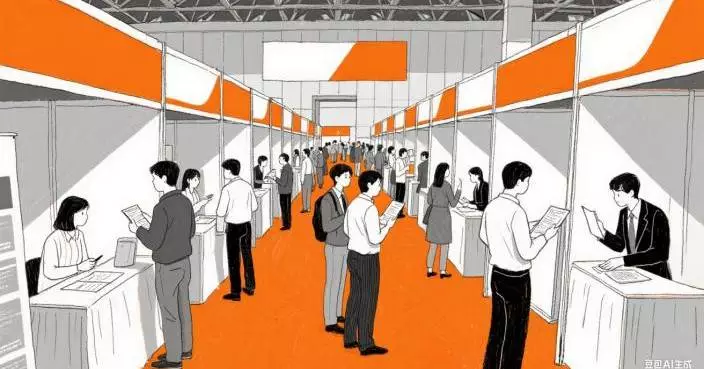
Source: AI-found images
CS chairs interdepartmental working group meeting on Huanggang Port Hong Kong Port Area
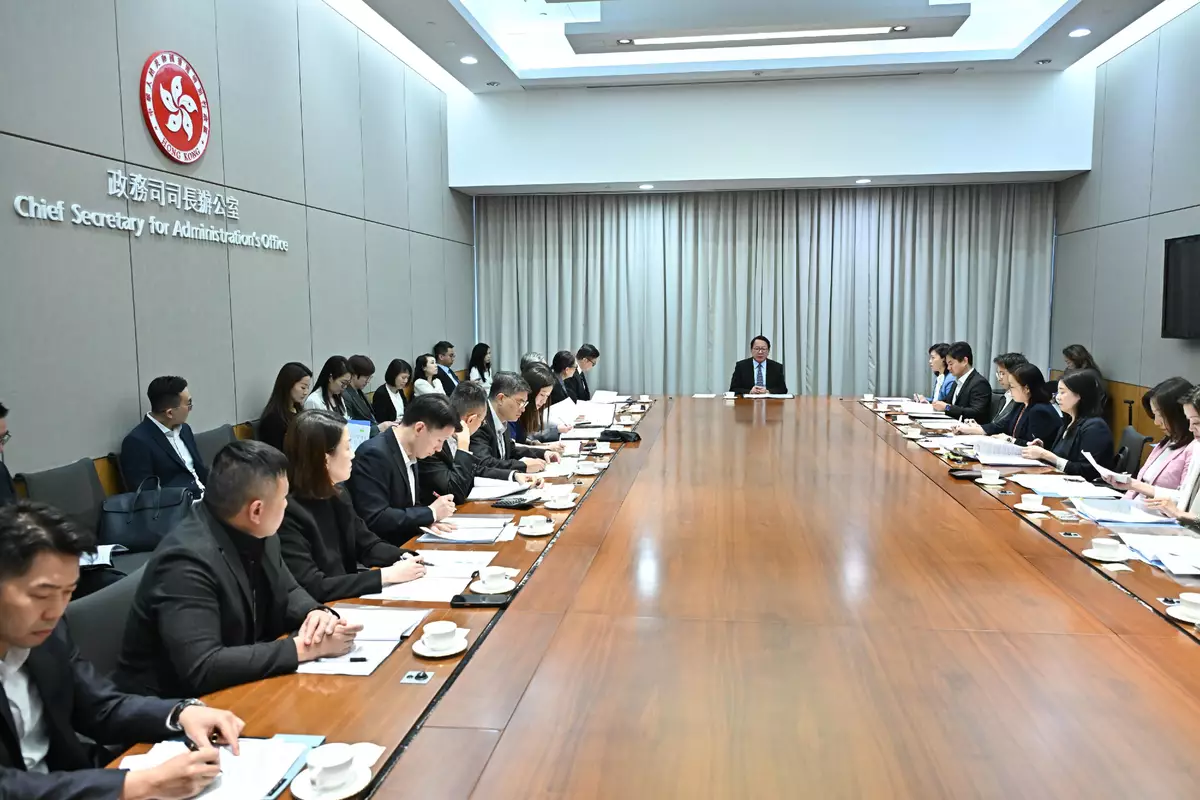
The Chief Secretary for Administration, Mr Chan Kwok-ki, today (October 28) chaired a meeting of the interdepartmental working group on the Huanggang Port Hong Kong Port Area to holistically co-ordinate and steer the preparatory work of various government departments in addressing the peak in cross-boundary passenger and vehicular traffic at the Huanggang Port during the Halloween period this weekend (i.e. from October 30 to November 1). The Secretary for Security, Mr Tang Ping-keung; the Secretary for Transport and Logistics, Ms Mable Chan; and representatives from other relevant government departments attended the meeting.
Mr Chan said, "With Halloween falling on this weekend, coupled with a number of events taking place in Hong Kong including the 'Hong Kong Wine & Dine Festival' and mega concerts, the number of visitor arrivals and late-night cross-boundary trips is expected to increase significantly. The Government of the Hong Kong Special Administrative Region attaches great importance to the operation of boundary control points (BCPs) and transport support, and has instructed all relevant departments to make advance deployment, and to accord priority to securing the smooth passage of public transport vehicles during peak clearance hours. Relevant departments have been instructed to effectively manage passenger and vehicular traffic as well as information dissemination, with a view to ensuring the safe and orderly operation of the port and surrounding roads, and providing a good travel experience for members of the public and visitors."
"We anticipate that the Huanggang Port will be very busy during the late-night hours over the Halloween weekend. During peak hours, the Government will adopt the principle of 'giving priority to public transport' and accord priority to the passage of public transport vehicles. I appeal to members of the public and visitors to plan their journeys in advance, take note of the operating hours of various land and rail BCPs, and avoid converging on the Huanggang Port during late-night hours. Travellers who need to cross the boundary during late-night hours are advised to take public transport. Travellers must note that under the principle of 'giving priority to public transport', those choosing to travel by cross-boundary private cars during peak hours may have to wait for a prolonged period on the roads and in the vehicle holding areas. We also encourage visitors to adjust their itineraries to stay overnight in Hong Kong and make good use of the 'ticket stub offers' launched by various events to make their overall journey more comfortable and enjoyable."
Forecast of late-night clearance peaks
Among the land BCPs between Hong Kong and Shenzhen, currently only the Huanggang Port provides 24-hour clearance services for passengers and passenger vehicles. Cross-boundary private cars holding Closed Road Permits (CRPs) for other land BCPs (Shenzhen Bay, Man Kam To, Sha Tau Kok and Heung Yuen Wai) are permitted to use the Huanggang Port between midnight and 6.30am daily. Consequently, there will be an increase in cross-boundary vehicles crossing the boundary via the Huanggang Port after midnight.
As multiple mega events this weekend are expected to conclude around midnight, the Government anticipates that the late-night hours over the three consecutive nights from October 30 (Friday) to November 1 (Sunday) (i.e. from about 11pm each night to 2am the following day) will be the busiest period for northbound passenger and vehicular flows at the Huanggang Port, and traffic at the port and in the vicinity of San Tin Highway will be very busy. Given the capacity limits of the connecting roads to the port and the port's handling capacity for cross-boundary private cars, in order to maximise the dispersal efficiency during peak hours, the authorities will accord priority to securing the passage of high-capacity franchised buses, green minibuses (GMBs) and cross-boundary coaches (CBCs). Under the arrangement of giving priority to the passage of public transport vehicles, passengers choosing to cross the boundary by cross-boundary private cars during late-night peak hours will experience longer waiting times, which may reach an hour or more in the vehicle holding areas and vehicle clearance channels. The authorities appeal to motorists and passengers to remain patient and tolerant, and follow the instructions of police officers on-site to queue up in order.
Interdepartmental collaboration and preparatory work at the port
Regarding port operations, the interdepartmental Joint Command Post at the Huanggang Port will be activated early in the afternoon of October 30 (Friday) and operate throughout the weekend to closely monitor passenger and vehicular flows in real time, and maintain close liaison with the Shenzhen port authorities to make swift responses and deployments when necessary, ensuring safe and orderly clearance for both passengers and vehicles. The Security Bureau (SB) will also concurrently activate the Emergency Monitoring and Support Centre to closely monitor and co-ordinate public order at the port, and co-ordinate interdepartmental follow-up actions where necessary to respond promptly to various kinds of emergencies. The Immigration Department and relevant port departments have minimised leave for frontline officers to enable flexible deployment of manpower, and will open all vehicle lanes, automated channels and manual counters as early as possible before the arrival of clearance peaks, including the clearance facilities at the passenger departure hall on L5, the vehicle departure level on L1 and the departure immigration clearance hall for on-board passengers on L1M. The Hong Kong Police Force (HKPF) and the Government Property Agency will also deploy additional police manpower and service ambassadors at L1 and L1M to assist in crowd and traffic dispersal, ensuring efficient and smooth clearance for vehicles and on-board passengers.
Enhancing traffic management and public transport contingency arrangements
The HKPF and the Transport Department (TD) have reviewed the operational experience from last weekend to further optimise road traffic management and public transport support in the vicinity of the port. Since the commissioning of the new port, the TD has set up a dedicated public transport lane leading directly to San Sham Road (i.e. the "bus/goods vehicle" slip road) for use by franchised buses, CBCs and GMBs to enter San Sham Road directly for the Huanggang Port. To strengthen the effective management of the dedicated public transport lane and enhance its effectiveness, the TD will enhance the road markings and extend the dedicated lane. The TD specifically reminds drivers of all light vehicles and taxis that they must not occupy the dedicated public transport lane, and must follow the instructions of police officers on-site. Meanwhile, during the peak hours of Huanggang Port-bound vehicular traffic on the nights of Friday to Sunday this week, the TD and the HKPF will arrange for four franchised bus routes passing through the San Tin Public Transport Interchange (PTI) to enter the PTI directly from Castle Peak Road. Depending on real-time vehicular flow, the HKPF will implement traffic control measures and activate vehicle holding areas in the vicinity of San Tin Highway in a timely manner for traffic diversion, properly separating the traffic streams of buses and cross-boundary private cars. The Transport and Logistics Bureau and the TD will also continue to co-ordinate closely with various public transport operators (PTOs) and steer them in reserving sufficient vehicles and manpower to flexibly step up service frequencies according to passenger demand; during peak hours, the service frequencies of franchised buses can be increased to every two to three minutes, while those of GMBs and CBCs can be increased to every five minutes. The TD's Emergency Transport Co-ordination Centre will operate 24 hours a day to closely monitor the traffic conditions at the Huanggang Port and across various districts, and implement contingency measures in a timely manner.
On-site traffic enforcement and combating illegal carriage of passengers
The HKPF will step up traffic control during peak traffic hours, swiftly handle traffic accidents and broken-down vehicles, and take stringent enforcement actions against traffic-obstructing offences such as illegal parking and the illegal use of dedicated public transport lanes by cross-boundary private cars. Furthermore, the Government has all along been very concerned about the use of motor vehicles for illegal carriage of passengers for hire or reward (commonly known as "white licence cars"). Legitimate cross-boundary hire cars must hold regular quotas for cross-boundary hire cars, CRPs and relevant Hire Car Permits. The HKPF has been gathering intelligence through various channels and taking targeted enforcement actions to severely combat the offences of illegal carriage of passengers for hire or reward by cross-boundary private cars. Apart from prosecuting offending drivers in accordance with the law, upon conviction, the drivers involved will be disqualified from driving and the vehicles involved will also be impounded. The TD will also revoke the CRP of the subject vehicle on the ground of breaching CRP conditions to enhance the deterrent effect. The Government will continue to strengthen law enforcement across all districts to combat illegal carriage of passengers for hire or reward, and will step up publicity on the relevant penalties to remind drivers not to defy the law, while alerting passengers to the potential risks of using illegal hire car services as the third party liability insurance for the vehicle providing illegal services may become invalid in the event of a traffic accident.
"Ticket stub offers" to encourage visitors to stay in Hong Kong
To encourage visitors to stay in Hong Kong for spending and accommodation after attending mega events while easing late-night cross-boundary passenger and vehicular flows, driven by the Culture, Sports and Tourism Bureau and the Hong Kong Tourism Board, relevant event organisers, catering outlets and merchants will launch a number of promotional offers this weekend, whereby visitors can enjoy various spending privileges upon presenting concert or event tickets.
Information dissemination
To facilitate early journey planning by members of the public and visitors, the SB, the TD, the HKPF and other departments will step up the dissemination of real-time information. Through the one-stop information platform on immigration clearance "Easy Boundary", the "HKeMobility" mobile application and social media platforms, the latest waiting times for passengers and private cars at various land BCPs will be announced, while the locations of traffic queues, estimated waiting times, utilisation of vehicle holding areas and special traffic arrangements will be announced in a timely manner during peak vehicular flow periods, alongside the provision of real-time traffic snapshots of roads to assist members of the public and visitors in grasping traffic situation and adjusting their itineraries. The working group appeals to members of the public and visitors planning to travel northbound across the boundary after evening events to make use of other land and rail BCPs before their closure as far as possible, and avoid converging on the Huanggang Port during late-night hours. Those who need to cross the boundary via the Huanggang Port during late-night hours should take public transport. The TD has steered PTOs to strengthen services from the Central District area on Hong Kong Island to Huanggang. Visitors may also stay overnight in Hong Kong after participating in nighttime festive events to avoid the clearance and vehicular traffic peaks, making their journey more comfortable and enjoyable.
Mr Chan expressed his gratitude to the personnel of various relevant departments and PTOs for standing fast at their posts and working in concert to maintain smooth and orderly clearance and traffic at the port. He again appealed to members of the public and visitors to plan their journeys in advance, pay attention to the information disseminated by various government departments, and follow the instructions of police officers on-site.

CS chairs interdepartmental working group meeting on Huanggang Port Hong Kong Port Area Source: HKSAR Government Press Releases
CS chairs interdepartmental working group meeting on Huanggang Port Hong Kong Port Area Source: HKSAR Government Press Releases