The European Commission on Tuesday released the EU Framework for Climate Resilience, aiming to strengthen its ability to anticipate, respond to and manage climate risks.
According to the bloc's announcement, Europe experienced prolonged heatwaves and drought this summer. In recent years, the continent has also been hit by severe floods, with climate change increasingly affecting people, businesses and infrastructure.
It is estimated that from 2022 to 2025, climate-related disasters caused economic losses of around 200 billion euros.
The Framework calls for better preparation for and response to climate risks, the integration of climate resilience into key policies, and support for local and regional authorities as they adapt to climate change.
The Commission said that Europe needs annual investment of around 70 billion euros to make its infrastructure and economy more adaptable to future climate conditions.

EU to strengthen its ability to respond to climate risks

EU to strengthen its ability to respond to climate risks
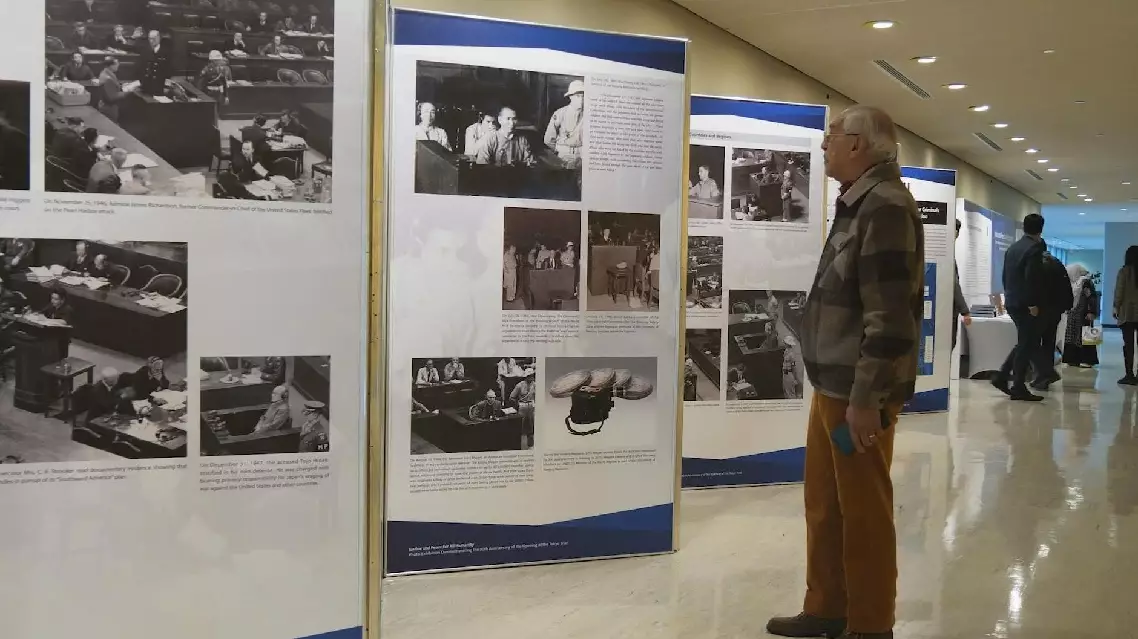
A photo exhibition marking the 80th anniversary of the opening of the Tokyo Trial is now underway at UN headquarters in New York, organized by China's Permanent Mission to the United Nations.
Themed as "Justice and Peace for All Humanity," this photo exhibition, running from Monday to Friday, features historical photographs, archives, and documents related to the Tokyo Trial, in which leaders of the Empire of Japan were tried for war crimes committed during WWII.
Fu Cong, China's permanent representative to the United Nations, made an appearance at the exhibit, where he explained to a reporter the importance of keeping the history of the trial alive.
"The purpose of the Tokyo Trial is not to seek revenge. It is for the people and the world to remember history," said Fu.
China's position was reaffirmed by Qi Dahai, director general of the Department of Treaty and Law at China's Ministry of Foreign Affairs, who warned that forgetting past suffering could invite future disaster.
"To forget the sufferings of yesterday may lead to the disaster of tomorrow. We reaffirm our commitment to remembering the agonies of war, upholding the truth of history and standing firm for peace and justice," Qi said.
Historians and nations recognize that trials were not perfect, but they established a legal framework for prosecuting Japanese aggression, introducing pivotal concepts including crimes against peace, crimes against humanity and mass atrocity.
"We need to resist the tendency to try to whitewash what happened more than 80 years ago, because unless these historical lessons are studied and remembered, there is always a danger that the world will repeat the mistakes that we had in the past," Fu said.
Eighty years on, the exhibition brings that history to a new audience and reminds them why the Tokyo Trial's legacy remains relevant.
"The victims should not be forgotten, because the crimes were so awful and heinous that this has no time limit, actually. Everyone should think about what happened to particular families and particular people," said Maxim Musikhin, director of the Legal Department at the Russian Foreign Ministry.
Priscah, a visitor to the exhibition, said the display helped her understand the brutality of what happened in Nanjing during the war.
"I think it is good to create awareness, and the information provided here is very vital to understand what happened during the [Nanjing] massacre," she said.
China warns against whitewashing history 80 years after Tokyo Trial