Skip to Content Facebook Feature Image

New Research Reveals Most Utilities Have Modernized IT Infrastructure, Yet Only 1 in 4 Achieved Fully Intelligent Operations

Business

New Research Reveals Most Utilities Have Modernized IT Infrastructure, Yet Only 1 in 4 Achieved Fully Intelligent Operations
Business

Business

New Research Reveals Most Utilities Have Modernized IT Infrastructure, Yet Only 1 in 4 Achieved Fully Intelligent Operations

2026-10-28 19:02 Last Updated At:19:10

LOS ALTOS, Calif.--(BUSINESS WIRE)--Oct 28, 2026--

A pivotal new IDC InfoBrief, sponsored by Bidgely in partnership with AWS and Snowflake, From Patchwork to Platform, assesses how far utilities have progressed in transforming their customer operations and which capabilities separate those that have achieved full expected outcomes. Based on a survey of 400 utilities and energy retailers across 14 global markets, the IDC InfoBrief reveals that despite the widespread standardization of cloud solutions and IT infrastructure, only 25 percent of utilities have reached the level where real-time data and embedded intelligence reshape operations.

This press release features multimedia. View the full release here: https://www.businesswire.com/news/home/20261028412252/en/

“Most utilities have standardized their customer operations, yet standardization only builds the foundation, and it is at the intelligent level, where real-time data and embedded AI reshape how customers are served, that measurable value accelerates,” said Gaia Gallotti, Research Director at IDC Energy Insights. “With only 1 in 4 utilities having crossed that threshold, it is imperative to stop treating platform modernization as the finish line and to start building personalization and operational AI on top of it.”

According to IDC, affordability, electrification and rising expectations now converge at the customer interface faster than most customer operations systems were built to absorb. This InfoBrief measured utilities against six core business outcomes: cost to serve, digital self-service, speed to launch, agent productivity, billing accuracy, and energy program participation.

In addition to citing personalization as the clearest marker of successful transformation, the research explains how ‘Advanced’ utilities are building intelligence layers atop their IT infrastructures that enhance decision-making and customer-facing operations.

Key Findings: The Differentiators Driving Real-World ROI

According to the IDC InfoBrief, top-tier energy leaders differentiate themselves across four key operational pillars:

“The promise of modernization isn't just having data in the cloud, it's activating that data where operations happen,” said Abhay Gupta, CEO of Bidgely. “Operational AI allows utilities to transform complex grid challenges into scalable programs while delivering the personalized engagement modern energy consumers expect.”

A Partnership Built for Scale

Moving from a patchwork IT model to an integrated enterprise platform requires a unified partner system connecting cloud infrastructure, modern data architecture and industry-specific AI.

“Scale changes everything,” said Don McDonnell, Worldwide Energy & Utilities Partner Lead at AWS. “When managing millions of grid endpoints simultaneously, operational delay becomes a business risk. The energy leaders pulling ahead are leveraging cloud-native computing power to convert massive data streams into near-instantaneous automated decision support.”

“AI is only as powerful as the data environment supporting it,” said Fred Cohagan, Global Head of Energy, GTM at Snowflake. “Fragmented data architectures create artificial ceilings for intelligent automation. Establishing a unified data foundation allows utilities to deploy AI natively against their entire data estate with total agility.”

To access the full IDC InfoBrief, download “ From Patchwork to Platform ” (doc #EUR254952326-IB, October 2026). To learn more about Bidgely UtilityAI™ Pro, visit bidgely.com/utility-ai-pro.

About Bidgely

Bidgely is the pioneer of AI-powered energy intelligence, transforming raw meter data into high-definition insights for global utilities. Serving over 50 million homes, the company’s UtilityAI™ Platform leverages 24 foundational patents to optimize grid visibility, call center operations, and personalized customer engagement. Recognized by Fast Company as a "Top 10 Most Innovative Applied AI" company, Bidgely integrates precision energy analytics with horizontal AI ecosystems like Microsoft Copilot and AWS to modernize the grid with premises-level accuracy. www.bidgely.com | bidgely.com/insights

IDC InfoBrief explores how 'Advanced' utilities move beyond patchwork IT models to an integrated and unified enterprise platform.

IDC InfoBrief explores how 'Advanced' utilities move beyond patchwork IT models to an integrated and unified enterprise platform.
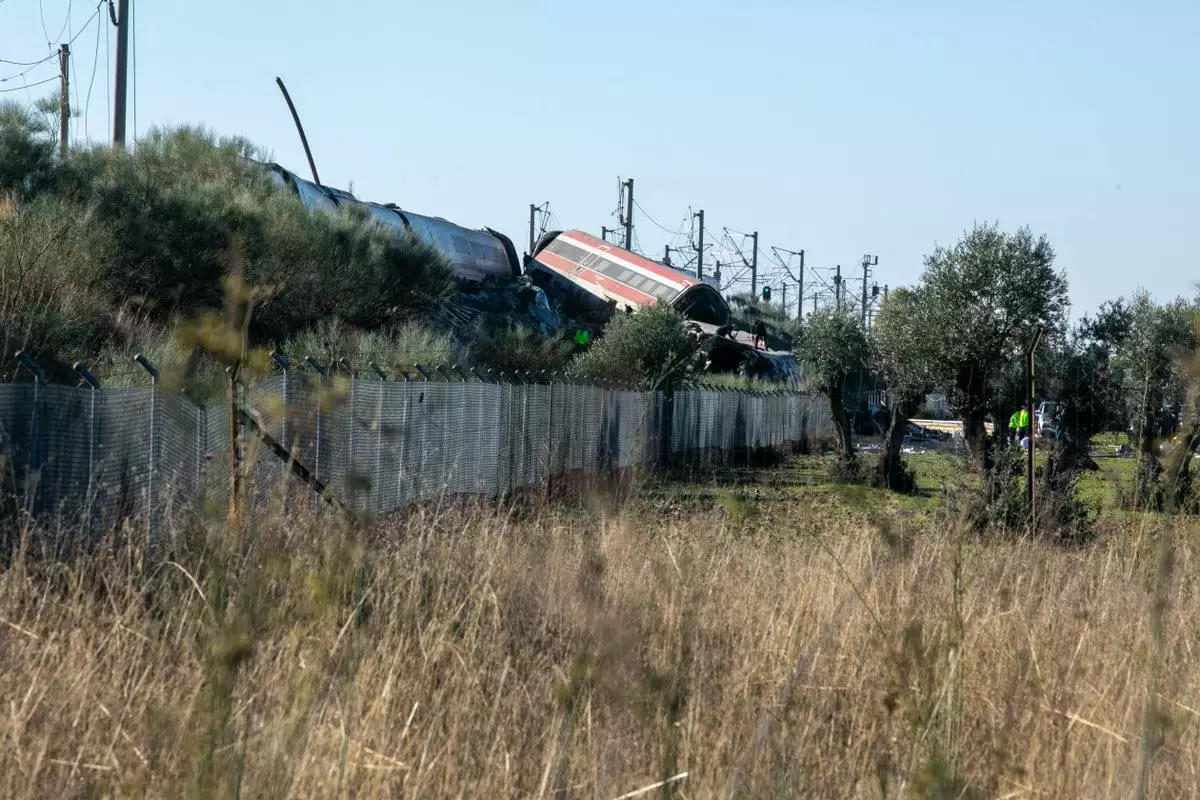
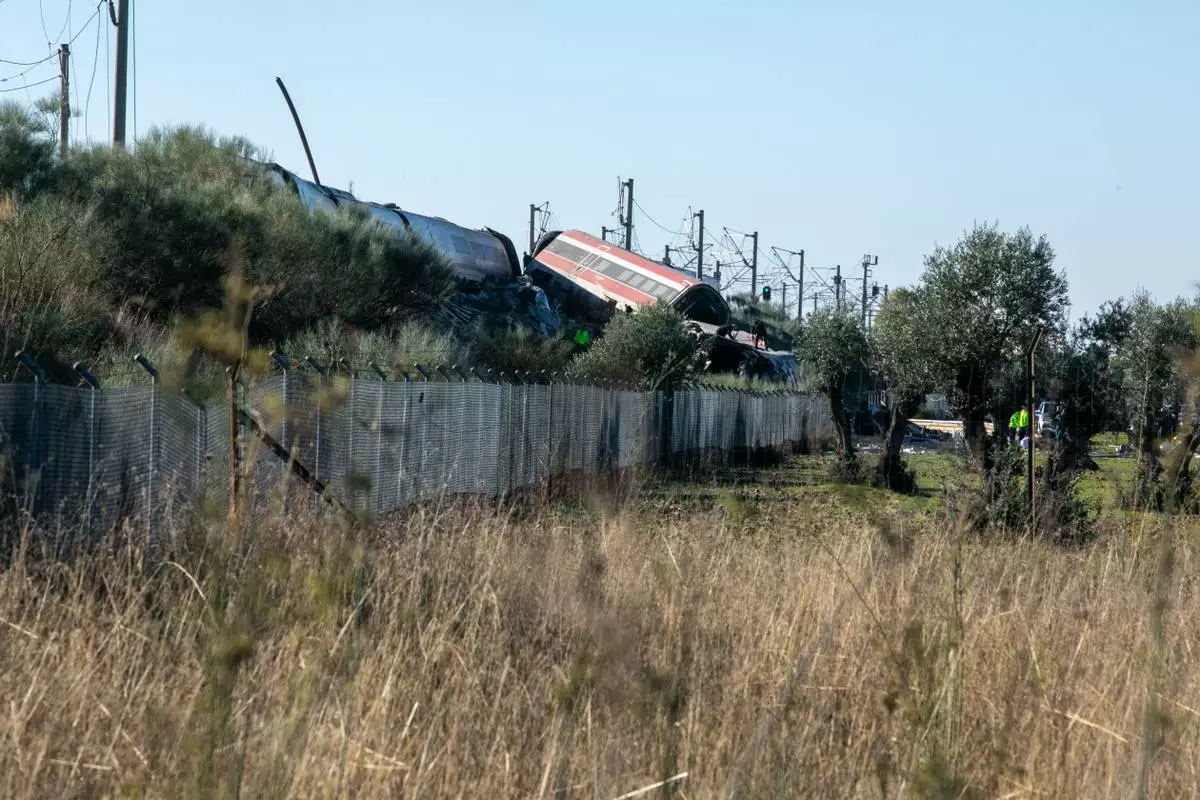
BARCELONA, Spain (AP) — A high-speed train slammed into the rear of another train that had stopped, derailing two cars and killing at least 30 people on Wednesday in central Spain, according to local media.

Spanish authorities initially reported 10 deaths, but Esther Padilla, spokeswoman for the Castilla La Mancha region, added “that number will surely rise.”

Spanish state-owned news agency EFE and other media reported later that the death toll had risen to at least 30.

It was the second major train accident in Spain this year.

Spain’s rail system operator ADIF said the crash occurred Wednesday morning in the province of Toledo. Rail service was suspended between Madrid, Ciudad Real and Andalusia.

Padilla told state broadcaster TVE that the accident was between two high-speed trains carrying hundreds of passengers and heading in the same direction from the capital Madrid to Seville in southwestern Spain. One ran into the tail of the other that had stopped, knocking two of its cars off the track. She said the cause of the crash was not known.

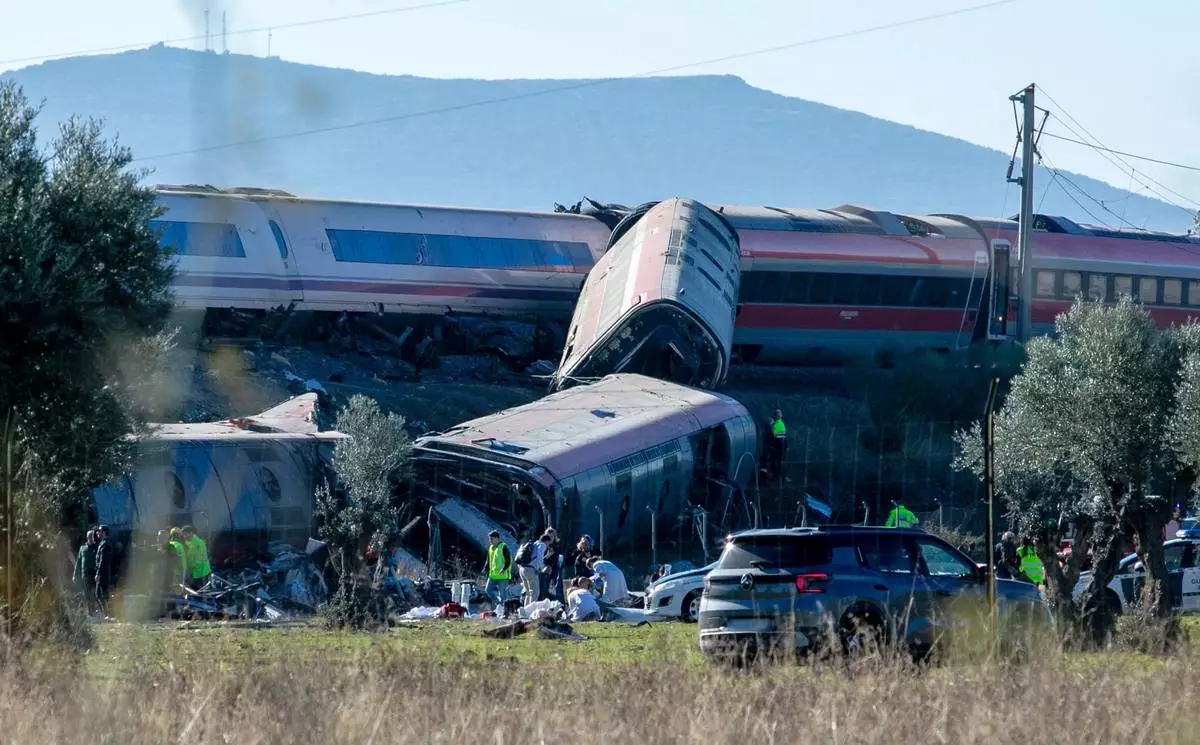
The crash, which occurred in a flat stretch surrounded by fields in between the towns of Urda and Los Yébenes, left one car shredded into bits of metal and other material, scattering debris down a gravel slope.

Spanish Health Minister Mónica García told TVE that emergency workers were focusing on rescuing survivors and bodies from the two most damaged train cars. She said that the injured are being sent to different hospitals in the area.

“It was a high-speed impact, so we are expecting this to be a tragedy,” García said.

The accident involved a train from Spain’s state-owned RENFE company and the private rail company IRYO. It appeared the RENFE train rammed the IRYO train, Spanish media reported. Trains from those two companies were also involved in a deadly crash in January.

Padilla said that 397 passengers were in the RENFE train and 147 passengers in the IRYO train.

IRYO, an Italian-owned company, said in a statement that it has “activated its security protocols and is closely working with authorities.”

The mayor of the nearby town of Urda, Manuel Galán, told Spanish state broadcaster TVE that civil protection authorities had asked his town hall to prepare a sports pavilion to attend to injured passengers.

A military emergency brigade was deployed to help emergency services, firefighters and police to the crash site.

Spanish Prime Minister Pedro Sánchez cancelled his agenda to focus on the crash. He wrote on X that he was “dismayed by the serious train accident in Toledo.”

“Emergency services are working on site to attend to the affected passengers,” wrote Sánchez, who faces a national election next month. “All my thoughts are with the victims and their families.”

The regional president of Castilla La Mancha, Emiliano García-Page, wrote on X that he was on his way to the crash site.

In January, 45 people died in southern Spain when a train jumped the track and hit an oncoming train. The crash was the deadliest in Spain since a 2013 crash that killed 80 people. The January incident shook the confidence the European country has in its extensive high-speed rail network.

Emergency services attend to the victims at the scene of a collision between two trains in Urda, Spain, on Wednesday, Oct. 28, 2026. (Juanma Jiménez/Europa Press via AP)

Emergency services attend to the victims at the scene of a collision between two trains in Urda, Spain, on Wednesday, Oct. 28, 2026. (Juanma Jiménez/Europa Press via AP)

The scene of a collision between two trains in Urda, Spain on Wednesday, Oct. 28, 2026. (Juanma Jimenez/Europa Press via AP)

The scene of a collision between two trains in Urda, Spain on Wednesday, Oct. 28, 2026. (Juanma Jimenez/Europa Press via AP)

The scene of a collision between two trains in Urda, Spain on Wednesday, Oct. 28, 2026. (Juanma Jimenez/Europa Press via AP)

The scene of a collision between two trains in Urda, Spain on Wednesday, Oct. 28, 2026. (Juanma Jimenez/Europa Press via AP)

Recommended Articles