Haba Lake nature reserve in Yanchi County, northwest China's Ningxia Hui Autonomous Region is drawing visitors with breathtaking autumn beauty as a forest belt of over 933 hectares in the reserve enters best viewing season.
Footage shows vast stretches of golden-hued trees lining both sides of a major road in the nature reserve, creating a spectacular autumn foliage display typical of the northwestern region. Most of the trees are tall Populus simonii (Simon poplars) growing on the sandy lakeshore. Crowds of residents and tourists have flocked here to take in the scenery.
"The autumn scenery at Haba Lake has truly exceeded my expectations. It's incredibly pure and pristine here. I just love it," said Xue Li, a tourist.
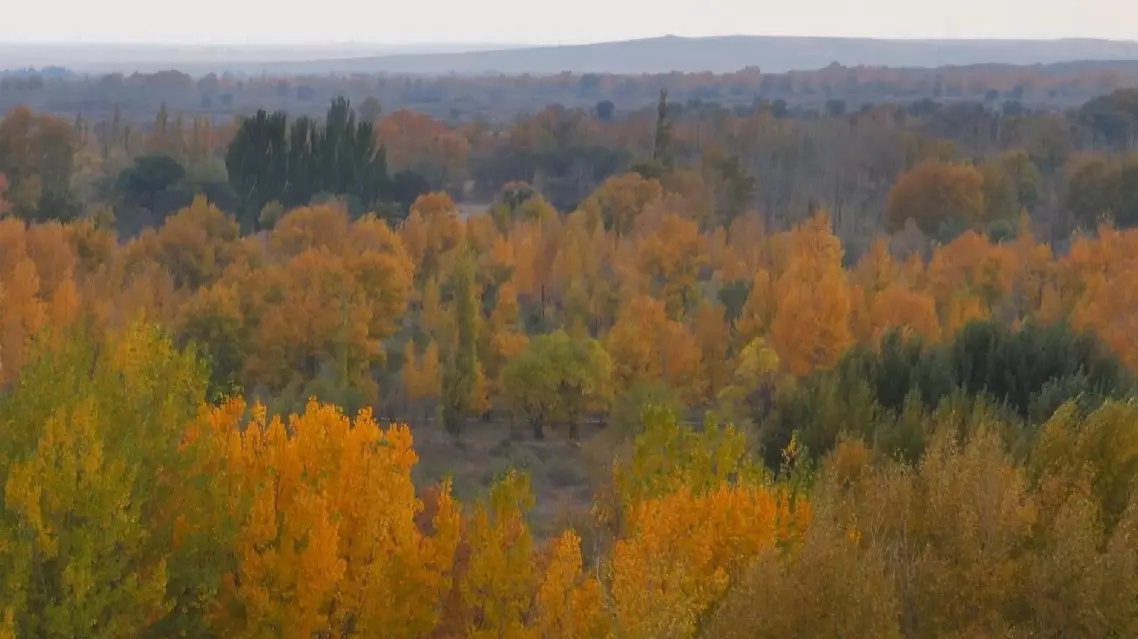
Splendid autumn scenery in Ningxia draws visitors
Counties on the edge of China's largest desert, the Taklimakan in northwestern Xinjiang Uygur Autonomous Region, have developed robust agricultural industries based on crops that can grow in sand.
To prevent desert expansion, the Taklimakan was completely encircled by a green belt stretching 3,046 km in November 2024, after more than four decades of efforts. The green belt has helped expand agricultural production, bringing more income to local people.
Located on the southern edge of the Taklimakan, Zanggui Township in Xinjiang's Pishan County introduced a plant known as Gualou, or Chinese snake gourd, in 2023.
Gualou's fruits and roots can be used medicinally, and its seeds can be made into snacks. The pulp can be used for producing wine, and the vines can be turned into organic fertilizer.
The township has established a 3,800-hectare standardized Gualou cultivation base.
"Pishan County's soil is sandy and has excellent air permeability, making it suitable for the growth of Gualou. The Gualou here is growing well, and its strongly spreading root system also helps inhibit the wind and fix the sand," said Chu Yaya, an official with the Pishan County Gualou Industrial Park.
This year, the local Gualou seed output is expected to exceed 3,000 tons, with the industry's output value surpassing 500 million yuan (around 75 million U.S. dollars). The development of the industry has provided stable employment for more than 2,500 residents from surrounding townships.
Meanwhile, on the northern edge of the Taklimakan Desert, Shaya County of Xinjiang's Aksu Prefecture is cultivating around 16,000 hectares of cistanche, a traditional Chinese medicinal herb that grows in the desert, helping locals earn extra income.
"I can earn 200 to 300 yuan a day. It's easy," said a local villager.
Shaya County has developed 17 kinds of cistanche products.
"The output value of the local cistanche industry has reached over 200 million yuan, which has increased incomes for more than 5,000 farmers and herdsmen," said Wang Kaiyan, an official with the Shaya County Forestry and Grassland Bureau.
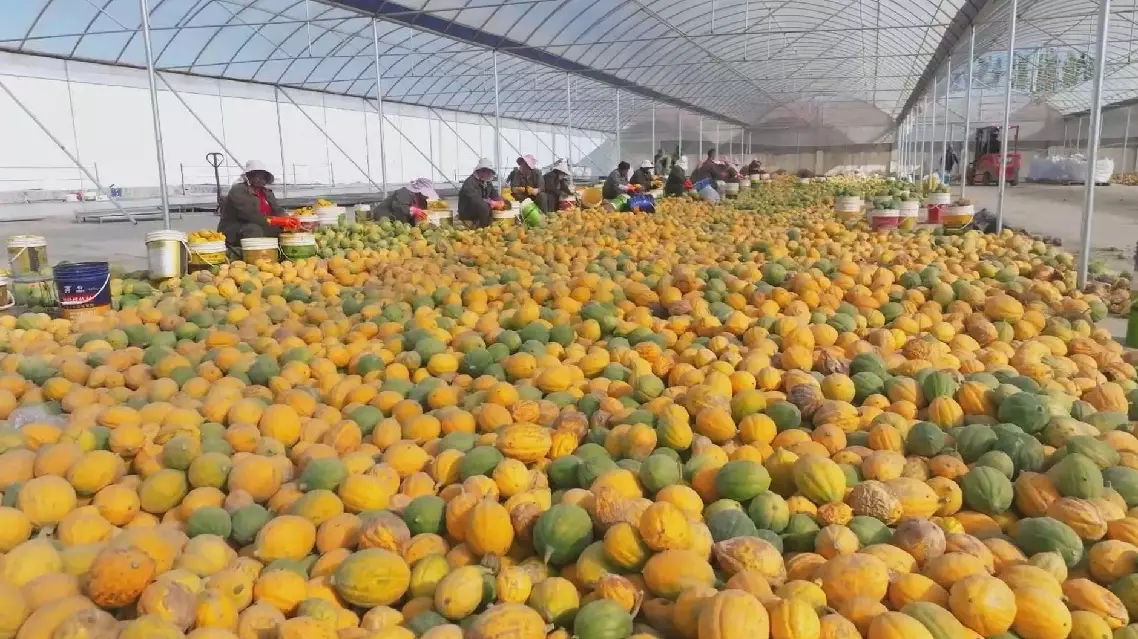
Sand crops on edge of Taklimakan Desert bring income for locals