WASHINGTON (AP) — The cost of the Iran war to American taxpayers has grown to $47.1 billion, according to a new estimate the Pentagon has provided to Congress. The fallout from the conflict has become a key issue in the midterm elections and could increase as President Donald Trump leaves open the possibility of renewed hostilities.
The figure from U.S. Central Command, which oversees operations in the Middle East, is as of Oct. 16 and offers the most up-to-date cost for the conflict since it was launched in late February by the United States and Israel. The latest price tag, obtained by The Associated Press this week, shows a $3.5 billion bump in U.S. spending since early September, when that figure stood at about $43.6 billion.
The growing cost of the unpopular war and its economic ripple effects on energy prices could hurt Republicans in next week's midterm elections. Voters on Tuesday will decide which political party controls Congress during Trump's last two years in office.
The Republican president has said new strikes on Iran are an option after the midterms and is sending more military resources to the Middle East, despite initially promising Americans a military campaign that would last only a matter of weeks. As the war’s costs in lives, tax dollars and economic impact grow, most voters say they want Congress to prioritize ending the conflict, according to a recent AP-NORC poll.
The expense of the conflict and military spending in general are already a contentious issue on Capitol Hill, where the Trump administration is pushing for the passage of a historic $1.5 trillion military budget proposal. The White House also is asking lawmakers to approve a $95 billion package that would help fund the Iran war and other priorities.
Wednesday marks eight months of the war, which Democrats have been trying to end through legislation that has failed to pass the Republican-controlled Congress.
“Trump and his ego led us into this war with no plan, no authority, and no exit strategy," Senate Minority Leader Chuck Schumer of New York said in a news release. "Senate Democrats will continue to do everything in our power to end this disaster of a war and stop the costs, chaos, and corruption seeping from the White House.”
In the latest estimate, the bulk of the war's costs are for replacing munitions, at about $29 billion. The advanced weapons most in demand and whose stockpiles have been drawn down are defensive missile interceptors, such as those launched by the Army’s Patriot and THAAD systems, with a single Patriot interceptor costing millions of dollars.
The Pentagon says about $11.9 billion is related to costs of operations, while an additional $6 billion is tied to equipment losses. The Air Force's costs are now $7.6 billion, and the Army's are more than $2 billion. The Navy's costs were listed at $1.45 billion, which is a significant drop from the $2.2 billion listed in early September.
When asked why the Navy’s cost estimates decreased over the roughly six-week period, both the Navy and U.S. Central Command referred the questions to the Pentagon, which did not immediately respond to emails requesting comment on the new cost estimates.
The latest estimate does not include damage to U.S. bases in the Middle East, which the Islamic Republic has attacked with ballistic missiles and drones. A report from the Pentagon inspector general released last month said Iranian strikes have damaged and destroyed hundreds of buildings and other structures at U.S. bases in Kuwait, Bahrain, Qatar, the United Arab Emirates, Saudi Arabia, Iraq, Oman and Jordan.
The Pentagon’s official tally lists 21 service members killed and 865 wounded in the conflict. That count includes troops who died in medical events and other situations that do not have a direct connection to the conflict, with 18 service members having been killed from Iranian strikes, combat aircraft crashes or disposal of Iranian drones.
While Trump has mused repeatedly about whether to make a deal with Iran or “finish them off,” a third aircraft carrier and thousands of additional troops are making their way to the region. The Trump administration also has reduced staffing at some U.S. Embassies after receiving intelligence that Iran has stepped up efforts to target American personnel.
Follow the AP's coverage of the Iran war at https://apnews.com/hub/iran.
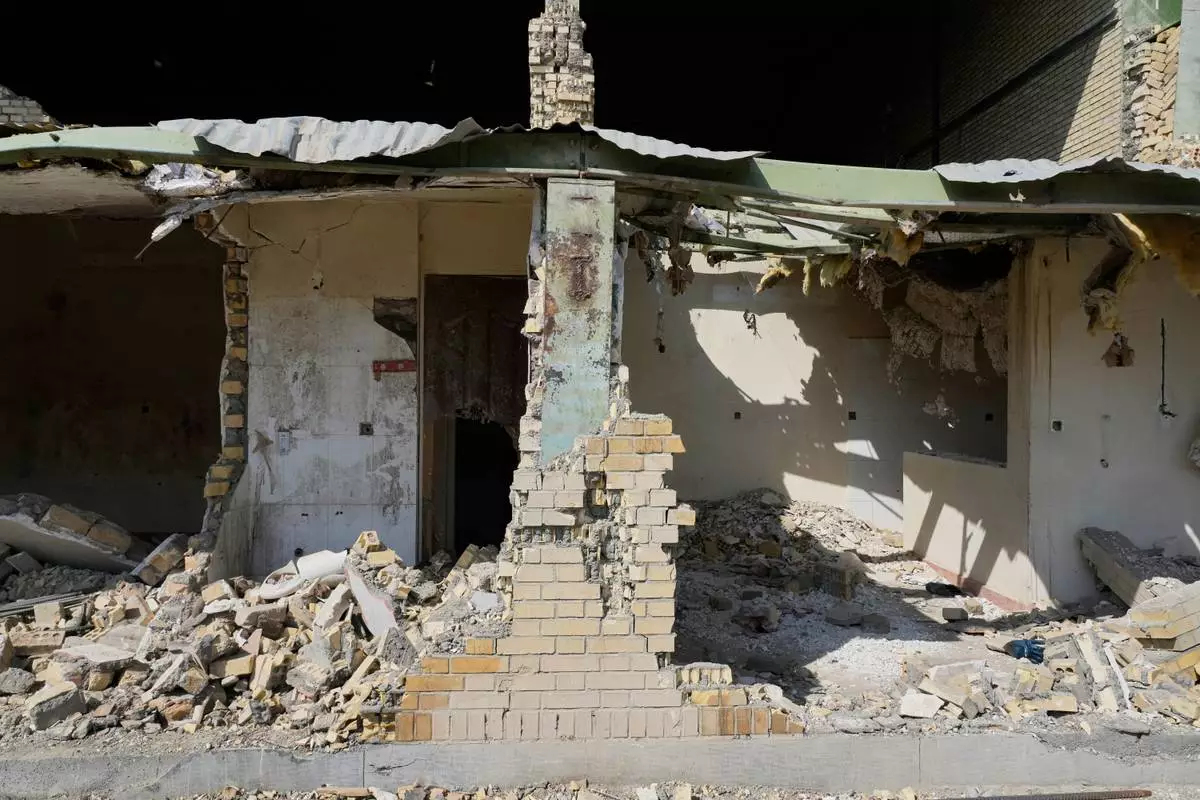
A school sports hall that Iranian authorities said was damaged when a nearby building was hit on March 28, 2026, is seen in Khomein, southwest of Tehran, Iran, Thursday, Oct. 15, 2026. (AP Photo/Vahid Salemi)
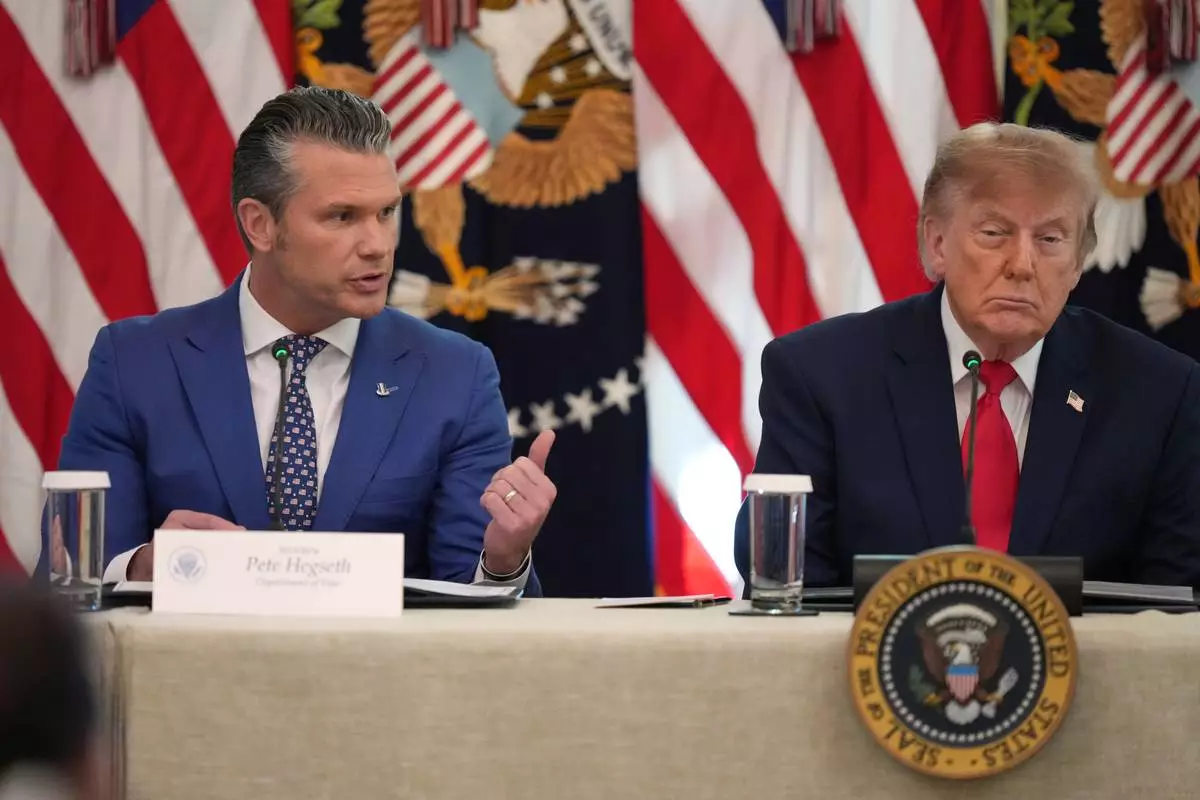
President Donald Trump listens as Defense Secretary Pete Hegseth speaks at a roundtable event in the East Room of the White House, Wednesday, Oct. 21, 2026, in Washington. (AP Photo/Alex Brandon)