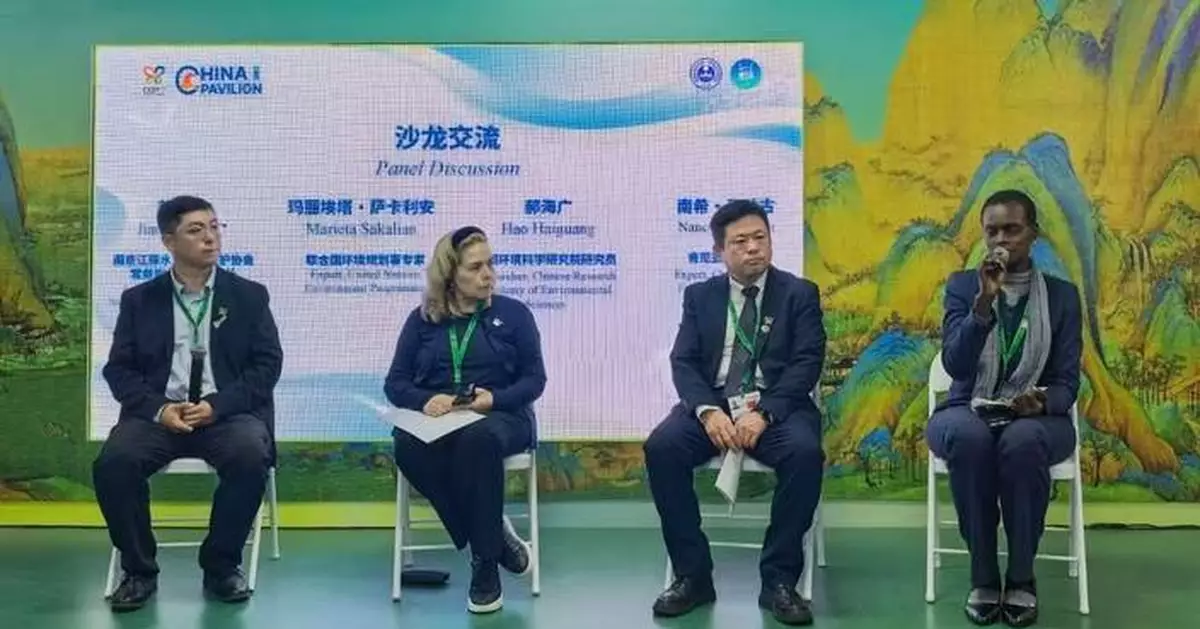
YEREVAN, ARMENIA – Media OutReach Newswire – 29 October 2026 – Jiangsu Day, a themed event at the China Pavilion during the 17th meeting of the Conference of the Parties to the Convention on Biological Diversity (COP17), was held in Yerevan, the Armenian capital, on October 26, highlighting Jiangsu's efforts to protect biodiversity and promote ecological restoration.
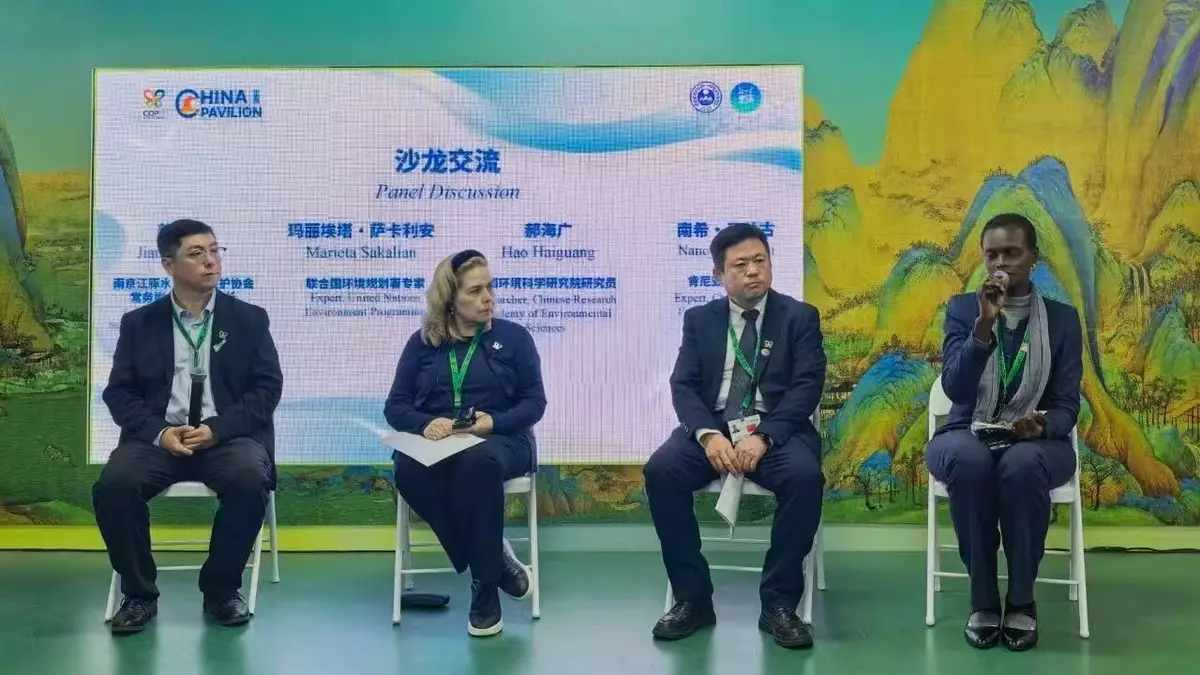
Experts delivering presentation during a panel discussion
Over the course of the two-hour program, participants explored a central question: how can wildlife habitats be protected and restored in regions characterized by intensive development, high population density and increasingly fragmented natural spaces.
Balancing Development and Biodiversity
Jiangsu faces a distinctive set of environmental challenges. Covering just 1.1 percent of China's land area, the province is home to around 6 percent of the country's population and generates more than 10 percent of its GDP. Against this backdrop, Jiangsu has prioritized ecological conservation and green development, strengthened pollution control and pursued systematic ecosystem restoration.
During the 14th Five-Year Plan period (2021–2025), the province continued to improve its environmental quality. Average annual PM2.5 concentrations fell 16.5 percent from the end of the previous five-year period, while the proportion of nationally monitored river sections meeting good or excellent water-quality standards rose by 11.5 percentage points.
Biodiversity surveys have recorded 9,266 species across the province, including 2,363 newly discovered species. These findings reflect both the richness of Jiangsu's natural environment and the growing capacity to document and protect it.
Environmental DNA Offers a New Way to Monitor the Yangtze
Environmental DNA (eDNA) technology is providing a more sensitive, non-invasive way to track changes in aquatic ecosystems along the Yangtze River.
Unlike conventional monitoring methods, which often require capturing organisms for identification, eDNA monitoring collects water samples and analyzes genetic material left behind by aquatic life. DNA barcoding can then be used to identify species without directly capturing them.
Jiangsu began exploring the technology in 2012 and launched a dedicated pilot program in Taihu Lake in 2017. In 2019, it established the first specialized eDNA laboratory within China's ecological and environmental protection system. A provincial standard introduced in 2023 further standardized procedures for sampling, quality control and data annotation.
Today, 19 routine monitoring sections have been established along the Yangtze River in Jiangsu, covering eight cities. Monitoring is conducted four times a year.
Between 2021 and 2025, the number of fish species recorded through the program increased from 84 to 104. Protected species, including the Chinese sucker, Myxocyprinus asiaticus, the long-nosed gudgeon, Rhinogobio ventralis, and the long-snout catfish, Ochetobius elongatus, were detected again. Environmental DNA signals of the Yangtze finless porpoise were found at all 19 monitoring sections.
Protecting the Yangtze Finless Porpoise Through Public Participation
The Yangtze finless porpoise has become a symbol of the coexistence of urban communities and nature.
In Nanjing, a coordinated observation network has been established along key sections of the river. Volunteers regularly record sightings in the field, contributing more than 69,000 observation records and providing valuable data to support conservation efforts.
Public participation extends beyond monitoring. The "Fish for Finless Porpoises" initiative has held more than 100 fish-release events, releasing over six million juvenile fish and attracting more than 5,000 participants.
Another initiative, "Help Crabs Return Home," has conducted nighttime patrols for three consecutive years to protect the migration of Chinese mitten crabs. Eco-friendly crab passageways made from recycled materials have also been installed to help the crabs navigate barriers along their migration routes.
The conservation network has also drawn international volunteers. More than 300 participants from over 15 countries and regions have taken part in related projects, helping expand cooperation from the Yangtze River to marine ecosystems.
A Legal Framework for Protecting the Plain-River Network
Jiangsu's Biodiversity Conservation Regulation took effect on May 22, 2025, becoming China's first provincial regulation dedicated to biodiversity conservation in plain-river network regions.
Effective conservation also depends on a comprehensive understanding of local biodiversity. Since 2017, Jiangsu has taken the lead in conducting province-wide biodiversity surveys organized by county-level administrative units.
More than 20 professional teams have established 17,400 transects, 10,100 quadrats and 12,600 sampling sites, generating over 620,000 survey records. The first round of surveys was completed in 2025, documenting 9,266 species across the province.
Building on these findings, Jiangsu has designated 25 key biodiversity areas and established 20 biodiversity observation stations. Satellite remote sensing, eDNA analysis and AI-powered species identification are being integrated into a monitoring network designed to improve automation, digitalization and remote observation.
Restoration Efforts Deliver Tangible Results
Jiangsu has established 23 ecological island pilot zones and 171 ecological security buffer zones, while creating or restoring 3,735 hectares of wetlands.
The results are becoming increasingly visible. In 2023, crested ibises were released into the wild for the first time along China's eastern coast as part of a reintroduction effort. In May 2026, the birds achieved natural breeding in the wild. The Yangtze finless porpoise population in Jiangsu has also continued to recover, while the number of waterbirds wintering in the province has remained above 500,000.
Together, these efforts demonstrate how habitat restoration, scientific monitoring and stronger legal protections can support biodiversity recovery in a region under significant development pressure.
Building International Partnerships for Biodiversity
Jiangsu Day also provided a platform for dialogue between Jiangsu and Armenia, as well as other regions along the Silk Road.
Despite their different geographical settings, the two regions share several points of comparison. Both occupy important positions in their respective countries' economies and have connections to major migratory bird routes. Armenia is home to distinctive species such as the Armenian butterfly, while Jiangsu is known for the Chinese tiger swallowtail. Lake Sevan plays a critical role in Armenia's water security, while Jiangsu is responsible for protecting and managing ecosystems across the Yangtze, Taihu Lake and Huai River basins.
The event featured presentations and discussions on implementation pathways for the Kunming-Montreal Global Biodiversity Framework, local conservation practices and opportunities for technological cooperation.
The discussions underscored a shared message: in economically developed and densely populated regions, biodiversity conservation need not come at the expense of development. Rather, a healthy natural environment is an essential foundation for sustainable, high-quality growth.
The program brought together experts from China and abroad. Tajik academician Saidov Abdusator delivered a presentation on preventing the introduction and spread of invasive alien species. Marietta Sakkalian, an expert with the United Nations Environment Programme, Nancy Malangu, an expert with a Kenyan foundation, Hao Haiguang, a researcher at the Chinese Research Academy of Environmental Sciences, and Jiang Meng, executive vice president and secretary-general of the Nanjing Yangtze Finless Porpoise Aquatic Wildlife Conservation Association, joined discussions on how major economic regions can balance development with biodiversity protection.
Jiangsu has been expanding its international conservation partnerships for years. Changshu, Yancheng and Suzhou have been recognized as International Wetland Cities, while Nanjing was included in the Nature Cities platform at COP16. Jiangsu has also joined Zhejiang Province in establishing a Taihu Lake regional alliance for implementing the Kunming-Montreal Global Biodiversity Framework and signed cooperation agreements on biodiversity conservation with neighboring regions in Shanghai, Zhejiang and Anhui.
Looking ahead, Jiangsu will continue to strengthen its legal framework, improve monitoring and supervision, enhance enforcement and deepen international cooperation. Through these efforts, the province aims to offer a model for advancing ecological conservation in China and contribute to global efforts to protect the planet's biodiversity.
The issuer is solely responsible for the content of this announcement.
** This press release is distributed by Media OutReach Newswire through automated distribution system, for which the client assumes full responsibility. **